Can Puppies Eat Salmon? Differences Between Raw, Cooked, and Salmon Food
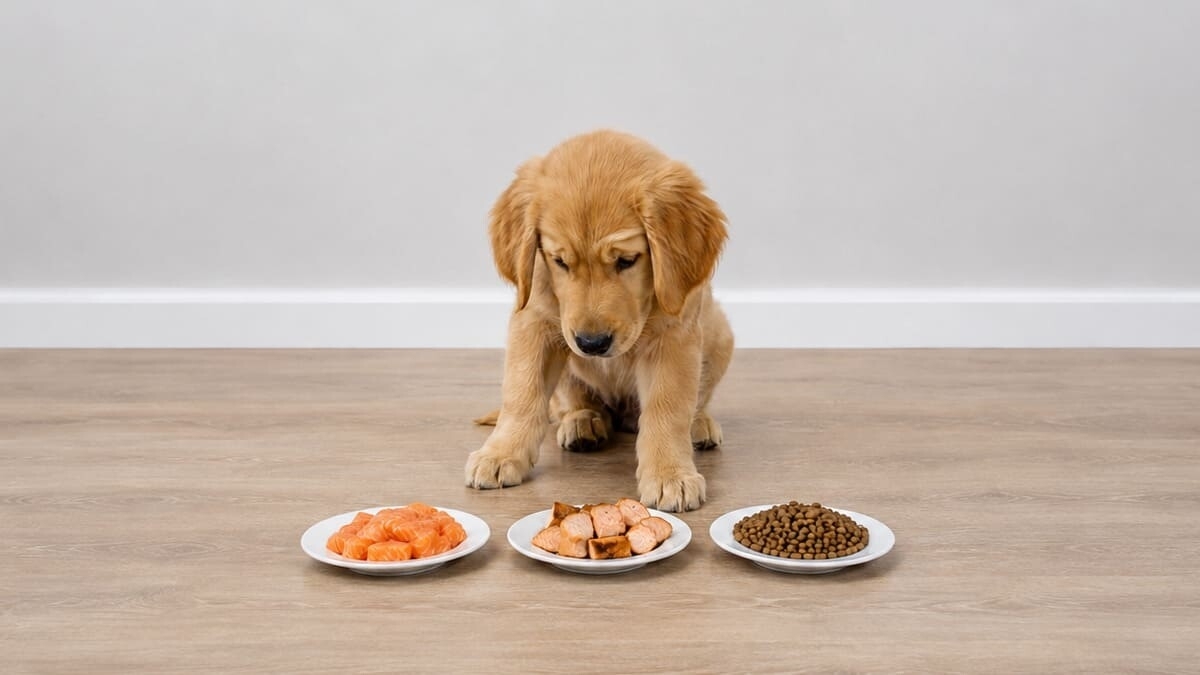
Puppies being given small amounts of well-cooked, plain, and boneless salmon They can eat it. However, giving raw salmon is not recommended. Raw fish can carry bacteria and parasites. Bones can also pose a risk to the mouth, throat, or digestive tract.
Advertisement
Puppies being given small amounts of well-cooked, plain, and boneless salmon They can eat it. However, giving raw salmon is not recommended. Raw fish can carry bacteria and parasites. Bones can also pose a risk to the mouth, throat, or digestive tract.
It is important not to evaluate homemade salmon and salmon-based puppy food in the same way. Plain cooked salmon can be a small supplementary food or treat. Complete puppy food, on the other hand, is formulated considering the energy and nutritional requirements specific to the developmental stage. The fact that salmon contains beneficial nutrients does not mean that it alone provides a balanced meal.
In this article, you can find information about the risks of raw salmon for puppies, how to offer cooked salmon, and what information to look for when choosing salmon-based food.
Warning: The growth rate, health status, and feeding plan of puppies can vary. Consult a veterinarian before adding a new food or changing an existing food.
What Risks Does Raw Salmon Pose for Puppies?
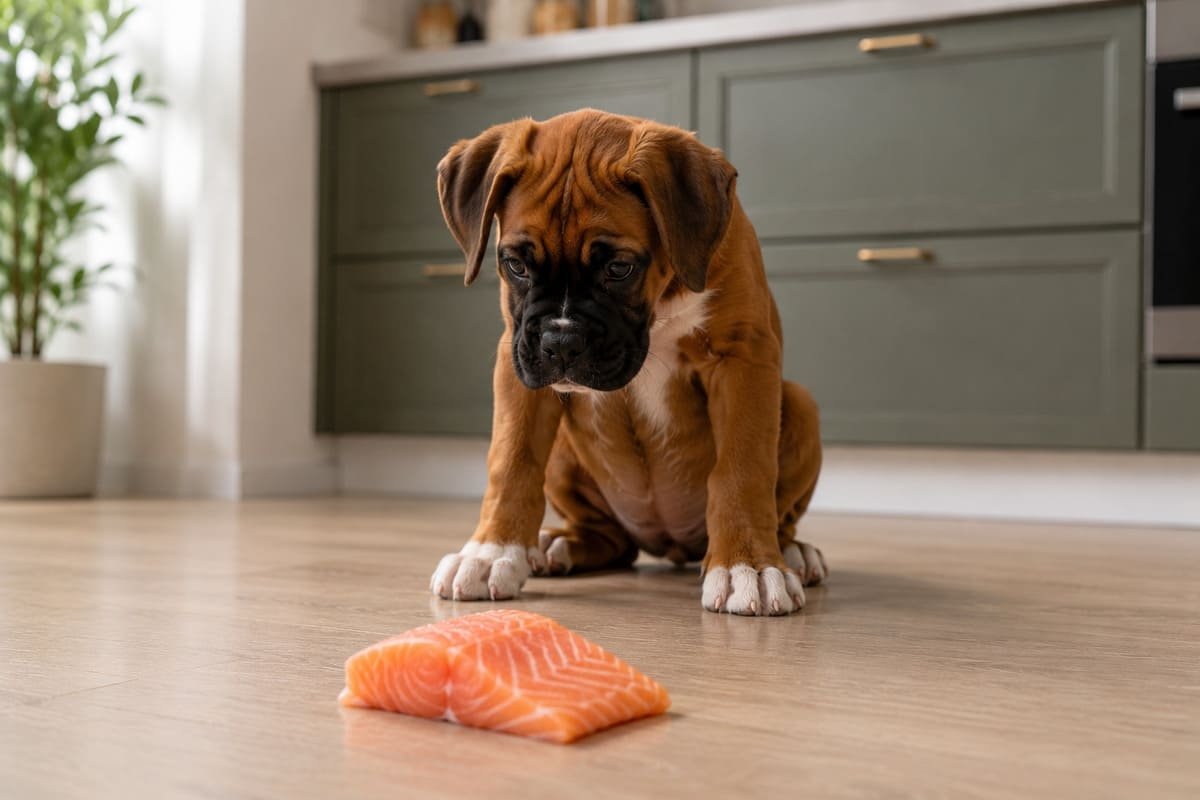
Raw salmon can expose puppies to risks from bacteria, parasites, and bones. The fact that the fish looks fresh or has been properly refrigerated should not be interpreted as meaning these risks are absent.
Puppies are considered among the groups more susceptible to foodborne microorganisms. Therefore, the risk of infection from raw fish should be assessed more cautiously during their growth period.
The CDC's pet food safety guidelines state that raw animal proteins may contain pathogenic microorganisms such as Salmonella and Listeria. Hands, food bowls, and kitchen surfaces that come into contact with raw fish can also contribute to the transmission chain.
Thin bones can cause mouth injuries, throat obstruction, or foreign body problems in the esophagus. Excessive drooling, gagging, difficulty swallowing, and repeated swallowing are symptoms that should not be ignored. If these symptoms are noticed, the puppy should be evaluated by a veterinarian without delay.
How to Give Salmon to a Puppy?

If giving salmon to a puppy, the fish should be thoroughly cooked, all bones removed, and served plain. Baking, boiling, or grilling without added oil are preferable methods.
There should be no raw or undercooked areas in the inside of the fish. Allow the salmon to cool before serving, and cut the fish into small pieces that the puppy can easily eat.
Salmon should not be seasoned with salt, sauce, butter, or spices. Recipes containing onions and garlic should also be avoided. Each piece should be carefully checked, as fine bones in home-cooked fish can easily be overlooked. Cooked salmon can be given to dogs, but portion control is as important as safe preparation.
Offering a small amount on the first try makes it easier to monitor the puppy's reaction to the new food. If vomiting, diarrhea, loss of appetite, or significant restlessness occur in the following hours, salmon should not be given again, and a veterinarian should be consulted. The absence of any problems does not mean that the portion can be increased without limit.
Potential Benefits of Salmon for Puppies
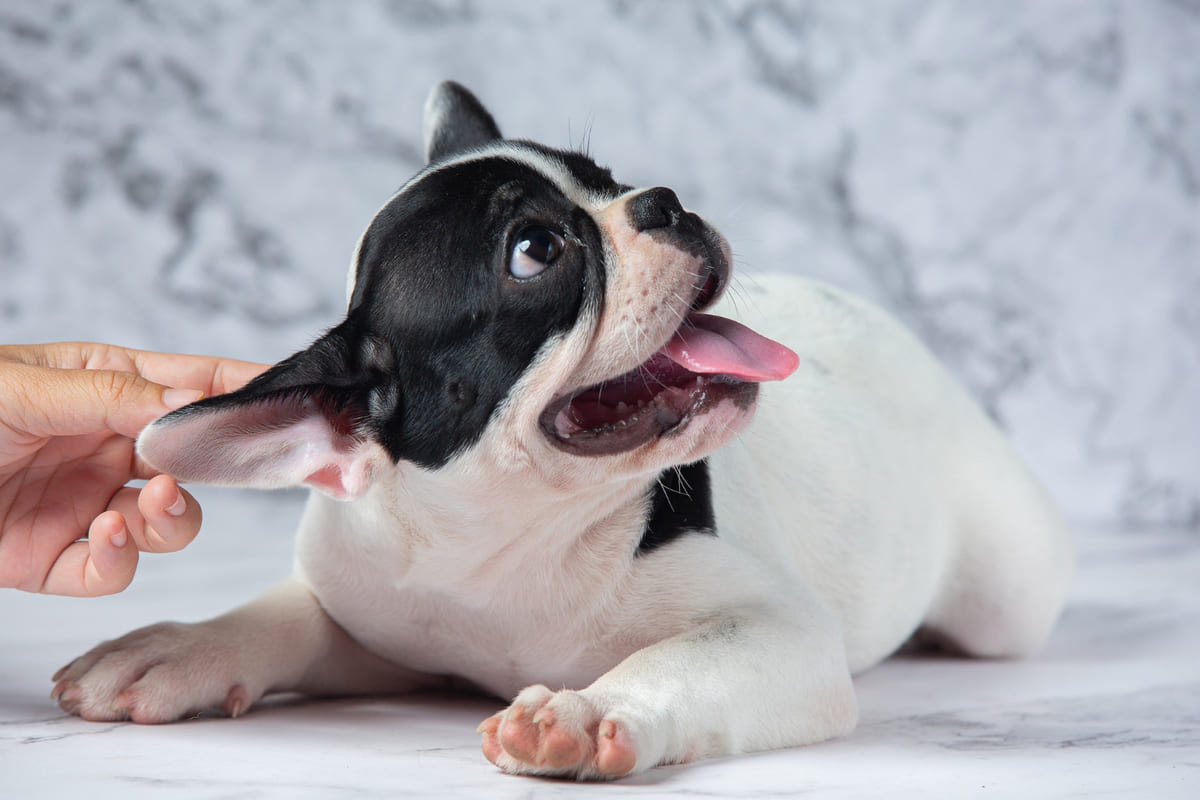
When cooking salmon at home, you may want to set aside a small piece for your puppy. When properly prepared, salmon can add valuable nutrients to their diet.
- Provides protein for growing tissues. Amino acids from protein are used as the puppy's muscles and organs develop.
- Contains EPA and DHA. These omega-3 fatty acids can be part of a balanced diet suitable for the growth period. DHA is found in the structure of brain and eye tissues.
- Provides B vitamins. The vitamins in salmon, especially B12, support the nutritional value of the fish.
However, the "more is better" approach is not correct for salmon. The nutrients it contains alone do not guarantee healthier development.
A few small pieces, plain, boneless, and well-cooked, can be offered occasionally. The puppy's main meal should consist of a complete food suitable for its growth period. If you want to include salmon in its daily diet in a more controlled manner, you can consider growing puppy foods with salmon.
Are Raw Salmon and Salmon-Containing Puppy Food the Same Thing?

No. Raw salmon is a food on its own. Puppy food containing salmon, on the other hand, is a formula where many nutrient sources are combined in specific proportions.
A piece of salmon can offer valuable nutrients. This does not make it a food that alone meets the puppy's daily meal needs. Nutritional adequacy during the growth period depends more on the whole of the daily diet than on a single component.
The salmon used in the food is one of the components of the recipe. The components in the formula together create the nutritional balance that the puppy needs. The evaluation is based not on the salmon itself, but on the overall nutritional profile.
From a safety perspective, the two options are not the same. Raw salmon can carry the risk of bacteria, parasites, and bones. The risk profile of processed foods is shaped by the processing and quality controls applied.
It is misleading to think of raw salmon as a more natural alternative to salmon-based food. One is a single food. The other can be prepared to form the basis of daily nutrition.
However, not every formula containing salmon is of the same quality. To distinguish the right product, the selection criteria for the food must be evaluated separately.
What to Look for When Choosing Salmon-Based Puppy Food?

When choosing salmon-based puppy food, first check the product's completeness and suitability for the growth period. The presence of a salmon image on the packaging or the mention of salmon in the product name alone does not prove nutritional adequacy.
Some puppies can consume different animal protein sources without problems. In puppies suspected of having food allergies, the presence of only one protein source on the label may not be sufficient for a diagnostic diet. Elimination diets should be planned under the supervision of a veterinarian. Foods that use salmon as the sole animal protein source can be evaluated from this perspective.
In some recipes aimed at sensitive digestion, salmon may be accompanied by rice, fiber, prebiotics, or probiotics. The product's compatibility with the puppy should be monitored through changes in appetite, stool consistency, vomiting, and body condition.
Salmon-based puppy foods may also contain nutrients such as omega-3 and omega-6 fatty acids, biotin, and zinc. These components are part of a balanced formula that supports normal skin and coat health.
The food should be appropriate for the puppy's age and expected adult size. The feeding chart on the package helps determine the starting amount. The daily portion can be readjusted as the puppy's weight and body condition change.
When comparing salmon-based puppy food options, digestive support, protein sources, and suitability for the growth period should be considered together.
The transition to a new food should be spread over several days. Changes such as appetite, stool consistency, and vomiting should be monitored. If a recurring problem occurs, the food choice should be reviewed with a veterinarian.
What to Do If a Puppy Accidentally Eats Raw Salmon?

The first step for a puppy that has eaten raw salmon is to determine the amount eaten and the time of consumption and contact a veterinarian. The source of the fish, whether it was raw or undercooked, and whether it contained bones should be noted. If available, the packaging should be kept. This information helps the veterinarian assess the risk.
Caution: Vomiting, diarrhea, fever, loss of appetite, lethargy, thirst, and significant behavioral changes should be monitored. “Salmon poisoning” is not caused by a toxin found in all raw salmon. It develops from eating raw or undercooked fish infected with a bacteria-carrying parasite. It is most commonly reported in the Pacific Northwest of North America. Information about travel to this region or contact with raw fish from this region should be reported to the veterinarian. Symptoms may begin one week to one month after consuming infected fish.
In case of suspected bone ingestion, excessive salivation, gagging, difficulty swallowing, regurgitation, or persistent swallowing require immediate evaluation. Repeated vomiting, marked weakness, or rapidly deteriorating general condition should not be expected. Even if the puppy shows no symptoms, the consumption of raw salmon should be discussed with a veterinarian.
Frequently Asked Questions

Does freezing raw salmon make it safe for puppies?
No, freezing raw salmon does not make it as safe as cooked fish. While low temperatures can reduce the amount of some microorganisms, they do not eliminate all of them. Frozen salmon should be treated as raw food after thawing. It is also important to prevent the liquid leaking from the fish during thawing from coming into contact with kitchen surfaces and other foods.
Can dogs eat salmon skin?
Salmon skin, cooked without spices using healthy methods, can be given to puppies in small amounts. The skin may contain more fat than the salmon meat. Large portions can increase daily energy intake and lead to digestive problems. It should not contain salt, sauce, oil, or spices. Raw salmon skin should not be given due to the same bacterial and parasite risks as the fish meat.
Can dogs eat smoked salmon?
Smoked salmon is not a suitable food for puppies. These products may have a high salt content and different seasonings may be used in their production. Smoking does not make the product the same as plain cooked salmon.
Can dogs eat canned salmon?
Plain, boneless salmon preserved in water can be given in small amounts. Products served in oil or with added salt are not a suitable first option. Sodium, fat, and other ingredients should be checked on the label. Canned salmon can be rinsed before serving. Even if the bones in the product appear soft, they should be carefully removed before giving it to a puppy.
Can puppies consume salmon oil?
Salmon oil can be consumed if the veterinarian deems it suitable for the puppy's diet. Since it is a concentrated source of fat, the amount should not be determined arbitrarily. The complete food used may already contain omega-3 fatty acids known as EPA and DHA. When determining the dosage of the supplement, the nutritional content of the food, the puppy's weight, and total energy intake should be considered together.
Kaynaklar:
https://www.cdc.gov/healthy-pets/about/pet-food-safety.html
https://www.vet.cornell.edu/departments-centers-and-institutes/riney-canine-health-center/canine-health-topics/raw-foods-dogs-evidence-based-advice-riney-canine-health-center
https://europeanpetfood.org/wp-content/uploads/2025/09/FEDIAF-Nutritional-Guidelines_2025-ONLINE.pdf
https://healthtopics.vetmed.ucdavis.edu/health-topics/salmon-poisoning-disease-dogs
https://www.merckvetmanual.com/digestive-system/diseases-of-the-esophagus-in-small-animals/esophageal-foreign-bodies-in-small-animals
https://www.petmd.com/dog/nutrition/can-dogs-eat-salmon
https://addictionpet.com/blog/5%E2%80%AFbenefits-of-salmon-for-puppies/
Advertisement
Advertisement
Keep exploring
Continue reading

Dog Nutrition
How Should Neutered Dogs Be Fed? Food Selection and Weight Control
After neutering, your dog's appetite, activity level, and daily energy needs may change. Continuing to feed the same amount of food may lead to…
Read guide →
Dog Nutrition
What is the purpose of L-Carnitine in dog food? What is its effect on weight control?
L-carnitine, which is frequently seen on the labels of weight-control dog foods, may seem like an ordinary ingredient at first glance.
Read guide →
Dog Nutrition
Can I Feed My Large Breed Dog Small Breed Dog Food?
The question, "Can I feed a large breed dog small breed food?" often arises from a practical need.
Read guide →
Dog Nutrition
Comprehensive Guide to Morkie Dog Care, Feeding and Training
It can be surprising at times that a dog so small can have such a big character. Morkie dogs, carrying terrier genes, love attention, get close to…
Read guide →