What Do Guinea Pigs Eat? Fresh Foods That Can Be Given
Just like rabbits, guinea pigs are herbivores and need certain food groups. For these small rodents to live a healthy, comfortable, and happy life, they need a complete and balanced diet. The most important thing to know about them is their constant need for Vitamin C.
Advertisement
Just like rabbits, guinea pigs are herbivores and need certain food groups. For these small rodents to live a healthy, comfortable, and happy life, they need a complete and balanced diet. The most important thing to know about them is their constant need for Vitamin C. Guinea pigs cannot naturally synthesize Vitamin C, so foods containing Vitamin C must be included in their diet. If they are not provided with sufficient Vitamin C, they may experience health problems due to Vitamin C deficiency. Guinea pigs' nutritional needs aren't solely focused on Vitamin C: Canned hay, a variety of fresh fruits and vegetables, and ideal amounts of dry food should be combined in appropriate proportions for a balanced diet. When creating feeding plans, all these food groups have specific benefits. Therefore, they should not be deprived of any of them and should not be fed a one-sided diet. In this article, you can find comprehensive answers to the question "What do guinea pigs eat?".

Basic Nutritional Needs of Guinea Pigs
One of the most basic needs of guinea pigs is high-fiber foods. Dry and fresh grasses are extremely critical in meeting their fiber needs, but dry grasses are the most important of these two foods.
They should have uninterrupted access to sun-dried grasses that retain their nutritional value. This supports the functioning of their digestive system. Dried alfalfa and meadow grasses are also extremely functional in meeting the natural gnawing needs of guinea pigs and keeping them active in their cages. Experts emphasize that dried grasses constitute a significant portion, 60-70%, of the nutritional needs of guinea pigs. While the high fiber content of hay is one of its most prominent benefits, its effects on controlling tooth length in guinea pigs should not be overlooked. Guinea pigs can also eat fresh grass and hay. However, it is important to pay attention to the conditions under which these foods are grown. The fresh grass offered to them should be free of chemicals and cat or dog urine. When giving these foods to guinea pigs that have not eaten grass or fresh hay before, they should be given in small amounts first, and the amount should be increased once their intestines get used to it. Dry food for guinea pigs should also be included in their feeding plans. Dry food varieties are formulated according to the specific needs of guinea pigs. Dry foods, which can be offered as a mixture of pellet feeds and quality seeds, help meet the vitamin C needs.
Guinea pigs can also eat fresh grass and herbs. However, it is important to pay attention to the conditions under which these foods are grown. The fresh grass offered to them should not contain chemicals or cat or dog urine. When giving these foods to guinea pigs that have not eaten grass or fresh herbs before, they should be given in small amounts first, and the amount should be increased once their intestines get used to it.
Dry food should also be included in guinea pig feeding plans. Dry food varieties are formulated to meet the specific needs of guinea pigs. Dry foods, which can be offered as a mixture of pellet feeds and high-quality seeds, help meet the vitamin C requirement.
As mentioned earlier, it is recommended to add foods rich in vitamin C to the diet of guinea pigs. However, the quantity of food offered should be carefully adjusted.

Diet Enriched with Fresh Vegetables and Fruits
For a healthy and balanced diet of guinea pigs, a variety of fresh vegetables and fruits are also needed.
Safe vegetables for guinea pigs can be listed as follows:
- Asparagus: Asparagus, rich in vitamin C, can be given to guinea pigs occasionally.
- Broccoli: Rich in vitamin C, broccoli can be added to guinea pigs' diets occasionally.
- Kale: Kale, a type of cabbage that is also classified as a superfood for humans, can be added to guinea pigs' diets a few times a week.
- Sweet Pepper: Sweet peppers, which contain vitamin C, can be added to guinea pigs' diets a few times a week.
- Tomato: Tomatoes, which should not be served whole, are among the safe foods for guinea pigs. The seeds are also not harmful to their health. Tomatoes should be completely peeled, and the stems and leaves removed.
- Spinach: Spinach, a leafy green vegetable, can be safely included in guinea pig diets. These are good choices for occasional offerings.
- Carrots: Carrots are a food that should be added to guinea pigs' diets infrequently. Due to their high sugar content, they can be given in small amounts as a treat.
- Cauliflower: Small amounts of cauliflower can be included in guinea pigs' diets. Offering more than ideal can lead to digestive problems, similar to cabbage.
- Parsley: Parsley, which contains various nutrients important for guinea pigs' health, including vitamin C, can be given a few times a week. It is high in calcium, but excessive amounts should be avoided.
- Cucumber: Containing very little sugar and plenty of water, cucumbers are among the healthy foods for guinea pigs. On days when cucumbers are included in the diet, it is recommended to choose additional vegetables that require less water intake.
- Lettuce: Lettuce is one of the safe foods for guinea pigs. However, iceberg lettuce is an exception. Due to its high water content, iceberg lettuce should not be given to guinea pigs. Other types of lettuce can be offered safely in limited quantities.
The following fruits are safe for guinea pigs:
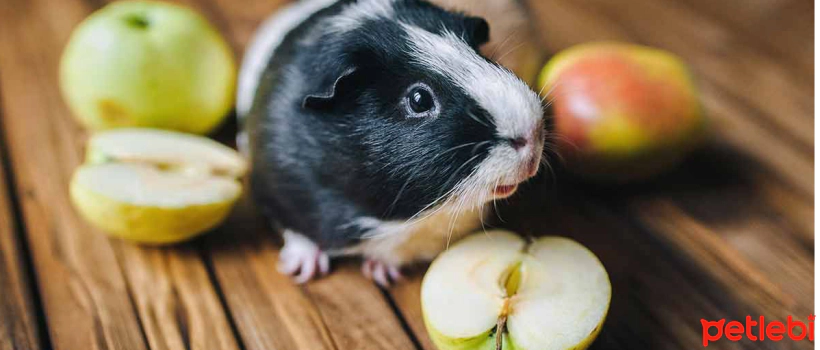
- Apple: A slice of apple can be safely offered to guinea pigs. Guinea pigs introduced to apples for the first time should be observed.
- Banana: Bananas are among the safe fruits for guinea pigs. Peeling the skin and giving only one slice is ideal.
- Forest Berries: Blackberries, blueberries, cranberries, strawberries, raspberries, and mulberries are among the safe fruits for guinea pigs. They can be given as treats, but the quantities should be limited.
- Citrus fruits: Citrus fruits such as mandarins, oranges, and grapefruits are nutritious fruits for guinea pigs. It is appropriate to offer them in small quantities after peeling.
- Grapes: One or two grapes will be a pleasant snack for guinea pigs. They should be given in small quantities due to their high sugar content.
- Kiwi: Kiwi is also among the fruits that can be given to guinea pigs. The quantity should be limited.
- Pineapple: A very thin slice of pineapple, with the core removed, will be a healthy and delicious treat for a guinea pig.
Fruits should not form the basis of a guinea pig's diet. Fruits can contain high amounts of sugar and can cause digestive problems such as diarrhea. It is extremely important to be careful.

Harmful and Unsuitable Foods for Guinea Pigs
Animal protein sources, avocado, onions, garlic, chocolate, fruit seeds, raw potatoes, chili peppers, and dairy products can be given as examples of foods harmful to guinea pigs.
The things to consider when planning a guinea pig's diet can be summarized as follows;
- Foods high in sugar should be avoided.
- Fruits should be offered in limited quantities.
- Fatty and high-carbohydrate foods should be avoided.
- Processed foods should absolutely not be included in the plan.
- Foods high in calcium are harmful to the urinary tract health of guinea pigs; such foods should be avoided.
- Salty foods should not be included in the diet of guinea pigs.
- Feeding plans should not be changed suddenly. They should be gradually introduced to foods they will consume for the first time.
Advertisement
Advertisement
Keep exploring
Continue reading

Small Pet Care
Runny Nose in Rabbits: Causes, Symptoms and Treatment Methods
Rabbits are generally known for their quiet and calm nature. Therefore, they often don't openly show their discomfort.
Read guide →
Small Pet Care
Is a Guinea Pig the Right Pet for You?
Guinea pig Adopting a pet has become increasingly popular among animal lovers in recent years.
Read guide →
Small Pet Care
Hamsterlar Meyve Yiyebilir mi?
Can hamsters eat fruit? This is one of the most frequently asked questions by both new adopters and experienced parents.
Read guide →
Small Pet Care
What Should Be Considered When Choosing Rabbit Food?
Rabbits are known for being cute and enjoyable creatures to care for. However, like all other pets, they have basic needs to live a healthy and…
Read guide →