Bichon Frisé Dog Breed Characteristics, Care and Feeding
If you are considering adopting a Bichon Frise, it's perfectly normal to have a few questions. After all, you've decided to embark on a long and personal journey, not a short adventure. At this point, although they are seen as easy to care for due to their small size, knowing about Bichon Frise's…

Advertisement
If you are considering adopting a Bichon Frise, it's perfectly normal to have a few questions. After all, you've decided to embark on a long and personal journey, not a short adventure. At this point, although they are seen as easy to care for due to their small size, knowing about Bichon Frise's adaptation to apartment living, shedding rate, and barking tendency can provide a more peaceful start.
The earliest traces of Bichons, whose real name is "Bichon à poil frisé" meaning curly-haired, are stated in The Spruce Pets source to have been seen in the Canary Islands in the 13th century. Sailors took these small dogs on their ships and kept them. Thus, this small breed with white fur became widespread in Europe. When their numbers decreased during the World Wars, serious efforts were made to preserve the breed, especially in France and Belgium. It was officially recognized by the AKC in 1973.
This article provides detailed information about Bichon Frisé characteristics, Bichon Frisé care, and Bichon Frisé nutrition.
A Glance at Bichon Frisé
Other Names: Bichon Frisé, Bichon à poil frisé
Character: Affectionate, friendly, playful
Weight: 3–6 kg
Shoulder Height: 23–28 cm
Eye Color: Black or dark brown
Coat Length: Medium-long, curly
Coat Colors: White; Cream shading in some individuals
Coat Patterns: White; shading on white
Shedding: Low
Hypoallergenic?: Often referred to as such. No dog is 100% hypoallergenic.
Care Requirements: Medium - High
Getting Along with Children: Generally good
Getting Along with Other Pets: Can adapt, early introduction is important
Enerji Seviyesi: Orta
Average Lifespan: 13–15 years
Origin: Canary Islands (Tenerife)
What Does a Bichon Frisé Dog Eat, How Should It Be Fed?
 One of the most important steps when living with a Bichon Frisé dog is to establish a clear feeding routine. Although classified as a small breed, the idea that simply eating less is enough doesn't always yield the right results. The goal for Bichon Frisé nutrition is to create a sustainable plan that maintains your dog's condition. The practical answer to the question "What does a Bichon Frisé eat?" is, as with all dogs, generally high-quality, complete, and balanced dog food. Dog foods suitable for small breeds are frequently preferred for this breed. When choosing food, suitability for the life stage is important. Puppy, adult, and senior stages bring different needs. Reading the food label makes it easier to find Bichon Frisé food recommendations. Suitability for the life stage is the first filter. Small breed foods are also a second filter. Some brands also offer breed-specific options. At this point, guidance from your veterinarian is valuable.
The practical answer to the question "What does a Bichon Frisé eat?" is, as with all dogs, generally high-quality, complete, and balanced dog food.
Dog foods suitable for small breeds are frequently preferred for this breed. When choosing food, adaptation to the life stage is important. Puppy, adult, and senior stages bring different needs.
When searching for Bichon Frisé food recommendations, reading the food label makes things easier. Suitability for the dog's life stage is the first filter. Small breed foods are the second filter. Some brands also offer breed-specific options. Veterinary guidance is valuable in this regard.
The safest starting point for Bichon Frisé's daily food intake is the feeding chart on the packaging. Portion sizes should then be adjusted according to your dog's weight. Body condition, activity level, and health status also affect the portion size. Excess calories can lead to weight gain.
If you use treats, it's easy to overlook the quantity. Pieces given during training are also included in the daily calorie count. Therefore, portion control is important in your Bichon Frisé treat and training plan. Treats making up a small portion of the daily calorie intake provides a more balanced approach.
In addition to dry food, canned dog food can be added to the feeding plan to meet taste expectations and support their health. The entire feeding plan should be developed in consultation with a veterinarian.
Common Diseases in Bichon Frisé Dogs
 Important:This section is for general information only and does not replace diagnosis and treatment. You should consult your veterinarian if you notice any symptoms.
Although Bichon Frisé dogs are generally considered robust, knowing some sensitivities can help them live a healthier life. The following diseases are emphasized in the sources to be approached carefully.
Patella Luksasyonu
Patella luxation is associated with the displacement of the kneecap. It is listed among the conditions that can be seen in Bichon Frisés in the Purina UK source. Stumbling, hopping, or briefly holding one's leg up during a walk may be noticed. If these findings recur, they need to be clarified with an examination.
Cilt Alerjisi
Itching, redness, paw licking, or recurring skin problems may occur. For dogs with allergies, the first goal at home is to regularly monitor triggers rather than trying them randomly. Questions such as when it started, where it increases, and whether it is seasonal are helpful in diagnosis. Treatment is planned according to the underlying cause and trigger.
Eye Diseases
One of the most frequently mentioned eye diseases in Bichon Frisés is cataracts. PetMD states that cataracts can develop in Bichon Frisés and affect vision.
If you notice changes such as cloudiness in the eyes, sensitivity to light, squinting, or bumping into the surroundings, you should not delay. Veterinary evaluation is recommended for treatment.
Dental Problems
Tarnish accumulation is more common in small breeds. According to PetMD, Bichon Frisé can be prone to dental disease; plaque and tartar buildup can lead to bad breath, pain, and tooth loss.
If symptoms such as decreased appetite, unilateral chewing, or increased bad breath are noticed, an oral check should not be neglected. The healthiest approach is to establish a regular brushing habit at home and not to neglect professional check-ups.
Kulak Enfeksiyonu
Signs such as bad odor in the ear, head shaking, ear scratching, and redness may raise suspicion of ear infection in dogs. The aim of ear cleaning is not to irritate, but to make control a routine practice. It is safer to get guidance from your veterinarian for the appropriate ear cleaning product and cleaning frequency.
Bladder Stones
Signs such as changes in toilet habits, frequent urination, straining, or changes in urine color are important. It is stated that bladder stones can be seen in Bichons and can be managed with surgery or a special diet planned by the veterinarian depending on the symptoms.
Physical Characteristics and Appearance of the Bichon Frisé Dog
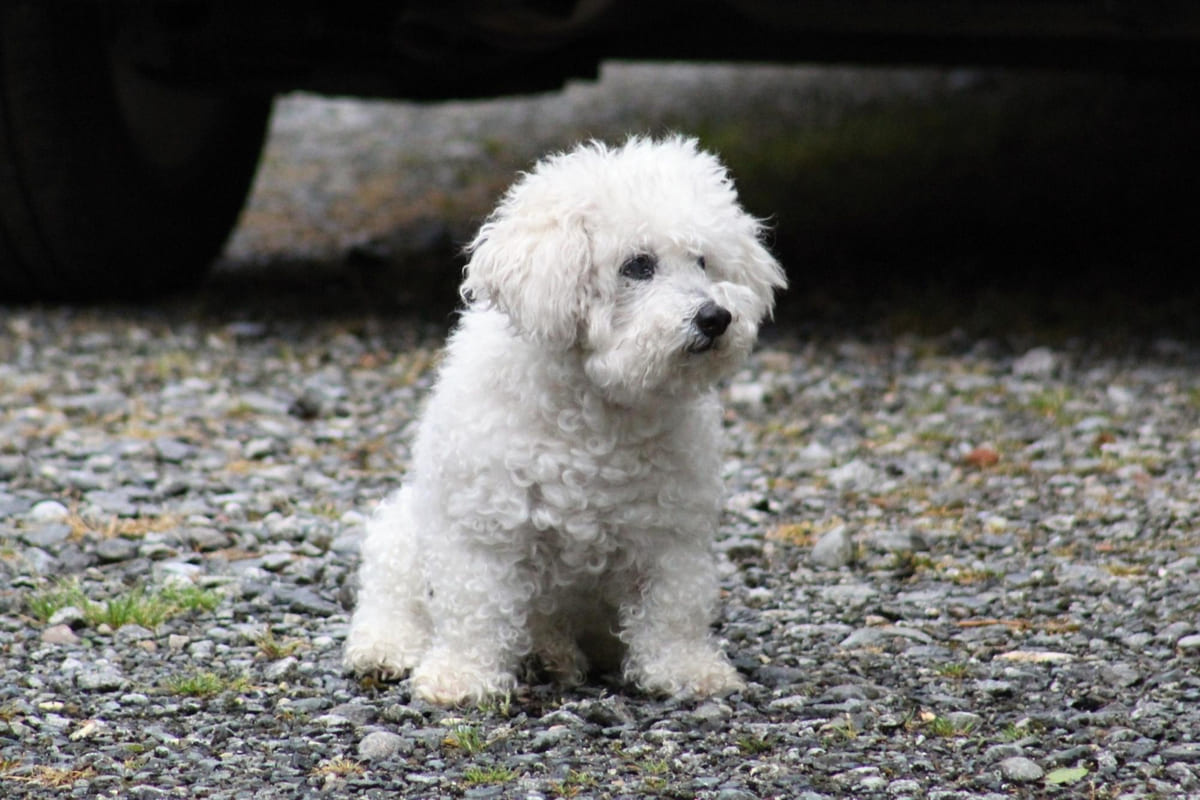
 The distinguishing feature of the Bichon Frisé is its compact body and curly, voluminous fur. The fluffy appearance is a natural result of its coat structure.
The prominent physical characteristics of Bichons can be summarized as follows:
- It belongs to the small breed dog class. Shoulder height is generally between 23–28 cm.
- The head structure appears almost round, and the facial expression is lively. The nose color is in shades of black.
- Their eyes are dark, bright, and have an attentive expression.
- The ears are droopy, with longer hairs visible above the ears.
- The tail is bushy and often carried over the back.
- The legs are short to medium length, with small, compact paws.
- Their coat, mostly white, is double-layered, with a curly top layer. Coat length is considered medium to long.
Bichon Frisé Dog Character
 The Bichon Frisé is described as a companion who loves close contact. They enjoy playing and socializing. They are curious to meet new people. Their potential to get along well with children is often emphasized. They can also be friendly towards other dogs.
Active during the day. Likes to relax on the sofa when he/she has burned off energy. May bark as a warning to unfamiliar noises. Early socialization and loving training can help control barking.
Key character traits:
- Can adapt to homes with frequent visitors, has a social nature.
- His/her friendly and gentle temperament is often described.
- Has a noticeable tendency to play and learn tricks. Is a master at brightening the atmosphere.
- May bark as a warning, especially when hearing unfamiliar noises.
- They tolerate the reward-based training approach well, increasing their motivation.
- They are devoted to their family and are not very comfortable being left alone for long periods.
Grooming Needs of Bichon Frisé Dogs
 Bichon Frisé grooming is most evident in the coat routine. This breed's "fluffy" appearance requires consistent care. Once a routine is established, grooming progresses more easily. Brushing is the fundamental step in coat care. Curly hair can easily tangle. When tangles grow, they can pull on the skin and reduce comfort. Therefore, making brushing a routine is helpful.
The white fur of Bichon Frisé dogs does not hide dirt, so the need for cleaning becomes apparent more quickly. The frequency of bathing is determined by lifestyle. Frequent bathing can dry out the skin in some dogs.
Bichon Frisé grooming may become necessary at regular intervals. When the hair around the face grows long, it can irritate the eyes. The paw pads are also prone to tangling. Professional grooming may be considered.
Eye cleaning should be considered as part of the grooming routine for Bichon Frisés. Discharge may occur in the tear ducts. Specially formulated dog eye care products can be used during eye cleaning. If there is persistent discharge, a veterinary evaluation is important.
Ear cleaning should also be included in the routine. The drooping ear structure can retain moisture. If you notice bad odor, redness, or scratching, a check-up is necessary. It is safer to clarify the cleaning product and frequency with your veterinarian.
Oral care is critical. Tartar can accumulate more quickly in small breeds. Brushing teeth at home helps reduce bad breath. Regular checkups make it easier to catch problems early. Nail trimming and paw control also affect comfort. Overgrown nails can impair walking and make it difficult to grip on slippery surfaces. A short checkup makes a difference, even indoors. Short walks that become routine, basic obedience games, and mini-activities with interactive toys at home are more effective for this breed than long runs. Regular exercise and interaction should also be considered part of their care. Bichon Frisé Dog Training Training progresses better with short but regular sessions. This breed is prone to bonding with humans, and a reward-based approach generally yields quick results. Clear rules, consistency, and calm repetitions make the process easier. The main goals are to establish commands like "sit, wait, come" and to restructure the daily routine from scratch.
Nail trimming and paw control also affect comfort. Overgrown nails can impair gait and make it difficult to grip on slippery surfaces. A short check makes a difference, even indoors.
For this breed, short, routine walks, basic obedience games, and mini-activities with interactive toys at home are more effective than long runs. Regular exercise and interaction should also be considered part of their care.
Bichon Frisé Dog Training
 Training progresses better with short but regular sessions. This breed is prone to bonding with people, and a reward-based approach generally yields quick results. Clear rules, consistency, and calm repetition facilitate the process. The main goals are to establish commands such as "sit, wait, come" and to restructure the daily routine from scratch.
Toilet training may take a little more time in small breeds; patience is essential. Early socialization increases adaptation to apartment life. If a tendency to bark is observed, meeting their energy needs and managing triggers becomes more functional. Alone-time training should also be progressed gradually, starting with short separations.
Bichon Frisé Sahiplenirken Bilinmesi Gerekenler
- Requires regular grooming. A brushing routine should be established and a periodic trimming plan should be made.
- Dirt and marks around the eyes are more easily noticed in white fur; be prepared for eye area care.
- It is a people-oriented breed. The time spent alone should be gradually increased, and separation anxiety should be addressed.
- It can adapt to apartment living. Energy should be balanced with daily walks and play.
- Warning barking may occur. An early boundary-setting training approach is beneficial.
- The socialization process should begin early. It needs controlled acclimatization to different people, sounds, and environments.
- It has the potential to get along with children and other pets; the introduction process should be supervised.
- Eye, ear, teeth, skin, and kneecap sensitivities may arise. Veterinary check-up routines should not be neglected.
- Its lifespan can be extended with good care. Those who adopt them need to be willing to commit to a long-term friendship.
Frequently Asked Questions About Bichon Frisé

We've covered the basics about Bichons. Now it's time to answer the most frequently asked questions about them…
Is a Bichon Frisé a good family dog?
The Bichon Frisé character is generally affectionate and people-oriented. This structure supports adaptation to family life. However, boundaries and routines should be clearly defined from day one.
Are Bichon Frisé dogs intelligent?
Bichon Frisé training progresses well in most homes. With short, regular sessions, they can learn commands more easily. Rewards and praise increase motivation. The amount of rewards should not exceed 10% of daily calories.
Can a Bichon Frisé dog live in an apartment?
The answer to that question is directly related to the routine established. Yes, they normally adapt successfully to apartment living. However, releasing their energy is a prerequisite. If their need for daily walks and play is met, they remain more balanced indoors. Early training is beneficial for barking management.
Do Bichon Frisé dogs bark a lot?
Warning barks may be observed. Door noises and unfamiliar sounds can be triggers. Barking may become more noticeable when activity decreases.
Do Bichon Frisé get along well with children?
They have a high potential to get along with children. However, interaction should be supervised. The child should be taught appropriate contact and boundaries.
How long do Bichon Frisé live?
The lifespan of Bichon Frisé is given as 13–15 years in sources. Regular care and check-ups make a difference in the long term. Nutrition and weight management are also important.
Are Bichon Frisé dogs hypoallergenic?
Bichons are among the breeds that can be adopted by those with dog allergies. In other words, they are considered hypoallergenic. However, it should be known: No dog is 100% hypoallergenic.
Do Bichon Frisé dogs shed a lot of hair?
They don't shed a lot of hair; on the contrary, it can be said that they shed very little. Nevertheless, their fur can easily tangle. Regular brushing can reduce the risk of tangling.
Do Bichon Frisés bite?
Bichon Frisés are generally an affectionate and social breed, but biting can still occur. They may react when fear and stress increase, especially if they feel cornered. Pain, sudden startle, or discomfort can trigger biting. Incorrect play habits also exacerbate the situation, especially if hand biting is allowed. Therefore, early socialization and basic training are important, clarifying boundaries and increasing confidence. There should be no pulling or squeezing in interaction with children; contact should always be controlled. Is a Bichon Frisé dog very expensive? The cost of Bichon Frisé care is most affected by grooming and coat care routines. Dietary preferences and veterinary checkups also shape the budget. Planning ahead reduces surprises. Can a Bichon Frisé dog be kept at home? The Bichon Frisé is a breed suitable for home care. They will be happy in a home environment, but for the process to go smoothly, they need regular short walks and playtime to expend their energy, routine brushing and periodic grooming to prevent matting, and they need to learn gradually if they will be left alone for long periods. Adaptation will be faster when a clear toilet routine and a safe space within the house are established.
Incorrect play habits also exacerbate the situation, especially if hand biting is allowed. Therefore, early socialization and basic training are important, clarifying boundaries and increasing confidence. There should be no pulling or squeezing when interacting with children; contact should always be controlled.
Is a Bichon Frisé dog very expensive?
The cost of Bichon Frisé care is most affected by grooming and coat care routines. Dietary preferences and veterinary checkups also shape the budget. If you proceed with a plan, surprises will decrease.
Can a Bichon Frisé dog be kept indoors?
The Bichon Frisé is a breed suitable for indoor care. They are happy in home life, but for the process to go smoothly, they need regular short walks and playtime to expend their energy, routine brushing and periodic grooming to prevent their fur from tangling, and if they will be left alone for long periods, they need to learn this gradually. Adaptation speeds up when a clear toilet routine and a safe area within the house are established.
Kaynaklar:
https://www.akc.org/dog-breeds/bichon-Frisé/
https://www.petmd.com/dog/breeds/bichon-Frisé
https://www.purina.co.uk/find-a-pet/dog-breeds/bichon-Frisé
https://www.thesprucepets.com/bichon-Frisé-dog-breed-profile-1117940
https://www.chewy.com/education/dog-breeds/bichon-Frisé
https://www.webmd.com/pets/dogs/what-to-know-about-bichon-Frisés
https://bowwowinsurance.com.au/dogs/dog-breeds/bichon-Frisé/
Advertisement
Advertisement
Keep exploring
Continue reading

Dog Nutrition
Can Puppies Eat Salmon? Differences Between Raw, Cooked, and Salmon Food
Puppies being given small amounts of well-cooked, plain, and boneless salmon They can eat it. However, giving raw salmon is not recommended.
Read guide →
Dog Nutrition
How Should Neutered Dogs Be Fed? Food Selection and Weight Control
After neutering, your dog's appetite, activity level, and daily energy needs may change. Continuing to feed the same amount of food may lead to…
Read guide →
Dog Nutrition
What is the purpose of L-Carnitine in dog food? What is its effect on weight control?
L-carnitine, which is frequently seen on the labels of weight-control dog foods, may seem like an ordinary ingredient at first glance.
Read guide →
Dog Nutrition
Can I Feed My Large Breed Dog Small Breed Dog Food?
The question, "Can I feed a large breed dog small breed food?" often arises from a practical need.
Read guide →