Can Goat Milk Be Given to Cats? Controlled Consumption Methods
Goat milk is one of the foods that cat owners have been frequently curious about lately. Although it is seen as a safer alternative due to some structural differences compared to cow's milk, the relationship between cats and milk is more complex than it seems.
Advertisement
Goat milk is one of the foods that cat owners have been frequently curious about lately. Although it is seen as a safer alternative due to some structural differences compared to cow's milk, the relationship between cats and milk is more complex than it seems. Therefore, before giving goat milk to cats, it is necessary to evaluate its benefits, limitations, and possible risks together.
Warning: This content is for general information purposes only. Every cat has different digestive tolerance, age, weight, and health status. If your cat has persistent vomiting, diarrhea, lethargy, loss of appetite, or weight loss, consult your veterinarian for a definitive evaluation.
Can Cats Drink Goat Milk?

Some healthy adult cats can tolerate small amounts of goat milk. The determining factor is the cat's individual digestive sensitivity. As underlined above, some cats may comfortably consume a small portion without problems, while others may experience symptoms such as soft stools, gas, or vomiting after drinking the same amount of goat milk directly.
The healthiest approach is to view goat milk not as a nutritional necessity, but only as a small supplement that can be offered occasionally to suitable cats. The primary source of fluids for cats should always be clean, fresh water.
How Much Goat Milk Should Be Given to Cats?
If you are going to try goat milk, the secret is to keep the portion small and carefully observe the cat's reaction. For the first attempt, not exceeding a few teaspoons provides a safer start. Afterwards, symptoms such as stool consistency, gas, bloating, vomiting, changes in appetite, or restlessness should be monitored for at least 24 hours. If any signs of digestive problems are observed, consumption should be stopped, and if the symptoms persist, a veterinarian should be consulted.
Beware of Lactose Intolerance in Cats
The most fundamental issue regarding cats consuming dairy products is lactose intolerance, that is, the inability to adequately digest milk sugar. While kittens possess the enzyme that breaks down lactose in their mother's milk, the activity of this enzyme decreases in many cats after weaning. Therefore, many adult cats may experience various digestive problems after consuming milk and dairy products. The problem is not limited to lactose. In some cats, the condition is a milk protein allergy independent of milk sugar. In this case, the immune system may react to casein or serum albumin, which are the main milk proteins. In this case, digestive symptoms may be accompanied by skin manifestations such as itching, or pruritus, and hair loss. Differentiating between lactose intolerance and milk protein allergy is critical to determining the correct approach. What are the Differences Between Goat Milk and Cow Milk? Goat milk differs from cow milk in terms of its protein and fat structure. The fat globules are smaller, and the structure of casein, the main protein in milk, is different. These characteristics are associated with some cats being able to tolerate goat milk more easily.
The problem is not limited to lactose. In some cats, the condition is a milk protein allergy independent of milk sugar. In this case, the immune system may react to casein or serum albumin, which are the main milk proteins. In this case, digestive symptoms may be accompanied by skin manifestations such as itching, or pruritus, and hair loss. Differentiating between lactose intolerance and milk protein allergy is critical to determining the correct approach.
What are the Differences Between Goat Milk and Cow Milk?

Goat milk differs from cow's milk in its protein and fat structure. The fat globules are smaller, and the structure of casein, the main protein in milk, is different. These characteristics are associated with some cats being able to tolerate goat milk more easily.
It is true that goat milk has less lactose, but the difference is not as significant as one might think: Cow's milk contains an average of 4.7% lactose, while goat milk contains around 4.1%. For an adult cat with lactase enzyme deficiency, this small difference is clinically almost insignificant.
These differences do not make goat milk completely risk-free. The idea that "Cow's milk bothers my cat, so goat milk must be better" is a misconception that requires caution, especially in cats with allergies.
A cat allergic to cow's milk protein is likely to react to goat milk with vomiting, itching, or hair loss. This response is independent of lactose, and changing the type of milk will not solve the problem.
Therefore, goat milk alone is not a balanced meal, but rather a minor addition to the diet for cats that can tolerate it. Nutritional balance is established with complete and balanced foods appropriate for age and health condition.
Is Goat Milk Safe? Basic Rules to Know
The most critical rule regarding the consumption of goat milk by cats is that goat milk should never be used as a substitute for main food, mother's milk, kitten milk powder, or water.
The form of the milk is crucial. Raw goat milk should not be given to cats. Raw milk carries a risk of pathogens such as Salmonella, Campylobacter, Listeria monocytogenes, and Brucella. These pathogens are zoonotic microorganisms that can cause acute gastroenteritis, or sudden inflammation of the stomach and intestines, and can be transmitted from animals to humans. Salmonella is a good example of this. The risk of salmonella is not only associated with raw milk. Raw eggs, raw or undercooked meat products, foods not prepared under hygienic conditions, and rarely contaminated pet food can also be sources of infection. Therefore, when discussing goat milk, the main issue is not whether the milk is natural, but what, in what form, and how much the cat consumes. When it is desired that cats benefit from the potential advantages of goat milk, much safer methods than offering goat milk directly in a bowl can be preferred.
Salmonella is a good example of this. The risk of salmonella is not only associated with raw milk. Raw eggs, raw or undercooked meat products, foods not prepared under hygienic conditions, and rarely contaminated food can also be sources of infection. Therefore, when discussing goat milk, the main issue is not whether the milk is natural, but what, in what form, and how much the cat consumes.
When it is desired that cats benefit from the potential advantages of goat milk, much safer methods than directly offering goat milk in a bowl can be preferred.
Goat Milk Wet Cat Foods: A More Controlled, Delicious, and Nutritious Option
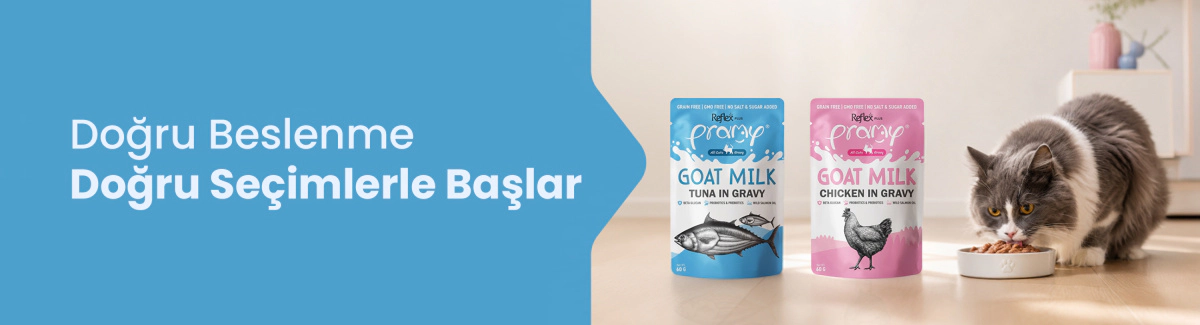
One way to offer the taste of goat milk in a more controlled manner is to choose products formulated for cats. When you give milk directly, it can be difficult to balance the portion, calories, and amount consumed. This situation, especially when repeated frequently, can lead to uncontrolled feeding, disruption of daily calorie balance, and digestive problems in some cats.
Goat milk wet foods and sauced products prepared for cats offer a more predictable use in terms of portion, consistency, and content.
Goat milk wet cat foods can be prepared with animal protein sources such as chicken and fish. Thanks to their sauced structure, they can be an easier alternative to consume, especially for cats who like wet food.
Depending on the product formula, grain-free options, options without added salt and sugar, or alternatives enriched with additional nutrients such as beta-glucan, probiotics, prebiotics, and salmon oil may be available. Since these components vary from product to product, it is necessary to check the ingredient list and feeding instructions when making a selection.
The main point to consider here is the place of goat milk products in your cat's daily diet. Some products are offered as complete meals, while others may be supplementary foods or snacks. Without making this distinction, supplementary products given with good intentions can replace main meals or increase your cat's daily energy intake without being noticed.
Instead of giving goat milk directly, choosing from goat milk wet food options suitable for your cat's age, weight, taste preferences, and any diet recommended by your veterinarian can provide a more balanced approach.
Frequently Asked Questions

Can cats drink goat milk every day?
No. Even in cats that tolerate it, it is not correct to make it a daily habit. It should be offered occasionally and in small portions, monitoring the digestive response. It should also be remembered that goat milk should not be given raw.
Does goat milk really contain less lactose?
On average, it contains slightly less. Cow's milk contains approximately 4.7% lactose, while goat's milk contains around 4.1%. This difference is clinically insignificant for a sensitive cat and may trigger similar digestive symptoms.
Can a cat allergic to cow's milk drink goat milk?
Most likely no. Since cow and goat milk proteins are very similar, a cat allergic to cow milk protein may also react to goat milk. This is a lactose-independent immune response; changing the type of milk is not a solution.
Can goat milk be given to kittens?
For nursing kittens, the best option is mother's milk or kitten milk powder. Goat milk alone does not meet the needs of a kitten during its growth period.
Does goat milk cause diarrhea in cats?
Cats sensitive to lactose or dairy products may experience diarrhea, gas, bloating, or vomiting. Since diarrhea and vomiting can lead to dehydration, consumption should be stopped and a veterinarian should be consulted if symptoms persist.
Is goat milk wet food or just goat milk more suitable for cats?
Wet food prepared with goat milk is more practical in terms of portion and ingredient control. Giving just milk is more uncertain in terms of quantity and digestive sensitivity.
Can raw goat milk be given to cats?
No. Raw milk carries a risk of pathogens such as Salmonella and Listeria. If milk is to be given, very small amounts of plain, additive-free, and pasteurized products should be preferred, taking the cat's health condition into consideration.
Advertisement
Advertisement
Keep exploring
Continue reading

Cat Lifestyle & Guides
What is Cat Soup? Is it Beneficial for Cats?
If your cat rarely visits its water bowl, is sometimes reluctant to eat dry food, or shows interest in different textures, liquid products may catch…
Read guide →
Cat Lifestyle & Guides
How to Give Rewards and Snacks to a Neutered Kitten?
The Feline Veterinary Medical Association supports neutering kittens until they are five months old.
Read guide →
Cat Lifestyle & Guides
Benefits of Colostrum for Cats and Dogs
Colostrum is the first milk produced by mother cats and dogs after birth. Thanks to its antibodies and high nutrient content, it responds to the…
Read guide →
Cat Lifestyle & Guides
Why is Gut Health Important in Cats?
In cats, bowel health is linked to many areas, from digestive regularity and immune system-related processes to energy levels and daily comfort.
Read guide →