Do Cats Really Sense Earthquakes? Discover the Scientific Facts!
For almost centuries, there has been a widespread belief that animals sense earthquakes before humans. When it comes to cats, which are sensitive to even the slightest movement and sometimes focus on sounds we cannot hear and points we cannot see, the question "Do cats sense earthquakes?

Advertisement
For almost centuries, there has been a widespread belief that animals sense earthquakes before humans. When it comes to cats, which are sensitive to even the slightest movement and sometimes focus on sounds we cannot hear and points we cannot see, the question "Do cats sense earthquakes?" frequently arises.
1. Do Cats Really Sense Earthquakes?
Earthquake detection is extremely important to minimize loss of life. However, this is not very possible with today's technology. On the other hand, it is thought that cats can sense earthquakes well in advance. Moreover, many results have been obtained as a result of various studies that prove the accuracy of this idea. Research conducted since the beginning of the 1900s shows that not only cats, but also many animals, from elephants to silkworms, sense this situation before an earthquake occurs.
Observable behavioral changes occur in living things that sense earthquakes. These changes are noticed in some animals a few seconds before the earthquake, and in others days before the earthquake.
Although cats can sense earthquakes in advance, how this happens is still not fully understood. There are many theories discussed on this subject. Most of these are based on anecdotal evidence.

2. What are the Effects of Earthquakes on Cats?
Earthquakes have quite different effects on cats. These effects vary depending on the intensity of the earthquake and the region where it occurs.
Like all animals, cats can be injured or lose their lives due to falling debris or collapsing structures during an earthquake. In addition, earthquakes create psychological as well as physical effects on cats. Earthquakes are a very stressful situation for cats. Cats usually become anxious and fearful during an earthquake.
Strong earthquakes can cause disorientation in cats, especially if they are outside during the earthquake. Cats that become confused or lose their way may have difficulty finding their way back home.
If you live in an earthquake zone, it is extremely important to prepare your cat for this situation. If your cat is indoors during an earthquake, you should try to create a safe space for it to hide, such as under a sturdy piece of furniture, and ensure it has access to plenty of food and water. If you have an earthquake kit, you can add extra water, some dry food, and a few treats to help calm your cat.
3. What are the Pre-Earthquake Behaviors of Cats?
There are many observations of cats exhibiting unusual behaviors before earthquakes. However, it is important to consider that not all cats will behave this way, and researchers still don't understand much about these behavioral changes. Common pre-earthquake behavioral changes in cats include making more noise than usual, moving quickly, hiding, and exhibiting unusual behaviors.
Increased vocalization: Some cats may meow more than usual or make other howling-like sounds before an earthquake.
Agitation or restlessness: Cats may be restless or agitated before an earthquake, constantly running around the house or moving more than usual.
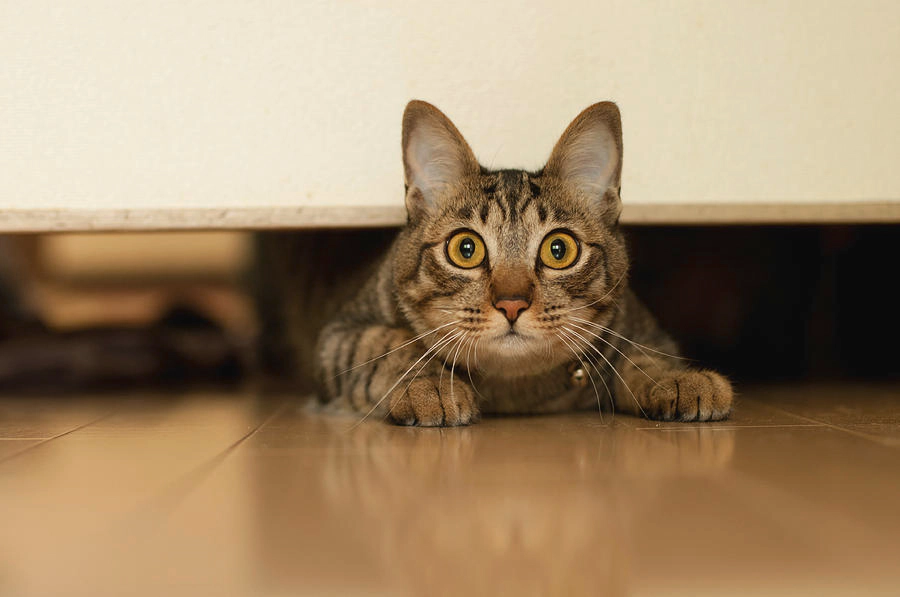
Hiding: Some cats may hide in unusual places before an earthquake, such as under the bed or in a cupboard.
Unusual behavior: Cats may exhibit unusual behaviors before an earthquake, such as refusing to eat or drink, demanding more attention, or becoming more aggressive or territorial.

4. What Do Cats Do During an Earthquake? Cats exhibit different behaviors during earthquakes. However, these behaviors are not the same for every cat. They can also vary depending on the magnitude or epicenter of the earthquake. Generally, as the intensity of the earthquake increases or as the cat gets closer to the epicenter, the behaviors tend to become more intense. Behaviors observed in cats during an earthquake are similar to those observed beforehand. In general, cats may try to hide, lose their balance, become frightened, or exhibit some unusual behaviors during an earthquake. Many cats will instinctively seek shelter during an earthquake. If your cat is indoors, it may try to hide under a sturdy piece of furniture such as a sofa or bed, or in a small space such as a cupboard. If your cat is outdoors during the earthquake, it may try to take shelter under a bush, a tree, or other low vegetation. Disorientation may occur, especially if the earthquake is severe or if the cat is outdoors during the earthquake. This situation can cause cats to become confused or disoriented, making it difficult for them to find their way back home. Many cats that are outside during an earthquake get lost because they cannot find their way home due to confusion. Some cats may be anxious or frightened during and after an earthquake. They may meow excessively or constantly run around. Some cats may even show symptoms of post-traumatic stress disorder after experiencing an earthquake. 5. How Do Cats Behave After an Earthquake? After an earthquake, cats may experience temporary or permanent behavioral changes. Even after the shaking stops, cats may continue to feel anxious or frightened. They may meow excessively, hide, or show other signs of distress.
Cats exhibit different behaviors during earthquakes. However, these behaviors are not the same for every cat. They can also vary depending on the magnitude or epicenter of the earthquake. Generally, as the intensity of the earthquake increases or as the cat gets closer to the epicenter, the behaviors tend to become more intense. Behaviors observed in cats during an earthquake are similar to those observed beforehand. In general, cats may try to hide, lose their balance, become frightened, or exhibit some unusual behaviors during an earthquake.
Many cats will instinctively seek shelter during an earthquake. If your cat is indoors, it may try to hide under a sturdy piece of furniture such as a sofa or bed, or in a small space such as a cupboard. If your cat is outdoors during the earthquake, it may try to take shelter under a bush, a tree, or other low vegetation.
Disorientation may occur, especially if the earthquake is severe or if the cat is outdoors during the earthquake. This situation can cause cats to become confused or disoriented, making it difficult for them to find their way back home. Many cats that are outside during an earthquake get lost because they cannot find their way home due to confusion.
Some cats may be anxious or frightened during and after an earthquake. They may meow excessively or constantly run around. Some cats may even show symptoms of post-traumatic stress disorder after experiencing an earthquake.
5. How Do Cats Behave After an Earthquake?
Cats may experience temporary or permanent behavioral changes after an earthquake. Even after the shaking stops, cats may continue to feel anxious or frightened. They may meow excessively, hide, or show other signs of distress.
Some cats may be more alert or vigilant after an earthquake, as if they are on alert for another earthquake. In such cases, you may see them react by jumping at the slightest movement or sound. Some cats may also experience loss of appetite or refuse to eat after an earthquake. This may be due to stress or anxiety.
On the other hand, you may also encounter cats that are more affectionate after an earthquake, wanting their owners to comfort them and make them feel safe. They may constantly rub against their owners' legs and climb into their laps to be petted.
6. How Can Cats Be Protected from Earthquakes?
It is possible to protect cats from earthquakes. With precautions taken before, during, and after an earthquake, you can ensure that your cat survives with the least possible damage. Make sure your cat has a safe place to hide during an earthquake. For example, places where your cat can easily enter, such as boxes or under furniture, can provide both safety and a sense of security. You can also create an emergency kit for your cat containing food, water, and any necessary medication.
It is important to remain calm and approach your cat calmly during an earthquake. If you are in an enclosed space with your cat during an earthquake, you must ensure that it is in a safe place. However, if your cat is hiding, do not try to remove it from its hiding place. Because your cat is stressed, it may attack you if you try to remove it.
7. How to Approach Cats When an Earthquake is Felt?
Cats can be very frightened during an earthquake. Therefore, it is important to help them calm down. Since your cat will take cues from you, you should first try to remain calm and composed, and speak to it in a soothing tone of voice.
Cats may seek a place to hide during an earthquake, so you should ensure they have access to a safe place to hide. This could be under a sturdy piece of furniture or in a carrier. If your cat is already hiding, do not try to get it out, as this may cause it to become even more frightened.

8. Scientific Studies on Cats' Sensing of Earthquakes
Although the relevant mechanisms are still not fully understood, some scientific studies have suggested that cats may sense earthquakes before they occur.
A study published in the journal Physics and Chemistry of the Earth in 2009 examined the behavior of animals in the days leading up to the L'Aquila earthquake in Italy in 2009. The study revealed that many animals, including cats, were restless in the days leading up to the earthquake and exhibited unusual behaviors such as making more noise than usual. Another study published in 2012 in the Journal of Applied Animal Welfare Science examined the behavior of cats before and after the 2011 earthquake and tsunami in Japan. The study revealed that many cats exhibited unusual behaviors in the days leading up to the earthquake, such as hiding, excessive meowing, and being more aggressive or seeking more attention than usual. A study published in the journal Animals in 2020 examined the behavior of cats and dogs before and after the 2019 Ridgecrest earthquake in California. The study revealed that many cats exhibited unusual behaviors in the days leading up to the earthquake, such as hiding, making noises, and being more aggressive than usual.
Another study published in 2012 in the Journal of Applied Animal Welfare Science examined the behavior of cats before and after the 2011 earthquake and tsunami in Japan. The study revealed that many cats exhibited unusual behaviors in the days before the earthquake, such as hiding, excessive meowing, and being more aggressive or demanding more attention than usual.
A study published in the journal Animals in 2020 examined the behavior of cats and dogs before and after the 2019 Ridgecrest earthquake in California. The study revealed that many cats exhibited unusual behaviors in the days before the earthquake, such as hiding, vocalizing, and being more aggressive than usual.
9. Misleading Information and Myths About Earthquake Sensing
There are many misconceptions and myths about cats and other pets regarding earthquakes. The most common is that cats can predict earthquakes with incredible accuracy. While it's thought that cats can sense earthquakes beforehand, this is not incredibly accurate.
Another common myth about cats and earthquakes is that they constantly run away during earthquakes. While some may try to run away, most cats hide and exhibit other behaviors. The behaviors of cats during earthquakes vary.
Another misleading piece of information is that cats can survive earthquakes better than humans. While cats are more agile than humans and can navigate better through rubble, they are vulnerable to injury and death during earthquakes. Like humans, cats can be injured or killed by falling objects, collapsing buildings, or other hazards.
10. What Owners Should Know About How Cats Sense Earthquakes
It is not possible to speak definitively about the behaviors cats will exhibit before, during, or after an earthquake. Cats' reactions to earthquakes can vary greatly. Therefore, it is not possible to talk about a single approach.
You know best how to approach your cat during or after an earthquake. Even if your cat does not have visible injuries, it is recommended to take your cat to a veterinarian for a general check-up after the earthquake. Your cat may suffer some injuries while running around trying to hide during an earthquake.
Advertisement
Advertisement
Keep exploring
Continue reading

Cat Lifestyle & Guides
What is Cat Soup? Is it Beneficial for Cats?
If your cat rarely visits its water bowl, is sometimes reluctant to eat dry food, or shows interest in different textures, liquid products may catch…
Read guide →
Cat Lifestyle & Guides
How to Give Rewards and Snacks to a Neutered Kitten?
The Feline Veterinary Medical Association supports neutering kittens until they are five months old.
Read guide →
Cat Lifestyle & Guides
Benefits of Colostrum for Cats and Dogs
Colostrum is the first milk produced by mother cats and dogs after birth. Thanks to its antibodies and high nutrient content, it responds to the…
Read guide →
Cat Lifestyle & Guides
Why is Gut Health Important in Cats?
In cats, bowel health is linked to many areas, from digestive regularity and immune system-related processes to energy levels and daily comfort.
Read guide →