Do Cats Suffer from Heat? Summer Heat and Its Effects on Cats
While the answer to the question "Do cats like the heat?" is yes, the amount of heat and the duration of exposure are important variables for the protection of cats' health. In these days when the summer months are rapidly approaching, are cats affected by the heat?
Advertisement
While the answer to the question "Do cats like the heat?" is yes, the amount of heat and the duration of exposure are important variables for the protection of cats' health. In these days when the summer months are rapidly approaching, are cats affected by the heat? What precautions should be taken against the heat? We wanted to share the answers to important questions like these with you, …
Do Cats Get Affected by Heat?
With the summer months, both the air temperature increases and the humidity reaches an unbearable level in some regions. Like humans and other animals, cats may need special care and attention during these periods. Cats that go outside on sunny days and spend a long time outdoors may experience various health problems due to excessive heat. Heatstroke in cats can become a major problem as a result of their inability to cool themselves down when exposed to high temperatures and humidity. In case of heatstroke, which is classified as an emergency medical situation, it is necessary to contact a veterinarian without delay.
Symptoms of Heatstroke in Cats
While heatstroke in cats living in homes is not a common occurrence, it is not impossible either. Cats that stay on balconies, live in gardens, and are exposed to high temperatures may show various symptoms during extreme heat. One of the most important indicators that they are uncomfortable from the heat is that they go to the coolest parts of the house to cool themselves down. This is also the main reason why they spend time in bathrooms and seek refuge in the shade in the house during the summer months. Cats may become more irritable than usual in the heat and may start to breathe frequently. It can also be stated that our little friends, whose paws sweat, have an increase in rectal temperature when they are uncomfortable from the heat. All these symptoms indicate that they are affected by the heat, but they are easily manageable. If the temperature gradually increases, the severity of the symptoms increases proportionally.
Symptoms of heatstroke in cats can be listed as vomiting, a significant increase in sleep duration, lethargy, redness of the tongue and mouth, increased heart rate, decreased urine output, muscle twitching, drooling, restlessness, difficulty breathing, dizziness, and rectal temperature exceeding 40 degrees. Failure to seek medical assistance at this point can lead to an increase in body temperature, damage to internal organs, and unfortunately, coma. Caution! When symptoms of heatstroke are observed in cats, they should be removed from the hot environment, ice should NOT be added to their water, their fur should be wiped with a damp cloth, and a veterinarian should be consulted immediately. Factors Increasing the Risk of Heatstroke in Cats Although hot and humid weather is uncomfortable for all cats, some cats may react more dramatically to the heat. It is known that obese cats, those with respiratory diseases, those with flat noses, those with cardiovascular diseases, those with neurological problems, older cats, thick and long-haired breeds, and overly active cats have a higher risk of heatstroke than other cats.
Attention! If symptoms of heatstroke are observed in cats, they should be removed from the hot environment, ice should NOT be added to their water, their fur should be wiped with a damp cloth, and a veterinarian should be consulted immediately.
Factors Increasing the Risk of Heatstroke in Cats
Although hot and humid weather is uncomfortable for all cats, some cats may react more dramatically to the heat. It is known that obese cats, those with respiratory illnesses, flat noses, cardiovascular diseases, neurological problems, older cats, thick and long-haired breeds, and hyperactive cats are at a higher risk of heatstroke than other cats.
How to Prevent Heatstroke in Cats? How to Protect Cats from Summer Heat?
Simple but functional measures can be taken to protect cats from the effects of heat and to ensure they are more comfortable and healthy.
1. Dehydration Should Be Prevented
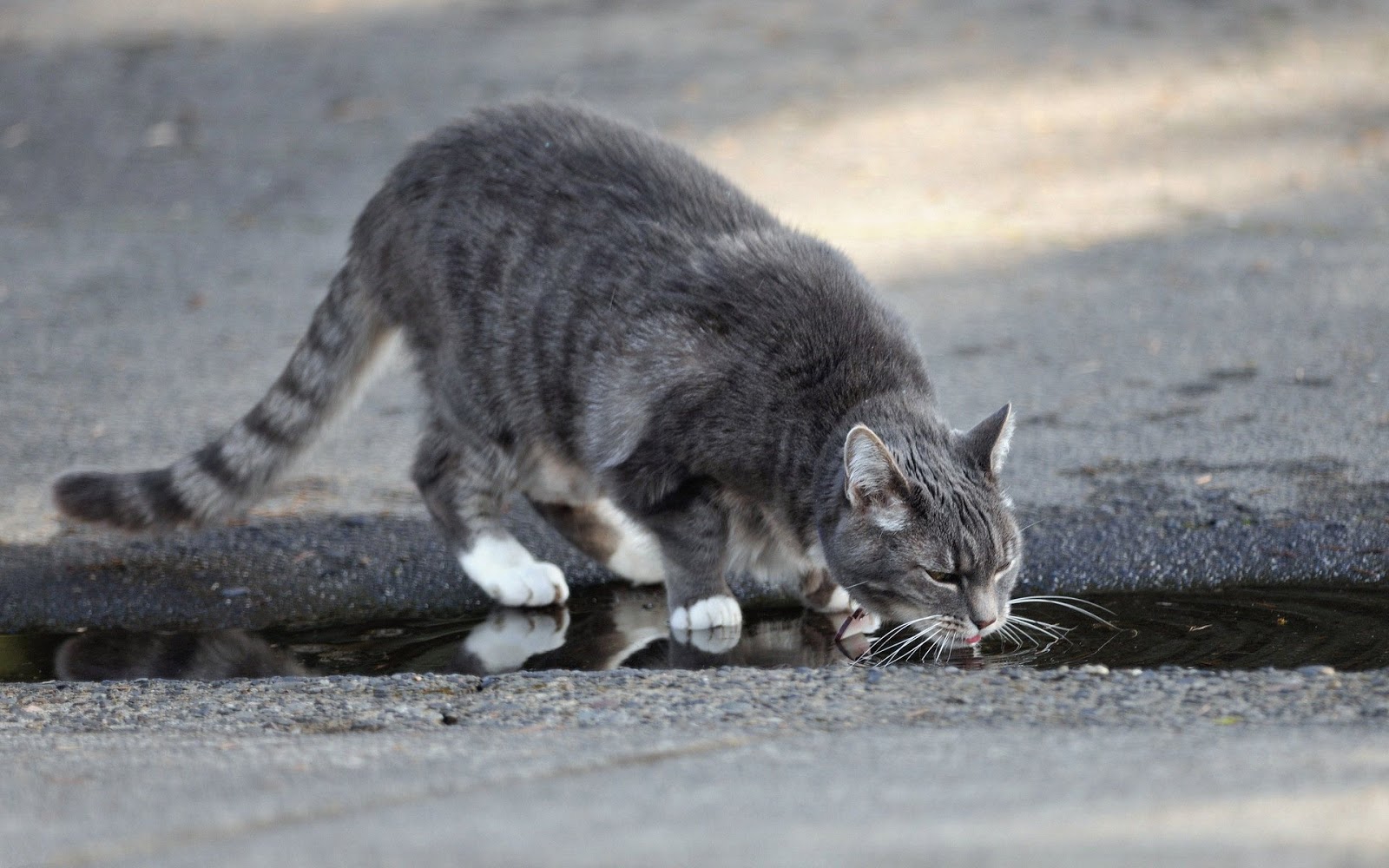
Dehydration is a problem that can occur regardless of air temperature and can threaten the health of living beings. It can occur in cats in every season and becomes a greater danger, especially in hot weather. To prevent dehydration, which is characterized by not drinking enough water or excessive water loss, they should consume wet food, their water should always be fresh, their water should be cooled with a piece or two of ice in the summer months, and liquid should be added to their dry food. Cats love to drink running, fresh water; you can choose from the automatic water bowl varieties available here. For cats with health problems or those of advanced age that increase the risk of dehydration, taking extra precautions to ensure they can drink water during hot months is important.
2. Precautions Should Be Taken Against Sunburn
Cats' ears and faces are sensitive areas to sunburn. All cats that spend time in the sun, especially during the hottest summer months, should have high-SPF sunscreen applied to their ears and faces.
3. Ensure They Are in Cool Environments
To prevent potential problems during hot summer days, it is necessary to ensure that our furry friends are in the shade and, if possible, in cool environments. By occasionally wetting their paws, applying cold compresses to the area under their necks, and ensuring they spend time in cool places, the negative effects of hot weather, especially sunstroke, can be prevented.
4. Calmness is Good in Hot Weather
It is important for cats not to move around too much in extremely hot weather. Therefore, the cool evening should be waited for to encourage them to play, and they should be allowed to rest during the hottest times of the day.
Advertisement
Advertisement
Keep exploring
Continue reading

Cat Lifestyle & Guides
What is Cat Soup? Is it Beneficial for Cats?
If your cat rarely visits its water bowl, is sometimes reluctant to eat dry food, or shows interest in different textures, liquid products may catch…
Read guide →
Cat Lifestyle & Guides
How to Give Rewards and Snacks to a Neutered Kitten?
The Feline Veterinary Medical Association supports neutering kittens until they are five months old.
Read guide →
Cat Lifestyle & Guides
Benefits of Colostrum for Cats and Dogs
Colostrum is the first milk produced by mother cats and dogs after birth. Thanks to its antibodies and high nutrient content, it responds to the…
Read guide →
Cat Lifestyle & Guides
Why is Gut Health Important in Cats?
In cats, bowel health is linked to many areas, from digestive regularity and immune system-related processes to energy levels and daily comfort.
Read guide →