English Bulldog Characteristics, Care and Temperament
It's not hard to spot an English Bulldog from afar. Its strong, low-set body, flat face, prominent jawline, and serious gaze give it a look that cannot be confused with any other breed. Inside the house, however, the picture changes: Most English Bulldogs stand out with their calmness, devotion to…

Advertisement
It's not hard to spot an English Bulldog from afar. Its strong, low-set body, flat face, prominent jawline, and serious gaze give it a look that cannot be confused with any other breed. Inside the house, however, the picture changes: Most English Bulldogs stand out with their calmness, devotion to their family, and dignified demeanor.
Its characteristic appearance directly determines its care routine. Due to its short nose, long walks and intense activity in hot weather can be risky; cooler hours and moderate exercise offer a safer routine. Keeping skin folds clean and dry, and weight control should not be neglected. The steps highlighted by The Spruce Pets—preventing overheating, fold care, and maintaining ideal body weight—form the basis of English Bulldog care.
This article provides information about the characteristics, temperament, diet, and potential health problems of the English Bulldog.
Warning: The short nose of English Bulldogs can make breathing difficult in hot weather and during intense exercise. If significant difficulty breathing or signs of overheating are observed, a veterinarian should be consulted. The care and exercise plan should be determined according to the dog's age, weight, and health condition.
General Characteristics of the English Bulldog Dog

The English Bulldog is a medium-sized, short-haired, broad-shouldered, low-bodied, and muscular dog breed. It is also known as the Bulldog or English Bulldog. Its large head, short face, and prominent lower jaw are the basis of the breed's distinctive appearance.
The American Kennel Club's official standard expects adult males to weigh approximately 22.7 kg and females approximately 18.1 kg. These values represent the ideal breed standard. Each dog's weight can vary depending on its age, body structure, and overall condition.
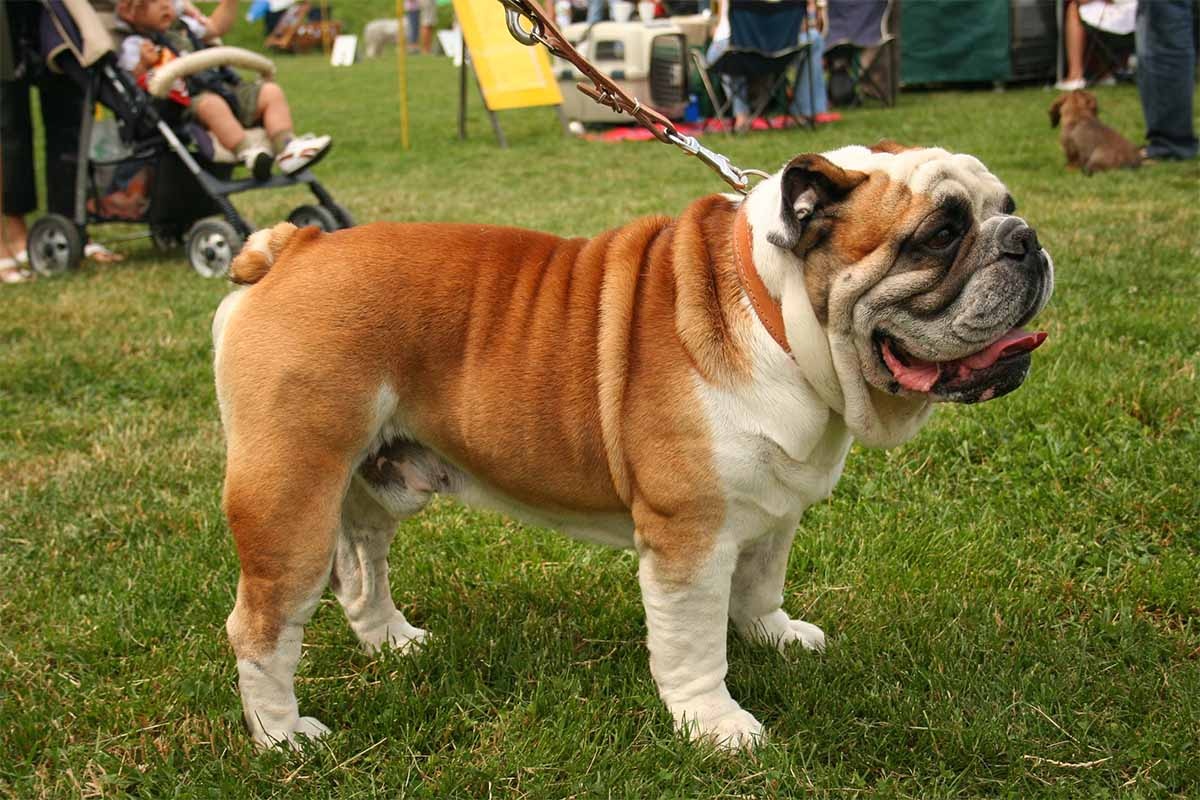
The English Bulldog has a broad, square-shaped head. Its nose is short, wide, and black. Its small, slender ears fold back. Its dark, round eyes are set far apart at the front of its face.
Its coat is short, straight, fine-textured, smooth, and shiny. Red, white, light brown, and pale yellow tones can be seen in various patterns. Distinct skin folds on the head and face are also part of the breed's physical structure. It has a broad chest, a short back, and strong legs.
English Bulldog Character and Adaptation to Family Life
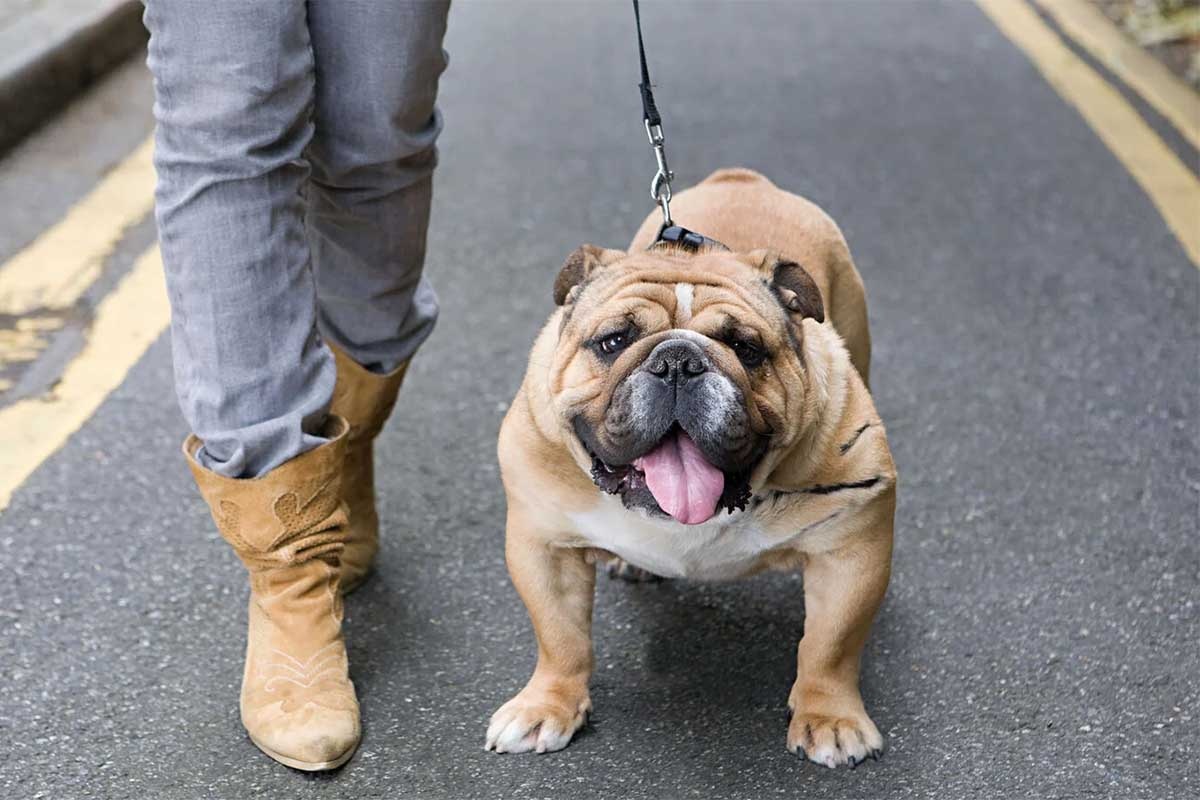
The English Bulldog is a dog that can adapt to family life when its needs are met and tends to form close relationships with people. The English Bulldog character is generally described as calm, affectionate, loyal, and determined.
The English Bulldog may have furrowed brows and a serious gaze. This strong expression should not be interpreted as indicating an aggressive temperament. In fact, they are generally alert, courageous, reliable, and affectionate. However, this framework does not mean that all English Bulldogs will behave the same. Each dog's temperament is shaped by innate characteristics as well as the socialization process, training, and past experiences.
With proper socialization, English Bulldogs can form a strong bond with children. However, contact between children and dogs should still occur under adult supervision. Children should be taught not to interfere with the dog's food, toys, and resting area.
Adaptation to other dogs and cats depends on early experiences. Some English Bulldogs may be selective about unfamiliar dogs or dogs of the same sex. Controlled introductions and secure personal spaces can help reduce tension within the home.
Can an English Bulldog Live in an Apartment or a House with a Garden?

An English Bulldog can live in an apartment. Suitability is more related to a cool environment, a regular daily routine, and controlled movement than to the size of the house.
It may not make a big difference whether an English Bulldog lives in the city or the countryside. The American Kennel Club states that this breed can adapt to different living conditions. While suitable for apartment living, this doesn't mean they can spend the whole day inactive. Short, regular walks planned for cooler hours should definitely be part of the daily routine. This breed often makes its presence known in the home not by barking, but by its distinctive sounds. Snoring, grunting, and noisy breathing are frequently heard. The English Bulldog can live in a house with a garden, but it is not suitable for being kept in the garden constantly. Its short nose can make it difficult for it to regulate its body temperature in hot weather. Garden use should be limited to cooler hours. Shade, fresh water, and access to a cool indoor space should be provided.
Short, regular walks planned for cooler hours should definitely be included in the daily routine.
This breed often makes its presence known in the home not by barking, but by its unique vocalizations. Snoring, grunting, and noisy breathing are frequently heard.
The English Bulldog can live in a house with a garden, but is not suitable for constant gardening. Its short nose can make it difficult for it to regulate its body temperature in hot weather. Garden use should be limited to cooler hours. Shade, fresh water, and access to a cool indoor space should be provided.
English Bulldog Training and Socialization Needs
The determined and independent behavior of English Bulldogs can sometimes slow down the training process. English Bulldog training can progress more efficiently with short, consistent, and reward-based exercises.
It is not correct to directly label the breed as stubborn. A dog that does not respond to commands may be tired, distracted, or may not value the reward offered sufficiently. The dog's physical comfort and motivation should be considered together during training.
Learning its name, coming when called, waiting, releasing, and walking on a leash are among the priority skills. Exercises should be kept short, and every behavior successfully completed should be rewarded immediately. If dog treats are used, the amount given should be included in the daily feeding plan.
The short nose structure also affects training conditions. Exercises should be done in a cool environment; breaks should be taken if breathing becomes difficult or the dog becomes noticeably tired.
Punishment, yelling, and physical coercion can damage the trust relationship. Unwanted behaviors should be managed by teaching appropriate behavior instead of punishment.
English Bulldog Care, Coat Structure and Exercise Needs

English Bulldog care requires a regular routine despite their short coat. Skin folds, eye area, ears, teeth, and nails should be checked at regular intervals.
According to the PetMD care guide, English Bulldogs have a moderate amount of shedding in their short, smooth coat. Brushing once a week with a soft-bristled brush can help remove shedding hair. Bathing frequency depends on the dog's skin condition, but intervals of one or two months may be sufficient. The folds around the face, neck, and tail should be checked daily. Accumulated dirt can be gently removed with a soft, dry cloth or a suitable dog wipe. The folds must be completely dried after cleaning. If redness, bad odor, discharge, or sensitivity is noticed, a veterinarian should be consulted. Discharge around the eyes should be cleaned without irritating the skin. For ear care, products recommended by a veterinarian should be used. Daily brushing of the teeth can help limit plaque buildup. Nail trimming frequency should be adjusted according to the rate of growth and the natural level of wear on the surface. Although the English Bulldog, considered one of the laziest dog breeds, seems to have low exercise needs, daily movement should not be completely neglected. Short walks during cooler hours, indoor games, and reward puzzles are suitable options. Intense running, long walks, and exercise in hot weather can increase the risk of respiratory difficulties.
The folds around the face, neck, and tail should be checked daily. Accumulated dirt can be gently removed with a soft, dry cloth or a suitable dog wipe. The folds must be completely dried after cleaning. If redness, bad odor, discharge, or tenderness is noticed, a veterinarian should be consulted.
Discharge around the eyes should be cleaned without irritating the skin. Ear care should be done using products recommended by a veterinarian. Daily brushing of teeth can help limit plaque buildup. Nail trimming frequency should be adjusted according to growth rate and the natural level of wear on the surface.
Although the English Bulldog, considered one of the laziest dog breeds, seems to have low exercise needs, daily movement should not be completely neglected. Short walks in cooler hours, indoor games, and reward puzzles are suitable options. Intense running, long walks, and exercise in hot weather can increase the risk of respiratory difficulties.
If breathing becomes noticeably difficult, exercise should be stopped immediately. The dog should be moved to a cool area, and veterinary assistance should be sought if symptoms persist.
English Bulldog Nutrition

The English Bulldog is a medium-sized dog breed that can reach approximately 18–23 kg in adulthood. Medium-sized dog foods suitable for the life stage can be considered when choosing food. However, size class is not the only criterion for determining the right food.
English Bulldog nutrition should be planned taking into account the dog's age, ideal weight, activity level, neutering status, and health needs. The chosen food should be complete and balanced, and portions should be measured.
Puppies of English Bulldogs should be fed puppy food appropriate for the growth period of medium-sized breeds. In adult dogs, the daily amount can usually be divided into two meals. Puppies may need three or four meals a day depending on their age.
Foods with the breed name on the label are one option to consider. However, the suitability of the food for the life stage, its nutritional adequacy, and the dog's individual tolerance should be examined together. Food changes should be made gradually to allow the digestive system to adapt.
English Bulldogs may be prone to weight gain. Excess weight can increase the load on the joints, reduce tolerance to hot weather, and make breathing difficult. Regular weighing and assessment of body condition help in timely portion adjustments.
Treats are also included in the daily energy intake. It is recommended that calories from treats do not exceed 10% of the daily total. If treats are used frequently in training, the amount of main meals can be adjusted accordingly.
Slow feeding bowls can be used for dogs that eat their food quickly. Food puzzles can also provide mental stimulation by extending mealtimes. Uninterrupted access to clean and fresh water should be provided throughout the day.
Health Problems That Can Be Seen in English Bulldogs

English Bulldogs may have certain health predispositions associated with their short face, prominent skin folds, and compact body structure. These predispositions do not mean that every dog will experience the same problems.
A VetCompass study published in 2022 compared the veterinary records of 2,662 English Bulldogs with those of 22,039 dogs of other breeds. English Bulldogs were found to be 2.04 times more likely to be diagnosed with at least one health problem than other dogs. While this result does not indicate the future of an individual dog, it does explain the susceptibility at the community level.
Brachycephalic Obstructive Airway Syndrome
Brachycephalic obstructive airway syndrome is a condition caused by anatomical changes that narrow the upper respiratory tract in short-headed dogs. Narrow nostrils, an elongated soft palate, and constricted nasal passages can limit airflow.
Signs of brachycephalic syndrome in English Bulldogs may include persistent noisy breathing, easy fatigue, intolerance to hot weather, and difficulty breathing during exercise. Snoring alone is not diagnostic. Significant respiratory effort at rest should not be considered a normal breed characteristic.
Skinfold Dermatitis and Other Skin Problems
Moisture and dirt accumulation in the folds around the face, neck, and tail can disrupt the skin barrier. This environment can facilitate the development of skinfold dermatitis and bacterial or yeast infections.
Redness, foul odor, moist appearance, discharge, tenderness, and itching are signs to watch for. Regular cleaning and careful drying can help reduce the risk. Cleaning an advanced infection at home does not cure it.
Interpaw cysts and paw skin inflammation can also occur in English Bulldogs. If you notice constant paw licking, redness or painful swelling between the toes, you should consult a veterinarian.
Eye Problems
English Bulldogs may be prone to problems such as cherry eye, entropion, and dry eye. Cherry eye is when the third eyelid gland protrudes, forming a pink or red mass in the inner corner of the eye.
Entropion is when the eyelid turns inward, causing the eyelashes and hairs to rub against the surface of the eye. This can lead to pain, redness, and corneal damage. In dry eye, the tear film that protects the surface of the eye is insufficient.
If you notice squinting, constant rubbing, excessive discharge, redness, or a noticeable mass in the eye, you should not delay an examination. Human eye drops should not be used without a veterinarian's recommendation.
Ear Infections
Outer ear canal infections can occur in English Bulldogs. Moisture in the ear canal, skin sensitivity, and allergic problems can contribute to the development of infection.
If you notice head shaking, ear scratching, bad odor, redness, and discharge, a veterinary evaluation is necessary. Ear cleaning is not a treatment for an existing infection. Incorrect products can increase irritation in the ear canal.
Hip Dysplasia and Knee Problems
Hip dysplasia is the loosening of the hip joint due to the incompatible development of the hip joint. Over time, it can lead to pain and degenerative joint changes.
Patel luxation, also known as kneecap dislocation, can also occur in English Bulldogs. Limping, gait similar to hopping, reluctance to move, or difficulty standing should be evaluated by a veterinarian.
Obezite
The compact appearance of English Bulldogs can make it difficult to detect weight gain early. Obesity can worsen respiratory difficulties, sensitivity to hot weather, and joint complaints.
Portion sizes, accounting for treats, and a daily exercise plan appropriate to the dog's capacity are necessary. Regular weighing and a veterinary assessment of body condition support weight management.
Difficulty in Birth
The body structure of English Bulldog dogs and the head size of puppies can increase the risk of difficulty in birth. Pregnancy and birth require close veterinary monitoring.
In this breed, mating decisions should not be made without a general health assessment and necessary screenings. Attempting to manage birth at home without professional assistance can pose serious risks to both mother and puppies.
Things to Know Before Adopting an English Bulldog

Before adopting an English Bulldog, it's necessary to be prepared for the care routine, temperature control, and potential health expenses. Low exercise needs do not mean that this breed is easy to care for.
- Noticeable breathing effort while resting, prolonged open-mouth breathing, or prolonged recovery after short movements should be evaluated. Accepting noisy breathing as breed-specific may lead to overlooking a potential problem.
- English Bulldogs may have difficulty regulating their body temperature in hot weather. A cool resting area should be provided in the house, and the dog should not be taken outside during the hottest hours.
- The folds around the face and tail should be checked regularly. Eye, ear, teeth, and nail care should also be included in the home routine.
- In addition to regular checkups, further investigation may be necessary for respiratory, skin, eye, or joint problems. Some dogs may require long-term medication or surgical treatment.
- The amount of food and treats given to English Bulldogs should be measured. Excess weight can negatively affect respiratory and mobility capacity.
- This breed is not suitable for long runs or intense sports. Short daily walks and indoor games should still be part of their routine.
- The heavy body, short legs, and flat face of English Bulldogs can make swimming difficult. They should not be left unattended near pools, lakes, or the sea.
- Snoring, growling, noisy breathing, and drooling may occur. Those who prioritize silence or impeccable home hygiene should consider these characteristics beforehand.
Frequently Asked Questions
Is English Bulldog training easy?
English Bulldog training requires a moderate level of patience and consistency. These dogs can learn; however, their determined nature can lead to a loss of motivation in long and repetitive sessions. Short training sessions, valuable rewards, and positive reinforcement can yield better results.
Is English Bulldog resistant to hot weather?
No, English Bulldogs are not a breed resistant to hot weather. Their short nose structure can make it difficult for them to regulate their body temperature through respiration. Walks should be done during cooler hours, and the dog should have access to a cool area with water.
Is snoring and noisy breathing normal in English Bulldogs?
Snoring and grunting-like breathing sounds are common in English Bulldogs. Significant breathing effort is not normal. If the dog is struggling while resting, becomes excessively tired during short movements, or takes a long time to recover, a veterinary evaluation is necessary.
How to clean the face and skin folds of an English Bulldog?
The face and skin folds should be checked daily, and any buildup should be gently cleaned. A soft, dry cloth or a suitable wipe designed for dogs can be used. After cleaning, each fold should be completely dried.
How long do English Bulldogs live?
The average lifespan of an English Bulldog is approximately 8–10 years. Genetic makeup, the degree of extreme physical characteristics, maintaining an ideal weight, and regular veterinary check-ups can affect lifespan.
Do English Bulldogs get along well with children?
Under normal circumstances, yes, properly socialized English Bulldogs can get along well with children. The dog's calm character alone does not guarantee safety. Interactions should take place under adult supervision, and children should be taught to respect the dog's boundaries.
Do English Bulldogs shed a lot of hair?
English Bulldogs shed a moderate amount of hair. Short hairs can easily cling to fabrics and surfaces. Weekly brushing helps collect shedding hair and maintain home hygiene.
How much exercise should an English Bulldog get per day?
For most adult English Bulldogs, approximately 20–30 minutes of light daily exercise, divided into cooler hours, can be a good starting point. Age, weight, air temperature, and respiratory capacity may vary. Exercise plans for dogs diagnosed with BOAS should be developed by a veterinarian.
Kaynaklar:
https://www.thesprucepets.com/bulldog-4584344
https://www.akc.org/dog-breeds/bulldog/
https://images.akc.org/pdf/breeds/standards/Bulldog.pdf
https://www.petmd.com/dog/breeds/bulldog
https://www.dogbreedinfo.com/bulldog.htm
https://www.royalkennelclub.com/breed-standards/utility/bulldog/
https://pmc.ncbi.nlm.nih.gov/articles/PMC9199211/
Advertisement
Advertisement
Keep exploring
Continue reading
Dog Care
Least Maintenance Dog Breeds
Do you dream of sharing your life with a dog, but don't know how to find the time for its care due to your busy life? Rest assured, you're not alone!
Read guide →
Dog Care
Dog Care at Home: Practical Tips and Daily Routines
Living with a dog at home is one of the best ways to experience unconditional love, but it also means taking on responsibility.
Read guide →
Dog Care
How to Clean a Dog After Coming From Outside? Dog Care After Daily Walks
Daily walks with your dog are one of the most important activities that directly affect its quality of life.
Read guide →
Dog Care
How Should Dog Care Be in Winter Months?
Winter months reduce living standards not only for humans but also for animals. This means differentiation.
Read guide →