Essential Cat Food Ingredient Terms for Cat Owners
If you are a cat parent with at least one cat eagerly awaiting your return and nourished by your love in addition to the food you provide, this article is for you. We are sure you think of them as if they were your child who will never grow up.

Advertisement
If you are a cat parent with at least one cat eagerly awaiting your return and nourished by your love in addition to the food you provide, this article is for you. We are sure you think of them as if they were your child who will never grow up. We have compiled the essential cat food ingredient terms you need to know to help them live healthier lives.
Why is Understanding Cat Food Ingredients Important?
Cats' nutritional needs should be met in accordance with their natural living conditions and the nutritional values they require. Therefore, as a cat parent, we need to first and foremost be aware of and understand "how to read cat food ingredients." You should be knowledgeable about the cat food terms mentioned in the ingredients and make your food choices accordingly. In our cat food ingredient guide, which we have prepared to clarify this issue, let's look at the points you should pay attention to together.

Most Frequently Encountered Terms in the Ingredient List
The more you know about the most frequently encountered terms on cat food ingredient labels, the more accurate choices you will make for your cat. In this way, you will be familiar with the ingredients that will meet your cat's nutritional needs and you will be able to easily identify low-quality foods. So, what are these terms? Now let's delve into the details together.
Meat and Animal Derivatives
First, it's important to check if the protein sources, which should be at the beginning of the ingredient list, are clearly and explicitly stated. If the food gets its protein balance from animal protein, it means it will directly affect your cat's overall health and digestive system. We recommend ensuring that the food clearly lists protein sources such as chicken, turkey, and salmon.
If the ingredient list doesn't clearly state what meat and animal derivatives are, we recommend reconsidering the quality of the food. This indicates that the ingredients include muscle meat, offal, or animal by-products such as bone and connective tissue.
If such a statement is included in the ingredients;
- It is unknown from which animal and which part it is obtained.
- Variations in content may be observed in different batches.
- Fluctuations in protein quality may occur.
- Allergic reactions may occur.
Chicken Meal / Fish Meal
Animal protein sources, which should be clearly stated at the beginning of the ingredient list, may be added to the food formulation by being ground into meal under special conditions. You may be wondering, "Why is chicken meal in cat food?" or "What is fish meal?". To prevent possible misunderstandings with the term "meal," which is a technical term, we are going into some details.
Chicken meal or fish meal is obtained by drying and grinding the animal source. This technical process increases the protein density by drying out the water content of the meat. This results in a more concentrated protein content compared to fresh meat.
Processed Animal Protein
The term processed animal protein has a more technical meaning. This process indicates that it is obtained by heat treatment of animal tissues. Although digestibility varies depending on the quality of production, foods with this type of content are quite rich in protein. To properly understand the quality of the food, you should pay attention to whether the animal from which the protein is obtained, the tissues used, and the production standard are clearly stated.
What Do Analytical Components Mean?
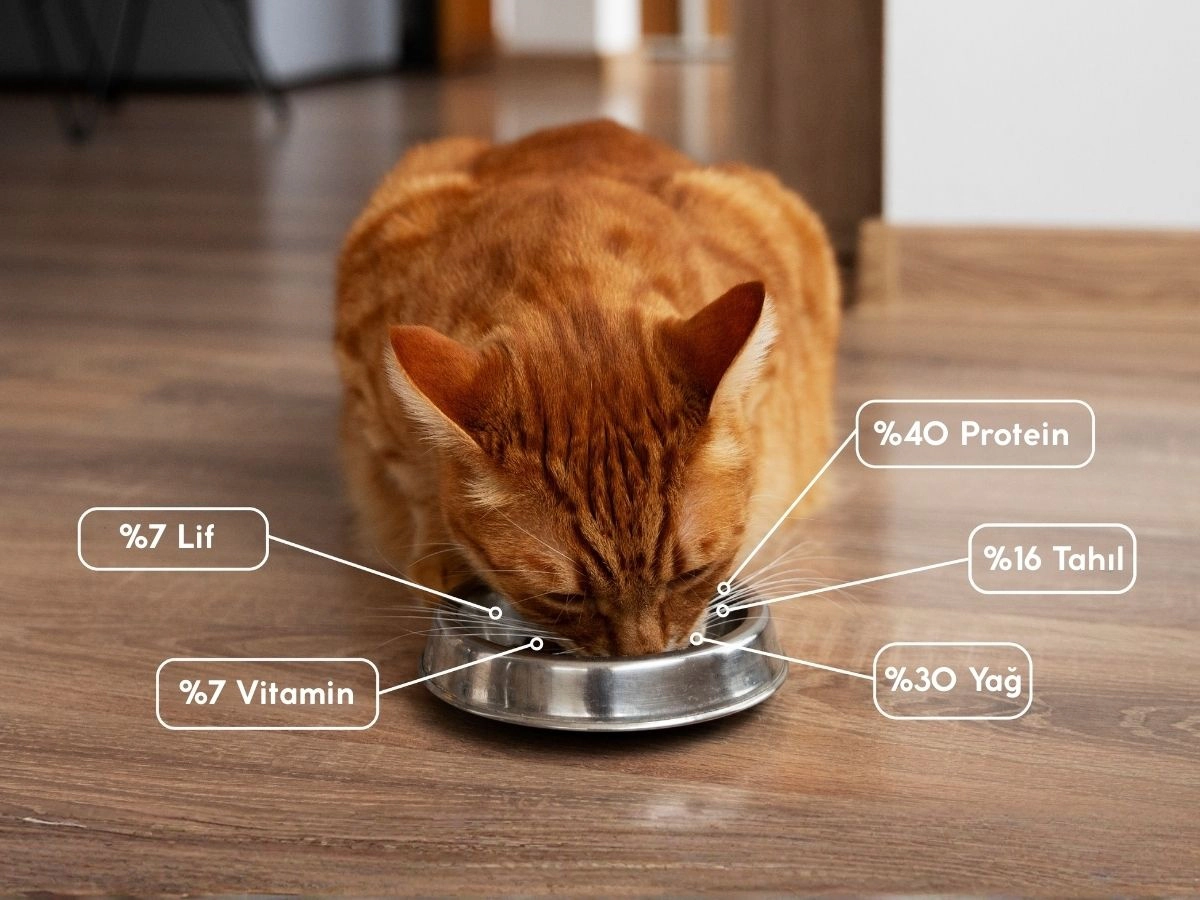
It's time to take a closer look at what the analytical components listed in the ingredient list mean. The table of analytical components is located on the back of the cat food package. The values in this table describe the basic nutrient ratios determined by the chemical analysis of the food. Correctly reading the components in the table allows you to clearly interpret whether the food is actually protein-rich or carbohydrate-rich.
Crude Protein
When we look at what crude protein is in the analytical components, we should think of it as the total amount of protein in the food, measured in the laboratory. For cats, who are obligate carnivores, this ratio plays an important role in their healthy diet. The protein ratio of cat food can be 30% or more for adult cats and even higher for kittens. To correctly analyze the quality of the food, remember to check that the protein source showing this ratio is clearly stated.
Crude Fat
The crude fat content in the ingredients table is a very important energy source in cat nutrition. Crude fat, which varies between 9-20% in dry foods, supports the absorption of fat-soluble vitamins and also the health of the coat and skin. We recommend that you pay attention to the crude fat content in the food you are examining, ensuring it is suitable for your cat's living conditions. It is especially beneficial to ensure that sufficient fat is provided for active, young, or thin cats; and that the fat content is controlled for cats prone to weight gain, neutered, or inactive cats.
Crude Fiber
Another term we should look at in the table is the crude fiber content. If we look at what crude fiber is, we can say that it refers to the amount of indigestible plant components in the food. Crude fiber; It supports your cat's bowel movements, regulates the digestive system, and helps reduce hairball formation. If a cat food is low in crude fiber, digestive balance can be affected; if it is too high, it can reduce protein density. Therefore, the crude fiber content in the food should be positioned as a supporting component, not as the main component of the food.
Crude Ash
The last term in the list of analytical components in the table is crude ash content. Crude ash content represents the total of calcium, phosphorus, magnesium, and sodium minerals in the cat food. From a technical perspective, crude ash represents the mineral content released after the food is burned. It is especially preferred for cats with urinary tract sensitivity. In dry foods, it usually takes its place in the table in percentages ranging from 5-9%.
Vitamin ve Aminoasit Terimleri
The vitamins and amino acids in the ingredient list are values that increase the quality and nutritional value of the food. It is necessary to know what these values are, which they obtain from their prey in their natural habitat, and to make sure that they are included in the ingredients. Remember that thanks to these powerful components that should be considered when choosing food, you will increase your chances of protecting your cat's overall health.
Taurine
Let's quickly clarify what taurine is, which is frequently encountered in the ingredient list. Since cats cannot synthesize sufficient amounts of taurine in their own bodies, supplementation from external sources is very important.
If you're wondering why taurine is important for cats, here's a short list:
- Strengthens heart muscle function.
- Sharpens vision and supports visual health.
- Critical level for the reproductive system.
- Contributes to the immune system.
Omega 3 and Omega 6
Omega 3 and Omega 6 fatty acids play a very important role in your cat's coat and skin health. Omega 3 in cat nutrition provides an anti-inflammatory effect, supporting joint health and the immune system, and contributing to skin health. The Omega 6 content in the food supports the skin barrier and improves coat quality.
Since food with excessively high Omega 6 levels can trigger inflammation, the point we want to emphasize is that the ideal balance in fatty acid ratios has been achieved. A ratio between 5:1 and 10:1 indicates balance.
Vitamin A, D3, E
The phrase "vitamin-enriched cat food" shouldn't be seen as just a marketing tactic used by the food brand. The clear indication of vitamins A, D3, and E, which are critically important for your cat's health, is a sign that the formula has been prepared in a balanced way.
Vitamin A supports your cat's vision and immune system. Vitamin D3 provides the calcium and phosphorus balance necessary for bone health. Vitamin E, thanks to its strong antioxidant properties, protects cells against oxidative stress and helps keep fats stable.
Grain and Carbohydrate Sources
The ratio of grains and carbohydrates in the food should be formulated in a balanced way to meet your cat's energy needs and support digestion. Instead of questioning whether there are grains in the food, it is important to know the amount of grains in the food and for what purpose they are preferred. Therefore, we recommend that you recognize the grain sources in the list and make your evaluation accordingly.
Corn, Wheat, Rice
The most common ingredients in grain-based cat food are corn, wheat, and rice. These grains are preferred to provide an energy source, add fiber, and form the structural structure of dry food. However, it should be remembered that animal proteins are the most biologically valuable protein source for cats.
Cat food containing corn includes plant-based protein and, when properly processed, increases digestibility. However, if used in high amounts, it can artificially increase the protein percentage of the food due to the proportion of plant-based protein it contains. The gluten in wheat can cause digestive problems in some cats. Rice, on the other hand, is more easily digestible and can be included in cat food formulas, especially for cats with sensitive stomachs.
What Does "Grain Free" Mean?
The "Grain Free" label on the food package does not give you a clear indication of the quality of the food. The grains in a food formulated in a balanced way will allow you to meet your cat's different needs. We recommend choosing "Grain Free" cat food if your cat has grain sensitivities.
So, if you're wondering what grain-free cat food is and what is used instead of grains in its formulation, let's go over the details together. The term grain-free food means that its formula does not contain grains such as corn, wheat, or rice. As an alternative to grains, carbohydrate sources such as potatoes, peas, chickpeas, or lentils are preferred.
Additives and Preservatives
Additives and preservatives, formulated to maintain the freshness of the food and extend its shelf life, and registered with an E number, appear in the ingredient list. These substances are used to prevent the fat in the content from oxidizing over time, changing its taste, and reducing its nutritional value. However, the main point we should focus on here is what these preservatives are.
Natural Antioxidants
Natural preservative cat food generally refers to products preserved with tocopherols. The correct answer to the question "What is tocopherol?" is that it is the natural form of vitamin E. Tocopherols are preferred because they delay the spoilage of fats, prevent oxidation, and extend shelf life. If the food label includes a statement such as "Preserved with tocopherols," this is a positive sign.
Yapay Renklendiriciler ve Aroma Vericiler
You might think that coloring cat food will help you attract your cat's attention. However, cats instinctively follow the trail of food, drawn by its scent. Therefore, the color of the food can be considered a move aimed at us parents.
If you are questioning what a flavoring agent is and why it is listed in the ingredient list, you should know that you are on the right track in questioning the quality of the pet food. Because the ingredients of a pet food that lacks a sufficient scent should also be questioned. The addition of an extra flavoring agent to the pet food should raise a question mark in one's mind regarding its quality.

Special Formulation Terms
Considering that every cat has different needs, it's natural for cat food to have special formulations. How well do you know the cat that lives with you in your home? Get ready to master the special formulation terms that will allow you to analyze the relationship between you.
Spayed Cat Food
In spayed/neutered cats, controlled calorie intake is very important because their metabolism slows down and their appetite increases after the spaying/neutering procedure. The content of spayed/neutered cat food is formulated taking these special conditions into account. It is prepared with a lower fat content, urinary health support and balanced mineral levels.
Sensitive Digestion / Hypoallergenic
Sensitive digestion cat food is specially formulated for cats with stomach and intestinal problems. It contains easily digestible protein, a balanced fiber ratio, and limited ingredients. Hypoallergenic cat food, on the other hand, is formulated to minimize the risk of allergens and prevent your cat from having allergic reactions. It usually contains a single protein source and hydrolyzed protein.
Indoor / Hairball
When we look at what indoor cat food is; these are foods with a formula specially developed for cats that live with us in our homes and whose movement area is limited compared to their natural conditions. They are usually prepared with controlled calories, a balanced fat ratio, and fibers that support digestion. In foods that provide hairball control, that is, hairball control, the fiber ratio is formulated higher. In this way, the hairs swallowed after grooming themselves are able to pass through the digestive system more easily.
Transparency on the Label: Which Statements Inspire Trust?
Transparency on the label is a good indicator for understanding the quality and reliability of a cat food. In reliable brands of cat food, it is important that the ingredient list is clear, the protein source (chicken meat, salmon protein, etc.), vitamin and mineral values, and analytical components are clearly stated. In other words, seeing the phrase "%35 chicken meat" instead of "meat and derivatives" in the ingredient list is an important criterion for building this trust.
Why is Knowing Cat Food Ingredient Terms Vital?
Keeping a cat at home is proof that we are committed to spending many years together. Therefore, choosing food that meets your cat's needs is vital. As we mentioned at the beginning of this article, choosing the right cat food is directly related to how well you know your cat. Finding the right ingredients for your cat, being able to read the ingredient list correctly, and making informed choices will further strengthen your relationship.
Kaynaklar:
https://www.aafco.org/resources/startups/nutritional-labeling/
https://cats.com/how-to-read-cat-food-labels
https://www.aafco.org/consumers/understanding-pet-food/
https://wsava.org/global-guidelines/global-nutrition-guidelines/
https://vcahospitals.com/know-your-pet/taurine-in-cats
https://chompz.in/whats-animal-meal-chicken-fish-and-should-it-be-in-your-cats-food/
https://www.petfoodinstitute.org/a-to-z-pet-food-vitamin-e/
https://www.petfoodinstitute.org/newsroom/artificial-flavors-colors-preservative/
https://www.vet.cornell.edu/departments-centers-and-institutes/cornell-feline-health-center/health-information/feline-health-topics/food-allergies
Advertisement
Advertisement
Keep exploring
Continue reading

Cat Nutrition
The Importance of Fiber in Cat Food: Its Role in Digestion, Hairballs, and Weight Control
Most people just glance at the "crude cellulose" line in the analysis table on the cat food packaging.
Read guide →
Cat Nutrition
The Importance of Wet Food Consumption in Cats During Summer
When temperatures rise, cats, just like us, may have difficulty maintaining their fluid balance.
Read guide →
Cat Nutrition
Mineral Balance in Dry Cat Foods: The Role of Calcium and Phosphorus
The suitability of cat food for a cat in the long term is not determined solely by protein, fat, or calories.
Read guide →
Cat Nutrition
What Should You Read on the Ingredient Label When Choosing Dry Cat Food?
Every cat parent wants to make sure they are getting the right dry food for their cat. At this point, you might be thinking, "Okay, but how can I be…
Read guide →