Goldfish Care and Aquarium: What You Need to Know for a Healthy Goldfish
Goldfish (Carassius auratus) are fish that can live for a long time and require more space and more stable water conditions as they grow. Therefore, goldfish care should not be considered a simple routine that can be maintained in a bowl.

Advertisement
Goldfish (Carassius auratus) are fish that can live for a long time and require more space and more stable water conditions as they grow. Therefore, goldfish care should not be considered a simple routine that can be maintained in a bowl. A goldfish aquarium of appropriate size, strong filtration, regular water changes, and the correct feeding plan form the basis of care.
Goldfish care is based on several interconnected basic rules. If the water volume is insufficient, the waste load increases, or the feeding schedule becomes uncontrolled, the fish's movement, appetite, and overall appearance may change over time.
It is also important to know the differences between species when choosing goldfish. Long-bodied species and double-tailed ornamental goldfish are not considered suitable for the same living space. Aquarium volume, equipment selection, water conditions, and daily care plan should be made according to these differences.
Warning: This content is for general information purposes only. It does not replace diagnosis and treatment. If symptoms such as decreased appetite, swimming disorders, rapid breathing, white spots, cottony formations, and abdominal swelling occur in goldfish, a veterinarian should be consulted.
Most Popular Goldfish Species

Goldfish species are distinguished by body structure, tail shape, and swimming capacity. These differences directly affect goldfish care and goldfish aquarium selection.
Comet Goldfish
The Comet is among the most common types of goldfish. It has a long and slender body. Its tail is noticeably long. It can be seen in shades of red, gold, white, and brown.
Its long body and active swimming style require it to have a larger space. Therefore, the Comet is more suitable for large aquariums than narrow tanks. The minimum aquarium volume is stated to be approximately 190 liters.
Shubunkin Goldfish
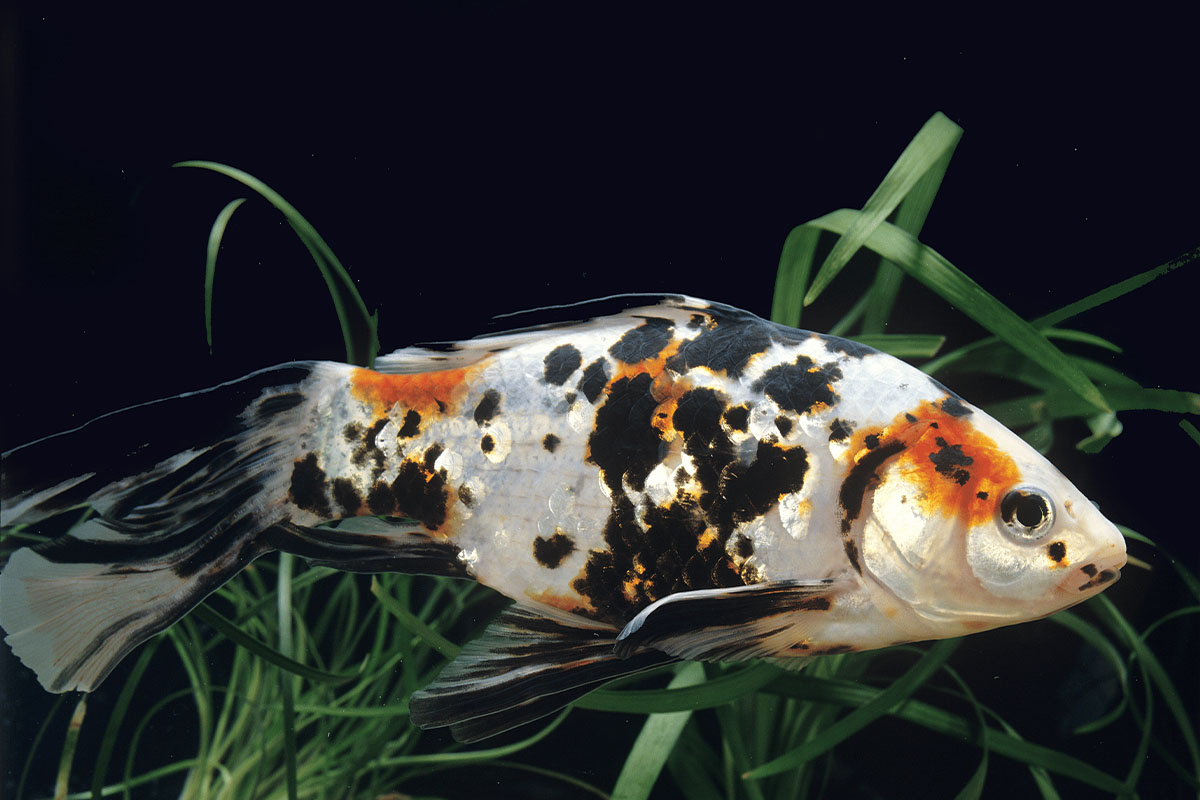
The Shubunkin is considered among the long-bodied goldfish. Its body form is similar to the Comet. Its fins are longer. In terms of color distribution, black, red, white, and blue tones can be seen together. In adulthood, its length is approximately 30-35 cm. Variables such as aquarium volume, water quality, feeding method, and swimming space can affect its size.
Ryukin Goldfish
Ryukin goldfish are one of the most striking species in the aquarium world with their short body structure and characteristic humps on their backs. Reaching approximately 10 cm in length and living up to 10 years, these fish do not possess agile swimming abilities due to their physical form. To balance their high calorie consumption and maintain the fish's condition, a careful and supportive feeding regimen is of great importance.
Fantail Goldfish
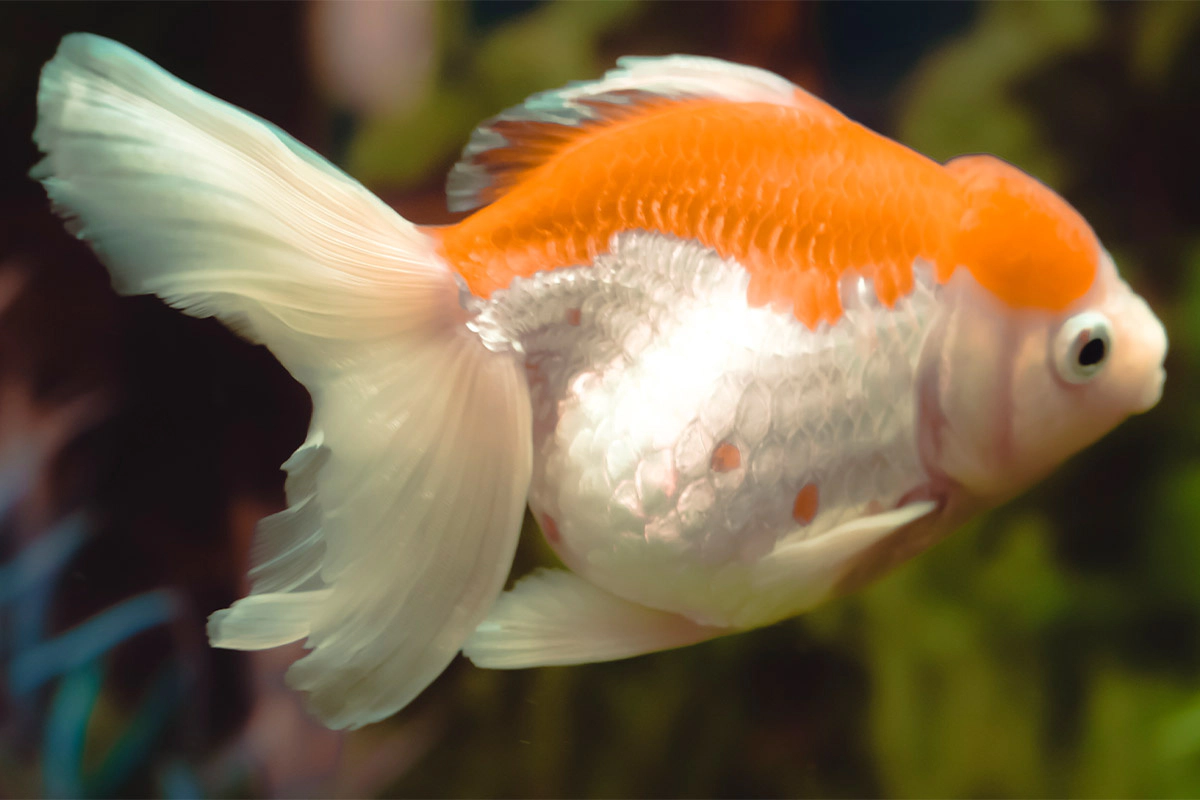
Fantail is one of the best-known species among ornamental goldfish. Due to its shorter and more compact body, it swims slower. The minimum aquarium volume is approximately 75 liters. For double-tailed species like the Fantail, the aquarium plan should be made more carefully. Since the swimming speed may be low, competition for food can be difficult.
Oranda Goldfish
The Oranda is also in the group of ornamental goldfish. It has a double tail. It is known for the prominent tissue development on the top of its head, also called a "wen". When the tissue grows excessively, it can surround the eye, and in this case, veterinary intervention may be necessary.
What are the Basic Care Needs of a Goldfish?
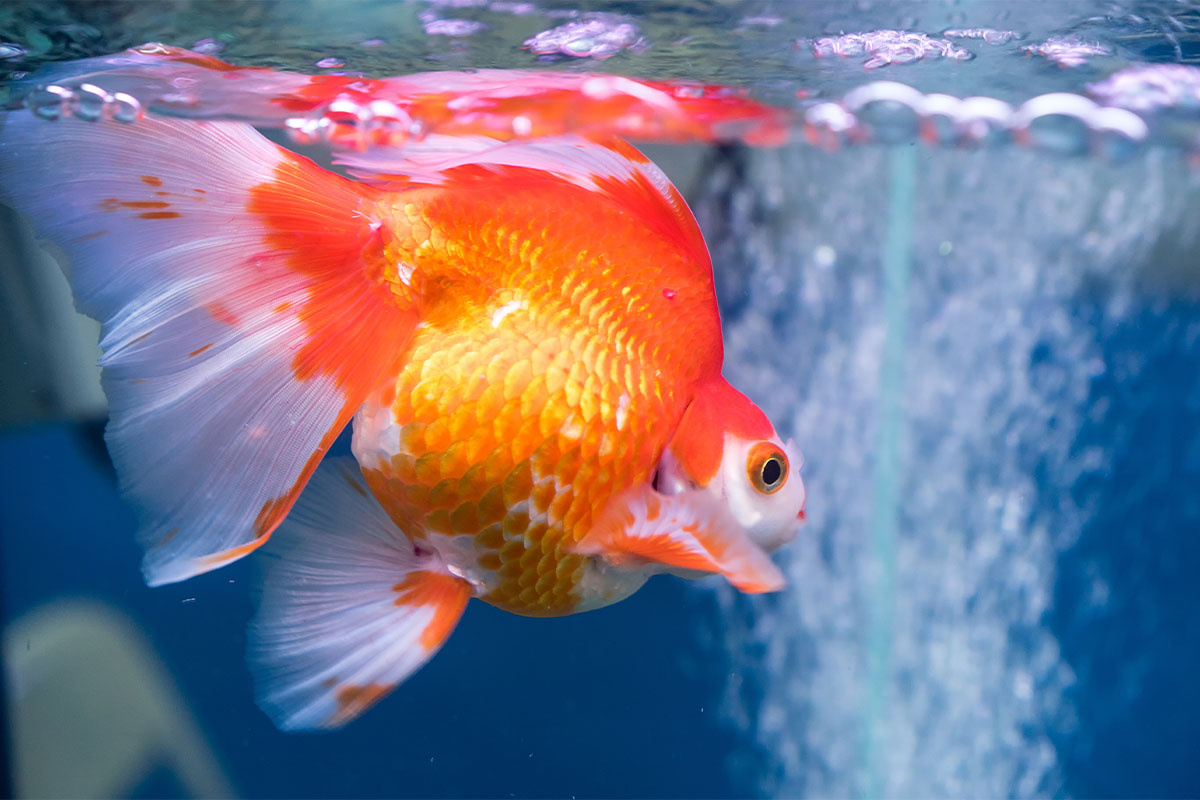
Goldfish care relies on the correct planning of several basic aspects together. A goldfish aquarium of sufficient size, appropriate temperature, strong filtration, regular water changes, and measured feeding are central to this plan. If any of these areas are disrupted, the water balance can be disturbed. This can directly affect the quality of life of the fish.
The key requirements for healthy goldfish care are:
Suitable aquarium volume: As goldfish grow, they need more living space. Insufficient volume can lead to a faster increase in waste load and make it more difficult to maintain water balance.
Balanced water conditions: Temperature, pH, and overall water quality in a goldfish aquarium should be kept as stable as possible. Sudden changes can cause stress on the fish.
Strong filtration: Goldfish are fish that produce a high amount of waste. Therefore, an effective filter system helps keep the water cleaner and more balanced.
Regular maintenance routine: Partial water changes, equipment checks, and basic water monitoring are essential parts of goldfish aquarium maintenance.
Safe aquarium setup: Sharp decorations, hard surfaces, and arrangements that hinder the fish's movement should be avoided. A safer environment reduces the risk of injury.
Correct feeding plan: Goldfish feeding should be planned in a measured, regular, and appropriate manner for the species.
The most common mistakes in goldfish care can be listed as follows:
• Choosing a small aquarium. • Insufficient filter power. • Ignoring the appropriate temperature range for the species. • Irregular water changes. • Using sharp decorations. • Overfeeding.
What Should a Goldfish Aquarium Be Like?

When planning a goldfish aquarium, the first criterion should be the size the fish will reach and the amount of waste they will produce. Goldfish should not be kept in small, empty, and unfiltered containers. A larger volume makes it easier to maintain water balance. The location of the aquarium is also important. It should be in a calm, stable place that does not receive direct sunlight.
How many liters should an aquarium for goldfish be and what type should it be chosen?
The answer to this question may vary depending on the goldfish species. Long-bodied goldfish are more suitable for pond conditions as they can reach approximately 30 centimeters in adulthood. If an aquarium is to be set up indoors, double-tailed ornamental goldfish may be a more suitable option.
According to the species-based volume recommendations in The Spruce Pets source, approximately 190 liters of aquarium volume should be considered for Comet, Shubunkin, and Sarasa goldfish, approximately 75 liters for Fantail goldfish, and approximately 115 liters for Oranda goldfish.
Volume is not the only criterion when choosing an aquarium. According to the SPCA, the length of the aquarium should be approximately 4 times the adult body length of the fish. The width should be at least 2 times, and the height at least 3 times. This measurement is important for the fish to swim comfortably and maintain their natural behaviors.
What equipment is needed for a goldfish aquarium?
Goldfish eat a lot and produce a lot of waste. Therefore, a filter of appropriate capacity is essential. The filter helps keep the water clean. It also provides a living space for beneficial bacteria. These bacteria convert toxic ammonia from fish waste into less harmful compounds.
In addition to the filter, an aeration system such as an air stone can be used. A water test kit should also be part of the maintenance routine. If tap water is used, a water conditioner is required.
A heater may be needed if the temperature does not remain constant. The aquarium should also include vegetation, tunnels, rocks, and safe decorations that provide resting and hiding areas. When planning the vegetation, ample swimming space should be maintained.
How to set up a goldfish aquarium step by step?
The first step is to choose the habitat according to the type of goldfish to be kept. Long-bodied species rapidly increase their space requirements. An aquarium plan may be more feasible for double-tailed ornamental goldfish.
Then, the aquarium should be placed in a quiet, sunless location with minimal temperature fluctuations. Sudden noises and vibrations can cause stress in the fish.
The next step is to create a safe environment inside the tank. Sand substrate, vegetation, hiding places, and fish-safe decorations should be added.
A filter system should be installed, aeration should be added if necessary, and the water to be used should be prepared with a water conditioner. Newly established aquariums require extra attention for the first 2-6 weeks, as the balance of beneficial bacteria is not yet fully established during this period.
The maintenance plan should not be delayed after setup. Water quality should be monitored daily in new tanks. In established aquariums, testing at least once a week is recommended. This monitoring is necessary to ensure that basic values such as ammonia, nitrite, nitrate, pH, and temperature remain within safe ranges.
How to clean a goldfish aquarium?
Goldfish aquarium cleaning should not be done by completely draining the water. The recommended approach is a partial water change of approximately 10-25% once a week. The aim is to keep nitrite and nitrate levels within a safe range. In other words, the basic principle is to clean less but more regularly.
If tap water is to be added, a water conditioner should be used first. The temperature of the newly added water should also be no more than 2 degrees different from the water in the tank. Cleaning the aquarium on the same day and using a similar method can help the fish adapt to this routine more easily.
What are the Ideal Water Conditions for Goldfish?
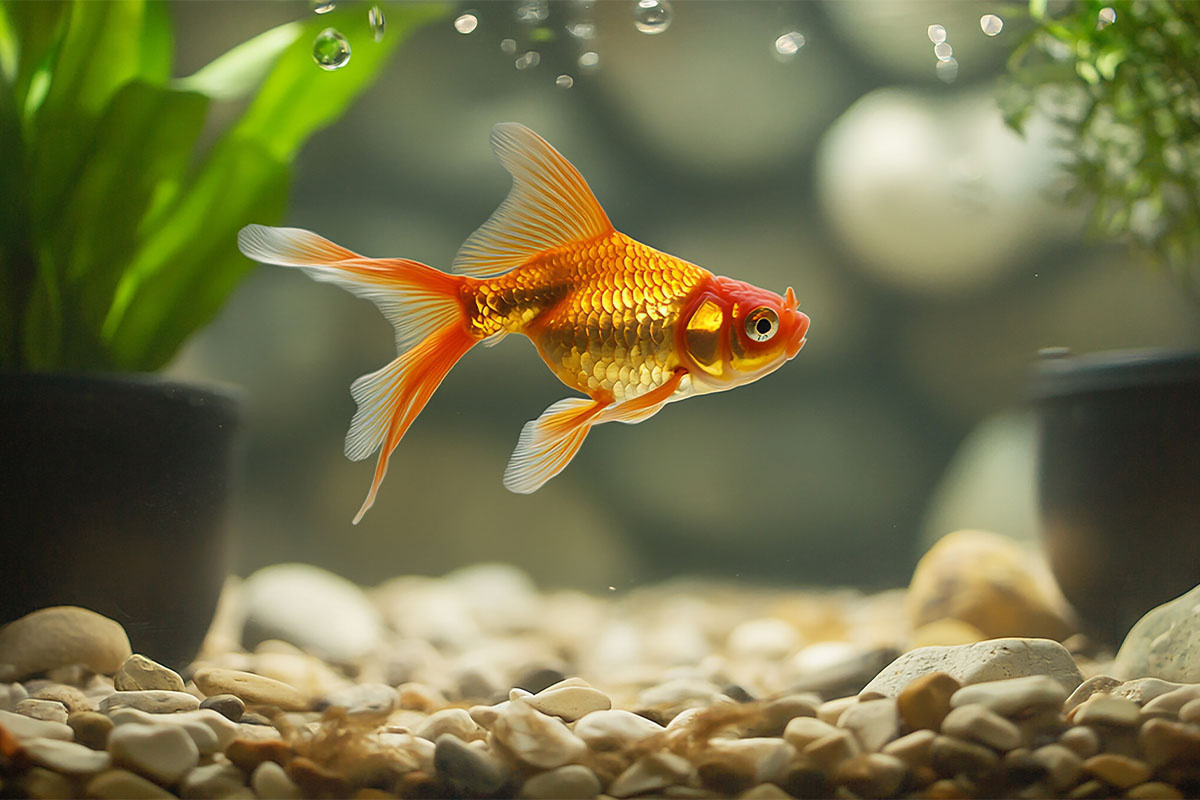
When the balance of water temperature, pH, ammonia, nitrite, and nitrate is disrupted, the health of the fish can be affected in a short time. In newly established aquariums, these values should be monitored daily. In established aquariums, weekly checks are a more appropriate approach.
What is the ideal water temperature for goldfish?
The ideal water temperature for goldfish varies depending on the species. For double-tailed ornamental goldfish, approximately 20–23 degrees Celsius is considered suitable, while for long-bodied species such as Comet and Shubunkin, the range of 16–21 degrees Celsius is more appropriate.
Although a wider tolerance range exists, the aim in the maintenance plan is not to push these limits. The main goal is to keep the water temperature as stable as possible.
Since fish can become stressed when the temperature changes frequently, the aquarium should not be placed in areas with intense temperature fluctuations. A quieter and more stable environment is safer for keeping goldfish.
Why is water quality important in a goldfish aquarium? According to the SPCA source, the basic water parameters recommended for monitoring in a goldfish aquarium are as follows: Ammonia: Below 0.1 ppm Nitrite: Below 0.1 ppm Nitrate: Below 50 ppm pH: 6.5–7.5 Carbonate Hardness (KH): 70–140 ppm Mineral Hardness (GH): Approximately 150 ppm Water temperature: 20–24°C
The basic water parameters recommended to be followed in a goldfish aquarium according to the SPCA source are as follows:
- Ammonia: Below 0.1 ppm
- Nitrite: Below 0.1 ppm
- Nitrate: Below 50 ppm
- pH: 6,5–7,5
- KH (Carbonate Hardness): 70–140 ppm
- GH (Mineral Hardness): Approximately 150 ppm
- Water temperature: 20–24°C
Important: Depending on the source, the tolerance limit for nitrate can extend up to 110 ppm, for pH to the range of 5.0–9.0, and for temperature to the range of 8–30°C.
In newly established aquariums, this biological balance does not occur immediately. More careful monitoring is required for the first 2–6 weeks. Increasing the frequency of testing is recommended during this period.
Can tap water be used for goldfish?
Tap water should not be added directly to the aquarium as it may contain chlorine and chloramine, which are harmful to fish. The water to be added to the aquarium should first be prepared with a suitable water conditioner.
The temperature of the water to be added is also important. There should be a maximum difference of 2 degrees between the new water and the aquarium water. Larger differences can increase the stress load on goldfish.
How to plan water changes in a goldfish aquarium?
Water changes in a goldfish aquarium should be done partially. A partial water change of approximately 10-25% once a week is considered ideal. Keeping nitrite and nitrate levels within safe limits should be the main goal.
It is important not to eliminate all the beneficial bacteria living in the filter during the water change. It is also beneficial to perform the maintenance on the same days and in a similar way. Because cleaning, although necessary, is a process that can create stress for the fish.
How to Feed Goldfish?

Goldfish are omnivores. That is, they can consume different kinds of food. The basic approach in the feeding regimen described by INJAF is; Variety, appropriate food selection, and spreading meals throughout the day are key.
What do goldfish eat?
The answer to the question "What do goldfish eat?" varies slightly depending on the species of fish. Long-bodied, single-tailed goldfish can adapt more easily to a wide variety of foods. For double-tailed ornamental goldfish, a more careful selection is necessary. In this group, sinking pellet foods are preferred. This is because they can help reduce the risk of swallowing air while eating from the surface.
Sinking pellet foods, thawed frozen foods, boiled green vegetables, peas, seaweed tablets, gel foods, and live plants can be preferred in feeding. Live plants, especially elodea, can be considered as an additional option providing fiber support.
Dry food is moistened before feeding to reduce bloating in the stomach and digestive burden.
What happens if you overfeed goldfish?
Overfeeding goldfish can negatively affect both the fish's health and the aquarium water. Uneaten food can dissolve in the water, increasing the ammonia load and degrading water quality.
Just as overfeeding can cause problems, so can underfeeding. The INJAF source emphasizes that underfeeding fish due to fear of overfeeding is a common occurrence.
In practice, two meals a day, morning and evening, are considered appropriate for adult goldfish. Smaller, more frequent meals may be preferred for young fish. The general measure is the amount the fish can consume within a few minutes. Distributing the food to different points in the aquarium can also reduce overloading at once.
How to choose the best food for goldfish?
The best food for goldfish is the food that suits the fish's body structure and digestive sensitivity. For double-tailed ornamental goldfish, it is described as a more appropriate approach to avoid flake food and prioritize high-quality sinking pellets.
The range of options is wider for single-tailed species. Nevertheless, products prepared for goldfish should be preferred as the basic food.
The most correct plan is a feeding regimen that does not rely on a single product. Pellet food can form the main axis. This can be accompanied by vegetables, thawed frozen food, algae tablets, or gel food. In short, a good goldfish feeding plan should be varied, measured, and suitable for the fish's structure.
What Do Goldfish Behaviors Tell Us?

The behavior of a goldfish can provide early clues about its care conditions. Behaviors should be evaluated along with swimming balance, mobility, appetite, and body appearance. Short daily observations make it easier to notice changes earlier.
What are the behaviors of a healthy goldfish?
• Active swimming in the aquarium • Not lying on its side for long periods • Not constantly staying on the surface of the water • Not sinking to the bottom and remaining motionless • No visible damage to its skin and fins
While these signs alone do not mean that the fish is completely healthy, they can be considered positive within the context of daily observation.
What are the Signs and Causes of Stress in Goldfish? How to Prevent It?

Stress in goldfish is often related to aquarium conditions. The most important areas to pay attention to are water quality, temperature balance, oxygenation, noise, and care routines. The more stable the aquarium environment, the better the fish's adaptation.
Signs of stress in goldfish include:
• Less movement than usual • Decreased appetite • Changes in usual behavior • Lying on its side for extended periods • Constantly surfacing or sinking to the bottom • Increased respiration
The answer to the question "How to prevent stress in goldfish?" is to keep the aquarium setup as stable as possible.
The goldfish aquarium should be located in a quiet, calm spot away from sudden temperature changes. Maintaining a balanced water temperature, regular filtration and aeration reduce the environmental burden on the fish. In addition, it is important to perform partial water changes according to a specific plan, not to change the cleaning routine frequently, and to regularly test water parameters. What are the Health Problems in Goldfish and How to Recognize Early Signs? Health problems in goldfish are often first noticed in behavior and appearance. Impaired swimming balance, decreased appetite, white spots, fin damage, cottony formations, abdominal swelling, and newly developing masses require early evaluation. When such changes are observed, aquarium conditions should be reviewed. In goldfish, problems with swimming balance, infections, parasites, and ingestion of inappropriate substances can be reflected in behavior.
In addition, it is important to perform partial water changes according to a specific plan, to avoid frequent changes in the cleaning routine, and to regularly test water parameters.
What are the Health Problems in Goldfish and How to Recognize Early Signs?
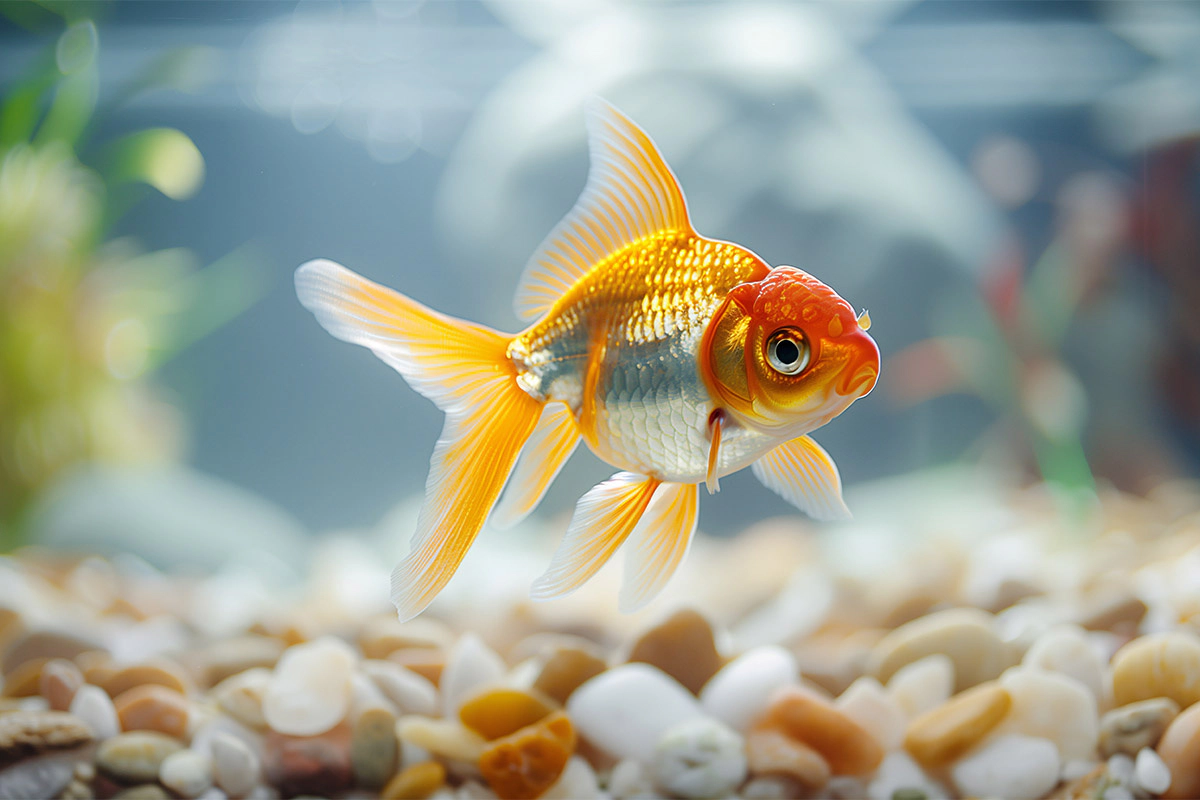
Health problems in goldfish are often first noticed in behavior and appearance. Disrupted swimming balance, decreased appetite, white spots, fin damage, cottony formations, abdominal swelling, and newly developed masses require early assessment.
When such changes are observed, aquarium conditions should be reviewed. In goldfish, issues such as swimming balance problems, infections, parasites, and ingestion of inappropriate substances can manifest in behavior. When choosing food for a
Swimming balance disorders
Swimming balance disorder is noticeable when the fish stays on the surface of the water, sinks to the bottom, lies on its side, or hangs upside down. Since the relationship between body form and swim bladder is more fragile, it may be more common in short-bodied fish.
This problem should not be attributed to a single cause. Swim bladder infections, anatomical predisposition, feeding patterns, and swallowing too much air while feeding from the surface are among the potential causes.
White spot disease
White spot disease is a contagious infection caused by the protozoan parasite Ichthyophthirius multifiliis. Small white cysts are seen on the skin, gills, and fins. One of the most important problems is its rapid spread.
In the early stages, weakness and darkening of the body color may be observed in addition to white spots. The condition may become more severe when gill involvement increases. Therefore, not just a single fish in the aquarium, but the entire system should be evaluated together.
Fin Rot
Fin rot is characterized by wear and tear and tissue loss starting at the edges of the fins. Bacterial factors are prominent. Unsuitable water conditions can also worsen the condition.
In the early stages, fin tips may become irregular. In advanced cases, redness, bleeding, ulcers, and deeper tissue loss may be observed. High organic load, low oxygen, temperature changes, and stress can create a breeding ground for bacterial outbreaks.
Fungal Infections
Fungal infections in goldfish are generally seen as cottony formations associated with Saprolegnia. These infections can appear as gray-white cottony masses on the skin, gills, around the eyes, or on the fins. Lesions that start on the surface can progress to deeper tissues.
What are the early signs of disease in goldfish?
Decreased appetite, lethargy, impaired swimming balance, rapid respiration, new lesions on the skin or fins, white spots, cottony coatings, persistent abdominal swelling, and newly developing masses are among the signs of disease in goldfish.
When these symptoms are observed, water parameters, filtration, and feeding schedule should be checked first. If the findings persist, a veterinarian should be consulted.
Reproduction in Goldfish

Goldfish are seasonally breeding fish. In nature, the main change that initiates breeding is an increase in temperature. In aquarium conditions, a similar temperature change can trigger breeding. For this, the water temperature is first lowered to approximately 10–12 degrees. Then, it is increased by approximately 2 degrees each day until it reaches the 20–23 degree range. Under these conditions, spawning behavior can be triggered.
It becomes somewhat easier to distinguish between male and female goldfish during the breeding season. Females generally appear rounder. The abdominal area may become fuller. In males, white breeding spots may be seen on the gill covers and pectoral fins. The pectoral fins may be longer and more pointed.
For breeding, there needs to be a surface in the aquarium where the eggs can attach. Aquatic plants provide a suitable area in this respect. The female lays her eggs on these surfaces. The male also participates in the process with external fertilization. If a suitable pair is planned, one pair can be used. A higher number of males can also be preferred.
Frequently Asked Questions

What is the ideal water temperature for goldfish?
The ideal water temperature varies depending on the species. For double-tailed ornamental goldfish, approximately 20–23 degrees is considered suitable, while for long-bodied species such as Comet and Shubunkin, the range of 16–21 degrees is more appropriate.
How should a goldfish aquarium be arranged and what equipment should be used?
A goldfish aquarium should be arranged to leave ample swimming space. A filter, water test kit, water conditioner, and a heater if necessary are among the basic equipment. Vegetation, hiding places, and safe decor also make the living space more suitable.
What are the best types of food for goldfish?
A varied feeding plan is more suitable for goldfish than a single type of food. Sinking pellet foods, thawed frozen foods, algae tablets, and gel foods can be included in this plan. The type of fish may change the feeding plan.
Which plants should be preferred in a goldfish aquarium?
Since goldfish can eat plants, more hardy species should be chosen. Anubias, Java fern, and hornwort are prominent options. It is also important that the plants are well fixed to the substrate.
How to clean goldfish water and choose an aquarium filter?
The filter should be chosen to be somewhat powerful, considering the high waste load of goldfish. The aquarium should not be completely emptied during cleaning; a partial water change of 10-25% should be done weekly.
What are the differences in care and feeding among goldfish species?
Single-tailed, long-bodied goldfish adapt more easily to a wider variety of foods. For double-tailed ornamental goldfish, however, due to their more compact body structure, food selection should be done more carefully. Sinking pellets and a more controlled feeding plan are more suitable for this group.
What conditions should be provided for goldfish breeding?
A separate aquarium with clean and balanced water should be prepared for goldfish breeding. The water temperature is generally kept between 20–23°C; In some cases, breeding can be supported by first providing a cooler period and then gradually increasing the temperature. Plants or suitable surfaces for the eggs to adhere to should be added, and the parents should be separated after spawning because they may eat the eggs. The eggs usually hatch within 3–7 days.
How should the lighting be in a goldfish aquarium?
The lighting in a goldfish aquarium should be moderate, regular, and should not overheat the aquarium. The aim is both to support the fish's natural day-night rhythm and to prevent unnecessary stress and algae growth.
Kaynaklar
https://www.thesprucepets.com/12-types-of-goldfish-5525618
https://injaf.org/aquarium-fish/the-goldfish-section/goldfish-and-their-diet/
https://www.aqueon.com/resources/care-guides/goldfish
https://www.nationalgeographic.com/animals/fish/facts/goldfish
https://www.spca.nz/advice-and-welfare/article/caring-for-goldfish
https://www.dpi.nsw.gov.au/dpi/biosecurity/aquatic-biosecurity/aquatic-pests-and-diseases/freshwater-pests/freshwater-finfish/goldfish
https://www.petmd.com/fish/goldfish-care-sheet
https://seagrant.psu.edu/resources/resource-item/goldfish-ais-fact-sheet/
https://www.sciencedirect.com/topics/agricultural-and-biological-sciences/goldfish
https://www.sciencedirect.com/science/chapter/edited-volume/abs/pii/B9780128210994000122
Advertisement
Advertisement
Keep exploring
Continue reading
Aquarium & Fish
Why Does Aquarium Water Smell?
The water is clear, the fish appear normal. However, a strong odor is present when approaching the aquarium.
Read guide →
Aquarium & Fish
How to Choose Aquarium Lighting?
The whole atmosphere of an aquarium can change the moment you turn on the light. Colors become more vibrant, the depth of the water and movement…
Read guide →
Aquarium & Fish
What are Aquarium Filter Materials? In What Order are They Used?
The water cleaning power of an aquarium filter depends on the materials inside it performing their functions correctly.
Read guide →
Aquarium & Fish
What is an Aquarium Heater, How to Choose One? How Many Watts of Heater are Needed?
The water in the aquarium is the entire environment in which the fish live. Excessively cold water or frequent temperature changes can cause stress…
Read guide →