Hachiko: The True Story and Monument of the Dog Symbolizing Loyalty
The crowd gathered in front of the Hachiko statue in Shibuya shows that a wait that began years ago is not forgotten today.
Advertisement
The crowd gathered in front of the Hachiko statue in Shibuya shows that a wait that began years ago is not forgotten today.
Today, the name Hachiko is seen as a symbol of loyalty in many parts of the world. A dog that greeted its owner at the station every day continues to return to the same spot even after its owner's death. Even after all these years, the impact of this story does not diminish; a real wait in Tokyo is passed down from generation to generation.
So what really happened, why did Hachiko become a symbol of loyalty, and what details were changed in the film adaptation?
Is Hachiko Real? Why is Hachiko So Famous?
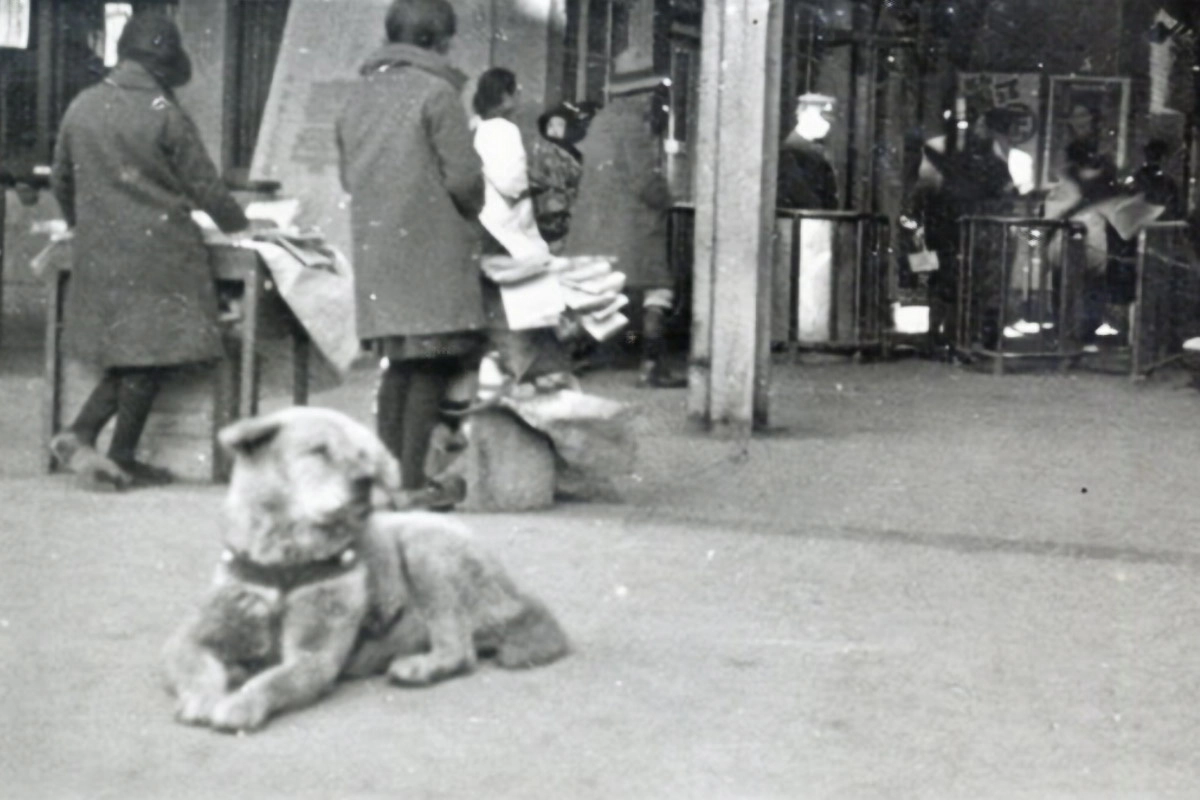
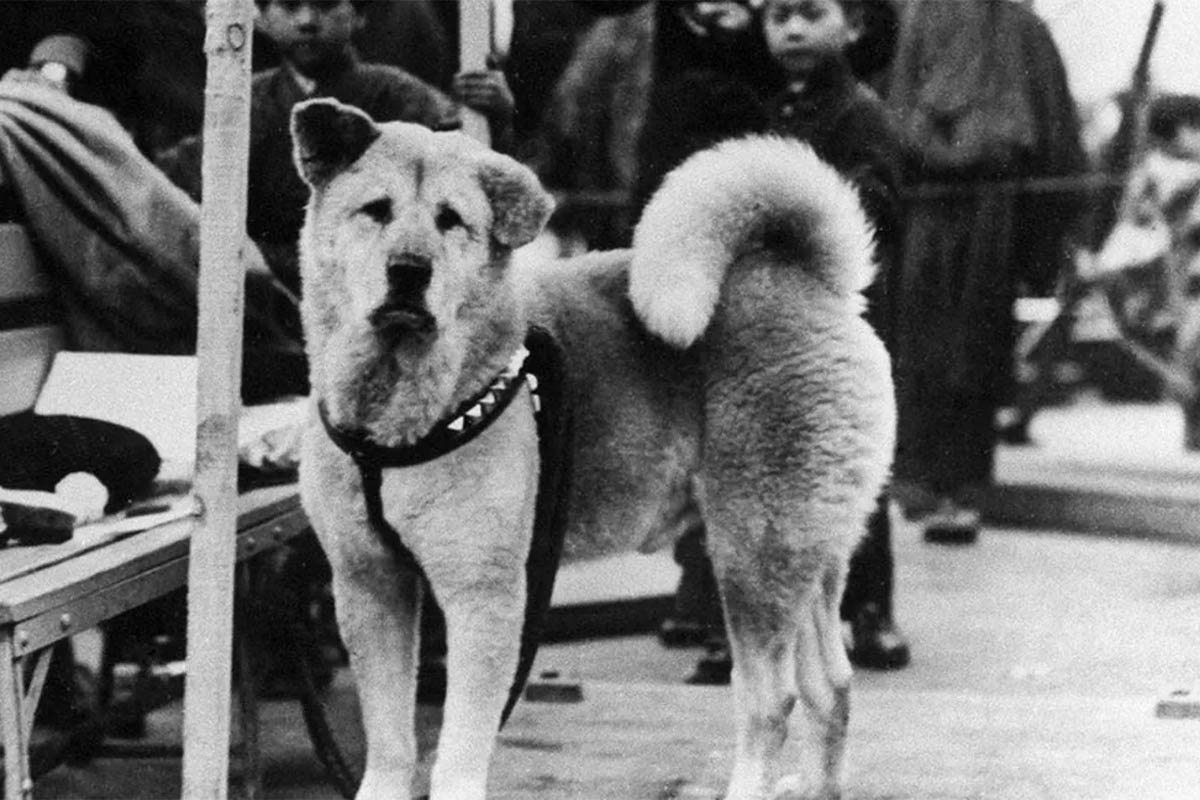
Hachiko is not a fictional character: His life, his owner Professor Ueno, and his wait at Shibuya Station are a real story recorded in historical records. It endures.
The main reason Hachiko became so famous is that he continued to return to the same spot even after his owner's death.
A newspaper article published in 1932 transformed Hachiko into a nationally recognized figure in Japan. The statue erected in his name in 1934 also cemented this story in public memory.
Later film adaptations, particularly the American film Hachi: A Dog's Tale, significantly contributed to Hachiko's worldwide recognition. Thus, Hachiko's story transcended historical memory in Japan and became known on an international scale.
The True Story of Hachiko
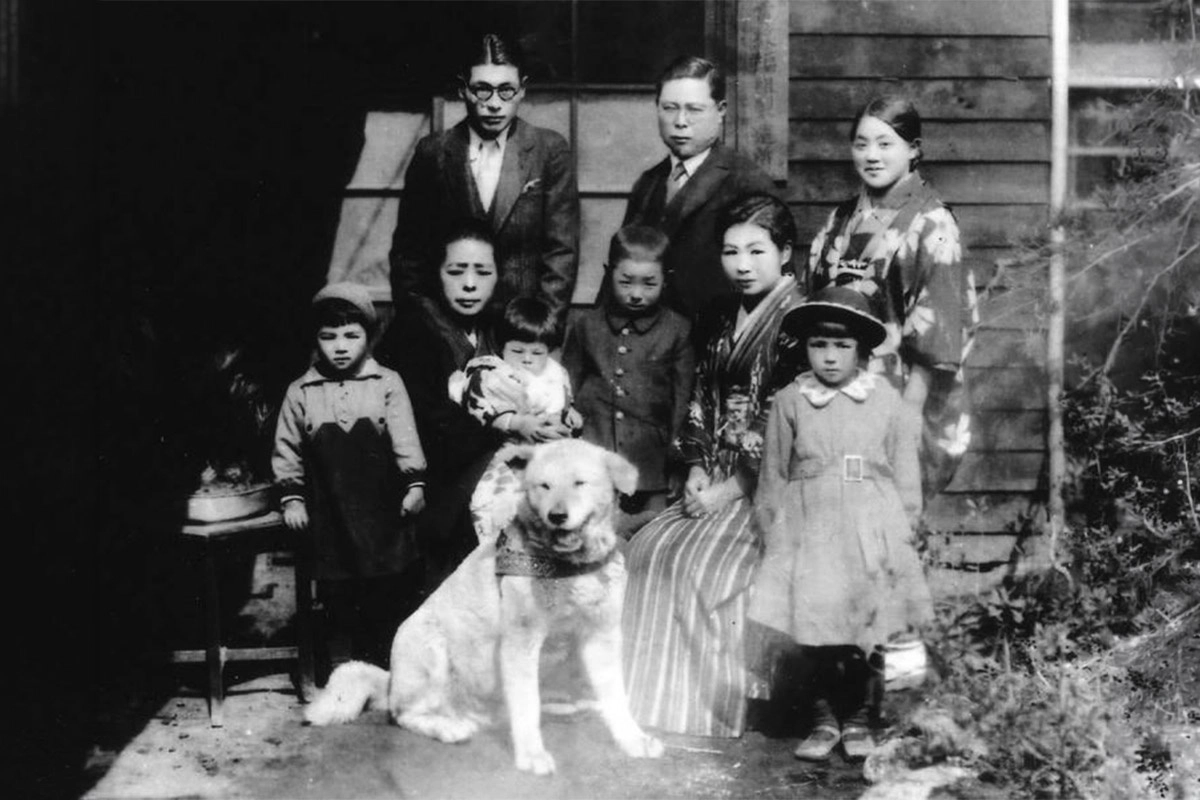
Born in 1923 in the Akita region of Japan, Hachiko's story begins with his adoption by Professor Ueno Hidesaburō in 1924. A strong bond quickly formed between Ueno, who worked at Tokyo Imperial University, and Hachiko.
Hachiko accompanied his owner to Shibuya Station every day and met him at the same spot at the end of the day. Shibuya Station became the center of the story with this daily routine. Since Professor Ueno commuted to work by train, Hachiko's waiting gradually attracted the attention of station employees, passengers, and local shopkeepers.
On May 21, 1925, Professor Ueno died of an illness at the university and could not return home. This was the turning point in the story. Hachiko, however, did not stop going to his familiar place; he continued to return to Shibuya Station, and this waiting continued for years.
Over time, the people around him got to know him better. There were those who nurtured him, protected him, and told his story to others. This early connection is why Hachiko comes to mind when Shibuya is mentioned today. The monument was erected later, and his fame spread later.
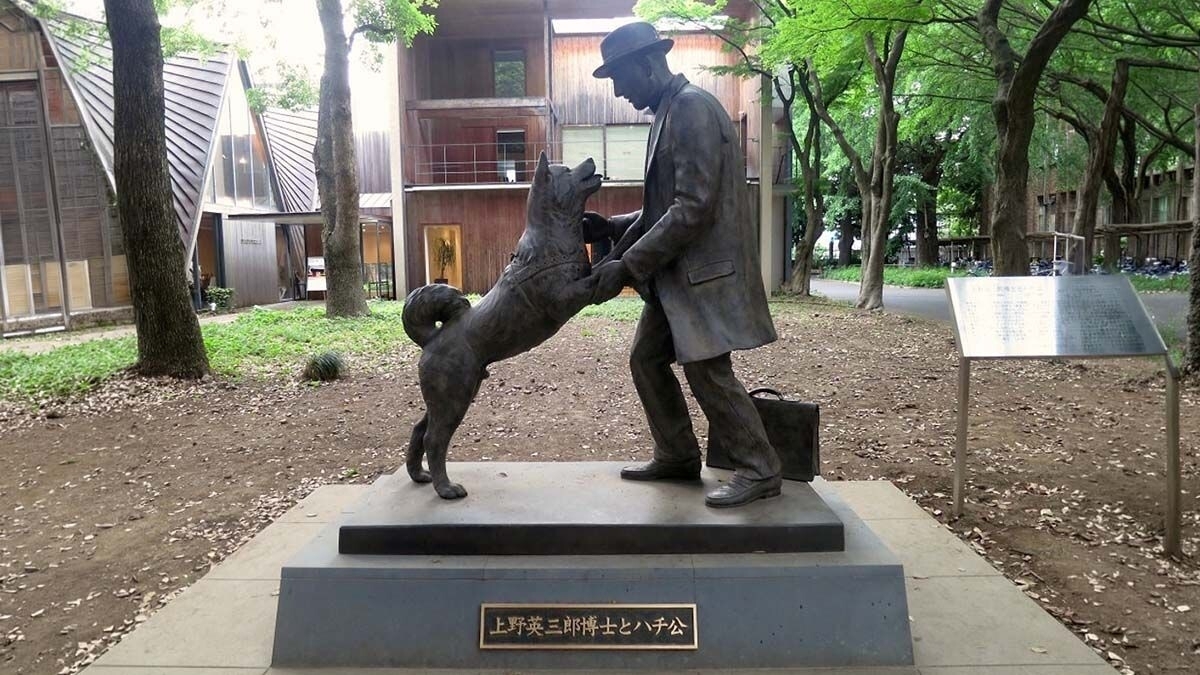
Over time, Hachiko's story transcended a personal narrative of loss and took a strong place in Japan's public memory. Hachiko, who became known nationwide with a newspaper article published in 1932, became a symbol of loyalty even during his lifetime with the statue erected at Shibuya Station in 1934. Although the original bronze statue was melted down during World War II, its reconstruction in 1948 at the request of the public showed that Hachiko was seen as a permanent figure in the collective memory. One reason for this symbolism's lasting impact is its visibility in Shibuya. The Hachiko Memorial is still remembered as one of the city's best-known meeting points today. The work of the University of Tokyo and the statue of Professor Ueno and young Hachiko on campus also show that this memory extends beyond popular culture. Hachiko's memory is not only kept alive through statues. In Aoyama Cemetery in Tokyo's Minato district, next to the grave of Professor Hidesaburō Ueno, there is a memorial dedicated to Hachiko.
Although the original bronze statue was melted down during World War II, its reconstruction in 1948 at the request of the public showed that Hachiko was seen as a lasting figure in the collective memory.
One reason for this symbolism's enduring appeal is its visibility in Shibuya. The Hachiko Memorial remains one of the city's most well-known meeting points today. The efforts of the University of Tokyo and the statue of Professor Ueno and young Hachiko on campus also demonstrate that this memory extends beyond popular culture.
Hachiko's memory isn't only kept alive through statues. In Tokyo's Minato district, at Aoyama Cemetery, next to Professor Hidesaburō Ueno's grave, there's a memorial dedicated to Hachiko.
Hachiko is not remembered as a story of the past; he continues to live on in Japanese society as one of the tangible representations of loyalty, fidelity, and remembrance.
Is the Hachiko Movie Real?

Hachi: A Dog's Tale, adapted from the true story of Hachiko, creates a more dramatic narrative by altering some important details. This is where the most significant difference between the legends and the facts about Hachiko begins.
In the true story, Hachiko was not a stray dog found by chance at the station. According to official sources regarding Shibuya, Prof. Ueno wanted to adopt an Akita dog, and Hachiko was brought from Akita to Tokyo for him. In the film, however, Parker Wilson finds a lost Akita puppy on his way home. So, in reality, there was a conscious adoption; in the film, a chance encounter is highlighted.
Another important difference emerges in the period after Professor Ueno's death. In the real story, Hachiko is not left abandoned at the station after losing his owner. He is entrusted to different places for a while, then stays with Kobayashi, Professor Ueno's former gardener.
Despite this, he continues to go back and forth to Shibuya Station. Some of the misinformation about Hachiko is concentrated here. Many people think he lived alone at the station for years. However, the point emphasized in the historical narrative is not that he was abandoned, but that he never stopped returning to the same spot even when living in a safe place.
Another difference between the film and the true story is seen in the character and narrative. The true story centers on Professor Ueno Hidesaburō of Tokyo Imperial University and Shibuya Station. The film, however, recreates this relationship through the character of Parker Wilson. Nevertheless, the common core of the two narratives remains the same. This fundamental story is the reason why Hachiko is so well-known worldwide.
Therefore, the most accurate answer to the question "Is the Hachiko film based on a true story?" is: Yes, it is adapted from a true story. Some details such as the first encounter, the location of the film, the manner of adoption, and the afterlife arrangement have been changed in the film.
Where is the Hachiko Memorial?

The Hachiko Memorial is located outside Shibuya Station in Tokyo. The official address is given as 2-1 Dogenzaka, Shibuya City, Tokyo. The main reason for the monument's recognition is its central location. Because it is very close to Shibuya Scramble Crossing, it has become one of the places easily accessible to both tourists and locals and adopted as a meeting point. Today, the Hachiko Memorial is one of Shibuya's most recognizable meeting points and holds a strong place in Tokyo's daily life. In this respect, the monument both makes Hachiko's story of loyalty visible and is constantly remembered within the vibrant flow of the city thanks to its location. How to Visit the Hachiko Memorial?
Its proximity to Shibuya Scramble Crossing makes it easily accessible and a popular meeting point for both tourists and locals.
Today, the Hachiko Memorial is one of Shibuya's most recognizable meeting points and holds a strong place in Tokyo's daily life. In this respect, the memorial both makes Hachiko's story of loyalty visible and, thanks to its location, is constantly remembered within the vibrant flow of the city.
How to Visit the Hachiko Memorial?

For those wishing to visit the Hachiko Memorial, the easiest option is to get off directly at Shibuya Station and follow the Hachiko Exit directions inside the station. Since the memorial is located just outside the station, there's no need to plan a long route.
Practical details to know before your visit are also quite simple: Because the memorial is in an open area, it can be seen quickly and is an easy stop to add to your Shibuya tour.
From a photography and environmental perspective, the most striking aspect of the memorial is its integration with the lively atmosphere of Shibuya. Therefore, in photographs taken, the flow of the city around it often stands out as much as the memorial itself. For those planning a quieter visit, choosing times when there are fewer crowds may provide a more relaxed experience.
Why Does Hachiko's Story Still Resonate Today?
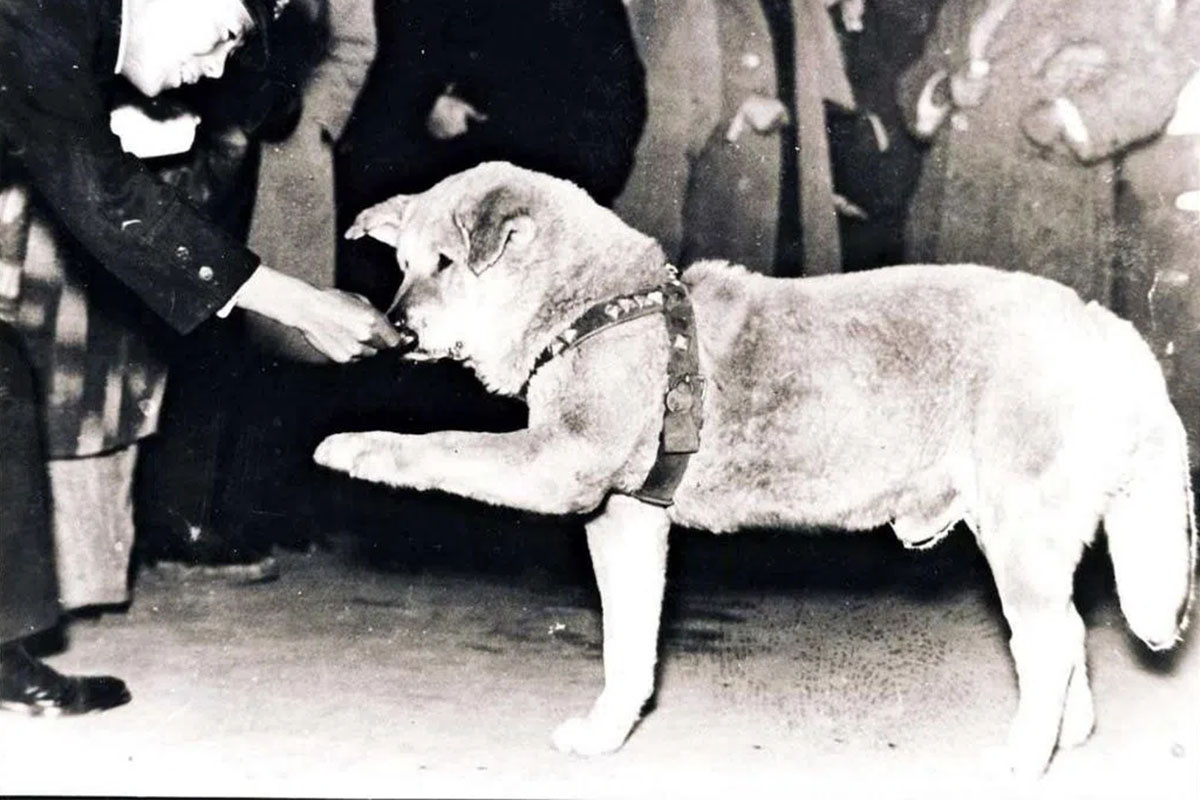
Hachiko's story resonates strongly today because it is not only based on a real event from the past, but is also constantly recalled in modern culture.
The 1987 Japanese film and the 2009 film Hachi: A Dog's Tale carried this story to new generations and different geographies.
His embalmed body, exhibited at the National Museum of Nature and Science in Tokyo, is also among the elements that still make his place in public memory visible today.
The statue erected on the Tokyo University campus in 2015, symbolizing the reunion of Hachiko and Professor Ueno, is one of the monuments that keeps this memory alive. Therefore, Hachiko is seen as a cultural symbol that continues to live on around loyalty, fidelity, and the human-animal bond.
Frequently Asked Questions
Is the story of Hachiko the dog based on a true story?
Yes. Hachiko is a real Akita inu born in 1923, and his owner was Professor Hidesaburō Ueno of Tokyo Imperial University.
What is the story of loyalty between Hachiko and his owner?
Hachiko accompanied Professor Ueno to the station every day and met him at the return time. Even after Ueno passed away in 1925, Hachiko continued to return to the same station for many years.
Why did Hachiko the dog become so famous in Japan?
His fame spread because he continued to wait even after his owner's death. A newspaper article published in 1932 made the story visible nationwide. Subsequently, a statue was erected, and Hachiko became one of the public symbols of loyalty.
What are some basic things to know about Hachiko the dog?
Hachiko is an Akita Inu. Born in Akita Prefecture in 1923, he came to Ueno's house in 1924, became synonymous with Shibuya Station, and died on March 8, 1935. Today, his memory is embodied in a monument, and his loyalty has become part of humanity's collective memory. Where is the Hachiko dog monument located and what is its significance? The most well-known Hachiko Monument is located just outside Shibuya Station in Tokyo. Its significance comes from symbolizing the spot where Hachiko greeted his owner and continued to return for years after his death. How accurately does the Hachiko dog film reflect the true story? The film preserves the emotional core of the story: the bond formed and the waiting that continues even after death. However, the 2009 American adaptation takes the events to the US; following the 1987 Japanese film, this version rearranges the true story for the screen.
Where is the Hachiko dog memorial located and what is its significance?
The most famous Hachiko Memorial is located just outside Shibuya Station in Tokyo. Its significance stems from the fact that it symbolizes the spot where Hachiko greeted his owner and continued to return for years after his death.
How accurately does the Hachiko the dog film reflect the true story?
The film preserves the emotional core of the story: the bond formed and the waiting that continues even after death. However, the 2009 American adaptation takes events to the US; following the 1987 Japanese film, this version re-edits the true story for the screen.
What legends exist about the relationship between the dog Hachiko and humans?
The most common confusion is that Hachiko was found by chance, as in the film's narrative. In the historical account, Hachiko is brought specifically for Professor Ueno. Another debate is whether the waiting is entirely explained by a sense of "duty"; some sources interpret it more in terms of bonding and loyalty.
Why is the dog Hachiko often cited as an example of loyalty?
Because loyalty is seen as a behavior that spans years. That is why Hachiko's name continues to live on in Japan as one of the strongest examples of narratives of fidelity and devotion.
What are the photographs and memorial works of the dog Hachiko?
Today, the most prominent memorial works are the Hachiko Memorial in Shibuya, the statue of Professor Ueno and Hachiko at the University of Tokyo, and the annual memorial ceremony held on March 8th. These memorials and archival images of Hachiko also stand out most prominently in visual memory.
Kaynaklar
https://www.u-tokyo.ac.jp/focus/en/features/z1304_00275.html
https://www.bbc.com/news/world-asia-65259426
https://www.nippon.com/en/japan-glances/jg00137/
https://japan-avenue.com/blogs/japan/hachiko
https://wamiz.co.uk/dog/advice/169612/incredible-facts-about-hachiko-the-dog-s-true-story
Advertisement
Advertisement
Keep exploring
Continue reading

Dog Lifestyle & Guides
The Unseen Risks of Excess Weight in Small Breed Dogs
Small breed Weight gain in dogs sometimes progresses unnoticed. Extra food added to the food bowl, treats given during the day, food offered from the…
Read guide →
Dog Lifestyle & Guides
Dental Health and Its Importance in Dogs
Dental health in dogs is often Bad breath doesn't become a concern until it's noticed. However, the problem often begins before the odor: Plaque…
Read guide →
Dog Lifestyle & Guides
Nasal Discharge in Dogs
If your dog has a runny nose, the first question that usually comes to mind is: Is this normal, or is there something I should be concerned about?
Read guide →
Dog Lifestyle & Guides
5 Exercise Suggestions for Overweight Dogs
Excess weight in dogs is a health problem that increases the load on the joints, reduces respiratory capacity, and silently lowers the quality of…
Read guide →