How to Choose an Aquarium Filter? Comparison of Internal, External, Hang-on, and Top Filters
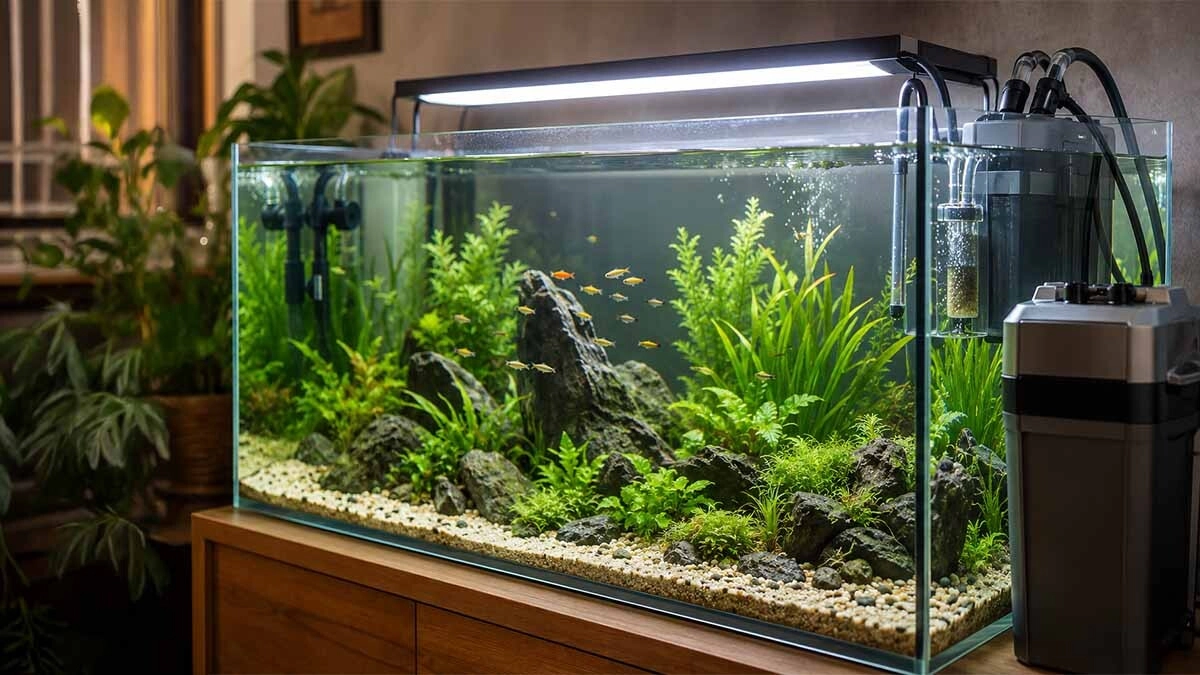
Choosing an aquarium filter when setting up a new aquarium is one of the fundamental steps that directly affects water quality and the health of the inhabitants. However, choosing a filter based solely on the catalog liters is not enough to find the right system.
Advertisement
Choosing an aquarium filter when setting up a new aquarium is one of the fundamental steps that directly affects water quality and the health of the inhabitants. However, choosing a filter based solely on the catalog liters is not enough to find the right system.
Aquarium filter types such as internal, external, hang-on, top, and UV filters perform mechanical and biological filtration functions with different installation structures. Therefore, when choosing the right aquarium filter, the net water volume of the aquarium, the live population, the flow requirements of the fish, the capacity of the filter materials, and the flow rate selection should be evaluated as a whole.
Warning: This content is for general information purposes only. The correct filter selection varies depending on the net water volume of the aquarium, the live population, and the flow requirements of the species.
What Does an Aquarium Filter Do?
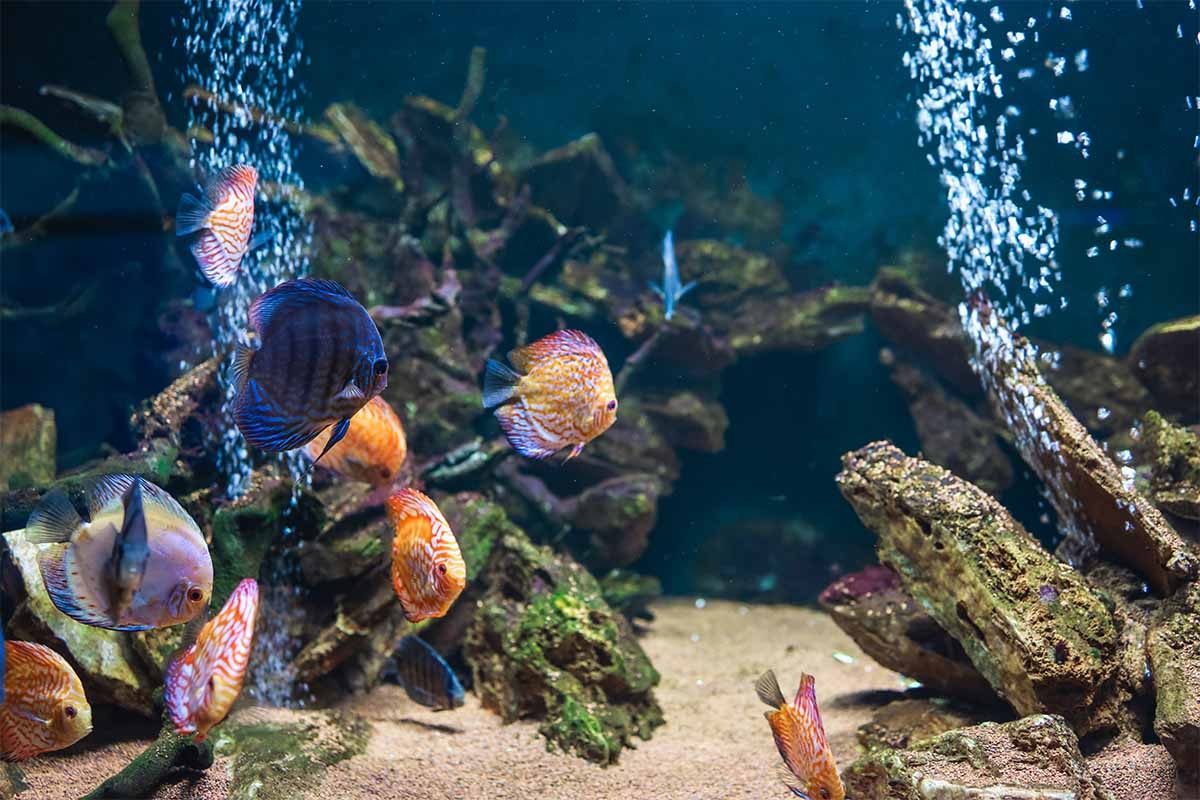
The filter is the heart of the system that keeps the aquarium water clean and balanced. It performs three functions simultaneously: It traps solid waste in the water, provides living space for beneficial bacteria, and supports oxygen exchange through water movement. Aquarium filters provide mechanical, biological, and, when necessary, chemical filtration. Mechanical filtration physically removes particles from the water. Biological filtration provides a surface for colonies of bacteria that convert ammonia and nitrite into nitrate, which is much less toxic. Chemical filtration retains specific dissolved substances when needed. The aquatic life support systems section of the Merck Veterinary Manual states that mechanical filtration should precede biological filtration. If coarse particles are not removed first, they can clog the biological bed and weaken the bacterial colony. The path of fish waste explains why biological filtration is so critical. The University of Florida IFAS reports that ammonia released from fish waste is first converted to nitrite, then to nitrate, and this conversion is facilitated by beneficial bacteria. As the biological load increases, the amount of ammonia released also increases, creating a need for a more powerful biological filter.
Aquarium filters provide mechanical, biological, and, when necessary, chemical filtration. Mechanical filtration physically removes particles from the water. Biological filtration provides a surface for colonies of bacteria that convert ammonia and nitrite into nitrate, which is much less toxic. Chemical filtration, when necessary, retains specific dissolved substances.
The aquatic life support systems section of the Merck Veterinary Manual states that mechanical filtration should precede biological filtration. If coarse particles are not removed first, they can clog the biological bed and weaken the bacterial colony.
The path of fish waste explains why biological filtration is so critical. The University of Florida IFAS reports that ammonia released from fish waste is first converted to nitrite, then to nitrate, and this conversion is facilitated by beneficial bacteria. As the biological load increases, the amount of ammonia released also increases, creating a need for a more powerful biological filter.
Caution: Using an aquarium filter does not replace regular water changes. Even the most efficient system cannot balance the nitrate that accumulates in the water beyond a certain point. Although nitrate is much less toxic than ammonia and nitrite, it can still cause problems for fish at high levels, so periodic water changes are an integral part of the system.
What to Consider When Choosing an Aquarium Filter?
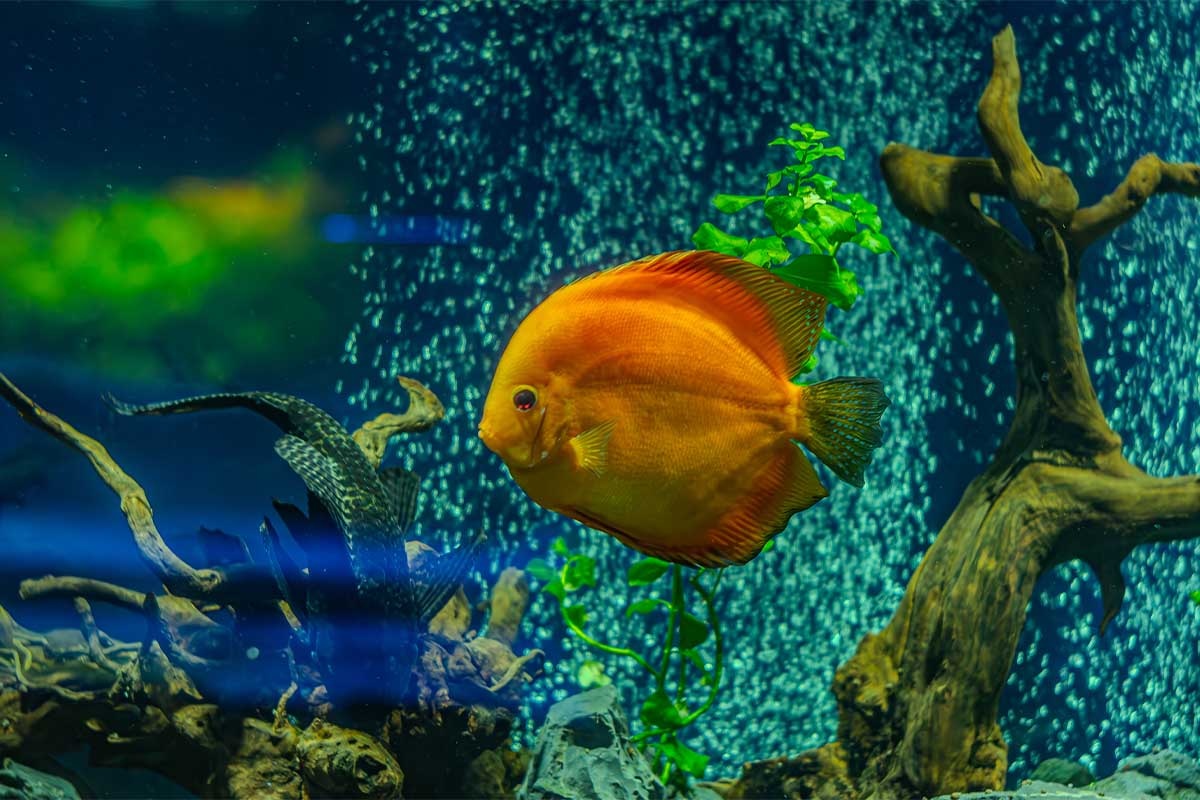
The right filter is chosen by looking at the intersection of several criteria, not just a single feature. Things to consider when choosing an aquarium filter can be listed as follows:
Net water volume of the aquarium: Decor, substrate, and equipment reduce the gross volume calculated from the glass size. It is more accurate to plan the filter capacity according to the actual water volume of the tank.
Number, size, and waste production of fish: A tank with high waste production or a crowded tank requires a strong biological capacity. The RSPCA Australia goldfish care guide emphasizes that for fish that produce a lot of waste, the filter should be selected with a strong capacity suitable for the live load.
Sensitivity of fish to strong currents: Some aquarium fish species prefer stagnant or slow-flowing water. Since strong water flow can make it difficult for these fish to swim, an adjustable flow filter provides flexibility.
Filter performance in actual use conditions: The flow rate value in the catalogs decreases with filter materials, hose length, and clogging. When choosing a model, the actual flow expected with a full tank of material should be considered.
Filter material capacity: The larger the surface area where bacteria can settle, the more robust the biological filtration will be. The volume of the material reservoir is one of the determining criteria for selection.
Installation area and space around the aquarium: External filters require space around the aquarium, while internal and hang-on filters occupy space in or around the tank. The available space narrows down the suitable aquarium filter options.
Ease of cleaning: In a system that requires frequent maintenance, practical access makes the job easier. Difficulty in reaching the material and impeller determines the ease of use in the long run.
Noise level, energy consumption and consumable cost: Noise level makes a difference in a tank near a bedroom. The energy consumption and the cost of changing materials of a continuously running device are also reflected in the total cost of ownership.
What Should the Flow Rate of an Aquarium Filter Be?
Filter flow rate is the amount of water passing through the filter in one hour and is expressed in L/h. The number of cycles is found by dividing the flow rate by the net water volume. For example, a flow rate of 500 L/h theoretically provides 5 cycles per hour in 100 liters of water. However, this number is not a fixed target that will suit every aquarium.
The correct flow rate is determined by the net water volume, live load, amount of waste, and the fish's tolerance to current. The volume and surface area of the filter media should also be taken into account. A high flow rate alone does not mean strong biological filtration. Biological capacity is determined by the filter media and the oxygenated water passing through it together.
The aquarium volume range specified by the manufacturer can be used as a starting point. Filter media and hose height can reduce the actual flow rate. Fish thrashing may indicate excessive flow, while a still water surface may indicate limited gas exchange. According to OATA, ammonia and nitrite should be 0 mg/L, and dissolved oxygen should be at least 6 mg/L. The adequacy of the filter is determined by monitoring water parameters, waste accumulation, and fish behavior together.
What are the Differences Between Internal, External, Hang-on, and Top Filters?
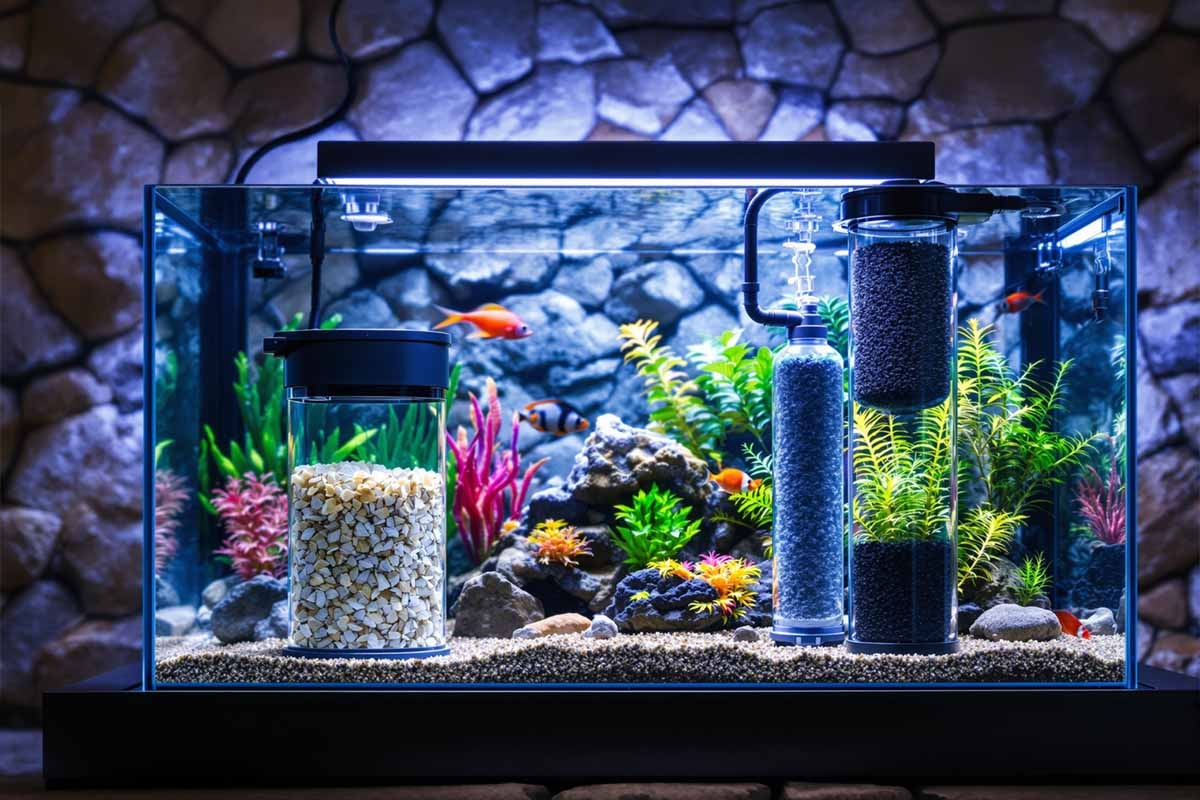
The four main filter types do the same job with different layouts and capacities. Fluval's freshwater aquarium filter selection guide compares the structural differences of these types based on the area they occupy, the volume of filter material, and ease of installation and maintenance.
What is an Internal Filter, and Which Aquariums is it Suitable For?
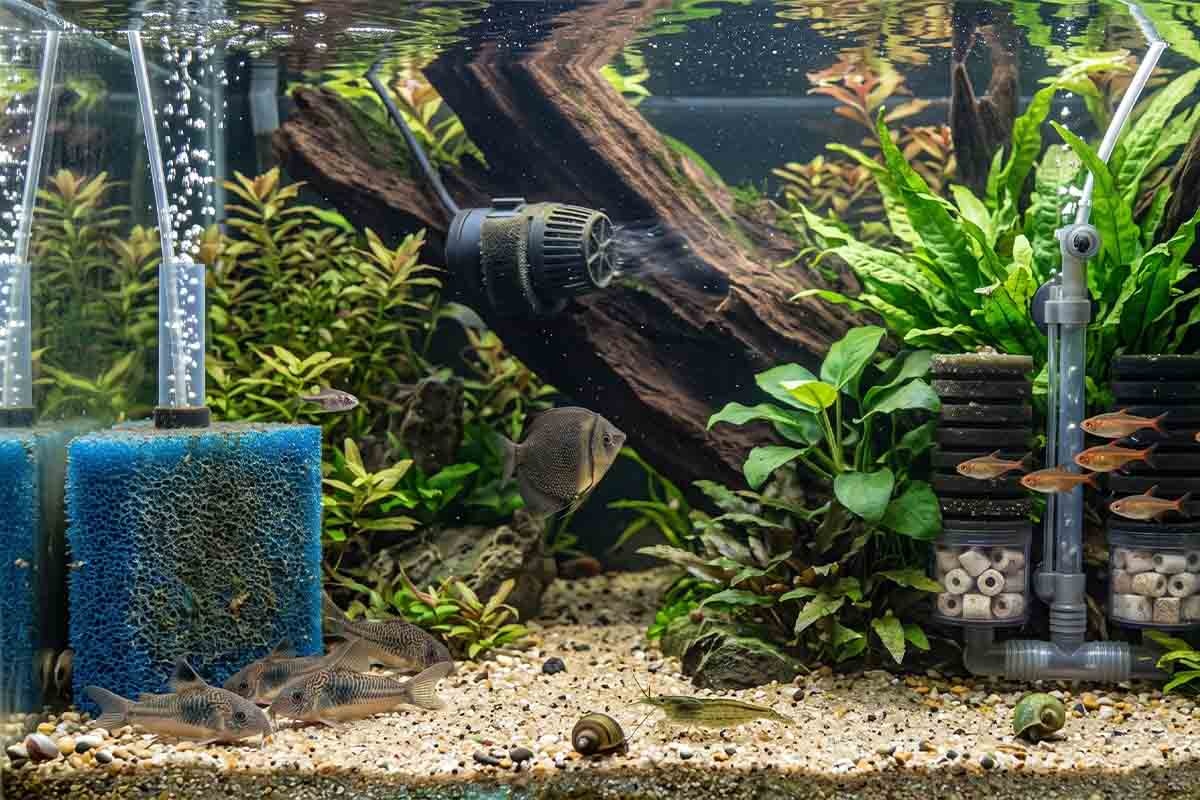
An internal filter is a compact solution that fits inside the aquarium. It works in small and medium-sized tanks without requiring a separate cabinet or external space. Installation and maintenance are simple. In most models, simply removing the filter from the water is sufficient to access the material. Since the material reservoir is relatively small, it may limit biological capacity in very crowded or large tanks. The space it takes up in the tank also affects the decor plan.
What is an External Filter, and Which Aquariums are they Suitable For?
An external filter is a system with a large reservoir located outside the aquarium. Thanks to its ample material volume, it offers powerful mechanical and biological filtration in medium and large tanks. The fact that it doesn't take up much space in the tank gives freedom in terms of decor. However, its installation requires more steps. Details such as inlet and outlet hoses, sealing, and air bleeding during initial operation require attention. Its large material capacity makes the external filter a strong choice in crowded tanks.
What is a Hang-On Filter, and Which Aquariums are they Suitable For?
A hang-on filter is a system that attaches to the edge of the aquarium and passes the water through a small external chamber and returns it. It takes up almost no space in the tank and is practical to install. It is suitable for small and medium tanks, for those looking for a simple solution. When choosing, it is necessary to consider its compatibility with the water level and lid structure of the aquarium. There should be enough space on the top edge of the tank for the hanging body and water inlet pipe. The material container is smaller compared to an external filter.
What is a Top Filter, and Which Aquariums is it Suitable For?
A top filter is a system that holds the filter chamber above the aquarium. A submersible pump inside the tank carries the water through a hose to the upper chamber, where the water passes through the filter materials and returns to the tank. The ability to layer different materials and access the chamber from the top makes filter maintenance easier. In return, it requires space for the chamber above the aquarium and a suitable lid arrangement. For the capacity of the top filter and the appropriate tank volume, it is best to refer to the values in the official manual of the model you purchased.
|
Filter type |
Highlight feature |
Dikkat edilmesi gereken nokta |
Suitable usage scenario |
|---|---|---|---|
|
Internal filter |
Compact, easy installation and maintenance |
Limited material capacity, takes up space in the tank |
Small and medium-sized tanks with low-to-medium live load |
|
External filter |
Large material volume, powerful Filtration |
More detailed installation, requires cabinet space |
Medium and large tanks, crowded or high waste producing tanks |
|
Hang-on filter |
Does not take up space in the tank, practical installation |
Water level and lid compatibility required |
Small-medium tanks, those seeking a simple solution |
|
Top filter |
Easy access to material, layered arrangement |
Requires top reservoir space and suitable lid |
Open top or suitable Medium-sized tanks with lids |
What Does a UV Filter Do and Can It Replace the Main Filter?
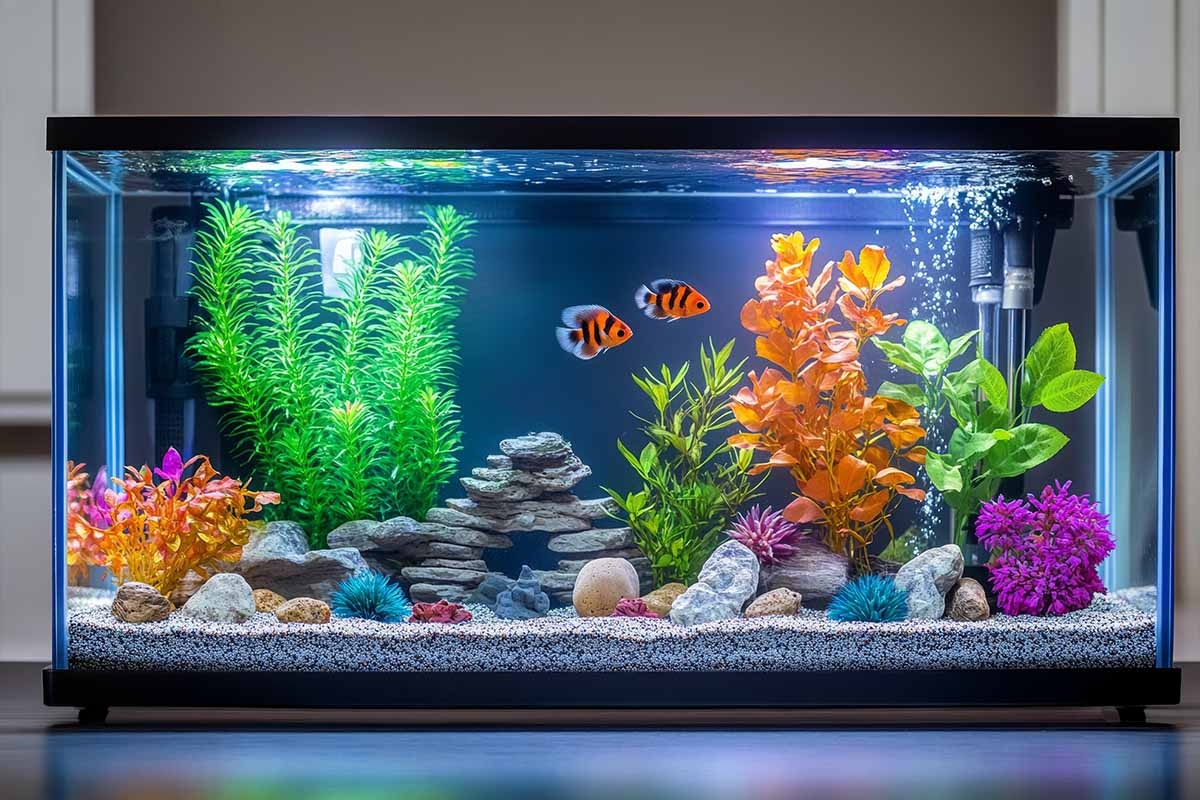
A UV filter is equipment that targets certain microorganisms that float freely in the water by passing the water through an ultraviolet lamp chamber.
The Merck Veterinary Manual states that UV is effective on microorganisms passing through the water, and its performance depends on the power of the device, the clarity of the water, and the flow rate. The expected effect decreases in cloudy water or with excessively fast flow.
Let's correct a common misconception. A UV filter performs a different process than mechanical and biological filtration. It does not filter out solid waste and does not provide a bacterial bed that transforms fish waste. In other words, it is not a direct alternative to an internal or external filter. UV only affects microorganisms in the water passing through the device; it does not target those attached to the fish or the bottom. Therefore, it is correct to consider the UV filter as an auxiliary piece of equipment that complements the main filter. It is not considered a mandatory device for every aquarium. How to Choose and Rank Aquarium Filter Materials? The actual performance of the filter is determined by the materials placed inside it. The materials are divided into three functions. Mechanical materials, such as sponges and fibers, filter particles in the water. Biological materials, such as ceramic rings and porous media, offer a large surface area for beneficial bacteria to settle.
Therefore, it is correct to consider the UV filter as an auxiliary piece of equipment that complements the main filter. It is not considered a mandatory device for every aquarium.
How to Choose and Sort Aquarium Filter Materials?
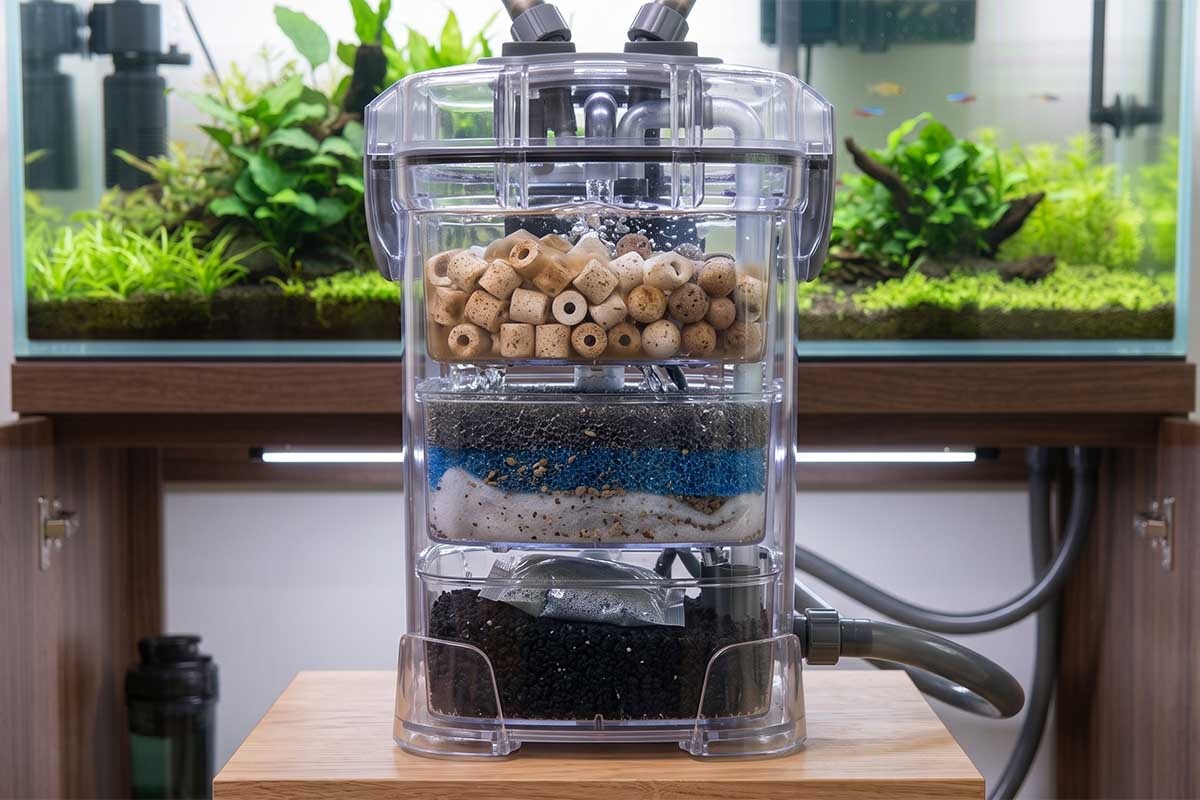
The actual performance of the filter is determined by the materials placed inside it. Materials are divided into three functions.
- Mechanical materials, such as sponges and fibers, filter particles in the water.
- Biological materials, such as ceramic rings and porous media, offer a large surface area for beneficial bacteria to settle.
- Chemical materials, such as activated carbon, are used to retain specific dissolved substances when needed and are not required to be constantly present in every tank.
When selecting aquarium filter material, care must be taken to ensure that it physically fits the filter model and meets the needs of the tank. Biological surface area directly affects the robustness of filtration, as emphasized in the RSPCA Australia water quality guidelines; therefore, the volume allocated to biological media should not be wasted.
Chlorine-containing tap water should not be used when cleaning the filter material. The OATA freshwater water quality guidelines recommend rinsing the material with water taken from the aquarium. Chlorine and chloramine in tap water can damage the colony of beneficial bacteria on the biological surface.
Arrangement is just as important as the selection. As we mentioned earlier, the general principle is that the water first passes through the mechanical material, then reaches the biological material. This way, particles are retained without clogging the biological bed. However, the exact sequence is not the same for every device. The direction of water flow within the filter and the manufacturer's instructions for the model determine the correct sequence. Frequently Asked Questions S069750S069751S069752S069752S069752S069752S069752S069752S069752S069752S069752S069752S069752S069752S069752S069752S069752S069752S069752S069753 ...
Frequently Asked Questions
Should the aquarium filter run 24 hours a day?
Yes, the filter should run continuously under normal use. The biological maturation of the filter takes time, and bacterial colonies depend on continuous water flow. Prolonged interruptions can reduce oxygen levels and bacterial activity within the filter. The level of risk varies depending on the filter type, interruption duration, and temperature. Closed external filters, in particular, should not be started directly after a long interruption without being checked.
Can an air pump replace an aquarium filter?
An air pump alone does not replace a filter. The bubbles from the air stone support surface movement and gas exchange. A pipe or sponge filter connected to the air pump can provide mechanical and biological filtration by passing the water through the sponge.
Can two different filters be used together in an aquarium?
Yes, they can. In tanks with high live populations or large tanks, multiple filters can be used together to increase the total filtration capacity. In such a setup, care should be taken to ensure that the total water flow is not too strong for the fish and that species sensitive to currents can find a calm area.
Are all filter materials replaced at the same time?
No, not all materials are managed according to the same schedule. Regular replacement of biological materials is often not necessary. The main goal is to maintain the established bacterial colony. When the sponges wear out, the filter fiber should be replaced more frequently depending on usage, and chemical materials such as activated carbon should be replaced according to the manufacturer's instructions. The entire biological surface should not be lost at once. Why does an aquarium filter make noise? There are several possible causes of noise. For example, a dirty or worn impeller assembly can cause noise. In addition, air trapped in the chamber, resonance caused by the body contacting the cabinet or glass, and faulty installation can also be sources of noise. It is the correct approach to check the impeller, air trapped, and installation together, rather than attributing it to a single cause.
Akvaryum filtresi neden ses yapar?
There are multiple possible causes of noise. For example, a dirty or worn impeller assembly can cause noise. In addition, trapped air in the chamber, resonance caused by the housing touching a cabinet or glass, and faulty installation can also be sources of noise. Instead of attributing it to a single cause, it is correct to check the impeller, air trapped, and installation together.
Kaynaklar
https://www.merckvetmanual.com/exotic-and-laboratory-animals/aquatic-systems/aquatic-life-support-system-components
https://www.merckvetmanual.com/exotic-and-laboratory-animals/aquaculture/production-methods-in-aquaculture
https://ask.ifas.ufl.edu/publication/FA031/pdf
https://kb.rspca.org.au/categories/companion-animals/fish/why-is-water-quality-important-when-setting-up-a-fish-aquarium
https://kb.rspca.org.au/categories/companion-animals/fish/how-should-i-care-for-my-goldfish
https://ornamentalfish.org/wp-content/uploads/How-to-understand-test-water-quality-in-freshwater-aquariums-Sept-2022.pdf
https://ornamentalfish.org/wp-content/uploads/How-to-set-up-and-maintain-a-freshwater-aquarium-Sept-2022.pdf
https://fluvalaquatics.com/ca/blog/choosing-a-filter-for-your-freshwater-tank
https://fluvalaquatics.com/ca/faqs/c-series
https://manuals.plus/asin/B0797WJKWZ.pdf
Advertisement
Advertisement
Keep exploring
Continue reading
Aquarium & Fish
Why Does Aquarium Water Smell?
The water is clear, the fish appear normal. However, a strong odor is present when approaching the aquarium.
Read guide →
Aquarium & Fish
How to Choose Aquarium Lighting?
The whole atmosphere of an aquarium can change the moment you turn on the light. Colors become more vibrant, the depth of the water and movement…
Read guide →
Aquarium & Fish
What are Aquarium Filter Materials? In What Order are They Used?
The water cleaning power of an aquarium filter depends on the materials inside it performing their functions correctly.
Read guide →
Aquarium & Fish
What is an Aquarium Heater, How to Choose One? How Many Watts of Heater are Needed?
The water in the aquarium is the entire environment in which the fish live. Excessively cold water or frequent temperature changes can cause stress…
Read guide →