How to Choose Aquarium Sand? How Many Kilograms of Sand Are Needed for an Aquarium?
Aquarium sand is often chosen based on its color, grain appearance, or package weight. However, similar-looking substrate materials can produce different results in terms of fish burrowing behavior, plant rooting, and water parameters. Insufficient sand will not meet the planned substrate height.

Advertisement
Aquarium sand is often chosen based on its color, grain appearance, or package weight. However, similar-looking substrate materials can produce different results in terms of fish burrowing behavior, plant rooting, and water parameters. Insufficient sand will not meet the planned substrate height.
The right choice requires answering two questions together: Which sand is suitable for the aquarium and how many kilograms should be purchased? The type of sand is chosen according to the inhabitants and the setup plan. The quantity is calculated based on the internal substrate dimensions of the tank, the target height, and the density of the product.
Warning: The preparation and usage conditions of aquarium sands may vary depending on the product. Check the packaging instructions and the substrate requirements of the inhabitants before setup.
What Should Be Considered When Choosing Aquarium Sand?

When choosing aquarium sand, the type of fish, grain size, plant arrangement, substrate height, ease of maintenance, and the material's effect on water parameters should be considered together. The best aquarium sand is the one that is compatible with the needs of the inhabitants in the setup and the targeted water conditions.
The following points should be considered when choosing aquarium sand:
Bottom behavior of fish: Fish that forage for food at the bottom, dig in the sand, or filter are in constant contact with the bottom. For these species, aquarium sands that are suitable for their mouth and whisker structures and do not contain sharp edges should be selected.
Aquarium sand grain size: Fine grains create a digging surface, while food and organic residues can accumulate between large grains. Since very light sands can be displaced by strong currents, the direction of the filter's flow should also be taken into account.
Plant plan: Plants that feed intensively through their roots can benefit from nutrient-rich substrates or supports applied to the root zone. In planted aquarium setups using inert sand, nutrient needs can be met with a separate plan.
Effect on water parameters: Inert substrate materials do not create a significant change in water chemistry. However, materials containing coral or aragonite can increase pH and water hardness. The mineral composition of the product should be compatible with the water parameters required by the organisms being kept.
Substrate height: The thickness of aquarium sand is determined according to the root structure of the plants, the burrowing behavior of the fish, and the planned appearance. When the target height is clarified before purchase, the amount of aquarium sand needed can be calculated more accurately.
Ease of maintenance: The particle size affects where waste will accumulate at the bottom and how bottom cleaning should be performed. The chosen sand should be compatible with the cleaning routine the aquarium owner can maintain. Color and appearance can be evaluated after options that meet these criteria have been determined. Thus, aesthetic preference is balanced with the needs of the inhabitants and the setup. What are the Types of Aquarium Sand and Substrate Materials? Aquarium substrate materials can be grouped according to their function as inert mineral substrates, active or nutrient-rich plant substrates, and calcium carbonate substrates that affect water chemistry. The distinction between fine sand, coarse sand, and gravel indicates the grain size of the material. This distinction is important. A product can be fine-grained, silica-based, and inert at the same time. Another product may be coarse-grained, calcium carbonate-based, and increase water hardness. Each expression that makes up the product name describes a different characteristic of the material.
Color and appearance can be evaluated after options meeting these criteria have been determined. This balances aesthetic preference with the needs of the animals and the setup.
What are the Types of Aquarium Sand and Substrates?
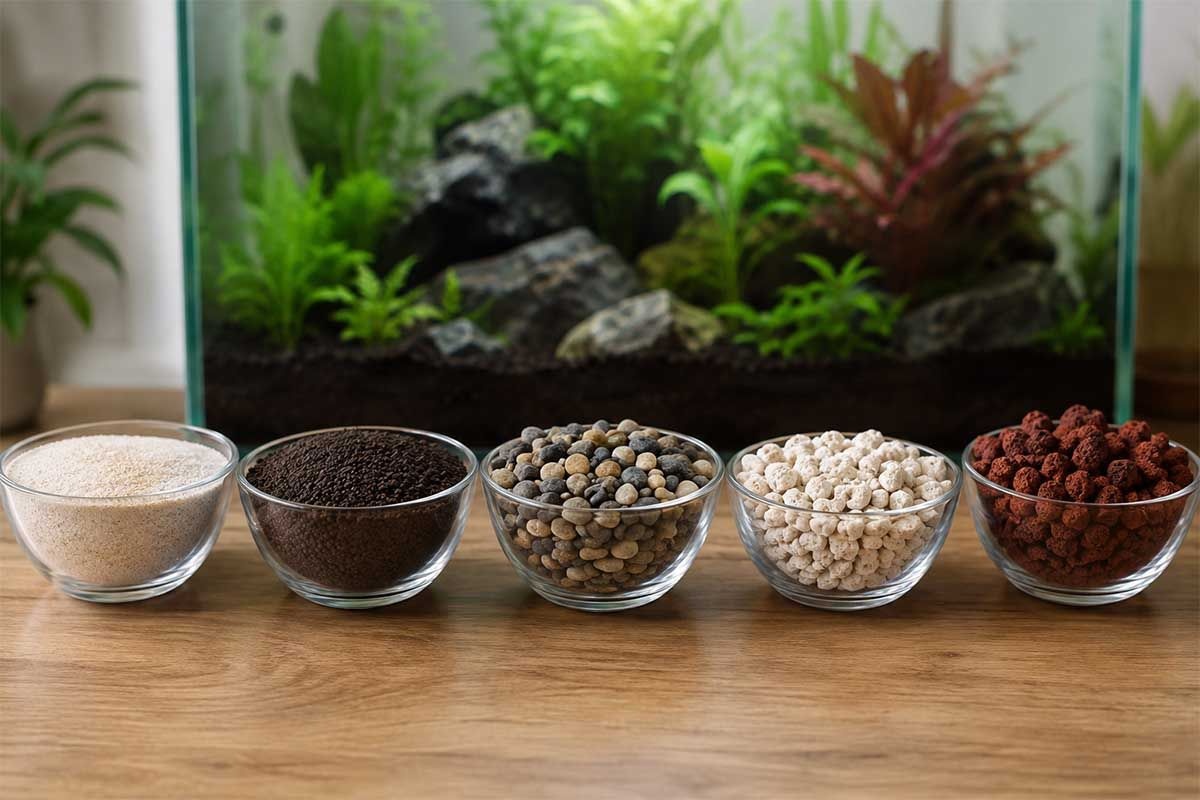
Aquarium substrates can be grouped according to their function as inert mineral substrates, active or nutrient-rich plant substrates, and calcium carbonate substrates that affect water chemistry. The distinction between fine sand, coarse sand, and gravel indicates the grain size of the material.
This distinction is important. One product can be fine-grained, silica-based, and inert at the same time. Another product can be coarse-grained, calcium carbonate-based, and increase water hardness. Each word in the product name describes a different property of the material.
|
Terim |
What does it describe? |
Basic distinction |
|
Silis veya kuvars kumu |
Mineral composition |
Generally inert structure |
|
Inert sand |
Effect on water chemistry |
No significant change in pH and hardness expected |
|
Bitki kumu |
Commercial use purpose |
Besleyici veya inert olabilir |
|
Aktif toprak |
Nutrient and chemical function |
May affect water values depending on the product |
|
Coral sand and aragonite |
Mineral structure |
May increase pH and hardness |
|
Fine or coarse sand |
Grain size |
Behavior, maintenance and flow compatibility |
|
River sand |
Source of the material |
Sufficient information about content and safety does not provide information |
Inert Aquarium Sands: Silica, Quartz, and Inert Gravel
Inert sand and gravel are ineffective substrate materials that are not expected to significantly alter the pH and hardness of aquarium water. Silica sand, quartz sand, and inert gravels of various sizes can be included in this group.
The definition of “inert” describes the effect of the material on water chemistry. Grain size and surface structure are separate characteristics. Fine silica sand and coarse quartz gravel can both be inert. When evaluating suitability for fish, the smoothness, size, and ease of maintenance of the grains should be examined.
Not every material containing silica or quartz should be considered suitable for aquariums. The purity of the product, whether it contains paint or coating, and its suitability for aquarium use should be checked. Products prepared for aquariums offer a more controlled choice than sands of unknown origin.
Inert substrates provide a ground for plant roots to anchor to but do not directly provide nutrients to plants. If root-feeding plants are to be grown, root fertilizer or another fertilization plan compatible with the setup can be used.
Active Soil and Nutrient Plant Substrates
Active soil and nutrient substrate are related concepts, but they do not describe the same characteristic. The term "active" indicates that the product can affect water chemistry. The term "nutrient" describes the nutrient content provided to plant roots.
A product can have both active and nutrient properties. Some plant substrate products consist of inert granules that plants can anchor to and do not directly contain nutrients. Therefore, one should not be satisfied with the "plant substrate" statement on the packaging; it should be checked whether the product is active, inert, or nutrient.
When choosing planted aquarium substrate, consider where the plant obtains its nutrients. For plants that feed intensively through their roots, nutrient substrate, active soil, or fertilizer tablets placed around the roots can be used. These supports increase nutrient access in the root zone.
For plants that obtain most of their nutrients from the aquarium water, inert aquarium substrate can be preferred. Plants that grow by attaching themselves to rocks or logs do not need to be planted in the substrate. BRS Fresh evaluates the selection of plant substrate and nutrient substrate based on the plant's root structure and feeding habits. The correct substrate plan provides nutrients to the area where the plant can actually use them.
The washing of active and nutrient products, the initial setup process, and their effect on water parameters may vary depending on the product. The manufacturer's preparation instructions should be followed during application.
Coral Sand, Aragonite, and Substrates Affecting Water Values
Coral sand and aragonite are substrate materials rich in calcium carbonate. This structure can increase the pH, alkalinity, and hardness values of the water. The level of effect varies depending on the composition, grain structure, and aquarium conditions of the product.
These substrates can be used in marine aquariums and in setups for some freshwater fish that are compatible with hard, alkaline water. When selecting, the target pH and hardness values should be compared with the effect of the product.
Differences Between Fine Sand, Coarse Sand, and Gravel
The distinction between fine sand, coarse sand, and gravel is based on the physical grain size of the aquarium sands. This classification does not indicate the mineral composition of the sand or its effect on water values.
Fine and smooth grains can provide a suitable surface for fish that dig in the sand or forage for food by scooping it up with their mouths. Very light grains can be carried away by strong currents. Their tendency to compact when they form a thick layer should be included in the maintenance plan.
Coarse sand and gravel create a heavier substrate. The spaces between the grains can allow food and organic waste to move downwards. Bottom siphoning should be done in a way that reaches these spaces.
The choice between sand and gravel depends on the behavior of the fish, plant roots, filter flow, and the cleaning schedule that can be applied. Thus, grain size is not a visual preference independent of other features of the setup.
How to Choose Aquarium Sand According to Fish Species?

When choosing aquarium substrate according to fish species, how the fish interacts with the substrate should be evaluated. Fish that dig in the sand, hold sand in their mouths, bury themselves in the sand, or forage for food at the bottom have different needs.
Fish that forage by taking sand in their mouths: Smooth grains of sand of a size suitable for the fish's mouth structure should be preferred. Fine sand can support the natural foraging behavior of fish that filter the bottom with their mouths.
Fish that dig in or bury themselves in the sand: A substrate that is easily movable and has no sharp edges is suitable. The weight of the sand should be considered as well as its grain size. Very light sands can be blown away by strong water currents and disrupt the substrate.
Bottom-dwelling fish with sensitive mouths or whiskers: Round and smooth grains help the fish move comfortably while traversing the bottom. Sharp-edged gravel should be avoided, and a regular maintenance plan should be established to prevent the accumulation of food scraps and waste. Bottom cleaning is as effective as the sand's composition in protecting the fish's delicate tissues.
Fish with limited contact with the bottom: Sand selection can be made according to the plant scheme, maintenance method, and water parameters. However, materials with sharp surfaces, paint that can bleed into the water, or unknown mineral composition should not be used.
The appropriate aquarium sand for bottom-dwelling fish is a material with a smooth surface, no sharp edges, and a grain size suitable for the fish's mouth structure.
Whether to use fine or coarse sand also depends on the fish's behavior. For fish that filter and dig in the substrate, fine, smooth sand may be more functional. In setups with fish that don't dig in the substrate, coarse sand or aquarium gravel with a suitable surface texture can be considered. Current strength, cleaning method, and plant plan should also be included in the final decision.
Which Sand Should Be Preferred for a Planted Aquarium?

The right substrate for a planted aquarium is the material that combines the plant's feeding method with the fertilization plan of the setup.
Planted aquarium substrate should be selected according to the root structure, feeding method, and target water parameters of the plants to be grown. Inert sand, nutrient substrate, and active soil can be used in different setup plans.
Root-feeding plants: Plants that develop a well-developed root system benefit more from the nutrients in the substrate. Nutrient substrates or active soils can create a suitable root zone for these plants. If inert sand is used, root fertilizer support can be used according to the plant's needs.
Plants that feed from the water column: In plants that obtain most of their nutrients through their leaves and stems, the nutritional value of the substrate is less important. Some plants that cling to rocks or logs are not planted in sand. In such setups, inert aquarium sand can be used for decoration and substrate arrangement.
Inert sand: Allows for a more controlled setup without significantly changing water parameters. It does not provide plant nutrients on its own. It can be supplemented with liquid fertilizer or root fertilizer depending on the plant selection.
Active soil: Some products provide nutrients to plant roots while also affecting water parameters such as pH and carbonate hardness. The level of effect varies depending on the product formula. The needs of the fish, the water used, and the manufacturer's usage instructions should be considered together.
Nutrient substrate: Nutrient-containing material can be used under the main substrate. It may need to be covered with suitable sand or gravel. Since the application method varies depending on the product, the packaging instructions should be followed.
Grain size affects the success of plant rooting and anchoring to the substrate. Very large grains can make it difficult to anchor plants with fine roots. In very fine and tightly packed sands, planting and root zone maintenance can be difficult. A grain structure that allows plant roots to anchor, does not easily disintegrate, and can be controlled during maintenance should be preferred.
What Should the Sand Thickness Be in an Aquarium?

The thickness of aquarium sand is determined according to the purpose of the setup. A substrate without plants, a substrate where rooted plants will be grown, and an aquascape setup that rises towards the back do not require the same height.
Sand thickness for standard, plantless aquariums: In most freshwater setups, a sand height of approximately 2.5–5 cm can be used. This range covers the substrate, leaves room for fish to forage, and allows for regular surface cleaning.
Sand thickness for planted aquariums: For rooting plants, a substrate height of 5 cm and above is generally preferred. The depth increases the area where roots can spread and helps plants remain stable at the bottom.
Sand thickness for sloping aquascape substrates: The front section can be kept lower and the back section higher. For example, a flat slope using 3 cm in the front and 7 cm in the back has an average height of approximately 5 cm. This average value can be used when calculating the amount of sand.
Sand thickness for aquariums using a nutrient substrate: The total thickness consists of the combination of the substrate and the top sand. The height of each layer should be adjusted according to the intended use of the product. The layer arrangement recommended by the manufacturer should be maintained.
Sand thickness for aquariums with digging fish: The extent to which the fish moves the sand should be taken into account. Insufficient depth may expose the substrate glass. In high substrates, areas where food scraps and waste may accumulate should be checked regularly.
How Many Kilograms of Sand are Needed for an Aquarium?
The amount of sand needed for an aquarium is calculated using the length and width of the substrate, the target sand height, and the density of the product. If aquariums with the same liter volume have different substrate dimensions, their sand requirements may also vary.
Aquarium Sand Calculation Formula

First, the required substrate volume is found:
Length (cm) × width (cm) × sand height (cm) ÷ 1,000 = substrate volume (L)
If 5 cm of sand is to be placed in an 80 × 35 cm substrate:
80 × 35 × 5 ÷ 1.000 = 14 L
This result does not mean that 14 kilograms of sand are needed. Silica sand, gravel, and activated soil can have different weights in the same volume.
The following formula is used for calculating kilograms:
Base volume (L) × product density (kg/L) = required amount of sand (kg)
If the kg/L value of the product is not specified, the package volume or the manufacturer's coating information should be checked.
How to Calculate the Amount of Sand on Sloping Bases?
For bases that rise evenly from front to back, the average height is used:
(Front height + back height) ÷ 2 = average sand height
If the sand is 3 cm at the front and 7 cm at the back, the average height is 5 cm. This value is added to the main volume formula.
In terraced or irregular aquascape designs, the base can be divided into sections for calculation. A closer result is obtained when the volume of each section is added together.
Should Aquarium Sand Be Washed Before Use?

Inert aquarium sand and gravel can be rinsed before adding to the tank unless the manufacturer recommends otherwise. The rinsing process removes dust and loose particles that may have accumulated during transport.
The sand should be placed in a bucket that has not previously come into contact with detergent or cleaning products.
Then, clean water should be added and gently mixed, and the cloudy water should be poured out. The process can be repeated until the water becomes largely clear. Soap or chemical cleaners should not be used.
Caution: Active substrate, nutrient substrate, and products labeled "do not rinse" should not be rinsed. Rinsing may affect the product's structure or its components. Brand instructions should be followed for these products.
When Should Aquarium Sand Be Changed?

Inert aquarium sand is not a material that needs to be completely replaced at regular intervals. Surface waste can be removed with regular water changes. New sand of the same type can be added to areas that are missing or have deteriorated in appearance.
Contamination of the sand with an unsafe substance, deterioration of its coating, or undesirable effects on water parameters may necessitate a change. In an established aquarium, removing the entire substrate can cloud the water and stir up accumulated waste, so the process should be carried out according to a plan.
The nutrient or water conditioning effects provided by active soil and nutrient substrates may decrease over time. The replacement time should be determined according to the product's lifespan, plant growth, water measurements, and manufacturer's instructions. A decrease in nutrient effectiveness does not necessarily require a complete replacement of the substrate. Depending on the setup, the use of root fertilizers or regional renewal can be considered.
Mistakes Made When Choosing Aquarium Sand

- Choosing sand based solely on color: Appearance should be considered after evaluating fish behavior and the material's effect on water parameters.
- Ignoring grain size: Large or sharp grains can hinder the natural behavior of fish foraging and digging in the substrate.
- Failure to control the effect on water chemistry: Substrates containing calcium carbonate, such as coral sand and aragonite, can affect pH and hardness. These materials should be matched to the target water values.
- Failure to consider plants: Inert sand does not provide direct nutrients to plants. Root-feeding plants may require a nutrient substrate or an appropriate fertilization plan.
- Determining the amount of sand according to aquarium liters: The correct calculation is based on the length, width, and target sand height of the substrate. The equivalent in kilograms is determined according to the density of the product.
- Rinsing all substrate materials: Inert sand and gravel can be rinsed. For active soil and nutrient substrates, the manufacturer's usage instructions should be followed.
Frequently Asked Questions

How many kilograms of sand are needed for a 50-liter aquarium?
The amount of sand in a 50-liter aquarium is calculated according to the base dimensions. If the base is 50 × 30 cm and the sand height is 4 cm, approximately 6 liters of material are needed. The kilogram value is determined according to the density of the product. Generally, since 1 liter of sand is equivalent to 1.5 kg, approximately 9 kg of aquarium sand may be needed for a 50-liter aquarium.
How many kilograms of sand are needed for a 60-liter aquarium?
Approximately 7.2 liters of sand are used for a 60 × 30 cm base and a 4 cm height in an aquarium. The need changes as the shape of the tank and the desired base height change. If 1 liter of sand weighs approximately 1.5 kg, then the required amount is 10.8 kg, or approximately 11 kg of sand. The equivalent in kilograms changes depending on the density of the product.
How many kilograms of sand are needed for a 100-liter aquarium?
For a 100-liter aquarium with a base of 80 × 35 cm, approximately 14 liters of substrate material are needed for a height of 5 cm. The equivalent in kilograms of this volume should be calculated from the product information.
How many liters are in 1 kg of aquarium sand?
The equivalent in liters of one kilogram of aquarium sand varies depending on the density of the material. For accurate conversion, the liter information on the packaging, the kg/L value, or the manufacturer's coating chart should be used.
Is it necessary to add sand to the aquarium?
No, not every aquarium needs sand. The choice of substrate depends on the behavior of the fish, the plant arrangement, the maintenance method, and the purpose of the setup.
Can an aquarium exist without sand?
Yes, an aquarium can be set up without a substrate. In some setups aimed at quarantine, breeding, and easy cleaning, a substrate may not be used. For fish that dig in the sand and plants that root, substrate material can offer a more suitable living space.
Is aquarium sand or gravel better?
Sand and gravel are suitable for different setups. For bottom-dwelling fish that dig, smooth, fine sand can be preferred. In setups that require a coarser and more permeable substrate, round-grained aquarium gravel can be considered.
Can river sand be used in an aquarium?
Rive sand of unknown origin and mineral composition should not be added directly to the aquarium. The effect of the material on water parameters, its grain structure and cleanliness should be reliably evaluated. Products prepared for aquarium use offer a more controlled choice.
Kaynaklar:
https://mbstore.uk/aquarium-sand
https://fresh.bulkreefsupply.com/content/post/aquarium-sand
https://aquariumscience.org/14-2-1-sand/
https://tankzen.co/blog/aquarium-sand
https://www.hygger-online.com/what-sand-can-be-used-in-aquariums/?srsltid=AfmBOooAKjK7532MVjuNiM0lneB5nrQ6A_DrP20O4h9x2HJ9o3BNRuL2
https://aquaremedyireland.com/2023/07/30/exploring-the-pros-and-cons-of-aquarium-gravel-sand-and-soil/?v=6ec2065c526d
https://www.swelluk.com/help-guides/aquarium-substrates/
https://advancedaquariumconcepts.com/best-freshwater-aquarium-sand/
Advertisement
Advertisement
Keep exploring
Continue reading
Aquarium & Fish
Why Does Aquarium Water Smell?
The water is clear, the fish appear normal. However, a strong odor is present when approaching the aquarium.
Read guide →
Aquarium & Fish
How to Choose Aquarium Lighting?
The whole atmosphere of an aquarium can change the moment you turn on the light. Colors become more vibrant, the depth of the water and movement…
Read guide →
Aquarium & Fish
What are Aquarium Filter Materials? In What Order are They Used?
The water cleaning power of an aquarium filter depends on the materials inside it performing their functions correctly.
Read guide →
Aquarium & Fish
What is an Aquarium Heater, How to Choose One? How Many Watts of Heater are Needed?
The water in the aquarium is the entire environment in which the fish live. Excessively cold water or frequent temperature changes can cause stress…
Read guide →