How to Clean an Aquarium? Improve Your Fish's Habitat in 8 Steps
The idea of completely emptying the aquarium water, which comes to mind when cleaning is mentioned, is one of the most common misconceptions in this hobby. Uncontrolled changes can make life difficult for the fish.
Advertisement
The idea of completely emptying the aquarium water, which comes to mind when cleaning is mentioned, is one of the most common misconceptions in this hobby. Uncontrolled changes can make life difficult for the fish. At this point, the aim is to improve the environment in a controlled manner, rather than resetting it all at once.
In the VCA Hospitals source, the importance of water conditions and system balance in aquarium setup is emphasized. When the cleaning process is managed with the same approach, maintaining balance and progressing step by step, it offers a safer framework.
In this article, you can find the steps for cleaning your aquarium and the things to consider during the cleaning process.
Warning: This content is for informational purposes only. The type of fish, the volume of the aquarium, filtration, and water parameters directly affect the maintenance plan. Household chemicals should not be used for cleaning, and safety rules should be followed when working with electrical equipment. Veterinary support should be sought in case of signs of illness, sudden deaths, or persistent stressful behavior.
Step 1: Prepare Before Cleaning the Aquarium

Preparing before starting the cleaning will reduce stress on the fish and make the process safer. Choosing a time frame where you won't rush the process, avoiding sudden light changes, and keeping the room temperature as constant as possible will help at this stage.
Having the equipment at hand before cleaning shortens the time spent working on the aquarium and prevents unnecessary haste. As mentioned in the Chewy source, when cleaning is planned, unnecessary haste and minor accidents are reduced.
Therefore, before you start, prepare a siphon or vacuum cleaner for bottom cleaning and a clean bucket that you have set aside only for the aquarium. Also have a suitable tool or sponge for cleaning the glass, the necessary conditioners to prepare the water, and a thermometer for temperature control on hand.
Step 2: Continue Cleaning Without Removing the Fish from the Aquarium

One of the most frequently asked questions when it comes to aquarium cleaning is whether or not the fish should be removed from the aquarium. In most cases, the answer is no.
One of the main sources of stress for fish is being removed from their familiar environment and moved to a temporary container. When water temperature, oxygen levels, and environmental stimuli change rapidly, the fish's behavior may change and their overall resistance may decrease.
As highlighted in the California Fish Vet source, removing fish during routine cleaning is often unnecessary and can increase stress. Keeping the fish in the aquarium allows for more controlled and gradual environmental changes during cleaning.
However, if there is a major structural problem in the aquarium or if a radical intervention such as glass replacement is required, a temporary relocation may be considered as an exception.
Step 3: Maintain Balance with Partial Water Changes
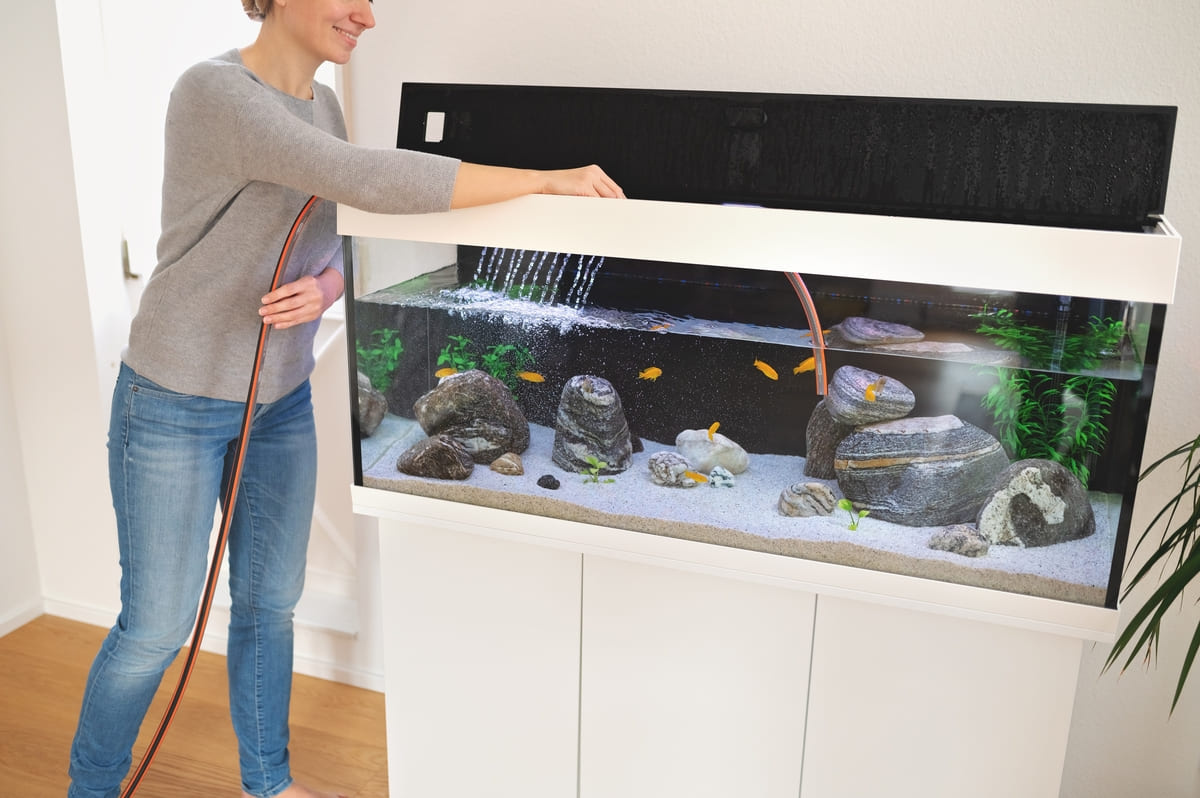
One of the most critical decisions in aquarium cleaning is how much water to change. The approach here is to proceed with partial water changes instead of completely draining the water. A full change may make the water appear clearer for a short time. However, it can strain the system by suddenly changing the conditions the fish are used to.
As stated in the WebMD source, regular and gradual water changes are one of the cornerstones of aquarium maintenance. This method reduces the effect of accumulated waste and limits the sudden changes in conditions that the fish may be exposed to. Even if you do maintenance weekly or less frequently, small but regular water changes generally yield a more balanced result.
Step 4: Clean the Debris Accumulated at the Bottom with Gravel Vacuuming
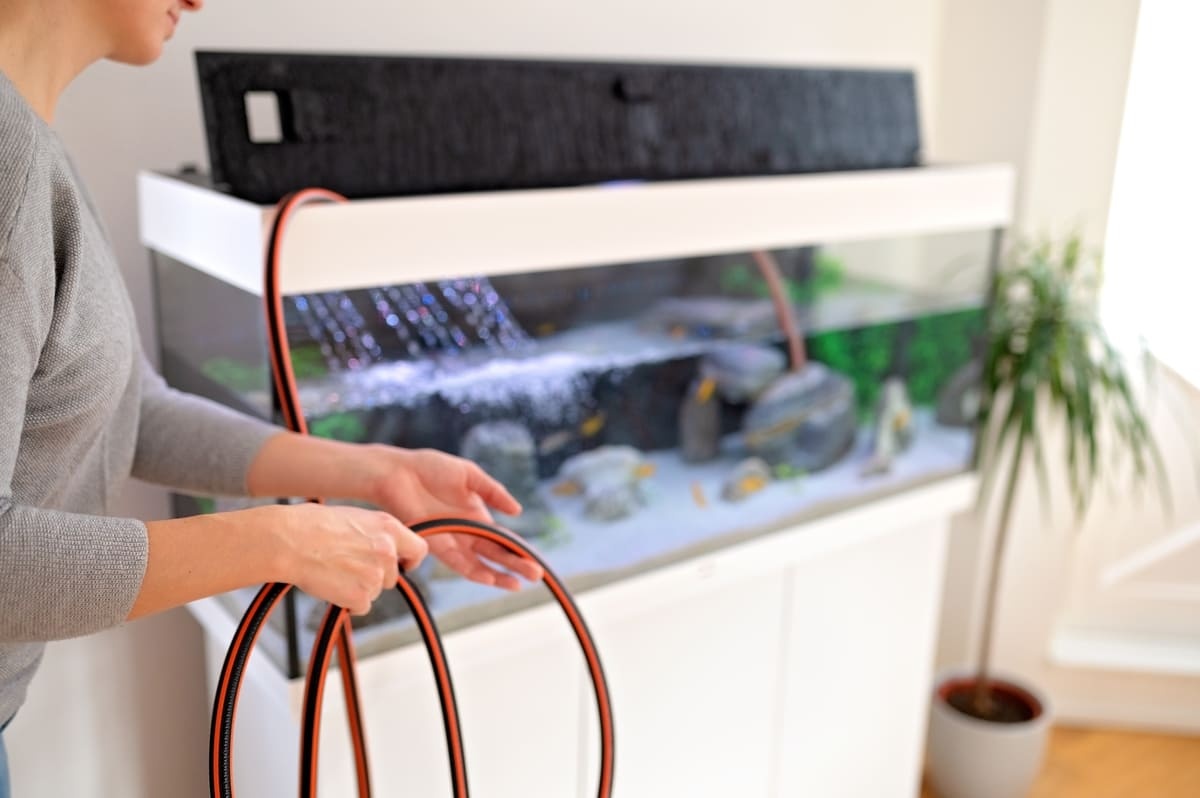
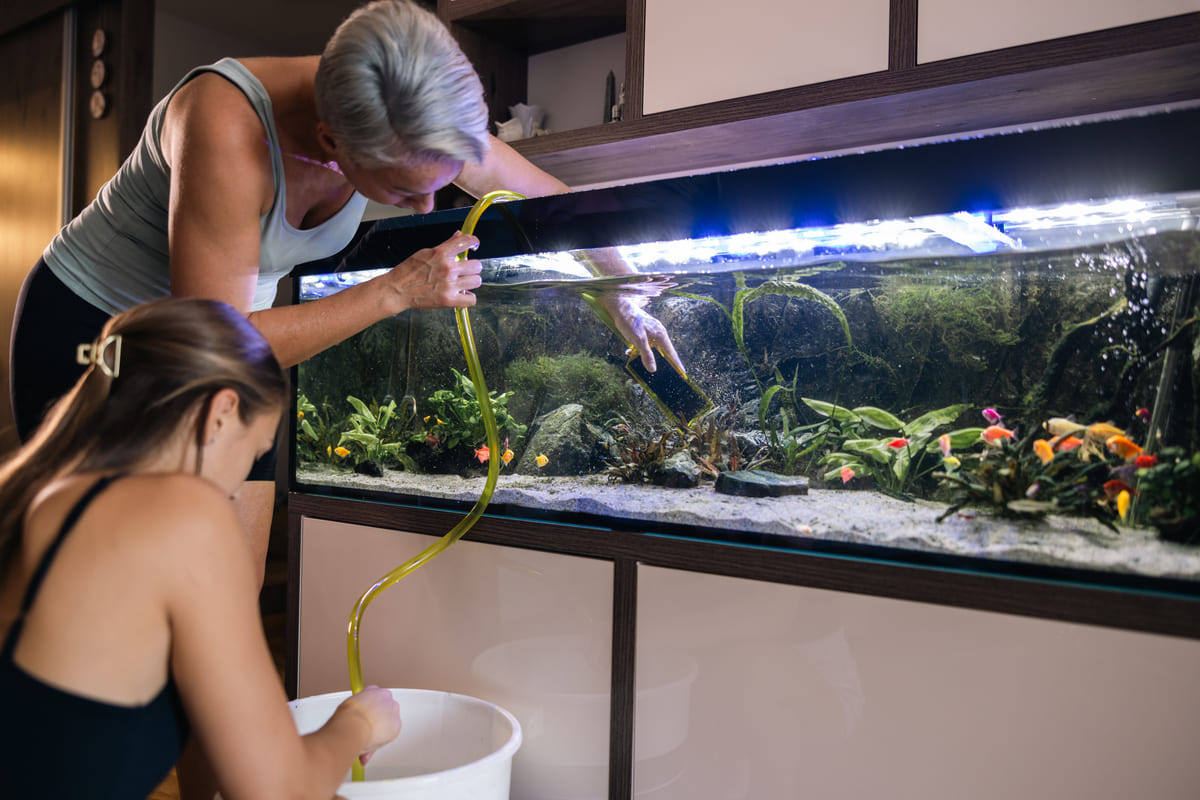
Debris accumulating at the bottom of the aquarium leads to water pollution over time. Even if this accumulation is not immediately noticeable, it can affect water quality. Gravel vacuuming is one of the maintenance steps that helps to remove this debris in a controlled manner.
As also stated in the WebMD source, the aim when performing a gravel vacuuming is not to completely mix the sand or make the bottom sparkling clean. Removing the debris accumulated on the surface during siphoning is often sufficient.
Going deep into the sand can cause unwanted fluctuations, especially in newly established or delicately balanced aquariums. Therefore, it is better to keep the movements slow and proceed with the process regionally.
Keeping the bottom cleaning short with each cleaning allows you to progress without overloading the system all at once. This keeps the accumulation at the bottom under control, the water quality remains more balanced, and a more stable environment is maintained for the fish.
Step 5: Gently Clean the Aquarium Glass
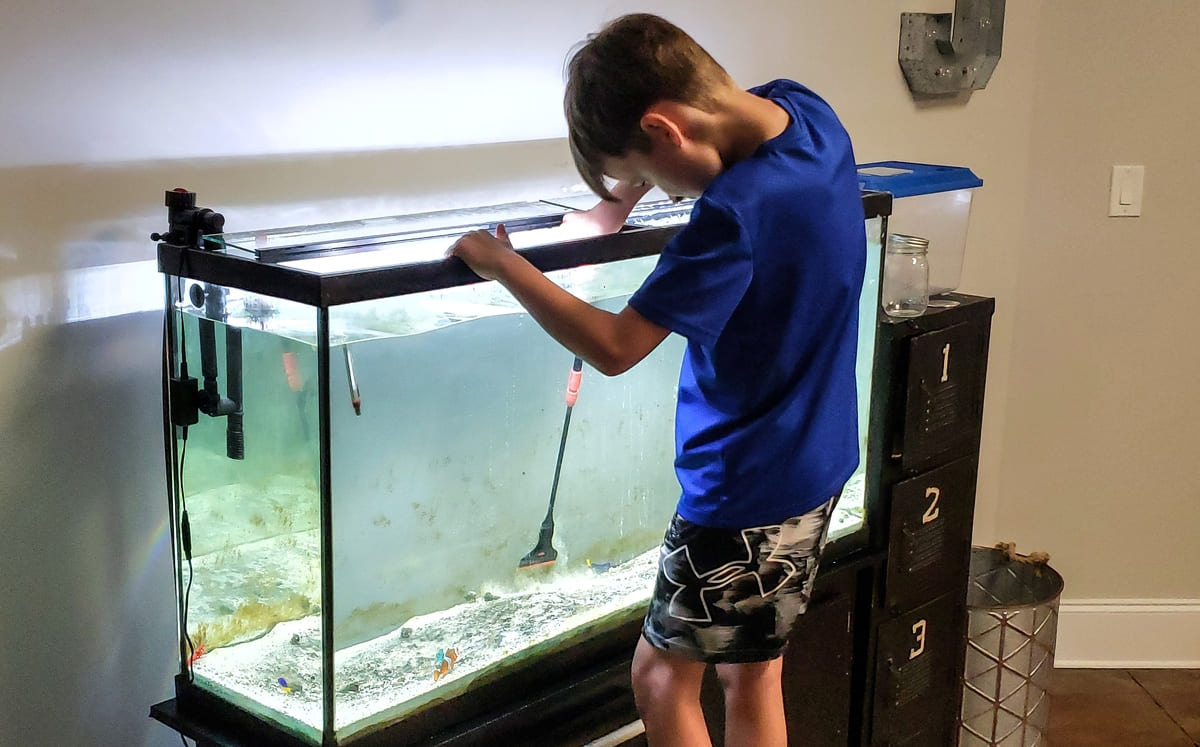
The green or brown layer that forms on aquarium glass is often called algae and can be aesthetically unpleasant. However, this accumulation on the glass and algae formation at the bottom are generally different. The goal of glass cleaning is to remove the layer that obstructs visibility in a controlled manner and not to put unnecessary strain on the water.
As emphasized in the PetMD source, chemical cleaning products should not be used when cleaning aquarium glass. Household glass cleaning sprays, detergents, or soapy sponges can pose a risk to fish. Alternatively, you can opt for aquarium-specific magnetic glass cleaners or a clean sponge dedicated solely to this purpose. Magnets make cleaning easier without getting your hands wet. If using a sponge, be careful not to scratch the sand between the glass and the substrate. Otherwise, the sand grains could scratch the glass.
Instead, you can opt for aquarium-specific magnetic glass cleaners or a clean sponge dedicated solely to this task. Magnets make cleaning easier without getting your hands wet. If you are using a sponge, you need to be careful between the glass and the sand. Otherwise, the sand grains can scratch the glass.
The aim of this step is to carefully remove the layer on the glass. Applying excessive pressure or repeatedly scraping the same area can unnecessarily stress the fish. Regular but gentle glass cleaning, when done in line with the overall aquarium maintenance routine, both maintains water balance and provides visual comfort.
Step 6: Clean Your Filter on Time and in Measure
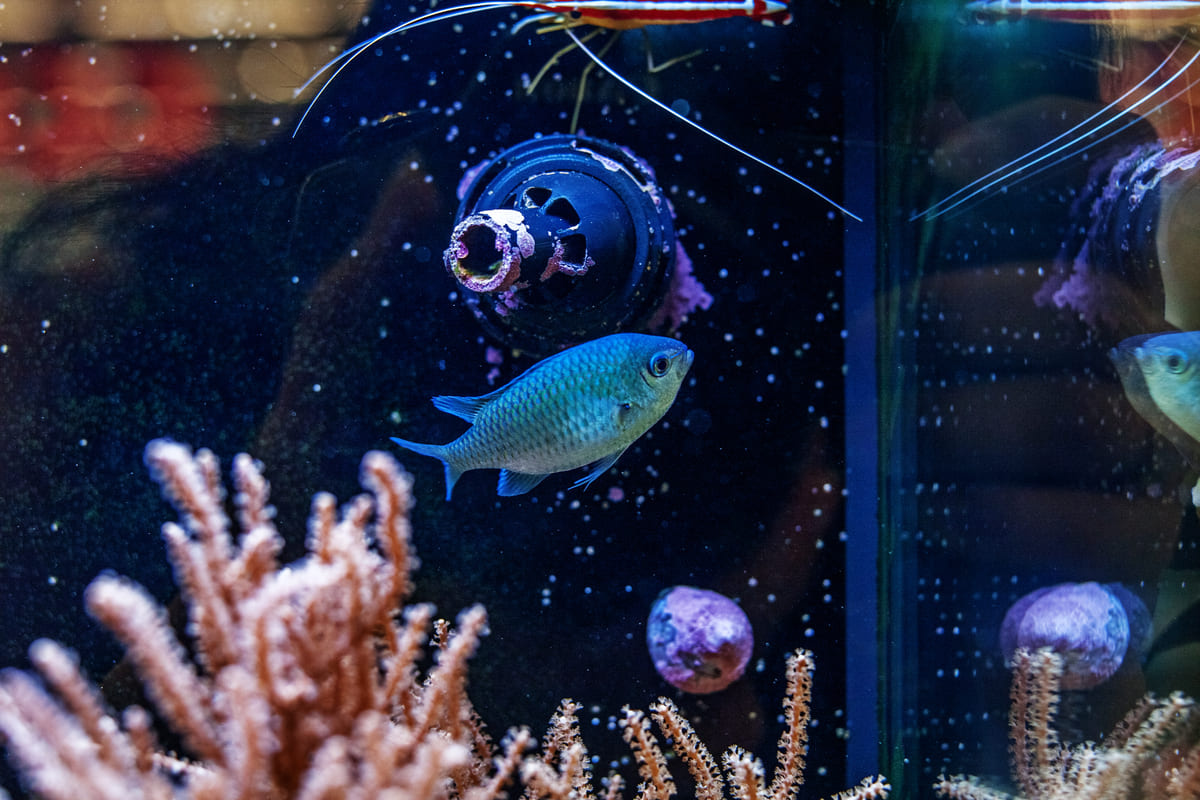
An aquarium filter is often seen as a mechanically filtering part that gets dirty and needs cleaning. However, the filter is one of the most critical carriers of biological balance in the aquarium. Therefore, filter cleaning should not be treated in the same way as wiping the glass or performing a bottom cleaning. As highlighted in the WebMD source (
), overdoing filter maintenance can do more harm than good. Beneficial bacteria living on the filter media play an important role in maintaining the natural balance of the water. Washing the filter with tap water or making it sparkling clean every time can lead to the loss of bacteria. When filter cleaning is necessary, rinsing the filter with a small amount of water taken from the aquarium is a more balanced approach.
Another important point is not to perform filter cleaning and water changes on the same day. Intensive interventions performed simultaneously can cause sudden fluctuations in the aquarium. Performing filter maintenance on a different day than a water change allows the system time to recover.
Step 7: Clean Decor and Plants Only If Necessary
Many people think that aquarium decorations and plants are parts that accumulate dirt and that they should all be removed and washed individually during cleaning. However, this approach may be unnecessary and disrupt the balance, especially in aquariums with established ecosystems. This is because the surface of decorations and plants is among the areas where beneficial bacteria can adhere.
Even more caution is needed when it comes to live plants. Healthy plants already support the balance of the water and often do not require extra treatment. If there is no noticeable accumulation on the leaves, observation is sufficient.
For artificial decorations, a short and gentle cleaning can be considered if there is visible surface contamination. The goal in this step is to proceed without disrupting the overall balance in the aquarium.
Step 8: Perform a Brief Check After Adding Water

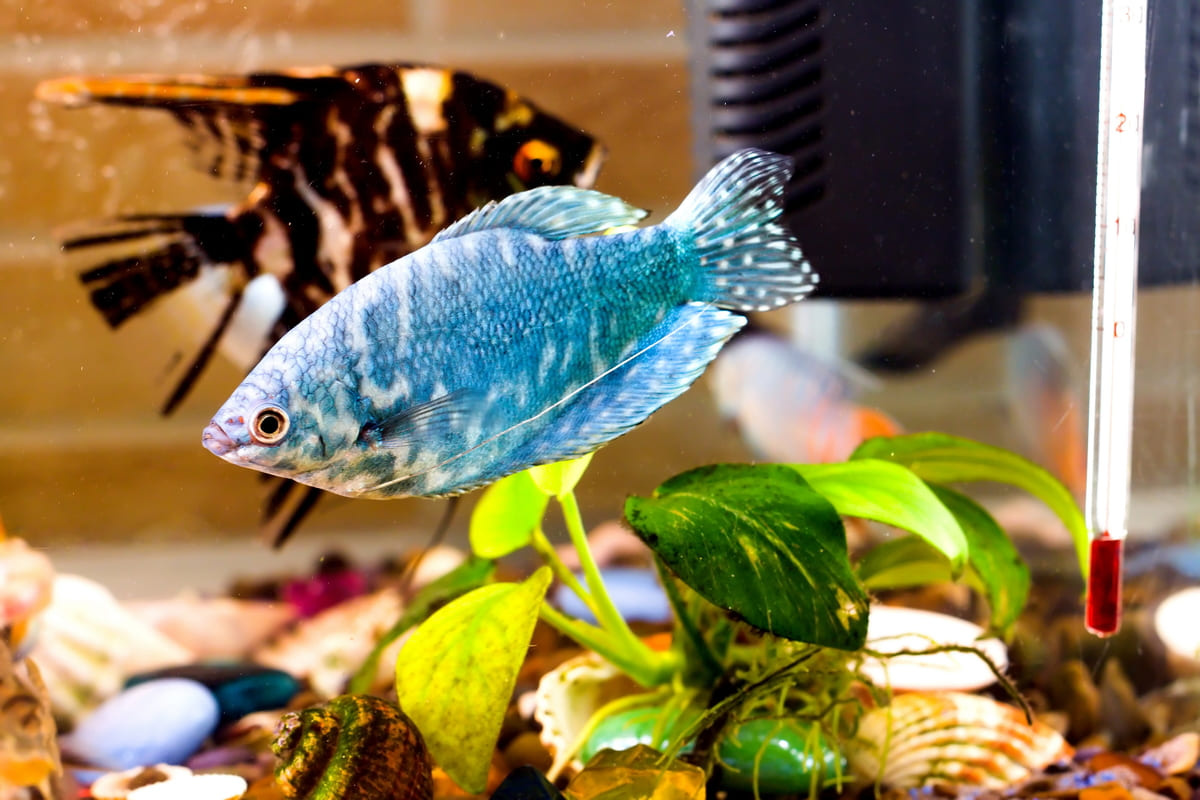
The process isn't complete when aquarium cleaning is finished and water is added again. It's a good idea to check the temperature with a thermometer in the first few minutes, as even a small temperature difference can cause stress in some sensitive species.
After checking the temperature, observe the fish's behavior. Reactions such as hiding more than usual, sudden swimming movements, or retreating to corners may indicate that the fish are trying to readjust to the environment.
Instead of feeding immediately during this process, leaving the aquarium to itself for a while ensures a calmer transition. The best approach after cleaning is to monitor the water flow, clarity, and the general condition of the fish. If everything is normal, the aquarium will regain its balance.
Akvaryum Temizliği Sonrası Yapılan En Büyük Hatalar
Care should also be taken against mistakes made after aquarium cleaning is complete. Making multiple interventions on the same day, thinking everything is clean, can make the aquarium's recovery process more difficult. Performing water changes, gravel cleaning, and filter cleaning consecutively causes the fish to experience multiple adjustment periods in a short time.
Another common mistake is immediately resorting to additional products after cleaning. Adding bacterial culture because the water isn't clear, trying different additives because the fish are hiding a bit, or overfeeding often doesn't improve the situation. On the contrary, it can start a new chain of imbalance in the aquarium. The best approach in the post-cleaning process is to leave the system alone for a while and observe it.
Aquarium maintenance, contrary to what most people think, is a balancing process that unfolds over time. Excessive and hasty interventions after cleaning, even if started with good intentions, can turn into an additional stress factor for the fish.
How to Turn Aquarium Cleaning into a Routine?

The most sustainable approach to aquarium maintenance is to establish a regular routine. When cleaning is done at specific intervals and with the same logic, the balance of the aquarium is less disrupted and the fish tolerate interventions more easily.
Small reminders are helpful when establishing a routine. Noting when you did a water change, gravel cleaning, or filter check eliminates uncertainty about when the last cleaning was done. The maintenance process progresses in a natural flow without turning into a crisis.
Frequently Asked Questions
You can find the answers to the most frequently asked questions about aquarium cleaning in this section of our content.
Does aquarium cleaning really extend the life of fish?
Regular and balanced cleaning ensures that fish live in a more stable environment. When sudden water changes and excessive interventions are avoided, stress is reduced and the immune system is less strained. This can indirectly positively affect the overall health and lifespan of the fish.
Why do mistakes made during aquarium cleaning lead to fish loss?
The problem is usually not the cleaning itself, but the sudden changes made during cleaning. Changing too much water at once, completely cleaning the filter, or performing many interventions in a single day can disrupt the water balance. This chain reaction can prevent fish from adapting to the new conditions.
How to maintain bacterial balance during aquarium cleaning?
Beneficial bacteria mostly live in filter materials and on surfaces. To maintain bacterial balance, the filter should not be over-cleaned during cleaning, and surfaces containing biological life should not be cleaned at the same time. Less intervention is safer for maintaining bacterial balance.
Why do fish hide or change color during aquarium cleaning?
During cleaning, light, vibration, and water flow may change. Fish hiding or their colors fading is often a temporary stress response. If the behavior returns to normal quickly, this is usually considered part of the adaptation process.
Why is over-cleaning an aquarium harmful?
The idea that "the cleaner, the better" doesn't apply to aquariums. Excessive cleaning can disrupt the natural balance of the system, and fish may constantly have to adapt to new conditions. The healthiest approach is to opt for regular and controlled maintenance rather than major interventions.
Kaynaklar:
https://www.webmd.com/pets/how-to-clean-fish-tank
https://www.chewy.com/education/fish/freshwater-fish/how-to-clean-a-fish-tank-freshwater-instructions
https://cafishvet.com/fish-tanks/how-to-clean-a-fish-tank/
https://vcahospitals.com/know-your-pet/pet-fish-setting-up-an-aquarium
https://www.webmd.com/pets/getting-pet-fish
https://www.webmd.com/pets/how-to-change-fish-tank-water
https://www.petmd.com/fish/how-clean-fish-tank
Advertisement
Advertisement
Keep exploring
Continue reading
Aquarium & Fish
Why Does Aquarium Water Smell?
The water is clear, the fish appear normal. However, a strong odor is present when approaching the aquarium.
Read guide →
Aquarium & Fish
How to Choose Aquarium Lighting?
The whole atmosphere of an aquarium can change the moment you turn on the light. Colors become more vibrant, the depth of the water and movement…
Read guide →
Aquarium & Fish
What are Aquarium Filter Materials? In What Order are They Used?
The water cleaning power of an aquarium filter depends on the materials inside it performing their functions correctly.
Read guide →
Aquarium & Fish
What is an Aquarium Heater, How to Choose One? How Many Watts of Heater are Needed?
The water in the aquarium is the entire environment in which the fish live. Excessively cold water or frequent temperature changes can cause stress…
Read guide →