How to Prepare a Birthing Area for Your Pregnant Cat?
The pre-birth preparation process can be likened to the start of a marathon. The most important part of the race is the preparation before reaching the starting line. For the mother cat, this process begins with creating a safe environment before giving birth.

Advertisement
The pre-birth preparation process can be likened to the start of a marathon. The most important part of the race is the preparation before reaching the starting line. For the mother cat, this process begins with creating a safe environment before giving birth.
One of the most important steps to take during this period is finding the right answer to the question, "How to prepare a birthing area for pregnant cats?" A safe, calm, and comfortable environment is among the basic conditions for a healthy birth.
In this article, you can learn about the elements that will ensure cats are fully prepared for the birthing process. You can discover what you need to know about important topics ranging from preparing a birthing area for pregnant cats to signs of labor in cats.
Warning: This content is intended as general information regarding the care of pregnant or birthing cats. Each cat's health, behavior, and birthing process may vary. If you observe any unexpected situations during your cat's pregnancy or birthing, it is recommended that you only act under the guidance of a veterinarian.
How to Tell if Your Cat is Approaching Birth?

Birth in cats is medically called parturition and usually manifests itself with noticeable signs in the last week of pregnancy. During this process, your cat's behavior, physical appearance, and habits begin to change.
Pregnant cats become quieter and more withdrawn a few days before giving birth. They often start spending time in closets, under beds, or in dark corners. These behaviors indicate that they are instinctively searching for a safe birthing area.
Physically, your cat's belly will noticeably drop, her teats will swell, and the first milk, called colostrum, may be secreted. In some cats, body temperature will drop below 37°C. The PDSA source, as well as veterinary guidelines, emphasizes that loss of appetite, restlessness, and constant grooming behavior indicate that birth is imminent.
If your cat is frequently breathing heavily, meowing, or licking its hind legs, the birthing process may begin soon. These behaviors are the body's preparatory responses for childbirth and indicate that the cat is beginning to get into the right position for delivery.
When these signs are observed, preparing a comfortable environment for your cat and starting the cat birth preparation process is the best course of action.
What is Nest Building Behavior in Cats?
Nesting behavior in pregnant cats is a strong instinct that usually begins in the last 20 days or the last trimester of pregnancy and refers to the cat's act of searching for and preparing a quiet, safe, and private place to give birth to its kittens.
The International Cat Care source states that cats exhibit “nesting behavior” before giving birth, and this behavior intensifies 24–48 hours before birth.
How to Prepare a Cat Birthing Box (Kitten Box)?

A birthing box is the most important piece of equipment for your cat to feel safe during birth and to protect her kittens. A properly prepared cat birthing box helps ensure a smooth birth and the healthy delivery of the kittens.
Choose the Right Box Size: Choose a box large enough for your cat to lie down comfortably, while also leaving room for the kittens. A cardboard box or a cat carrier with a removable top that allows the cat to lie down comfortably is ideal.
Create a Soft and Hygienic Floor: Place an absorbent birthing pad on the bottom of the box. Lay a washable fleece blanket or cotton towel on top. The right equipment makes the post-birth cleanup process easier.
Add Heat-Retaining Materials: Kittens cannot regulate their body temperature. Therefore, you can place a hot water bottle wrapped in a towel or a low-setting heating pad on one side of the box. The Spruce Pets guide states that the heat source should not be in direct contact with the kittens.
Adjust the Sides and Top: The side walls of the box should be high enough to prevent the mother cat from seeing outside, but low enough to allow easy entry and exit. Leaving the top half-open allows for airflow and can make it easier for the mother cat to feel comfortable.
Help Your Cat Get Used to the Crate: Prepare the crate a few days before birth and place it in an area your cat can access. Placing a cover with her scent inside can help with the acclimatization process. Cats explore the crate before birth, and if they find it comfortable, they will choose it for birth.
Keep the Crate in a Fixed Location: If your cat has accepted her territory, do not move the crate. Moving it can create pre-birth stress.
In addition to all this, there are other steps that need to be taken. For example, a water and food bowl and a cat litter box should be placed near the cat birthing crate. The specified cat products should not be inside the crate.
What Should Your Cat's Birthing Area Be Like? Choosing the Ideal Birthing Area

The birthing area is one of the most critical elements in ensuring your cat feels safe. Here are some things to consider when choosing a birthing environment for your cat:
- Cats prefer quiet, dimly lit, and infrequently used areas before giving birth. Avoid noisy areas, high human traffic, or places where children frequently pass by.
- Cats need privacy during birth. Closed areas such as cupboards, under beds, or boxes better meet this need.
- Choose a surface that the mother can easily enter and exit, with a soft and easy-to-clean floor.
- Newborn kittens cannot regulate their own body temperature. Therefore, it is recommended to keep the temperature between 24–26°C.
- Respect your cat's chosen territory. Forcing your cat to move to another area can create stress and negatively affect the birthing process.
- Place absorbent pads or towels under the box. Being able to easily change these surfaces after birth is important for hygiene.
Other Important Elements of the Birthing Area

The environment of the birthing area is just as important as the box itself for the smooth progress of the birthing process. Proper arrangement of elements such as food and water, litter box, and ambient temperature protects both the mother's comfort and the kittens' health.
Food and Water Bowl
It is quite natural for your cat not to want to leave her area during the birthing process. Therefore, non-slip food and water bowls should be placed close to the birthing box.
Litter Box
The litter box should also be close to the birthing area, but not directly next to it. Dust-free and odorless cat litter should be used to reduce the risk of infection. The mother cat rarely wants to leave her area after giving birth, so choosing a litter box with low sides makes it easier for the cat to access.
Ambient Temperature
Ambient temperature is vital, especially for kittens. In the first weeks after birth, kittens cannot regulate their body temperature. Therefore, the environment must be kept constant between 24–26°C. If the temperature drops, the risk of hypothermia increases in the kittens.
Preparation for Birth and Aftermath

It is necessary to be with your cat when labor begins, but not to interfere with the process. As the time of birth approaches, the mother cat usually retreats to her box and begins to experience contractions at short intervals. The best thing to do at this stage is to maintain the silence of the environment and observe the natural progress of the birth process.
After the birth is complete, several steps are important to ensure the comfort of the mother and kittens. If the pad or cover under the box is soiled, it should be carefully changed, and the kittens should be kept dry and warm. If the mother cat has not cleaned her kittens, they can be gently wiped dry with a sterile cloth.
The Day Your Cat Will Give Birth

The gestation period in cats averages 63–65 days, although this can vary by a few days. As the time of birth approaches, behavioral and physical changes become more pronounced. One of the most frequently observed signs is the cat spending time in the same spot and exhibiting nest-preparing behavior. This usually indicates that birth will occur within 24 hours.
According to Cats Protection, just before giving birth, cats eat less, breathe more frequently, and walk and move restlessly. A 1–2 degree drop in body temperature is one of the most reliable indicators that birth is approaching.
When the day of birth arrives, your cat's contractions will be visible. When contractions begin, your cat may frequently lick the base of its tail and exhibit occasional restless movements. At this point, it is important to allow the cat to remain in a quiet area and ensure that the preparation of the birthing environment is complete. As emphasized in the Chipman Road Animal Clinic source, it is recommended to leave the cat alone on the day the birth begins, but to carefully monitor it from a distance. Since unnecessary interventions can cause stress to the cat, a veterinarian should only be contacted if the birth becomes difficult. Things to Consider During the Birthing Process When your cat's labor begins, allowing the process to progress naturally is the best approach. However, being observant during this period and recognizing potential risks early is critical. The birthing process in a pregnant cat generally occurs in three stages: the preparation phase, the birth of the kittens, and the expulsion of the placenta.
As emphasized in the Chipman Road Animal Clinic source, it is recommended that the cat be left alone on the day labor begins, but carefully monitored from a distance. Since unnecessary interventions can cause stress to the cat, a veterinarian should only be consulted if labor becomes difficult.
Things to Consider During the Birthing Process

When your cat's labor begins, allowing the process to progress naturally is the best approach. However, being observant and recognizing potential risks early is critical. The birthing process in a pregnant cat generally occurs in three stages: preparation, birth of the kittens, and expulsion of the placenta.
Preparation for Birth in Cats (First Stage):
This stage can last 12–24 hours. Your cat will become restless, frequently check her nest, and breathe heavily. Uterine contractions have begun, but the kittens are not yet born. According to PetMD, at this stage, the cat's abdominal muscles contract slightly and the cervix slowly opens.
Birth of Kittens (Second Stage):
Contractions become more pronounced, and each kitten is born, usually at intervals of 10–60 minutes. During this process, your cat may meow loudly or her breathing may increase. Each kitten is born in its own amniotic sac. The mother cat cleans this sac by tearing it open with her teeth.
During birth, the mother should be able to move freely, and no intervention should be made that would prevent her from licking her puppies.
Placental Expulsion (Third Stage):
The placenta is expelled after each puppy. The number of placentas should match the number of puppies. A missing placenta can pose a risk of infection. In this case, a veterinarian should be consulted.
Important:
- If your cat's labor has exceeded 6 hours and the kitten has not been born,
- If consecutive contractions last longer than 30 minutes,
- If the kitten has partially emerged but is not progressing, you should contact a veterinarian immediately.
Finally, a veterinary check-up within 24 hours of birth is recommended. This check-up is important for assessing both the mother cat's postpartum recovery process and the kittens' overall health. This ensures a safe and healthy start after birth.
Frequently Asked Questions
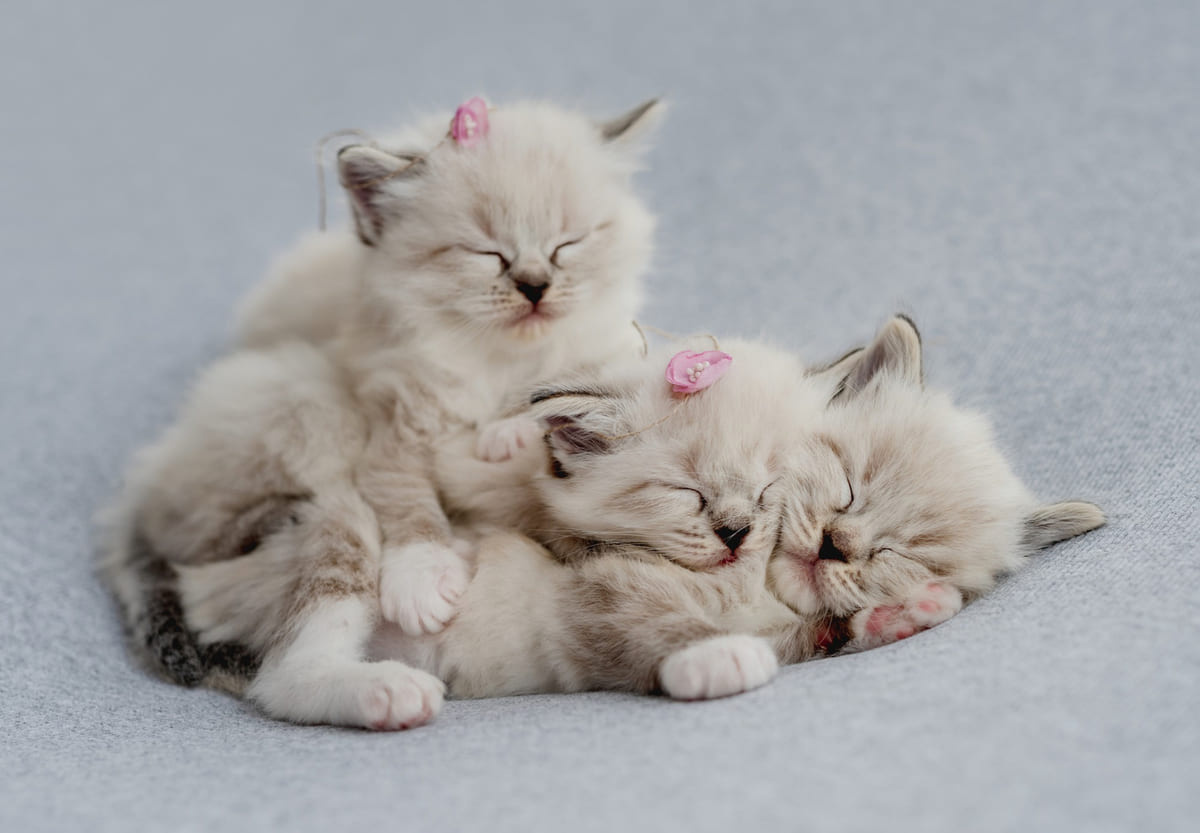
In this section of our content, you can find answers to frequently asked questions about the birthing process in cats.
What should you do when labor begins?
If your cat is in labor, allow her to be alone in a quiet and dark environment. Do not interfere unnecessarily. If the kitten has not been born after more than 6 hours or if your cat is in excessive distress, consult a veterinarian.
“My cat is about to give birth but won’t go into the birthing area,” what should I do?
Cats may sometimes be slow to accept the birthing box. Place a blanket with their scent in the box. If they still don’t go in, clean and secure the area they have chosen.
My cat isn't interested in her kittens after giving birth, is that normal?
Postpartum behavioral problems can occur in cats. Some cats may be tired immediately after giving birth. If she doesn't show interest in the kittens within the first few hours, observe her carefully. If she remains uninterested for a long time, it may be a problem related to milk production or stress. A veterinary check-up is necessary.
When should I take my pregnant cat to the vet?
A routine check-up should be done in the last week of pregnancy. Routine check-ups help determine the number of kittens and estimate when birth is approaching. If birth is delayed or the discharge looks abnormal, a vet should be consulted immediately.
Do I need to take my cat and kittens to the vet after giving birth?
A check-up within 24 hours of birth is important to assess the mother cat's uterine health and the kittens' general condition.
How to calculate the day a cat will give birth?
The gestation period in cats is approximately 63–65 days. If you know the mating date, you can make an estimate accordingly. In addition, a drop in body temperature below 37°C is one of the indicators that labor will begin within 24 hours.
Kaynaklar:
https://www.chipmanroadanimalclinic.com/how-to-prepare-your-pregnant-cat-to-give-birth
https://eileenslovak.com/2021/10/23/nesting-box-101/
https://icatcare.org/articles/cat-birth
https://www.cats.org.uk/media/1029/eg18_pregnant_cats-_birth_and_care_of_young_kittens.pdf
https://www.royalcanin.com/uk/cats/kitten/helping-your-pregnant-cat-give-birth-at-home
https://www.petmd.com/cat/conditions/reproductive/cat-pregnancy-and-kittens-complete-guide
https://www.instructables.com/How-to-prepare-when-your-cat-gives-birth/
https://www.pdsa.org.uk/pet-help-and-advice/pet-health-hub/other-veterinary-advice/cat-labour-a-guide-to-your-cat-giving-birth
https://www.thesprucepets.com/helping-pregnant-cat-during-birthing-555410
https://www.petmd.com/cat/slideshows/general-health/cat-birthing-delivering-kittens-safely
Advertisement
Advertisement
Keep exploring
Continue reading

Cat Lifestyle & Guides
What is Cat Soup? Is it Beneficial for Cats?
If your cat rarely visits its water bowl, is sometimes reluctant to eat dry food, or shows interest in different textures, liquid products may catch…
Read guide →
Cat Lifestyle & Guides
How to Give Rewards and Snacks to a Neutered Kitten?
The Feline Veterinary Medical Association supports neutering kittens until they are five months old.
Read guide →
Cat Lifestyle & Guides
Benefits of Colostrum for Cats and Dogs
Colostrum is the first milk produced by mother cats and dogs after birth. Thanks to its antibodies and high nutrient content, it responds to the…
Read guide →
Cat Lifestyle & Guides
Why is Gut Health Important in Cats?
In cats, bowel health is linked to many areas, from digestive regularity and immune system-related processes to energy levels and daily comfort.
Read guide →