Mammary Cancer in Dogs
Benign or malignant tumors are frequently found in unspayed female dogs. In fact, mammary tumors are the most common type of tumor in unspayed female dogs. The mammary glands in female dogs are responsible for producing milk for newborn puppies.

Advertisement
Benign or malignant tumors are frequently found in unspayed female dogs. In fact, mammary tumors are the most common type of tumor in unspayed female dogs. The mammary glands in female dogs are responsible for producing milk for newborn puppies. The part of these glands, which are arranged in two rows from the chest to the lower abdomen, that protrudes outside the body is called the nipple. Tumors occurring in these areas can cause serious problems for dogs. Although mammary cancer is extremely common among female dogs, it rarely occurs in male dogs. Neutering greatly reduces the risk of mammary cancer. In fact, it is even more effective when female dogs are neutered before they enter their heat cycle. In this article, we will discuss what you need to know about mammary cancer in dogs.
Types of Mammary Tumors in Dogs
Mammary tumors in dogs are divided into two categories: benign and malignant. It can be said that in half of the dogs with mammary tumors, the tumors are benign. These are classified as adenomas or mixed tumors. In the other half of the dogs with mammary tumors, the tumors are malignant. These include types such as carcinoma, carcinoma in situ, and cystic papillary carcinoma. A wide variety of malignant tumors can be encountered, but those mentioned are the most common.

Causes of Mammary Cancer in Dogs
The causes of mass formation in the mammary glands of dogs are still not fully understood. It is thought that hormones and genetic predispositions play a role in tumor formation. In particular, genes present in certain breeds make dogs more susceptible to mammary cancer. Toy or Mini Poodle, English Springer Spaniel, English Cocker Spaniel, English Setter, Pointer, German Shepherd, Maltese, and Yorkshire Terrier breeds have a higher risk of developing mammary tumors compared to other breeds. Female reproductive hormones increase the risk of mammary cancer in dogs. According to research, the risk of mammary cancer in dogs that have never been in heat is around 0.5%. Mammary cancer occurs in dogs between the ages of 1 and 15 years. However, tumor formation is very rare in dogs under 5 years old. The average age for mammary cancer can be stated as 10.5 years. Symptoms of Mammary Cancer in Dogs Symptoms of mammary tumors in dogs are quite noticeable. Single or multiple masses in the mammary glands are the most important symptom. In almost half of the cases, more than one tumor forms. Superficial tissue loss on the skin surface of the mammary tissue, often due to inflammation and discharge, is another common symptom. A lump in the breast tissue can sometimes move freely, which usually indicates that the tumor is benign. Lumps that are attached to the skin, fixed, or move very little are generally malignant. Swollen lymph nodes are another symptom of breast cancer in dogs. In cases where the cancer has spread to the lungs, difficulty breathing is also observed in addition to these symptoms. How is Breast Cancer Diagnosed in Dogs? Other conditions can also cause symptoms similar to breast lumps in dogs. The veterinarian usually rules out these possibilities before concluding it is cancer. At this point, it is extremely important to provide the veterinarian with complete information about the dog's medical history, reproductive history, and symptoms. Tests such as a complete blood count and urinalysis can be performed to diagnose breast cancer. In addition, X-rays of the chest and abdomen can show metastases if present. A biopsy is usually performed to determine whether the mass is benign or malignant. Similarly, a sample can also be taken from the lymph nodes.
Symptoms of Mammary Cancer in Dogs
Symptoms of tumors in the mammary glands in dogs are quite distinct. A single or multiple mass in the mammary glands is the most important symptom. In almost half of the cases, more than one tumor forms. Superficial tissue loss, often due to inflammation and discharge on the skin surface of the mammary tissue, is another common symptom. The mass in the mammary tissue can sometimes move freely, which usually indicates that the tumor is benign. Masses that are attached to the skin, fixed, or move very little are usually malignant. Swollen lymph nodes are another symptom of mammary cancer in dogs. In cases where the cancer has spread to the lungs, difficulty breathing is also seen in addition to these symptoms.
How is Mammary Cancer Diagnosed in Dogs?
Some other conditions can also cause symptoms similar to mammary gland lumps in dogs. Veterinarians usually rule out these possibilities before concluding it's cancer. At this point, it's extremely important to provide the veterinarian with complete information about the dog's medical history, reproductive history, and symptoms. Tests such as complete blood count and urinalysis can be performed to diagnose mammary gland cancer. X-rays of the chest and abdomen can also show any metastases. A biopsy is usually performed to determine whether the mass is benign or malignant. Similarly, a sample can be taken from the lymph nodes.
Treatment of Mammary Gland Cancer in Dogs
There are several treatment options for mammary tumors in dogs. At this point, it is necessary to choose the most effective treatment according to the type, location, and number of tumors. Usually, surgical removal of the tumor is required. It can be used in combination with some other treatment methods to ensure a comfortable recovery process. Some tumors are extremely aggressive and penetrate deep into the surrounding tissues. In such cases, only a part of the tumor can be removed. Afterwards, the remaining tumor in the skin is treated with chemotherapy and radiation therapy. In surgeries where the tumor is removed from the body, neutering the dog increases its chances of a longer life. During the treatment process, the dog's condition is monitored with regular physical examinations and X-rays.
Can Mammary Cancer in Dogs Be Prevented?
The most effective measure to reduce the likelihood of mammary cancer in dogs is neutering. The probability of mammary cancer in dogs neutered before their first heat cycle is 0.5%. This rate increases to 8% when neutered after the first heat cycle. If neutered after the second heat cycle, the probability of mammary cancer is 26%. Neutering after the age of 2.5 years no longer provides any preventative effect. For more detailed information about neutering dogs, you can read our blog post titled "What are the Benefits and Harms of Dog Neutering?".
Life Expectancy
The effects of mammary cancer on a dog's lifespan vary depending on the stage of the cancer. In general, dogs with small tumors live longer than those with large tumors. Life expectancy is lower in cases where the cancer has metastasized to the lymph nodes. The life expectancy is lowest when cancer has spread to more distant areas, such as the lungs. Treatment is also extremely difficult in such cases. The chosen treatment method is also very important. While it varies depending on the stage of cancer, the average life expectancy for dogs that only undergo surgery is 6 months. For dogs that undergo surgery and continue with additional treatments such as chemotherapy, this period can reach 24 months.
Advertisement
Advertisement
Keep exploring
Continue reading
Dog Health
7 Mistakes Made in Dog Training and Correct Approaches
A dog's failure to respond immediately to commands is often interpreted as stubbornness or disobedience.
Read guide →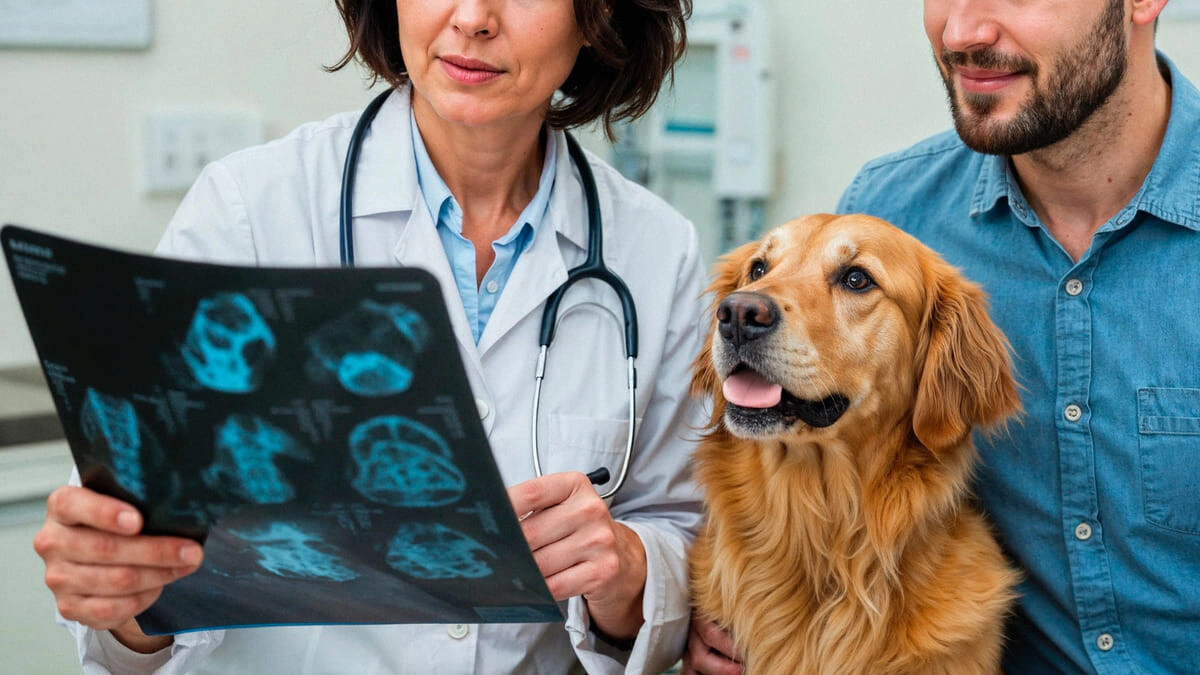
Dog Health
Symptoms, Causes and Treatment of Enlarged Heart in Dogs
Your dog stops earlier than usual during walks, stops playing quickly, has noticeably faster breathing when climbing stairs, or If your dog has a dry…
Read guide →
Dog Health
Causes, Symptoms, and Treatment Methods of Oral Melanoma in Dogs
Imagine you notice a small lump in your dog's mouth one morning. This lump, which might be mistaken for an insignificant wound or gum problem, could…
Read guide →
Dog Health
Beyond the Itch: Causes and Treatment Methods of Skin Diseases in Dogs
Skin diseases in dogs should not be perceived as merely negative changes in aesthetic appearance.
Read guide →