Non-Shedding and Hairless Cat Breeds
Many people love cats and feel their hearts warm when they see a cat approaching them. However, dealing with cat fur is difficult. Especially for people with cat allergies, owning a cat can be a dream because of the shedding fur. For this reason, non-shedding and hairless cats are quite interesting.
Advertisement
Many people love cats and feel their hearts warm when they see a cat approaching them. However, dealing with cat fur is difficult. Especially for people with cat allergies, owning a cat can be a dream because of the shedding fur. For this reason, non-shedding and hairless cats are quite interesting.
It's often impossible for cats to completely shed. However, some breeds have a lower tendency to shed, and with the right grooming routine, this process can be more easily controlled. The situation is different with hairless cats. Some breeds may have very fine hairs that are difficult to see with the naked eye, while others have almost completely smooth skin.
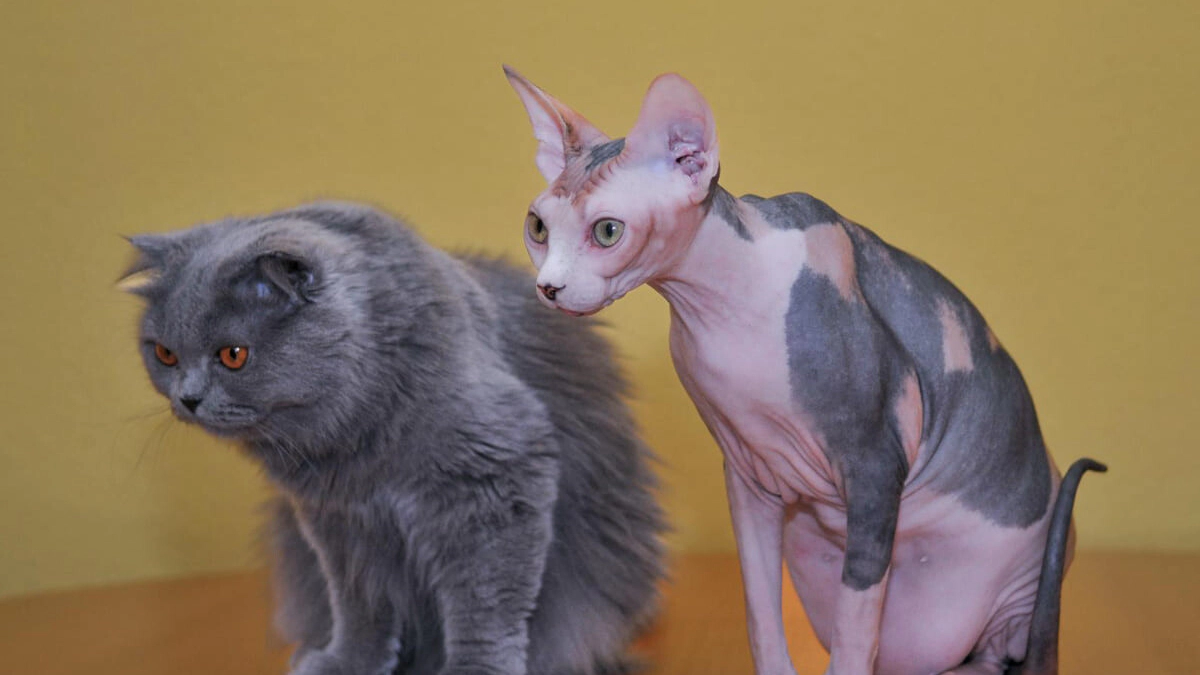
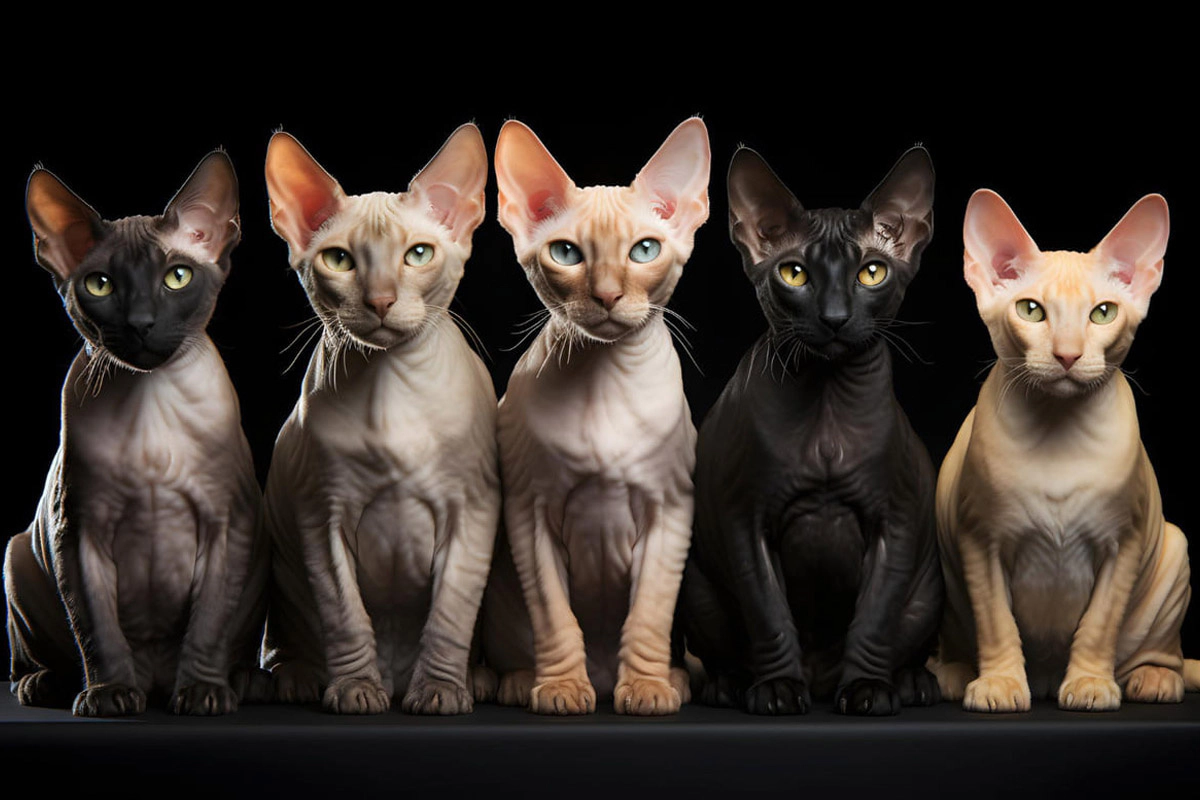
One of the first breeds that comes to mind when talking about non-shedding cats is the Sphynx. However, Bambino, Peterbald, Donskoy, Ukrainian Levkoy, Lykoi, Minskin, Dwelf, Elf, and Kohana are also considered hairless or partially hairless cat breeds.
In this article, we will discuss cats with low shedding tendencies, hairless cat breeds, their care needs, and the basic points to know before adopting one.
Warning: This content is for general informational purposes only. The coat structure, grooming needs, and allergy effects of cat breeds may vary from cat to cat. It is recommended to consult a veterinarian about the cat's health status, living conditions, and care needs before making a decision to adopt.
Non-Shedding and Low-Shedding Cat Breeds
Some cat breeds may shed more than others. This is related to coat structure, fur density, grooming routine, diet, and living conditions. However, it is not true that any cat sheds no hair at all.
Bengal Kedisi
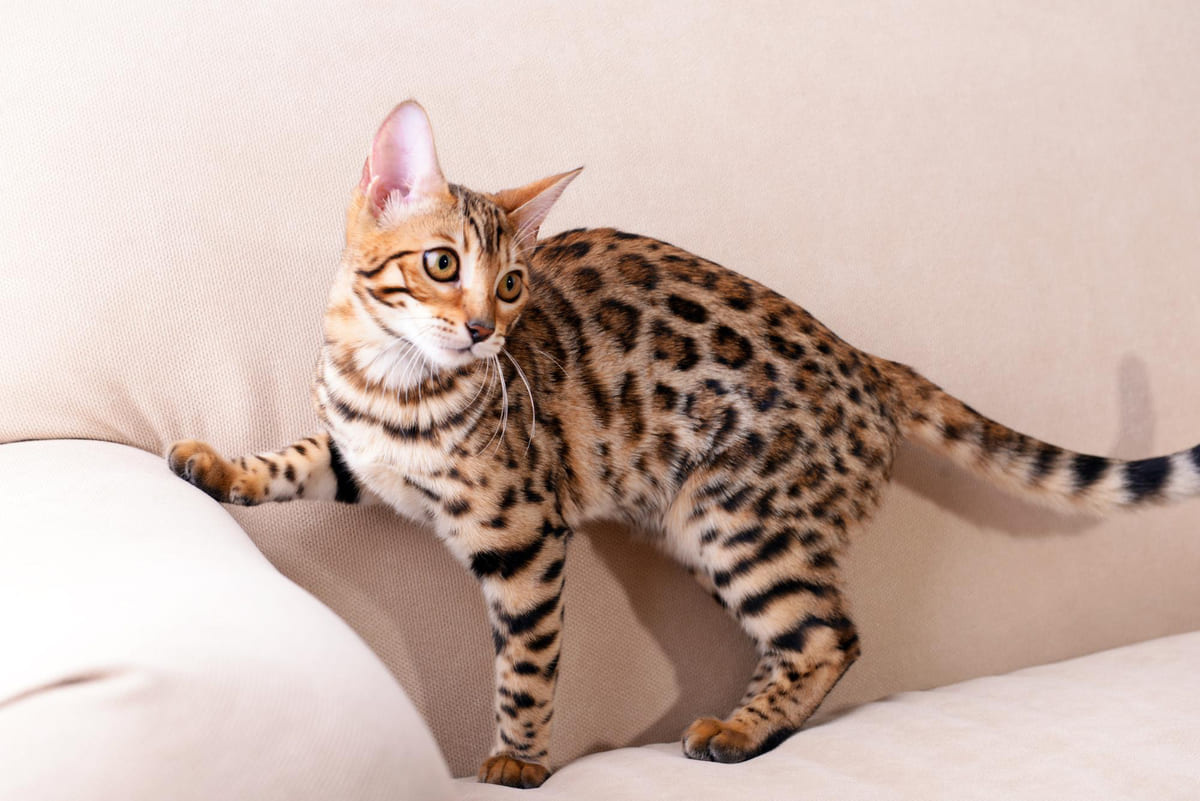
The coat structure of this breed is similar to its wild relatives. Resembling their large ancestors like leopards and tigers, these cats have strikingly beautiful fur that sheds very little compared to other cats.
While Bengal cats may not be the perfect answer for those seeking a non-shedding cat, the fact that this breed sheds very little and is easy to groom is a big plus. It should also be noted that behind their wild appearance, they have a very playful, social, active, and cheerful character.
Bombay Kedisi
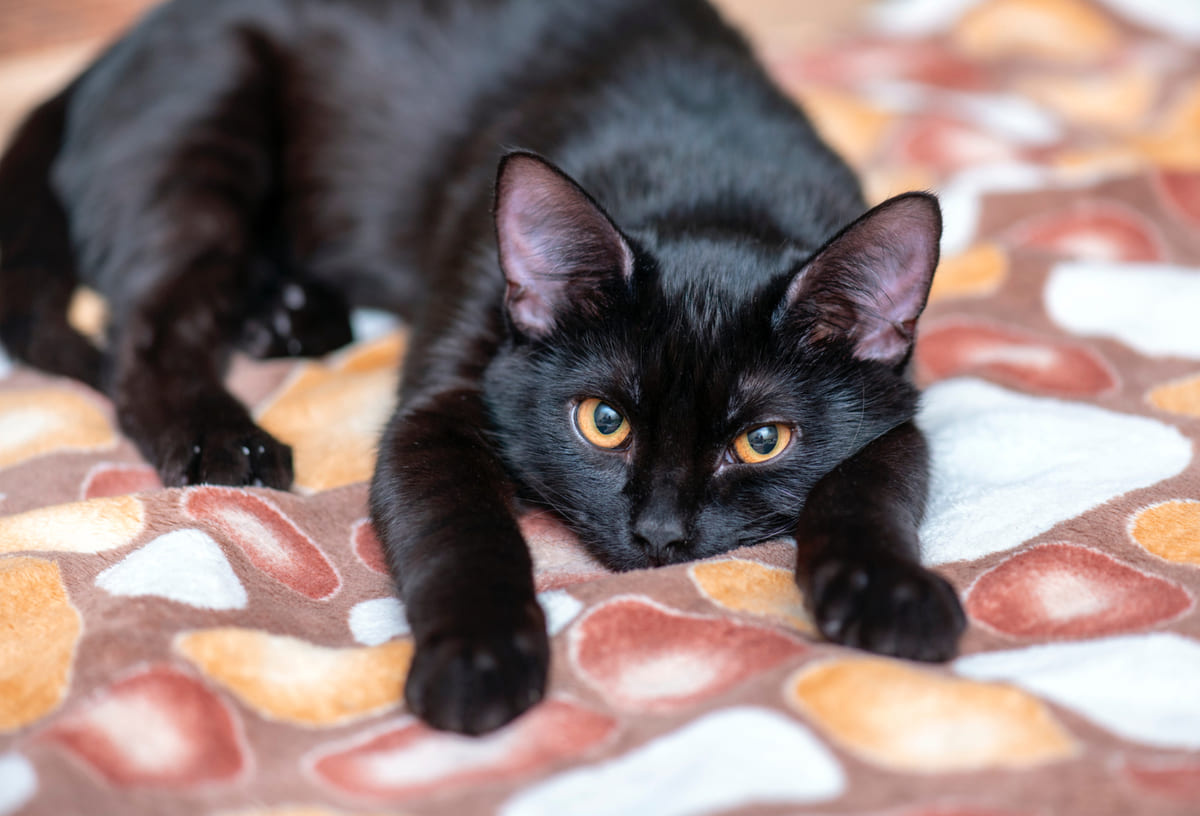
It is not wrong to describe this breed as a domestic panther. Their short, black fur that sheds very little is the most striking beauty of this breed. Bombay cats can also be trained on a leash and learn to fetch items. They are one of the most popular black-furred cats.
Known as both social and affectionate cats, Bombay cats can be the right choice for those who dislike shedding. Besides being among the non-shedding cats, their playful and curious nature makes them a good companion. Setting aside certain times of the day to interact with them and participate in their games is a good way to touch their sensitive souls.
Cornish Rex

Many cat breeds have fur consisting of two different layers. Cornish Rex cats have a single layer of curly and very soft fur.
Their low shedding makes this breed a good choice for those with allergies. With their large ears, curly fur, and long faces, this breed has a unique appearance and is known for being energetic and social.
Exotic Shorthair
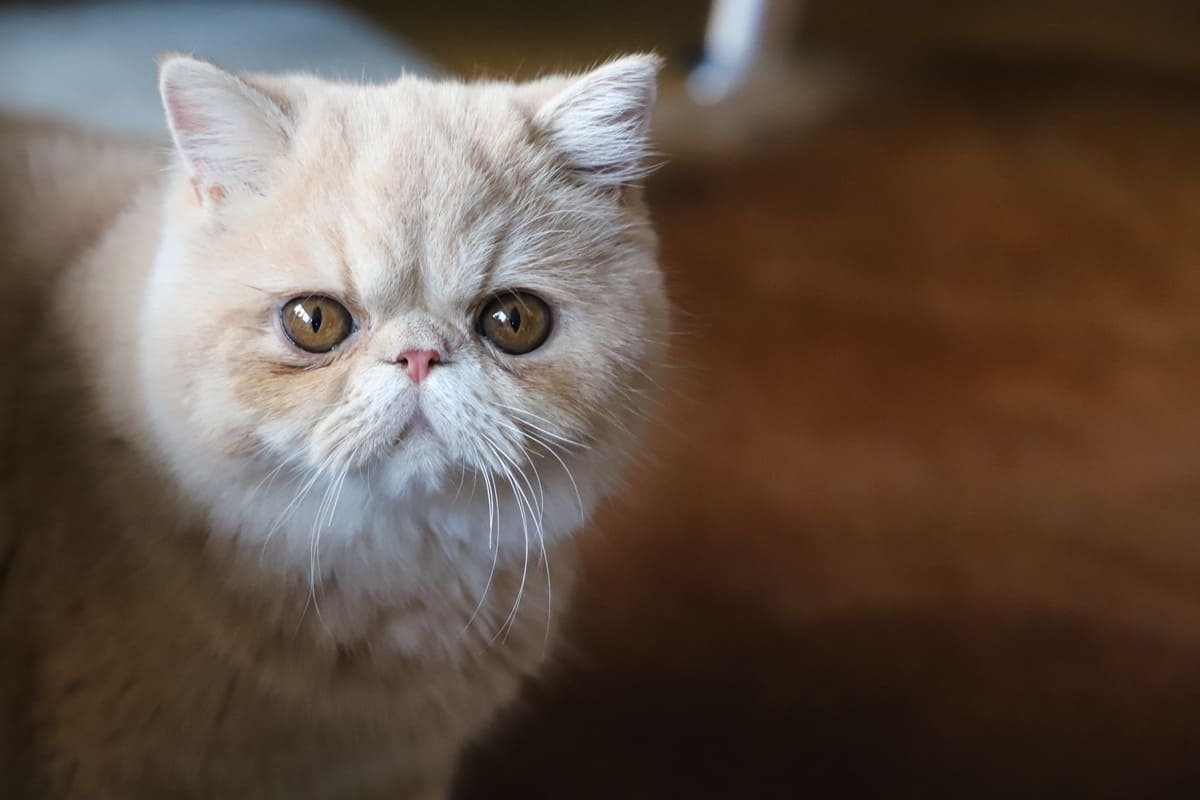
Exotic Shorthair cats, notable for their thick and dense fur, are known for shedding very little. With proper care, these cats, which are known for being quite calm and reserved, will be ideal housemates for those who want to own a non-shedding cat.
They are known for being good-natured, affectionate, social, and playful. Their curiosity and good rapport with children are among their most prominent characteristics. Winning everyone's hearts with their innocent gaze, this breed is the right choice for large families among non-shedding cats.
Sibirya Kedisi

Siberian cats are among the most surprisingly non-shedding cats. The characteristic feature of this breed is its long and dense fur. However, compared to many other cat breeds, they are known to be more hypoallergenic and shed very little hair.
The general grooming routine for this breed is also quite easy. Brushing them once a week is sufficient. Of course, what you need to know about them is not limited to this. Among the calmest cats, these beauties can exhibit dignified behavior.
Siamese (Siyam)
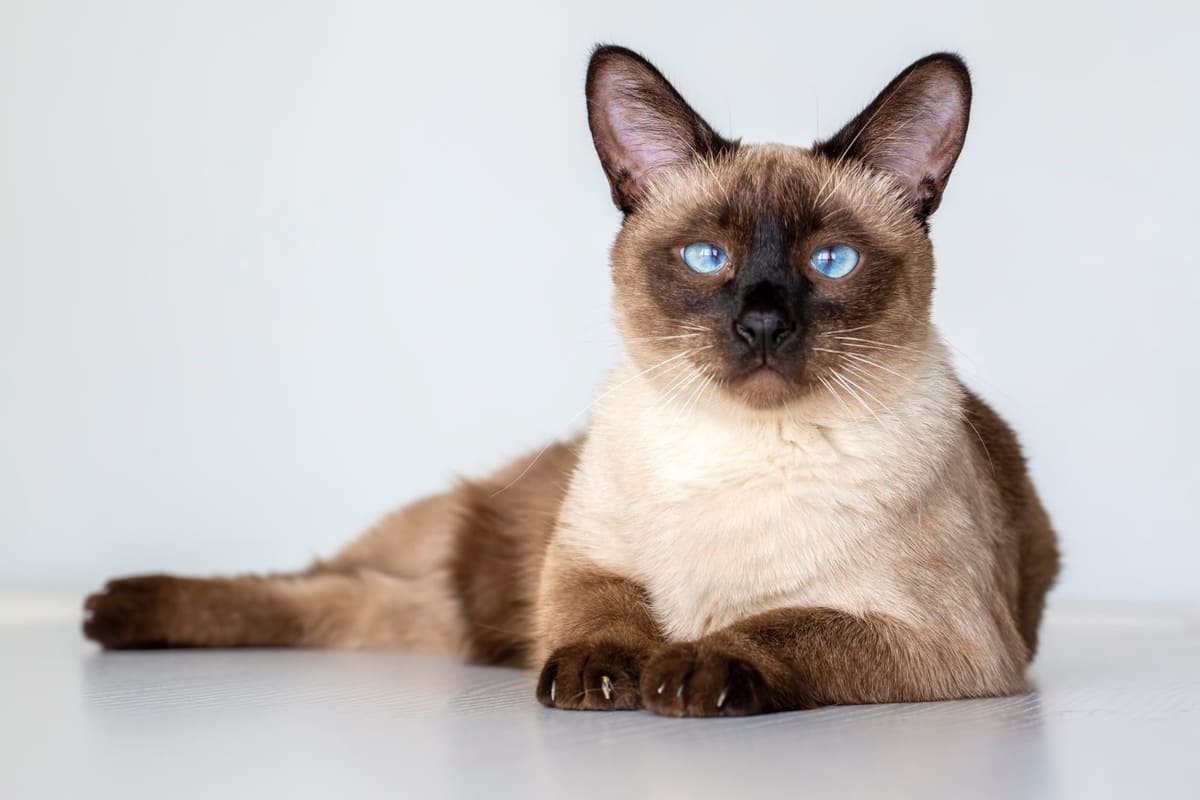
The Siamese breed, which stands out among non-shedding cats, has managed to attract the attention of many people with its unique appearance. Known for its striking blue eyes and short fur, this breed sheds very little hair.
With regular brushing, the rate of shedding can be easily controlled, and this breed also has a very sensitive nature. Siamese cats, who get along well with children and have their own unique way of communicating, are good companions for those with allergies or who dislike shedding.
Russian Blue (Russian Blue Cat)

This breed's shedding is generally seasonal, and they only shed for about two or three weeks a year. Apart from that, thanks to regular brushing, the shedding rate is quite low.
Russian Blue cats, which have a very elegant and muscular build, are also known for their gentle nature. This breed, which will be a good choice for homes with children and large families, is a perfect family cat candidate when socialized early.
Abyssinian Cat

The Absyssinian is also among the examples of cat breeds that shed little hair. These cats, who are quite intelligent and have a strong sense of curiosity, have endless energy to explore the world around them. Jumping and climbing are among their areas of expertise.
Although they have independent spirits, they are known to love to attract attention. Allowing them to release their energy and calm down is important to prevent their potentially destructive mischief. Cat toys will be quite functional in this sense. You can access cat toy varieties by clicking here.
American Bobtail
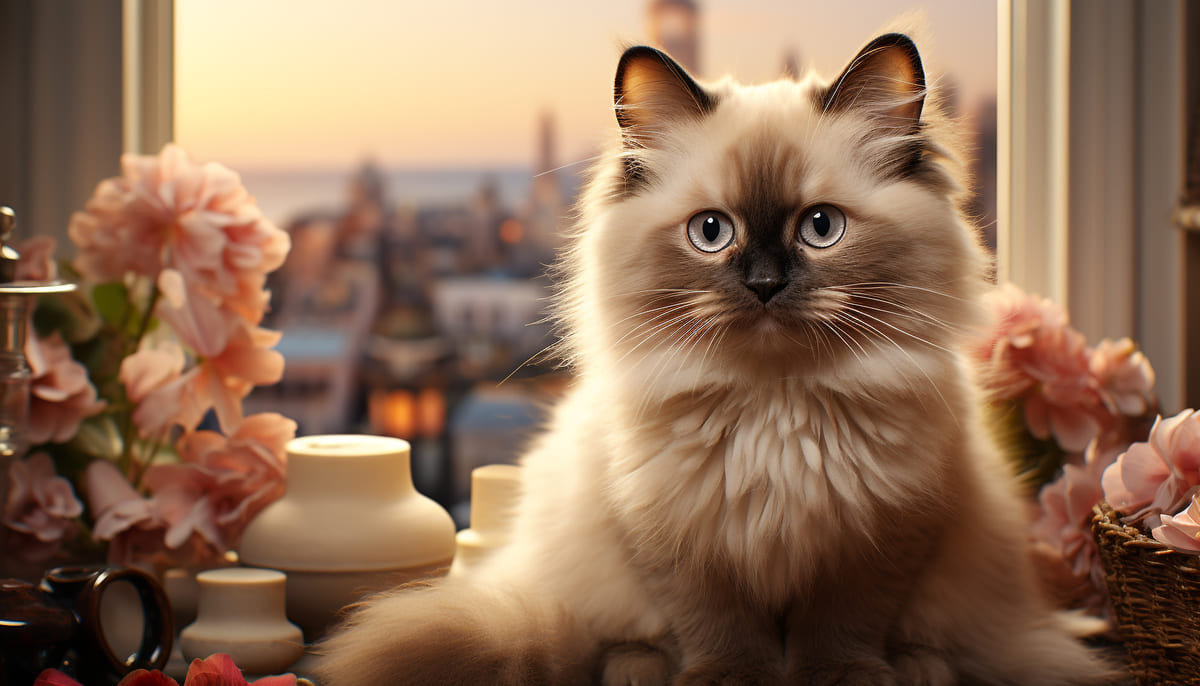
American Bobtail cats, which have short, medium-length and long fur, have a wild appearance. This breed, which may initially cause apprehension for those who don't spend time with cats, can exhibit extremely devoted behavior towards its family. They are both docile and very eager to socialize. They are known to form good relationships with children and other pets. Even the long-haired ones don't shed significantly, and shedding problems are minimal, especially when grooming is done regularly. One of the most interesting facts about them is that they have naturally shorter tails. The main reason for this is that they can easily see their surroundings over their backs in case of danger. This breed, which is also known to be kept for therapeutic purposes, matures slowly; it takes about 2-3 years for them to reach their adult size physically.
They are both docile and very eager to socialize. They are known to form good relationships with children and other pets. Even long-haired ones do not shed significantly, especially when grooming is done regularly; shedding problems are minimal.
One of the most interesting facts about them is that they have naturally shorter tails. The main reason for this is that they can easily see their surroundings over their backs in case of danger. This breed, which is also known to be kept for therapeutic purposes, matures slowly, needing approximately 2-3 years to reach adult size physically.
Devon Rex
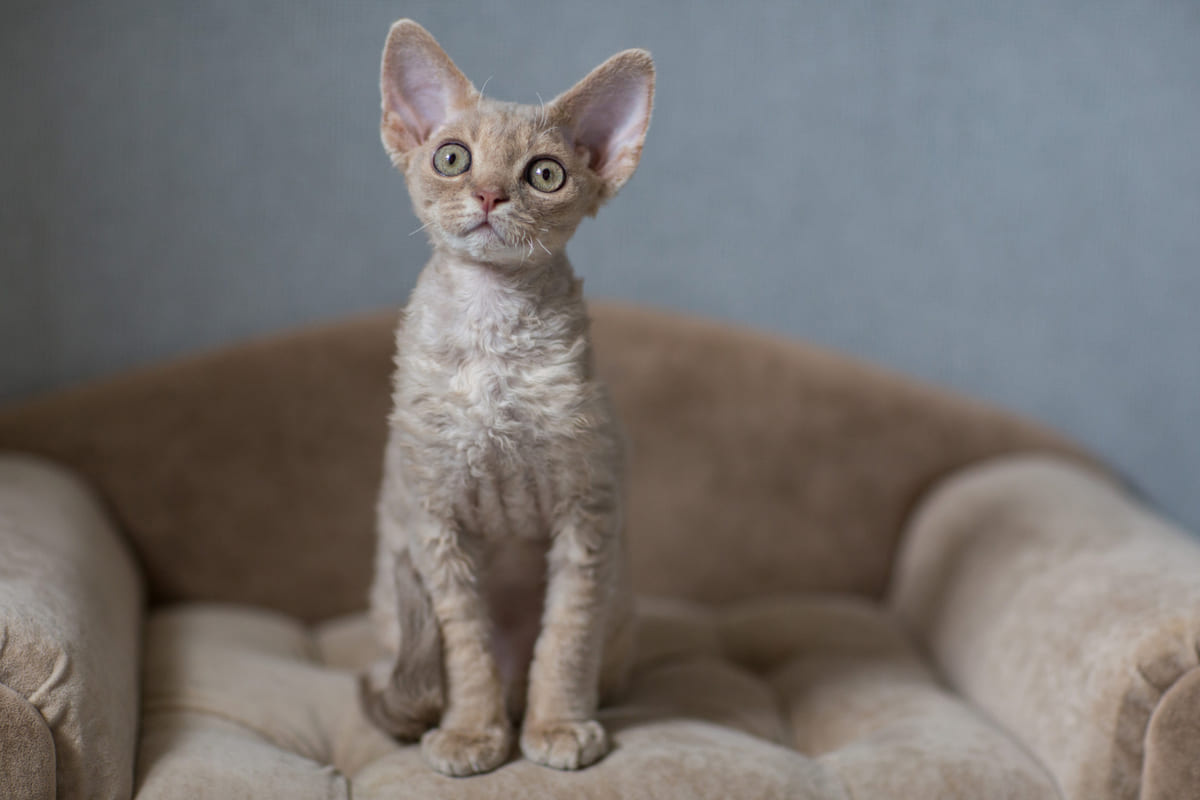
Devon Rex cats, which are among the white-furred cats, are easily distinguishable by their unusual appearance. They attract attention with their curly fur, large ears, and elegant structure. This breed, which is quite energetic, loves to play.
With their active nature, they can live harmoniously with both children and other animals. It is quite common for them to form a strong bond with their owners. It is not surprising to see them sleeping in laps, on shoulders, or on the neck.
Their fur is short, fine, and wavy. Therefore, they require less grooming compared to other long-haired breeds. However, since their fur is delicate, they need to be brushed gently. The Devon Rex breed is among the preferred breeds for people with allergies because of its low shedding tendency.
These cats, with their very high intelligence levels, actively interact with their environment. They can respond to commands and can be entertained with toys for a long time. According to The Spruce Pets, they adapt very well to indoor life and do not like being left alone. Therefore, they can be a suitable companion for people who spend most of the day at home.
Balinese
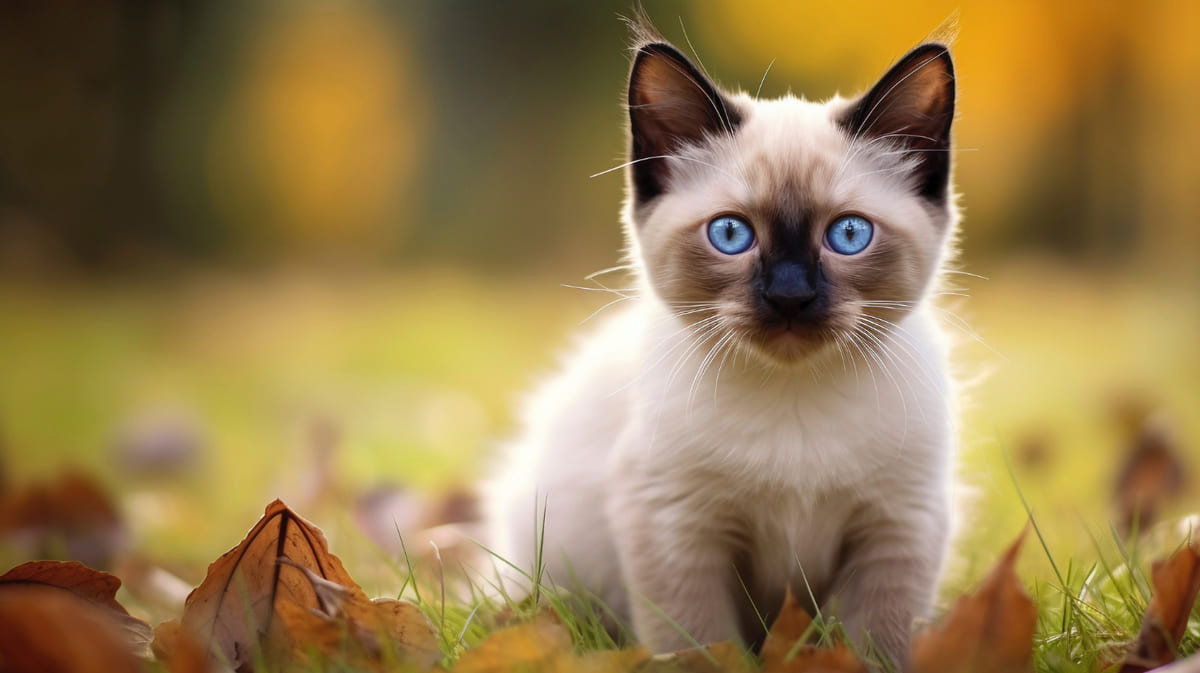
Balineses are known for their elegant and athletic build. They are notable for their slender bodies, silky long fur, and almond-shaped eyes. Although they are known for their resemblance to Siamese cats, their fur is longer. Unlike many cat breeds known for their quiet nature, Balinese cats are quite talkative. They try to communicate with their owners and ask for attention by meowing.
These intelligent, social, and people-oriented cats do not like being left alone. Spending time with them, playing and talking is a source of happiness for Balinese cats.
They can also easily reach high places thanks to their agile build, and their curious nature allows them to explore the house. They get along well with children and other pets, and can live harmoniously, especially with early socialization.
Although their fur is long, it is not difficult to care for. It has a soft and non-matte texture. With regular brushing, shedding can be kept to a minimum. According to the CFA source, Balinese cats are known as a healthy and long-lived cat breed that arose through natural mutation. Their average lifespan can reach up to 15 years.
Javanese

Javanese cats are distinguished by their elegant body lines, striking eye structure, and single-colored silky fur. They are known for their similarities to Balinese and Siamese cats. Although their slender build makes them appear delicate, they are quite athletic and robust. They easily climb to high places indoors and attract attention with their agile movements. Enriching their environment increases their comfort.
Thanks to their social nature, they can form strong bonds with the people in the house. They love being with their owners and may become restless when left alone. Their talkative nature allows them to express their emotions verbally. Because of this characteristic, they may not be suitable for those looking for a quiet cat in the home.
Javanese cats are open to learning. They enjoy playing with toys and often respond to what their owners say. This breed needs both physical activity and mental stimulation. If they are not given enough opportunities to play, they may become bored and exhibit restless behavior.
Tonkinese

Tonkinese cats are an energetic and loving breed born from a combination of Siamese and Burmese breeds. These cats are known for their compact but muscular bodies, bright eyes, and short, velvety fur. Their eye color is usually blue-green and is definitely eye-catching.
Eager to form close bonds with their owners, Tonkinese cats are quite social. They don't like being alone and expect attention. They get along particularly well with children and other pets. Thanks to their fun, talkative, and playful nature, they can be a source of joy in the home.
Tonkinese cats need both physical and mental stimulation. Spending time with toys, playing with intelligence-enhancing cat toys, and engaging in interactive play are important for them. According to PetMD, this breed can be ideal for both individuals with active lifestyles and families who spend a lot of time at home. Their daily grooming needs are low; their short fur is easy to clean. Burmilla Burmilla cats are distinguished by their soft and dense fur, slightly curved noses, and prominent eye lines. Their silvery sheen and green-toned eyes are the most distinctive features of this breed. Their body structure is medium-sized and muscular; they always reflect their elegance with their aesthetic posture. This breed is known for its independent yet affectionate nature. Burmilla cats generally have a calm temperament, but can be quite playful if they want to. They exhibit a balanced mood in a home environment: neither overly possessive nor completely distant. They are a good choice, especially for those seeking a peaceful and balanced companion at home.
Burmilla

Burmilla cats are distinguished by their soft and dense fur, slightly curved noses, and prominent eye lines. Their silvery sheen and greenish eyes are the most distinctive features of this breed. Their body structure is medium-sized and muscular; they always reflect their elegance with their aesthetic posture.
This breed is known for its independent yet affectionate nature. Burmilla cats generally have a calm temperament, but can be quite playful if they want to. They exhibit a balanced mood in a home environment: neither overly possessive nor completely distant. They are a good choice, especially for those seeking a peaceful and balanced companion in their home.
Burmilla cats are easy to care for. Their fur is dense but medium length, and brushing once a week is sufficient. According to Dailypaws, Burmilla cats can live harmoniously with both adults living alone and children in a family environment. This gentle breed, which doesn't meow much, adapts easily to home life.
Hairless Cat Breeds
Hairless cat breeds are noteworthy not only for their unusual appearance but also for their specific care requirements. Those considering adopting these cats should be prepared not only for shedding but also for details that affect daily life, such as skin type, ambient temperature, cleaning routines, and social needs.
Sphynx (Sfenks)
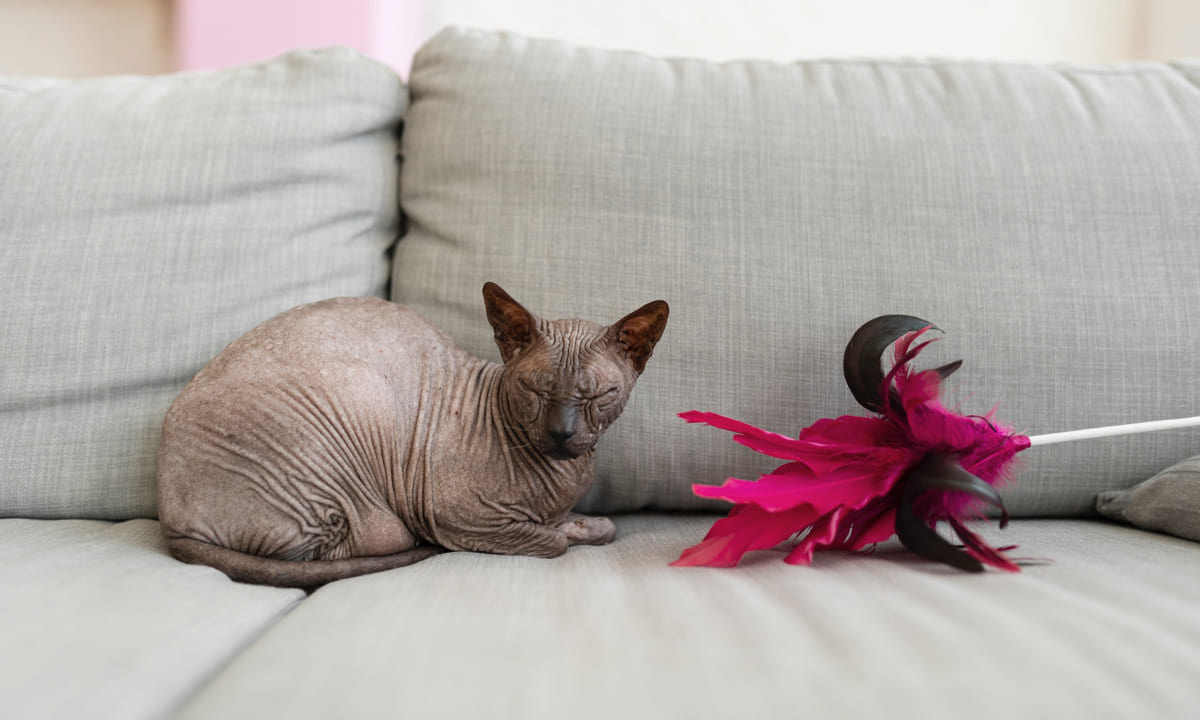
The Sphynx is the first breed that comes to mind when you think of hairless cats. This breed, which emerged in Canada in the 1960s, has fine peach-colored fur on its skin. With its medium-sized body, large ears, and distinctive facial features, it has a very characteristic appearance.
When you touch it, you feel a velvety softness. One of the most frequently asked questions is about its character. These cats are extremely social, affectionate, and people-oriented.
Sphynx cats, whose fur is so sparse that it is barely visible to the naked eye, are not hypoallergenic. The Fel d1 protein found in cat saliva can trigger allergies.
It does not require any traditional grooming. Because they lack fur, body oils can accumulate on the skin. Therefore, it is important to bathe them at regular intervals and to check the area around their ears and nails. In cold weather, they should be kept in a warm environment and, if necessary, supported with cat clothes. Bambino The Bambino cat is one of the most striking hairless cat breeds. This breed, which resulted from crossbreeding Sphynx and Munchkin breeds, has both a hairless body and short legs. Its name comes from the Italian word "bambino," meaning "baby," and it truly resembles a small kitten with its miniature appearance. Reaching an average weight of 2.5–4 kilograms, Bambinos have an unusual appearance with their compact bodies and large ears.
Bambino

The Bambino cat is one of the most striking hairless cat breeds. Created by crossbreeding Sphynx and Munchkin breeds, this breed has both a hairless body and short legs.
The name comes from the Italian word "bambino," meaning "baby," and indeed, with its miniature appearance, it resembles a small kitten. Weighing an average of 2.5–4 kilograms, Bambinos have an unusual appearance with their compact bodies and large ears.
They are extremely affectionate, playful, and social cats by nature. They enjoy spending time with people and are very well-suited to living in a home environment. Just like Sphynx cats, their skin requires regular care. You should bathe them frequently to prevent oil buildup and provide a warm environment to protect them from the cold.
Peterbald
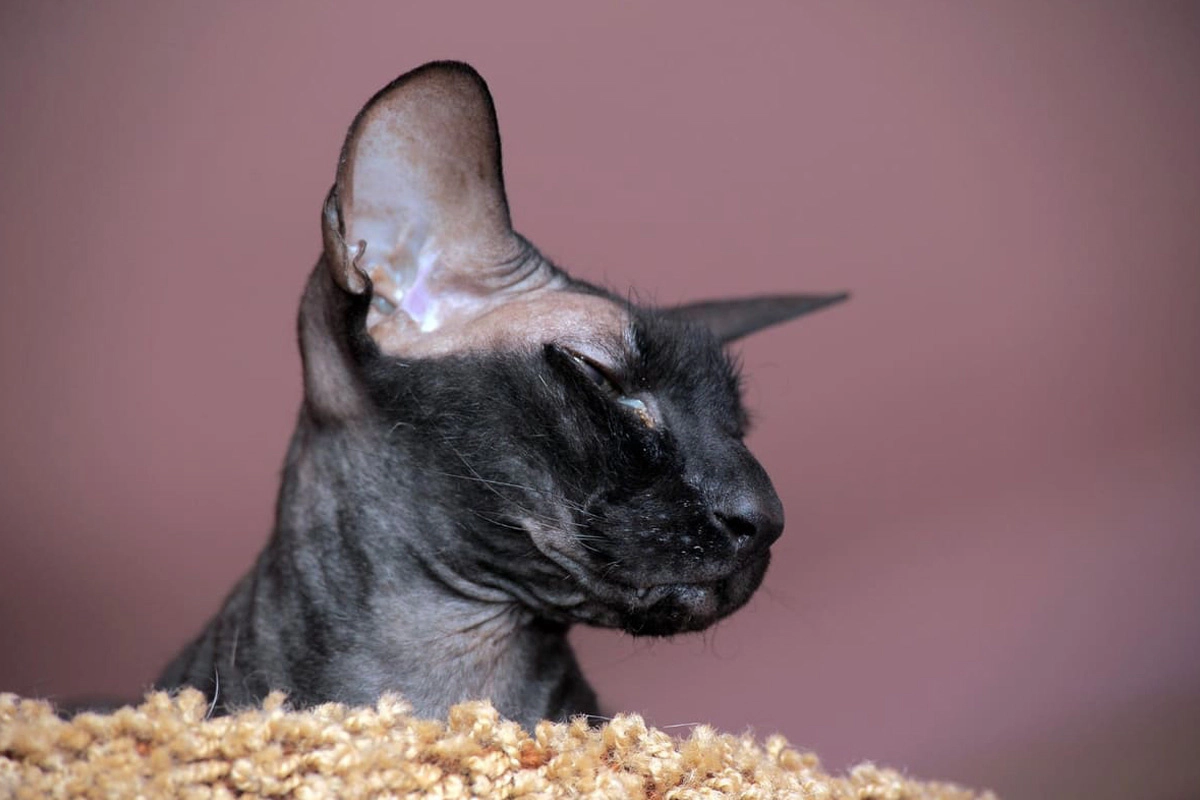
The Peterbald cat originated in Russia in the 1990s by crossbreeding Oriental Shorthair and Donskoy. They are easily distinguishable by their elegant and slender body structure, long legs, and triangular-shaped heads. Their most striking feature is their ability to have different coat types: They can be born completely hairless, covered with a fine "peach fuzz"-like layer, or with short, velvety fur.
Due to their sensitive skin, they need to be protected from direct sunlight. Skin problems can develop if they are not protected from the sun. Therefore, regular bathing and skin care are very important for their health. In winter months, they should definitely be kept in a warm environment, and if necessary, they should be provided with cat clothes.
Donskoy (Don Sphynx)

The Donskoy cat, or as it is known, the Don Sphynx, was first discovered in Russia in the late 1980s. A professor named Elena Kovaleva rescued and adopted a female kitten and named her Varvara. Within a few months, Varvara's fur began to fall out, and Kovaleva, thinking it was due to a disease, tried many treatments. However, without success.
Varvara later mated and gave birth to both furry and hairless kittens. Interestingly, even the kittens born with fur eventually lost it. This was initially thought to be a sign of illness, and Kovaleva was even told to give up the cats.
The truth was revealed thanks to a breeder, Irina Nemikina. Nemikina adopted one of the kittens, included it in her breeding program, and observed that the hairlessness continued in subsequent generations. Thus, it was discovered that the hairlessness was actually a hereditary genetic mutation. The new breed was named "Don" and "Sphynx". The Wisdom Panel source states that the breed is recognized by the CFA and TICA as "Donskoy".
The most important point in the care of Donskoy cats is skin cleanliness. Because they have no fur, their bodies produce oil, but they lack the fur to absorb this oil. Therefore, you need to wipe their skin daily with a damp cloth or special cat skin care products. A full bath should be done every 1-2 months with cat-specific shampoo. Ukrainian Levkoy The Ukrainian Levkoy is one of the most distinctive breeds among hairless cats. Developed in Ukraine in the early 2000s, this breed resulted from crossbreeding Donskoy and Scottish Fold cats. They are easily recognizable by their ears that fold forward. They stand out with their slender and long bodies, large almond eyes, and athletic appearance. Their average weight ranges from 3–5 kilograms. In terms of character, they are affectionate, social, and close to humans. They form strong bonds with their owners, love to play, and can get along well with other pets. Like other hairless cats, they require regular skin cleaning. Since they don't have hair that can absorb body oils, their skin should be wiped regularly and they should be bathed occasionally. Also, because they are sensitive to cold, they need to be kept warm in a home environment. Lykoi The Lykoi cat, also known as the "wolf cat" among the public, takes its name from the Greek word "lykos" (wolf). Its appearance resembles a wild wolf with its partially hairless skin and patchy coat. This distinctive appearance is entirely the result of a genetic mutation. Its fur is sparse and irregular; the area around the eyes, nose, and mouth is often bare. Although they have a wild appearance, they are actually affectionate, social, and very playful cats. Thanks to their curious nature, they love to explore their surroundings. They are people-oriented and form close bonds with their owners. They have recently been recognized by TICA.
Ukrainian Levkoy
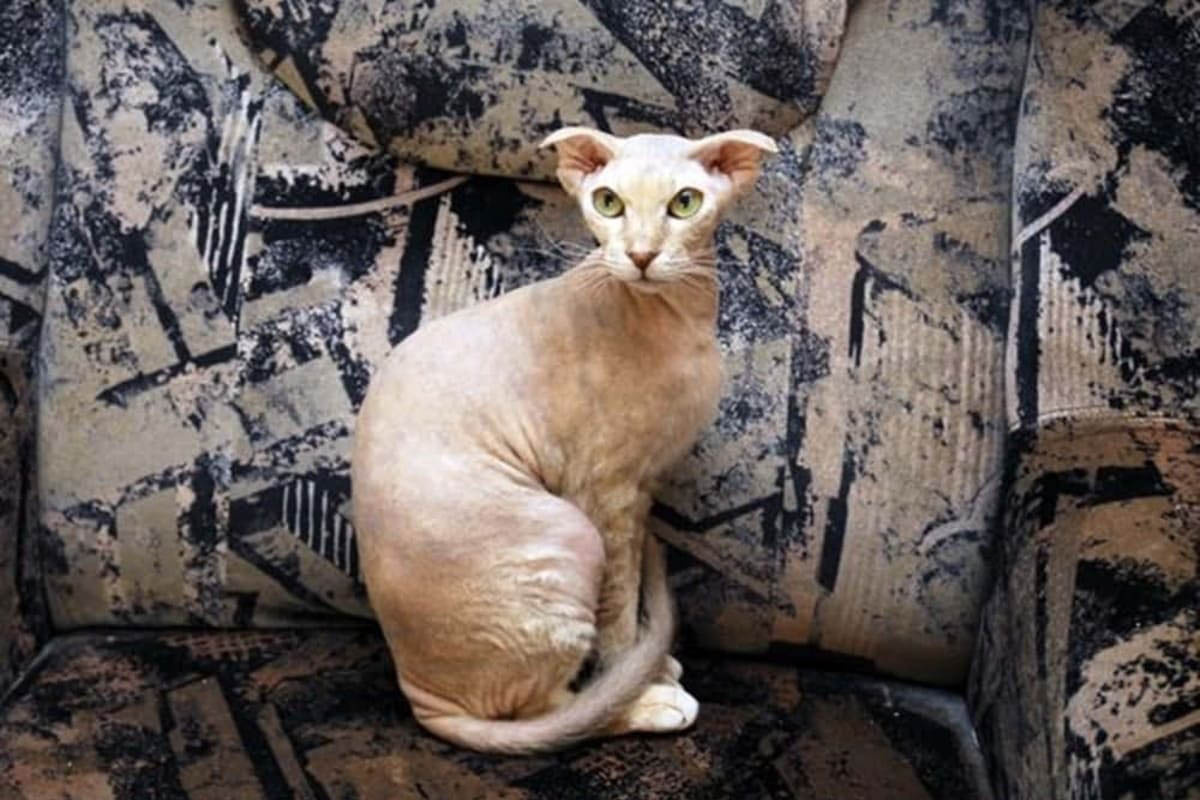
The Ukrainian Levkoy is one of the most distinctive breeds among hairless cats. Developed in Ukraine in the early 2000s, this breed resulted from crossbreeding Donskoy and Scottish Fold cats.
Easily recognizable by their ears that fold forward. They are notable for their slender, long bodies, large almond-shaped eyes, and athletic appearance. Their average weight ranges from 3–5 kilograms. In terms of character, they are affectionate, social, and close to humans. They form strong bonds with their owners, love to play, and can get along well with other pets.
Like other hairless cats, they require regular skin cleaning. Because they lack fur to absorb body oils, their skin should be wiped regularly and they should be bathed occasionally. They are also sensitive to cold and need to be kept warm indoors.
Lykoi
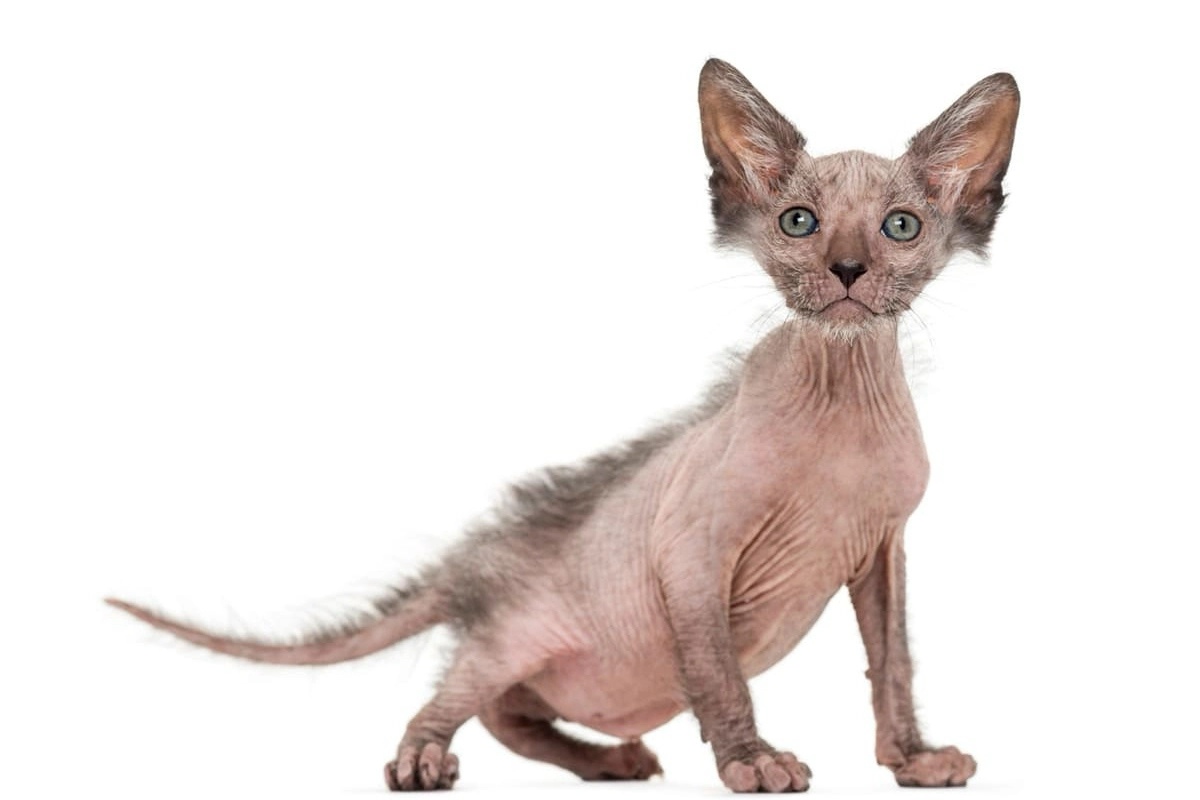
Lykoi cat, also known as the "wolf cat," gets its name from the Greek word "lykos" (wolf). Its appearance, with its partially hairless skin and patchy coat, resembles a wild wolf. This distinctive appearance is entirely the result of a genetic mutation. Their fur is sparse and irregular; the area around the eyes, nose, and mouth is often bare.
Despite their wild appearance, they are actually affectionate, social, and very playful cats. Their curious nature makes them love exploring their surroundings. They are people-oriented and form close bonds with their owners. They have recently been recognized by TICA.
Lykoi cats are more energetic compared to other hairless breeds. In general, they exhibit a harmonious nature both in home environments and in social relationships. Regular skin cleaning is important for skin health; protecting them from the cold also ensures they live comfortably.
Minskin
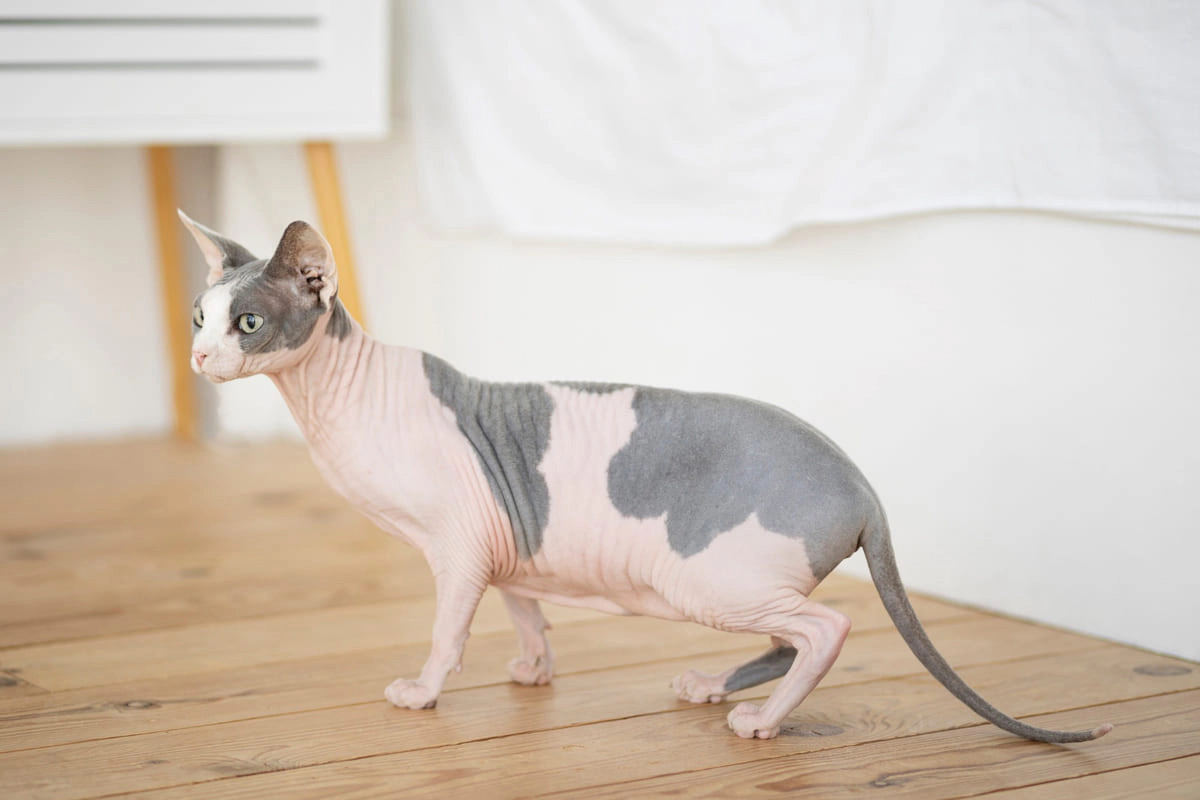
The Minskin cat is one of the new hairless cat breeds developed in America in the early 2000s. It is a hybrid that combines the characteristics of Sphynx, Munchkin, Devon Rex (which is among allergy-friendly cats), and Burmese cats. Its most distinctive features are its short legs and partially hairless bodies. While some parts of their bodies, especially the face, ears, tail, and paws, have short and fine hairs, other parts are almost completely hairless.
Minskin cats have a playful, energetic, and affectionate character. They love to form close bonds with people and enjoy spending time in laps. They are also compatible with children, making them suitable for family life. Their skin requires regular cleaning, and a warm environment should be provided to protect them from the cold.
Dwelf
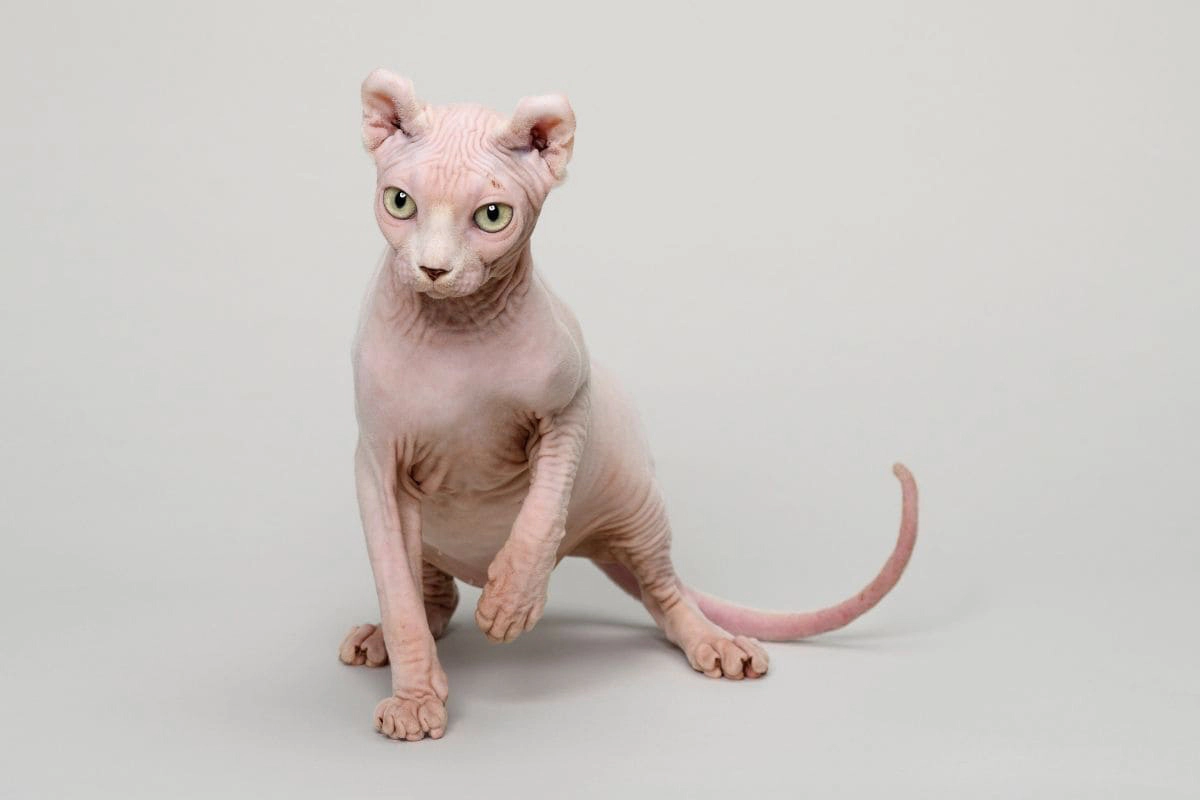
The Dwelf cat gets its name from the combination of the English words "dwarf" and "elf." This breed, which resulted from the crossbreeding of Sphynx, Munchkin, and American Curl cats, has a unique appearance with its hairless body, short legs, and ears that curl backward. They have a medium-sized, muscular body and usually weigh 2–4 kilograms. Their genetic heritage from different cat breeds gives them an unusual aesthetic.
In terms of character, Dwelf cats are quite affectionate, people-oriented, and playful. In a home environment, they can follow you step by step and enjoy spending time in your lap. Thanks to their social nature, they also get along well with children. Like other hairless breeds, they need regular skin care, bathing, and protection from the cold. They are not officially recognized by TICA.
Elf
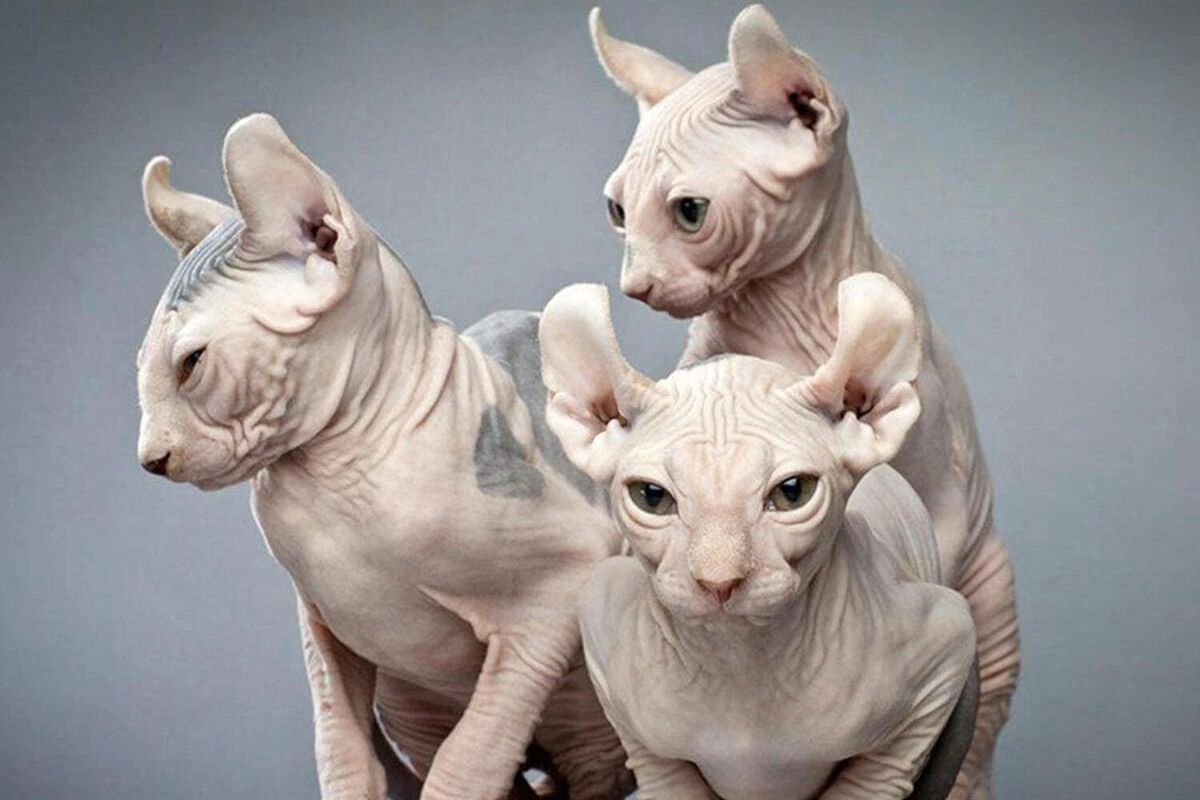
The Elf cat is one of the newest and most striking hairless cat breeds. Developed in America in the mid-2000s, this breed was created by crossbreeding Sphynx and American Curl cats. It inherited its hairless body from the Sphynx and its backward-curved ears from the American Curl. It is not officially recognized by TICA and CFA.
They have a medium-sized, muscular, and athletic build. Their average weight ranges from 3–6 kilograms.
Elf cats are affectionate, social, and quite playful in character. They are known for their devotion to humans, follow their owners around the house, and enjoy spending time in their laps. As mentioned in the Chewy source, Elf cats are very fond of play and interaction thanks to their high energy levels.
In terms of care, they have similar needs to other hairless cats: regular skin cleaning, bathing at regular intervals, and protection from the cold. Due to their need for attention, they do not like being left alone; therefore, it is important to spend time with them during the day.
Kohana
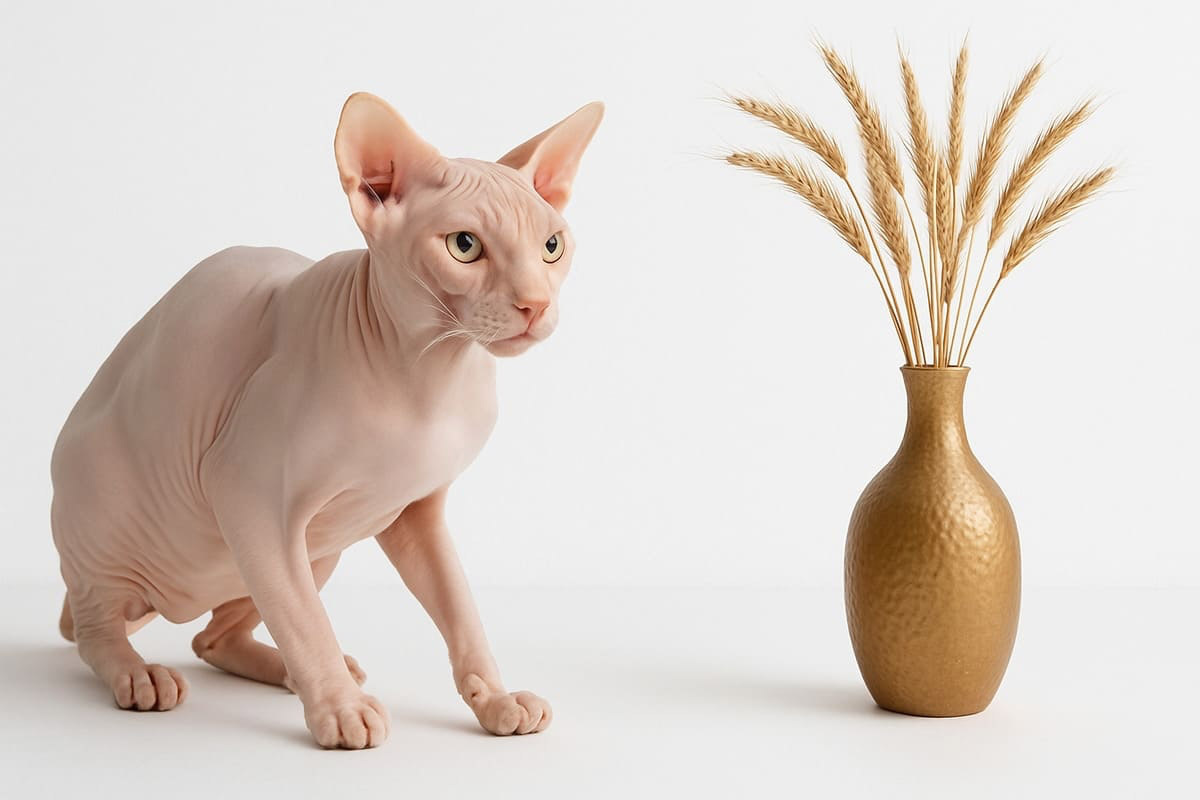
The Kohana cat is one of the rarest hairless cat breeds. Also known as the "Hawaiian Hairless," this breed is completely hairless due to a genetic mutation. Unlike Sphynx cats, it doesn't have a fine coat of fur. Its skin is completely smooth, distinguishing it from other hairless cats. It has a muscular and sturdy body structure. They are medium-sized, usually weighing between 3 and 5 kilograms.
Kohana cats are very affectionate, adaptable, and social animals. They love to form strong bonds with people, need attention, and dislike being alone. They require regular skin cleaning, bathing at regular intervals, and protection from the cold. Due to their rarity, their numbers are quite limited worldwide.
Care Needs of Non-Shedding and Hairless Cats

The care needs of cats with low shedding tendencies and hairless cats are not the same. For cats that shed little, regular brushing, quality nutrition, and overall coat health are important. In hairless cats, skin cleaning, ambient temperature, and sun protection become even more important.
Hair Care in Cats with Low Shedding
Regular brushing should not be neglected in cats with a low tendency to shed. A brushing routine helps reduce the spread of shed hair in the home environment and supports a healthier-looking coat. The amount of shedding in these cats may vary depending on the season, diet, stress, grooming frequency, and general health status.
Skin Cleaning in Hairless Cats
Although hairless cats require less classic hair care, skin cleaning is a more significant care issue. Because they have less fur, body oil can accumulate on the skin. Therefore, the skin should be cleaned regularly, and the frequency of bathing should be determined according to the cat's needs and the veterinarian's recommendation.
When grooming routines are neglected, oily skin, dirt accumulation, and bad odor can occur. During cleaning, products suitable for cats should be preferred, and practices that may irritate the skin should be avoided.
Protection from Cold and Sun
Hairless cats may be more sensitive to cold. Attention should be paid to the temperature of their living environment, and if necessary, they should be provided with cat clothing during the winter months.
Sunlight is also among the issues that need attention for these cats. The lack of fur can cause the skin to be directly exposed to the sun. Therefore, prolonged sun exposure should be avoided, and outdoor activities should be done in a controlled manner.
Ear, Nail, and Skin Check
In some hairless cats, especially Sphynx breeds, the ears and the spaces between the nails can get dirty more easily. Regularly checking these areas, being gentle during cleaning, and avoiding products that may cause irritation are important.
If redness, scaling, bad odor, excessive oiliness, or itching are noticed on the skin, a veterinary check should not be delayed.
Advantages of Non-Shedding and Hairless Cats

Cats with low shedding tendencies or hairless cats may be advantageous for people who want to make hair management easier at home. However, these advantages do not mean that the need for grooming disappears. Acting with the right expectations in these cats allows for a healthier decision to adopt.
They Can Make Hair Management Easier at Home
Cats that shed little or are hairless can help reduce the amount of hair accumulating in the home. This can make hair cleaning more manageable, especially on surfaces such as sofas, carpets, clothes, and beds.
Allergen Spread May Be More Limited
Hairless cats can also cause allergies. In allergic reactions, the Fel d 1 protein found in the saliva and skin of cats plays a more significant role than their hair. However, the low amount of shedding may make the spread of allergens into the home environment more limited for some people.
Beware of Sudden Hair Shedding!
In this article, we shared information about cat breeds that are prone to low shedding and are hairless. However, this does not mean that the breeds mentioned in this article will not shed at all, or that mixed-breed cats will necessarily shed a lot. Even some cats known as hairless may have very fine hairs that may shed from time to time.
The amount of shedding can vary depending on diet, grooming routine, seasonal changes, stress, and general health status. If sudden and significant hair loss is noticed in a cat that normally sheds little, it may be due to various reasons such as allergies, infections, medication side effects, sunburn, or stress. In such a case, a veterinary check-up should not be neglected.
To manage shedding, it is important for cats to have a balanced diet, be brushed regularly, and have their living spaces kept clean. People with cat allergies can take precautions by washing their hands after contact with cats, using a filtered vacuum cleaner, and regularly cleaning the hair that accumulates on their clothes. You can find various cat combs and brushes suitable for your pet's coat type here.
Frequently Asked Questions About Non-Shedding and Hairless Cat Breeds
Do non-shedding cat breeds really not shed at all?
No. The term "non-shedding cat" is generally used for breeds with a low tendency to shed. Every cat may shed a certain amount of hair. The amount of shedding can vary depending on breed, coat type, grooming routine, diet, seasonal changes, and health status.
Do hairless cats shed hair?
Some hairless cat breeds may have very fine and short hairs. These hairs may shed from time to time; however, shedding is generally more limited compared to cats with normal fur. In some breeds, the skin may appear almost completely smooth. Do non-shedding or hairless cats cause allergies? Yes, they can cause allergies. In allergic reactions, the Fel d 1 protein found in the cat's saliva and skin plays a more significant role than its fur. Low shedding may limit the spread of allergens into the home environment for some people; however, this does not mean that the risk of allergies is completely eliminated. Are non-shedding cat breeds easy to care for? In cats with low shedding tendencies, grooming may be more manageable. Nevertheless, regular brushing, quality nutrition, and monitoring of skin and coat health are necessary. If a sudden increase in shedding, localized shedding, or redness of the skin is noticed, a veterinary check-up is important.
Do non-shedding or hairless cats cause allergies?
Yes, they can cause allergies. In allergic reactions, the Fel d 1 protein found in the cat's saliva and skin plays a more significant role than its fur. The low amount of shedding may limit the spread of allergens into the home environment for some people; however, this does not mean that the risk of allergies is completely eliminated.
Are non-shedding cat breeds easy to care for?
In cats with low shedding tendencies, grooming may be more manageable. However, regular brushing, quality nutrition, and monitoring of skin and coat health are still necessary. A sudden increase in shedding, localized shedding, or redness of the skin should be checked by a veterinarian.
Are hairless cats difficult to care for?
Hairless cats require regular skin care. Because they have less fur, body oil can accumulate on the skin. Therefore, skin cleaning, bathing routines, and checking the ears and nail areas should not be neglected. The frequency of care should be determined according to the cat's skin type and the veterinarian's recommendations.
Do hairless cats get cold?
Yes, hairless cats may be more sensitive to cold. The temperature of their living environment should be monitored, and if necessary, they should be provided with cat clothing during the winter months. Prolonged exposure to direct sunlight can also pose a risk to skin health. Are non-shedding cats suitable for homes with children? Some low-shedding cat breeds may be suitable for family life due to their social and adaptable character. However, the adaptation process depends on the cat's temperament, level of socialization, the children's behavior, and the home environment. Children should interact with cats gently, in a controlled, and safe manner. Many hairless cat breeds are described as social, playful, and inclined to form close relationships with humans. Nevertheless, every cat's character is different. When deciding to adopt a cat in a household with children, the cat's need for attention, sensitive skin, and grooming routine should be considered together.
Are non-shedding cats suitable for homes with children?
Some low-shedding cat breeds may be suitable for family life due to their social and adaptable personalities. However, the adaptation process depends on the cat's temperament, level of socialization, children's behavior, and the home environment. Children should interact with cats gently, in a controlled, and safe manner.
Do hairless cats get along well with children?
Many hairless cat breeds are described as social, playful, and inclined to form close relationships with humans. However, every cat's character is different. When deciding to adopt a cat in a home with children, the cat's need for attention, sensitive skin, and grooming routine should be considered together.
What should be considered before adopting a non-shedding or hairless cat?
Before adoption, the cat's grooming needs, living space, diet, character, and health history should be evaluated. Cats that shed little hair require regular brushing and monitoring of coat health. In hairless cats, skin cleanliness, a warm environment, sun protection, and social needs may be more prominent.
What is the difference between a Donskoy and a Sphynx?
Donskoy and Sphynx cats are both hairless cat breeds, but their genetic makeup differs. In Sphynx cats, hairlessness is associated with a recessive gene, while in Donskoy cats it is associated with a dominant gene. Differences in skin texture and coat structure can also be observed.
Kaynaklar:
https://www.thesprucepets.com/devon-rex-cat-breed-profile-4693660
https://www.petmd.com/cat/breeds/devon-rex
https://www.thesprucepets.com/balinese-cat-full-profile-history-and-care-4686126
https://cfa.org/breed/balinese/
https://www.thesprucepets.com/javanese-cat-breed-profile-6500994
https://www.thesprucepets.com/tonkinese-cat-full-profile-history-and-care-4694353
https://www.petmd.com/cat/breeds/tonkinese
https://www.dailypaws.com/cats-kittens/cat-breeds/burmilla
https://www.kippy.eu/blog/en/cat-breeds-without-fur
https://www.petmd.com/cat/general-health/hairless-cats
https://www.thesprucepets.com/hairless-cat-breeds-11720987
https://www.purina-arabia.com/find-a-pet/articles/cat-types/fur-type/hairless
https://www.chewy.com/education/cat/general/behavior-breeds-10-things-to-know-about-hairless-cats
https://www.thesprucepets.com/peterbald-cat-breed-profile-4778267
https://www.thesprucepets.com/bambino-cat-breed-profile-4770712
Advertisement
Advertisement
Keep exploring
Continue reading
Cat Breeds
Non-Shedding and Hairless Cat Breeds
Many people love cats and feel their hearts warm when they see a cat approaching them. However, dealing with cat fur is difficult.
Read guide →
Cat Breeds
What Breed is My Cat? Learning Cat Breeds
Cats have been a part of human life for thousands of years. The bond we form with them cannot be limited to their appearance or breed-specific…
Read guide →
Cat Breeds
The 10 Smartest Cat Breeds
It is well known that cats are unique companions that beautify our lives. But is the fact that they are so intelligent sufficiently known?
Read guide →
Cat Breeds
White-Furred Cat Breeds and Characteristics
Cats have been one of the most adorable and fascinating companions in human life for thousands of years.
Read guide →