Puppy Toilet Training: How to Urinate?
Dogs interact with their environment and other Dogs are constantly learning as a result of their interactions with other dogs or humans. Learning is particularly rapid in puppies. Basic training during this period can help dogs live happy and peaceful lives.

Advertisement
Dogs interact with their environment and other Dogs are constantly learning as a result of their interactions with other dogs or humans. Learning is particularly rapid in puppies. Basic training during this period can help dogs live happy and peaceful lives.
The most basic training for puppies begins with toilet training. Toilet training usually starts when puppies are eight weeks old. At this age, they can also learn basic dog training cues such as sit, wait, or come.
For someone who is raising a dog for the first time, potty training may seem difficult. The main reason for this is that bladder control develops with age. Learning is supported by repetition, correct timing, and calm guidance. With a patient and consistent training plan, your puppy can gradually learn where to relieve itself, which areas to avoid, and how to guide it when it needs to go to the toilet.
Warning: This content is for informational purposes only. If there are sudden toilet accidents, frequent urination, diarrhea, or signs of pain, a veterinary evaluation is necessary.
The Right Steps for Toilet and Urination Training in Puppies

Important: Until puppies complete their vaccination schedule, their contact with the outside environment should be controlled. The most appropriate timing for the puppy's outing should be evaluated according to the vaccination schedule determined by the veterinarian.
You need to continue toilet training consistently and give your dog time to learn. In this process, establishing a repetitive routine is crucial rather than relying on a single method. When the puppy will be taken outside, which area it will be directed to, which words will be used to reinforce it, and how it will be rewarded after correct behavior should be planned from the beginning.
Everyone in the house needs to adopt the same approach during training. Behaviors that one person allows and another prevents can confuse a puppy. Proceeding with a patient, calm, and consistent plan will reduce accidents and make it easier for the puppy to associate the correct area with its toilet needs. Positive Reinforcement There are many different ways to train a puppy. However, one of the most important and scientifically supported training methods is positive reinforcement. Positive reinforcement is the process of rewarding a desired behavior to encourage it. Techniques such as using punishment to reduce or eliminate unwanted behavior should be avoided. Because these can create trauma, fear, and anxiety in your dog, leading to negative consequences in the long run. To prevent this, you should learn what the most appropriate rewards are for your puppy.
Positive Reinforcement
There are many different ways to train a puppy. However, one of the most important and scientifically supported training methods is positive reinforcement.
Positive reinforcement is the process of rewarding a dog to encourage a desired behavior. Techniques like punishment should be avoided to reduce or eliminate unwanted behavior. These can create trauma, fear, and anxiety in your dog, leading to negative long-term consequences. To prevent this, you should learn what the most appropriate rewards are for your puppy. Be Consistent. Dogs feel happier when they have a regular life. This requires consistency in all areas related to them, including training. Feeding at the same time every day is an important example of consistency. Keeping feeding times at similar intervals helps make toilet needs more predictable. Puppies often need to go to the toilet after waking up, eating, drinking water, and playing. Therefore, providing opportunities to go to the toilet at similar times throughout the day helps make training more understandable. When everyone in the house follows the same routine, the puppy is less confused. The frequency of going outside varies from puppy to puppy. Age, bladder control, diet, and daily activity directly shape this process. Therefore, setting a specific weekly or monthly goal can often create unnecessary pressure. Until the vaccination schedule is complete, contact with the outside environment should be planned in a controlled manner according to the veterinarian's recommendations. During this period, a designated toilet area, pee pad, or safe, private areas can be used indoors. After the vaccination program is complete, a more regular outdoor toilet routine can be established. The Importance of Crate Training in Toilet Training
While some dogs are rewarded with a few extra treats of their usual daily food, others are harder to persuade and may prefer a tastier snack.
The topic of treats requires attention. The reward needs to be given at the right time. A reward given immediately after the puppy completely finishes its business in the correct place strengthens the connection between the behavior and the result. A reward given too early can distract the puppy.
Some puppies may not be motivated by food. For these puppies, you can try giving them toys they enjoy playing with when they do a good job.
Praise is another way to positively reinforce a puppy. In some cases, all you need for basic toilet training might be to reward them with love and praise.

Use Keywords
Association is very important in dog training. The more elements you associate with a behavior you expect from your dog, the easier it will learn. In toilet training, smell and location are among the elements that can be associated with the act of urinating or defecating. Another element is the keyword. You should choose a word that will remind your dog of going to the toilet and say this word to it every time it sits down to do its business.
At this point, it is important that the keyword is a single word and that everyone in the house uses the same word. Playing with your dog and rewarding it when it does its business after hearing this word will speed up the process.
A short phrase such as “toilet”, “pee time” or “let’s go to the toilet” can be chosen. Using the same calm tone of voice each time with the chosen word makes it easier for the puppy to associate the command with the behavior. However, repeating the command frequently at different times, for play or warning purposes, can confuse the learning process. Be Consistent Dogs feel happier when they have a regular life. This requires consistency in all areas related to them, including training. Feeding at the same time every day is an important example of consistency. Keeping feeding times at similar intervals helps make toilet needs more predictable. Puppies often need to go to the toilet after waking up, eating, drinking water, and playing. Therefore, providing opportunities to go to the toilet at similar times throughout the day helps the training progress more comprehensibly. When everyone in the house follows the same routine, the puppy is less confused.
Dogs feel happier when they have a regular life.
This requires consistency in all areas related to them, including training. Feeding at the same time every day is an important example of consistency. Keeping feeding times at similar intervals helps make toilet needs more predictable. Puppies often need to go to the toilet after waking up, eating, drinking water, and playing.
Therefore, providing opportunities to go to the toilet at similar times throughout the day helps make training more understandable. When everyone in the house follows the same routine, the puppy is less confused. The frequency of going outside varies from puppy to puppy.

Establish a Location
Smells play a very important role in dogs' ability to perceive the world around them. Dogs rely heavily on smells to exhibit the behavior expected of them. Therefore, location is extremely important in toilet training.
By establishing a stable location, you can make it easier for your dog to learn where to relieve itself by associating the environment, the smells it encounters in that environment, and the need to relieve itself.
Use of a Safe Area and Pee Pad

When a puppy first arrives home, planning its movement area in a controlled and safe way can facilitate toilet training. This area should be arranged so that the puppy can move comfortably; and have access to its food, water, resting area, and toys.
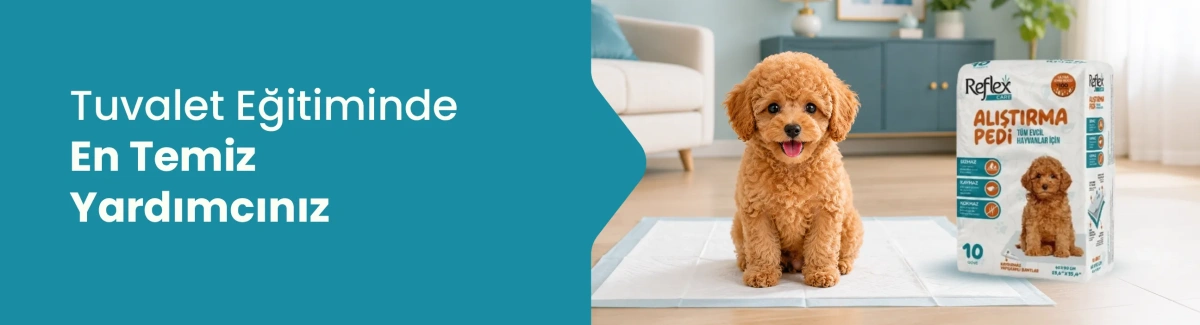
If a pee pad is to be used, its location should not be changed frequently. The pad should be placed away from the puppy's food and water bowls, and the area should be kept as consistent as possible. The number of pads can be gradually reduced to encourage the puppy to use the designated area.
During puppy toilet training, a pee pad that absorbs liquid well, helps reduce odor, and doesn't easily slip on the floor can make the process more controlled. During this period, dog training pads of different sizes and features can be considered to create a designated toilet area inside the house.
Take Them Outside Frequently
From waking up in the morning to the last outing before going to sleep at night, going outside consistently at certain times of the day makes it easier for the puppy to associate the correct area with its toilet needs. After meals and water breaks, these outings, which occur as soon as play sessions end, create a recurring pattern, and over time this pattern begins to take root in the puppy's mind. The frequency of going outside varies from puppy to puppy. Age, bladder control, feeding schedule, and daily activity directly shape this process. Therefore, setting a specific weekly or monthly goal can often create unnecessary pressure. Until the vaccination schedule is complete, contact with the outside environment should be planned in a controlled manner according to the veterinarian's recommendation. During this period, a designated toilet area, pee pad, or safe private areas can be used indoors. After the vaccination program is completed, a more regular outdoor toilet routine can be established. The Importance of Crate Training in Toilet Training Crate training is the process of creating a safe space for dogs. Especially during puppyhood, familiarizing a dog with a crate or designated area can be beneficial for many basic trainings, including toilet training. This area should be designed as a space where the puppy can calm down, rest, and feel safe.
Age, bladder control, diet, and daily activity directly shape this process. Therefore, setting a specific weekly or monthly goal can often create unnecessary pressure.
Until the vaccination schedule is complete, contact with the outside environment should be planned in a controlled manner according to the veterinarian's recommendations. During this period, a designated toilet area, pee pad, or safe, private areas can be used indoors. After the vaccination program is complete, a more regular outdoor toilet routine can be established. The
Importance of Crate Training in Toilet Training

Crate training is the process of creating a safe space for dogs. Especially during puppyhood, getting a dog accustomed to a crate or a specific area can be beneficial in many basic trainings, including toilet training. It should be planned as an area where the puppy can calm down, rest, and feel safe.
Card training allows puppies to stay in a safe area without causing harm when left alone or unsupervised at home. This can also help manage toilet accidents. The aim here is not to keep the puppy confined for long periods, but to provide a safe environment during short intervals when supervision is not possible.
The size of the crate should be chosen correctly for your dog's comfort. Your dog should be able to stand, turn around, and lie down comfortably inside the crate. Crates that are too small restrict the dog's movement. In crates that are too large, the puppy may use one corner as a resting area and another corner as a toilet area.
Mistakes Made in Toilet Training Puppies

One of the common mistakes made in all training, including toilet training, is getting angry, yelling, or showing violence when the dog does something wrong. These types of reactions do not actually eliminate unwanted behavior through learning. On the contrary, they can cause fear, hesitation, and confusion in the puppy. Punishment-based training does not prevent unwanted behavior. It causes them to do the unwanted behavior when no one is around. Therefore, shouting at the puppy when it urinates or defecates in the house, putting its nose near the soiled area, or scaring it is not a correct training method. The answer to the question "When should toilet training start in puppies?" is that it should start when the dog is quite young. However, although early training yields positive results in the long term, accidents are normal. You need to be patient while the dog learns where and what to do. Punishing the dog will only cause it to be afraid and make more mistakes. It can also cause the relationship you build with your dog to turn into a traumatic experience. The goal of the training process is not to catch and punish mistakes, but to guide the puppy to the right area at the right time.
Punishment-based training does not prevent unwanted behavior. It causes them to engage in unwanted behavior when no one is around. Therefore, yelling at a puppy when it urinates or defecates inside, putting its nose near the soiled area, or scaring it is not a correct training method.
The answer to the question "When should toilet training start for puppies?" is that it should start when the dog is quite young. However, while early training yields positive results in the long term, accidents are normal. You need to be patient as the dog learns where and what to do.
Punishing the dog will only cause it to become afraid and make more mistakes; it will not help you achieve any other result. It can also cause the relationship you build with your dog to turn into a traumatic experience. The goal of the training process is not to catch and punish mistakes, but to guide the puppy to the right area at the right time.
How to Clean Correctly After Toilet Accidents?
Accidents can happen indoors during toilet training. In this case, the area should not only be cleaned of visible dirt. If the urine smell remains on the surface, the puppy may perceive the same spot as a toilet area again.
Therefore, the soiled area needs to be cleaned in a way that leaves no odor. Ordinary surface cleaning may not be sufficient in some cases. Stain and odor removers can help reduce the re-marking of the area, especially in repeated accidents.
Instead of reacting angrily in front of the puppy during cleaning, the area should be cleaned calmly, and in the next attempt, the puppy should be guided to the designated toilet area at the right time.
How Long Does Toilet Training Take for Puppies?

The duration of toilet training for puppies is not the same for every dog. Age, bladder control, previous habits, the established routine at home, and the consistency of the caregivers affect this process.
Some puppies can adapt to the right routine quickly. For others, maintaining the same routine for a longer period is necessary. Therefore, it is not correct to give a precise number of days for toilet training.
What is important in the training process is not expecting the puppy to progress without accidents, but rather reinforcing the correct behavior repeatedly. Going outside at the same times, using the same area, directing with the same command, and rewarding correct behavior strengthens learning.
If the duration increases or accidents become more frequent, the training plan should be reviewed again. The process can be managed more effectively if you track when the puppy needs to go to the toilet during the day, which areas it goes to, and at what times accidents occur. When to Consult a Veterinarian? If toilet training in puppies is not progressing despite a certain routine, the situation should not be considered solely as a training error. In some puppies, age, bladder control, stress, environmental changes, or health-related factors may make the process more difficult. If sudden toilet accidents, frequent urination, diarrhea, difficulty defecating, signs of pain, changes in appetite, or significant restlessness are noticed, a veterinarian should be consulted. These symptoms do not always mean a serious illness; however, health-related possibilities should be evaluated before continuing with the training plan. It is also important to monitor the puppy's behavior during toilet training. The times when accidents occur, their relationship to food and water consumption, frequency of excursions, and the puppy's general condition can be noted. This information helps the veterinarian to assess the process more accurately. Frequently Asked Questions What does it mean if a puppy is hiding to relieve itself? This can occur if the puppy has previously been scolded or received a strong reaction during a toilet accident. The puppy may choose out-of-sight areas to avoid punishment. Therefore, instead of reacting harshly to accidents, routine and correct guidance should be reinforced. What should be done if a puppy relieves itself on the edge of the pad? In cases of accidents on the edge of the pad, the layout of the area should be reviewed. The pee pad may be too small, easily slippery, or not in a space where the puppy can comfortably turn around. Using a more stable and appropriately sized pad, and keeping the area a little larger initially, may help.
When to Consult a Veterinarian?
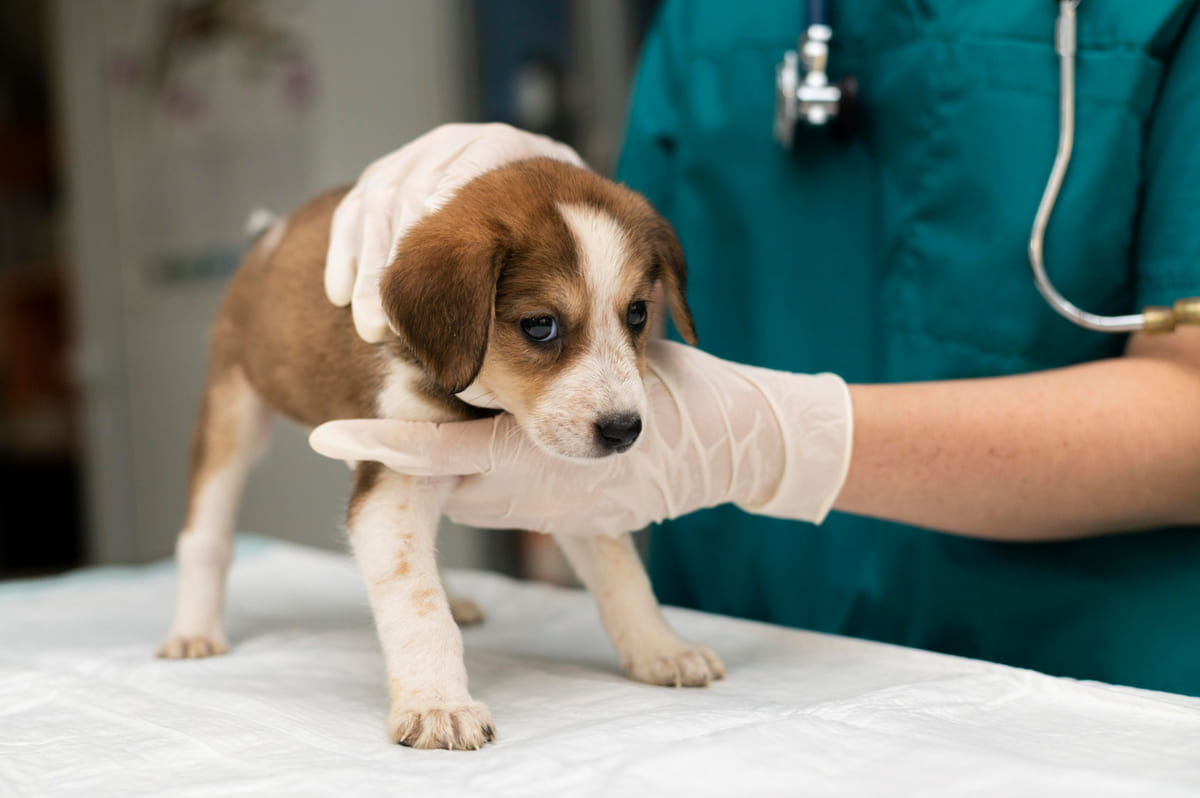
If toilet training in puppies is not progressing despite a certain routine, the situation should not be considered solely as a training error. In some puppies, age, bladder control, stress, environmental changes, or health-related factors may make the process more difficult.
If sudden accidents, frequent urination, diarrhea, difficulty defecating, signs of pain, changes in appetite, or significant restlessness are noticed, a veterinarian should be consulted. These symptoms do not always mean a serious illness; however, health-related possibilities should be evaluated before continuing with the training plan.
It is also important to monitor the puppy's behavior during toilet training. The times when accidents occur, their relationship to food and water consumption, frequency of excursions, and the puppy's general condition can be noted. This information helps the veterinarian to assess the situation more accurately.
Frequently Asked Questions

What does it mean if a puppy is urinating in hiding?
Hiding to urinate may occur if the puppy has previously been scolded or received a strong reaction during a toilet accident. The puppy may choose out-of-sight areas to avoid punishment. Therefore, instead of reacting harshly to accidents, routine and correct guidance should be reinforced.
What should be done if a puppy is urinating on the edge of the potty pad?
The placement of the pad should be reviewed in cases of accidents near the edge of the pad. The pad may be too small, easily slippery, or not in a space where the puppy can easily turn around. Using a more stable and appropriately sized pad, and initially keeping the area slightly larger, may be helpful.
Does a puppy urinate when excited?
Some puppies may urinate during moments of excitement, fear, or intense welcomes. This does not always mean failure in toilet training. If it occurs frequently, does not decrease with age, or is accompanied by other symptoms, a veterinary evaluation is necessary.
What to do if a puppy doesn't urinate outside?
The outdoor environment can be too stimulating for a puppy. Sounds, smells, people, and other animals can distract it. In this case, the same quiet area should be preferred each time, the puppy should not be rushed, and should be supported with a short reward or praise after relieving itself.
Does a puppy break its toilet habits in another home or while visiting?
New environments can temporarily disrupt a puppy's toilet routine. Different smells, unfamiliar surfaces, and changing times can weaken learned behavior. Therefore, it is necessary to provide more frequent opportunities to relieve oneself in the first few days when visiting or staying for short periods.
How long can a puppy hold its urine?
Since bladder control develops with age, puppies cannot hold their urine for long periods. Therefore, they should be directed to the toilet area after sleeping, eating, drinking water, and playing. Frequent accidents, straining, bloody urine, diarrhea, or changes in appetite require veterinary evaluation.
Advertisement
Advertisement
Keep exploring
Continue reading
Dog Behavior & Training
Seeing a Dog in a Dream: From White Dogs to Attacks, From Feeding Dogs to Being Bitten, All Meanings
Seeing a dog in a dream sometimes leaves a warm feeling of friendship, and sometimes creates a tension that makes you think even after waking up.
Read guide →
Dog Behavior & Training
Why Do Dogs Fear Fireworks?
Fear of fireworks in dogs is a common problem many people encounter during Christmas, holidays, or celebrations.
Read guide →
Dog Behavior & Training
Dog Behaviors: Get to Know Body Language and Its Meanings!
Dogs, even though they can't speak with words, can actually tell you a lot. Every movement, every posture gives clues about their emotional world and…
Read guide →
Dog Behavior & Training
Can Dogs Be Left Alone at Home?
Before adopting a dog, it is essential to carefully consider the responsibilities this new friend will bring and how these responsibilities will…
Read guide →