Snowshoe Cat Characteristics, Character and Care
The Snowshoe cat is a unique breed developed by the controlled mating of Siamese cats and American Shorthair cats.

Advertisement
The Snowshoe cat is a unique breed developed by the controlled mating of Siamese cats and American Shorthair cats.
With its white paws, sapphire blue eyes, and masked face, the Snowshoe cat resembles a Siamese at first glance. However, it has a fuller body and a much softer voice. This breed, also known as the "karayak cat" in Turkish, gets its name from its snow-white paws that look as if it has walked on snow.
Although the most talked-about aspect of the Snowshoe cat is its appearance, the real focus should be on its temperament. In terms of character, the Snowshoe cat combines a loyal, intelligent, and social nature with a unique tendency towards dominance.
It shouldn't be expected to sleep quietly in a corner of the house. It observes its owners, can learn to open doors, and curiously follows people's daily routines. Of course, there's more to them than that. Let's explore this unique cat together.
Warning: This content is for general information purposes only. Every cat is different, and the information in this content may vary individually. For a definitive assessment of the cat's health, behavior, or diet, you should always consult a veterinarian.
General Characteristics of the Snowshoe Cat

The Snowshoe is a medium-sized but surprisingly strong cat. It reflects the fullness of the American Shorthair cat combined with the long and athletic lines of the Siamese. According to the Governing Council of the Cat Fancy's breed definition, the body is neither too small nor too large; They are muscular, balanced, and athletic. Their paws are oval, their ears are medium to large, and their head shape is triangular. Males generally weigh between 4 and 5.5 kilograms and feel heavier than they appear when held. Females are mostly smaller, weighing between 3 and 4.5 kilograms. While some females may approach the size of males, they do not always reach the same weight. The coat is short, silky, and single-layered. Its pattern is the breed's signature. Puppies are born pure white, with the point coloration at the tips beginning to appear within a few weeks. The tail, legs, ears, and face darken while the body remains a lighter shade. The most common colors are seal point and blue point. The eye color is almost always clear and deep blue. It can take up to two years for all these colors to fully develop, especially in lighter shades. The breed's story begins in the early 1960s with Dorothy Hinds-Daugherty, a Siamese breeder in Philadelphia. Among the kittens of her own Siamese cat, she found three kittens with white legs, liked the look, and set out to create a new breed. She worked with a tuxedo-patterned house cat to give it the white "V" face marking, and with an American Shorthair to give it fuller body. Progress was slow due to poor record keeping. By 1977, there was almost only one breeder left, while by 1989 the number approached thirty. The International Cat Association recognized the breed at championship level in 1994.
Males generally weigh between 4 and 5.5 kilograms and feel heavier than they appear when held. Females are mostly smaller and remain in the 3 to 4.5 kilogram range. While some females may approach the size of males, they do not always reach the same weight.
The coat is short, silky, and single-layered. Its pattern is the signature of the breed. Kittens are born pure white, with the point markings beginning to appear within a few weeks. The tail, legs, ears, and face darken while the body remains a lighter shade. The most common colors are seal point and blue point. Eye color is, as a rule, clear, deep blue. It can take up to two years for all these colors to fully develop, especially in lighter shades. The breed's story begins in the early 1960s in Philadelphia with Dorothy Hinds-Daugherty, a Siamese breeder. Among the kittens of her own Siamese cat, she found three with white legs, liked the look, and set out to create a new breed. She worked with a tuxedo-patterned house cat to give the white "V" face marking, and with an American Shorthair to give the body fullness. Progress was slow due to poor record keeping. While there was almost only one breeder left in 1977, by 1989 the number had approached thirty. The International Cat Association recognized the breed at championship level in 1994. Height is important for them. When provided with both play and additional hiding places such as climbing areas, high sleeping platforms, observation points and cat tunnels, they can channel their energy in the right direction. The home environment should be made cat-friendly, as breakable trinkets and items on the edge of shelves can become toys. Interaction with young children should always be supervised and the cat should be given its own space. Very noisy, constantly moving or frequently visiting homes can be challenging for this sensitive breed. How to Care for a Snowshoe Cat?
Eye color is an almost invariable rule: clear, deep blue. It can take up to two years for all these colors to fully develop, especially in lighter shades.
The breed's story begins in the early 1960s with Dorothy Hinds-Daugherty, a Siamese breeder in Philadelphia. She found three kittens with white legs among her own Siamese cats, liked the look, and set out to create a new breed. She worked with a tuxedo-patterned house cat to give the white "V" face marking, and with an American Shorthair to give fullness to the body. Progress was slow due to poor record keeping. By 1977, there was almost only one breeder left, but by 1989 the number approached thirty. The International Cat Association recognized the breed at championship level in 1994.
Snowshoe Cat Character and Temperament

It's difficult to describe a Snowshoe in a single word, because no two Snowshoes are alike in personality. The International Cat Association describes this breed as sometimes shy, sometimes "bossy," but generally gentle and eager for interaction. Some are timid, some want to take control of the house, and some take on the role of a protective caregiver. The common point is that they are all intelligent, curious, and fond of humans.
This intelligence is directly reflected in daily life. A Snowshoe can learn fetch, walk on a leash, and open doors. They have high energy but are not restless or easily provoked. They may get into a little mischief if not kept busy.
They like to use their voice, but this voice is different from the sharp meow of a Siamese cat. Snowshoe cats generally speak in a soft, melodic tone and enjoy chatting with you. Some may prefer complete silence.
Another notable characteristic is their interest in water. Many Snowshoe cats may prefer to play in water rather than shy away from it.
They may be initially shy around strangers. They are a companion who prefers to lead rather than follow, making their presence felt.
Is a Snowshoe Cat Suitable for Home Life?
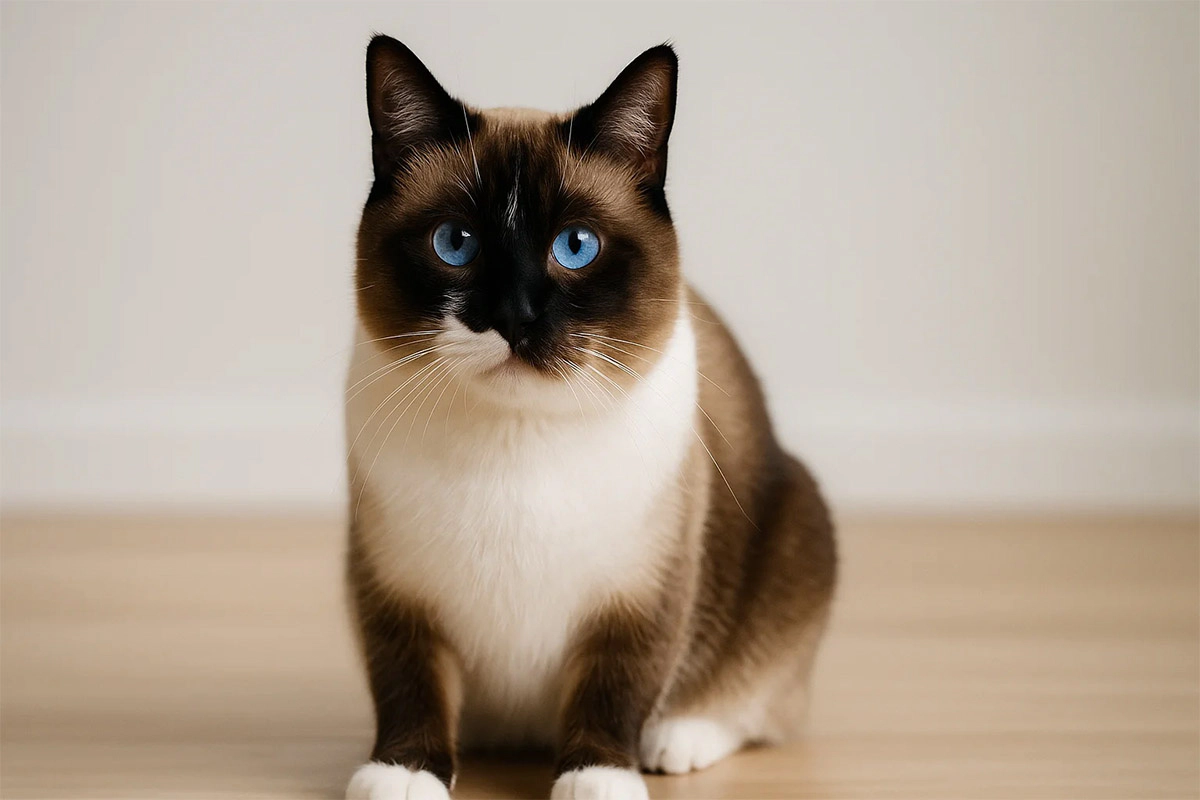
The short answer is yes, but it must match the right home environment. The Fanciers Breeder Referral List states that Snowshoe cats are very social and should not be left alone for long periods. This loving, playful, and family-oriented breed thrives in homes where it can form close relationships with people. It can live harmoniously with children and, when properly introduced, with other cats, and even dogs. Height is important for it. Providing both play and hiding places, such as climbing areas, elevated sleeping platforms, observation points, and a cat tunnel, allows it to channel its energy in the right direction. The home environment should be made cat-friendly, as breakable trinkets and items on the edge of shelves can become toys. Interaction with young children should always be supervised, and the cat should be given its own space. Very noisy, constantly moving, or frequently visiting homes can be challenging for this sensitive breed. How to Care for a Snowshoe Cat? Snowshoe cats are considered among the easiest breeds to care for. Its short coat and self-grooming habits make grooming much easier. However, a few regular routines can maintain the cat's health and strengthen its bond with humans. Snowshoe Cat Grooming Snowshoe's short, single-layered coat doesn't require special daily grooming. Brushing a few times a week is sufficient for most Snowshoe cats. This removes dead hairs, evenly distributes skin oil, and provides a good opportunity for external parasite control. Bathing isn't a routine need; when bathing is necessary, using cat-specific shampoos can support skin health. Oral and Dental Health Oral health, as with all cats, is an area that should not be neglected in Snowshoe cats. Regular brushing with a veterinarian-approved cat toothpaste helps prevent tartar and gum problems. In addition, regular veterinary checkups and professional dental cleanings when needed are the most reliable way to maintain oral health in the long term. Regular nail trimming and ear checks should also become routine as part of Snowshoe cat care. Snowshoe Cat Exercise Needs This cat wants to be mentally and physically engaged. Fetch games, fishing rod-type toys, scratching posts, and puzzle toys that can hold snacks help channel its energy effectively. Because of its high intelligence, it gets bored in a monotonous environment and may express this boredom through mischief. Short but interactive play sessions several times a day help maintain the cat's fitness while preventing behavioral problems.
Height is important to this breed. Providing both play and additional hiding places, such as climbing areas, elevated sleeping platforms, observation points, and a cat tunnel, allows it to channel its energy in the right direction. The home environment should be made cat-friendly, as fragile trinkets and items on the edge of shelves can become toys.
Interaction with young children should always be supervised, and the cat should be given its own space. Very noisy, constantly moving homes, or those with frequent visitors, can be challenging for this sensitive breed.
How to

Snowshoe cats are considered among the easiest breeds to care for. Their short coat and self-grooming habits greatly simplify the process. However, a few regular routines can maintain the cat's health and strengthen its bond with humans.
Snowshoe Cat Coat Care
The short, single-layered coat doesn't require special daily care. Brushing a few times a week is sufficient for most Snowshoe cats. This removes dead hairs, evenly distributes skin oils, and provides a good opportunity for external parasite control. Bathing isn't a routine need; when bathing is necessary, using cat-specific shampoos can support skin health.
Snowshoe Cat Oral and Dental Health
Oral health, as with all cats, is an area that should not be neglected in Snowshoe cats. Regular brushing with a veterinarian-approved cat toothpaste helps prevent tartar and gum problems. In addition, regular veterinary checkups and professional dental cleanings when needed are the most reliable way to maintain long-term oral health. Regular nail trimming and ear checks should also become routine as part of Snowshoe cat care. Snowshoe Cat Exercise Needs: This cat likes to be mentally and physically engaged. Fetch games, fishing-type toys, scratching posts, and puzzle toys that can hold snacks help channel its energy effectively.
Regular nail trimming and ear checks should also become routine as part of Snowshoe cat care.
Snowshoe Cat Exercise Needs
This cat likes to be mentally and physically engaged. Fetch games, fishing-type toys, scratching posts, and puzzle toys that can hold snacks help channel its energy effectively.
Because of its high intelligence, it gets bored in a monotonous environment and may express this boredom through mischief. Short but interactive play sessions established a few times a day help maintain the cat's fitness while preventing behavioral problems.
Snowshoe Kedisi Beslenmesi
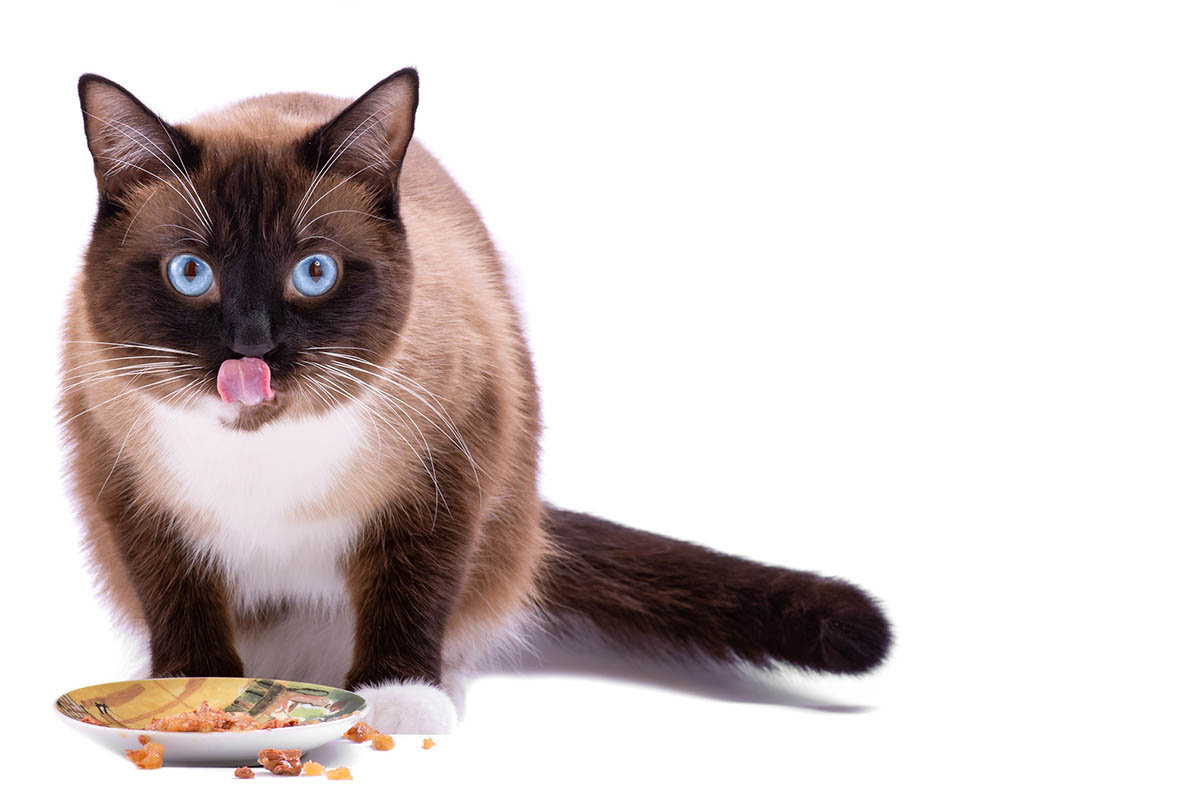
The amount of food a Snowshoe should eat per day cannot be reduced to a single number. Age, weight, neutering status, and activity level directly determine this amount. The needs of a growing, energetic kitten are different from those of a calm, older cat.
Therefore, the correct approach is to apply the feeding chart on the chosen food package according to the cat's ideal body condition and adjust it over time.
You can consider the daily amount stated on the food packaging as a starting point. Then, you can reduce or increase the portion by regularly monitoring your cat's weight and body structure. The ribs being slightly palpable and the waistline being clearly defined indicates ideal body condition.
You can choose dry or wet food according to your cat's taste. When making your choice, you should consider daily fluid intake as well as their eating habits.
Water consumption is just as important as food. Clean and fresh water should be provided every day. Water fountains are a good alternative for cats that drink little water. For a clear plan on how much your cat should eat, it is safest to get personalized advice based on weight and age from your veterinarian.
Common Diseases in Snowshoe Cats
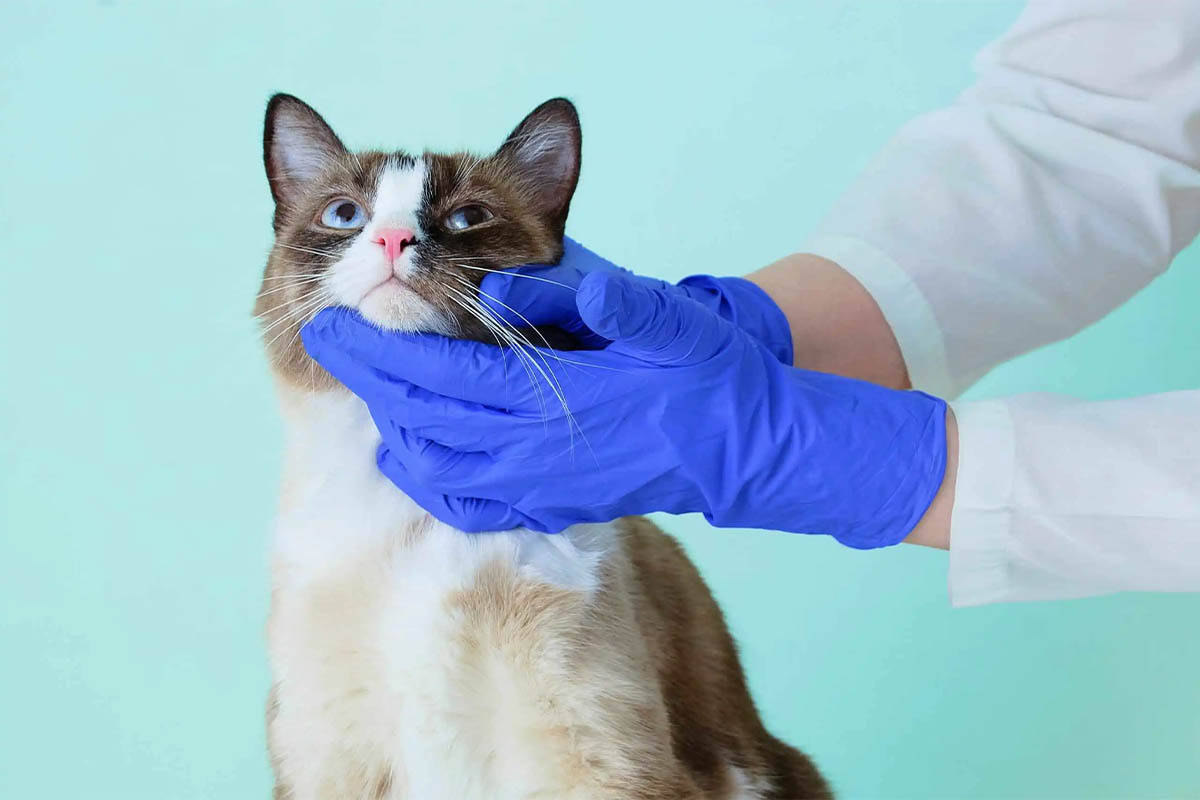
Snowshoe cats are generally a healthy and hardy breed. However, no breed is entirely risk-free, and as a responsible owner, it is useful to know a few key points to keep in mind. Keeping vaccinations and parasite protection up-to-date, combined with regular veterinary checkups, forms the basis of preventive health.
Polycystic Kidney Disease (PKD)
Polycystic kidney disease is a hereditary disorder in which fluid-filled cysts form in the kidneys that can grow over time. Although it has been reported to occur in Snowshoe cats, data on its prevalence in this breed is limited. As the disease progresses, symptoms such as increased thirst and urination, loss of appetite, weight loss, and vomiting may occur.
Strabismus
The Snowshoe's Siamese heritage can manifest in some individuals as strabismus, also known as crossed eyes, where the eyes move in different directions. This is a characteristic of the breed that is sometimes encountered and originates from its Siamese ancestry. It usually does not seriously affect the cat's quality of life, but if a strabismus or change in the eyes is noticed later in life, it should be shown to a veterinarian.
Kuyrukta Kıvrılma (Kink)
Again, related to the Siamese lineage, some Snowshoe individuals may have a slight curl in their tail. Chewy describes this as a structural feature that can be encountered in the breed. While this condition, which is mostly cosmetic, does not cause discomfort to the cat, it is advisable to consult a specialist for evaluation if there is pain, sudden change in shape, or sensitivity in the tail.
Things to Know Before Adopting a Snowshoe Cat

A Snowshoe is an extremely satisfying companion when it finds the right owner; however, it is not a cat for everyone. Clarifying the following points before making a decision will make things easier:
- This cat is a social creature and does not like to be alone for long hours. A life where no one is home all day is not suitable for it.
- It has high intelligence; Without toys, a climbing area, and interaction, they may get bored and turn to mischief.
- Breakable items and a love of heights don't go well together. It's important to arrange the house in line with this fact.
Frequently Asked Questions
What is the difference between a Snowshoe cat and a Siamese cat?
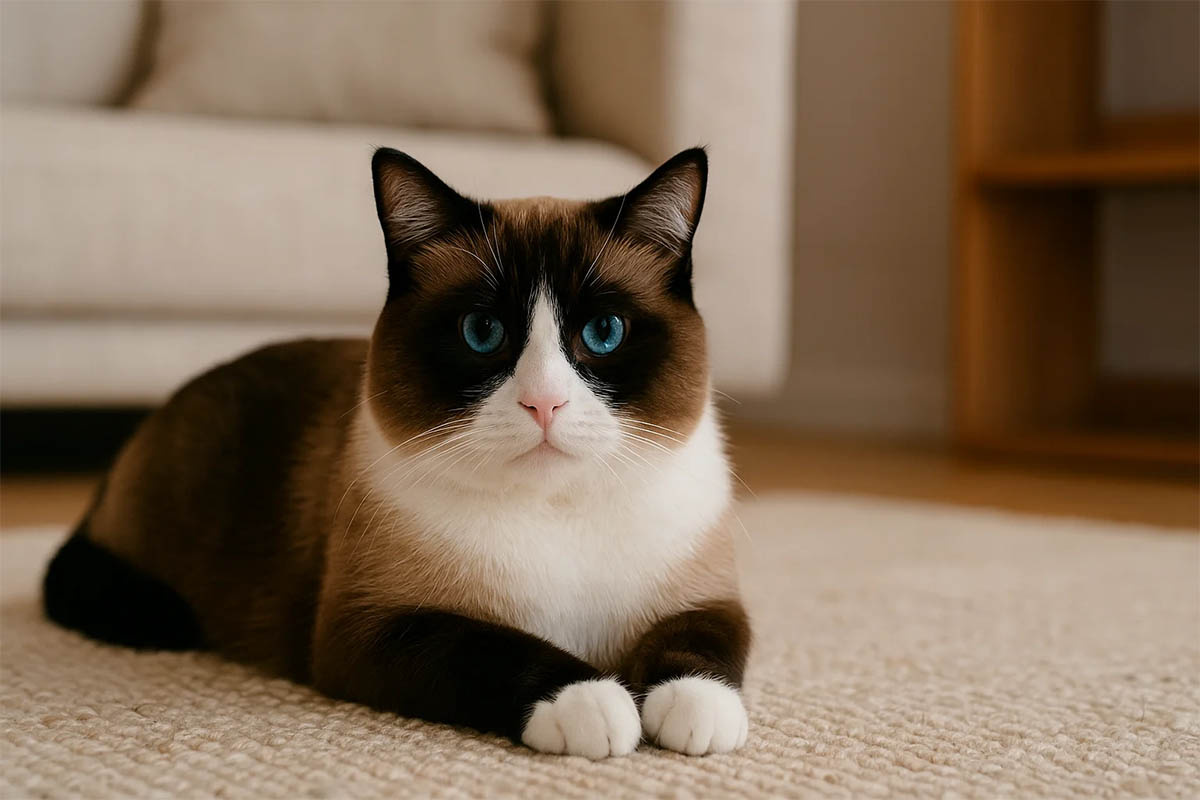
Both breeds have blue eyes and point markings. The Snowshoe has white paws and a predominantly white "V" facial marking; its body is fuller and more muscular, a legacy of the American Shorthair. Its voice is softer and more melodic than the Siamese's, and its temperament is generally calmer and more balanced. The Siamese is thinner, longer-lined, and typically has a higher-pitched voice.
Does a Snowshoe cat's color change later?
Yes. Snowshoe kittens are born completely white. Coloration at the tips begins to appear within a few weeks. The tail, legs, ears, and face darken over time. Full color settling, especially in lighter shades like chocolate and lilac, can take up to two years.
Are a Snowshoe cat's eyes always blue?
Snowshoe cats have blue eyes, and this is one of the defining characteristics of the breed. The shade can range from a clear bright blue to a paler blue-gray, with blue being the base color.
Do Snowshoe cats shed?
Due to their short, single-layered coat, Snowshoe cats shed moderately and are easy to care for. Brushing a few times a week is generally considered sufficient to remove dead hair. Shedding may increase slightly during seasonal changes.
Can a Snowshoe cat be left alone at home?
Snowshoe cats are a highly social breed and are not suitable for being left alone for long periods. They can cope with short periods of solitude, but being left alone all day may make them unhappy.
Does a Snowshoe cat get along well with children?
Generally, they get along well. Their loving and playful nature makes them suitable for homes with children. For a healthy relationship, introductions should be done patiently and gradually, interaction with young children should be supervised, and the cat should be given its own space where it can retreat.
How many years do Snowshoe cats live?
The average lifespan varies between 14 and 20 years according to sources. Genetic predisposition, balanced nutrition, a safe living environment, and regular veterinary check-ups are decisive in ensuring a long and healthy life.
Who is a Snowshoe cat suitable for?
It is suitable for people who can dedicate time to it, enjoy interactive play, and have a lifestyle that will not leave it alone for long hours. A calm but attentive home helps this intelligent and social cat to be happy.
Kaynaklar
https://www.purina.co.uk/find-a-pet/cat-breeds/snowshoe
https://www.chewy.com/education/cat/general/behavior-breeds-snowshoe-cat-breed
https://www.gccfcats.org/getting-a-cat/choosing/cat-breeds/snowshoe/
https://www.breedlist.com/index.cfm?Page=Snowshoe
https://tica.org/breed/snowshoe/
https://www.petmd.com/cat/breeds/snowshoe-cat
Advertisement
Advertisement
Keep exploring
Continue reading

Cat Care
Is My Cat Coughing or Trying to Pass a Hairball?
Seeing your cat crouch down, stretching its neck, and trying to expel something with a strange sound can be unsettling.
Read guide →
Cat Care
York Chocolate Cat Characteristics, Care and Temperament
With its dark brown fur, watchful eyes, and observant demeanor, the York Chocolate is a cat that sparks curiosity at first sight.
Read guide →
Cat Care
Tiffanie Cat Characteristics, Care and Temperament
Silky fur, on its neck With its frilly mane and large, curious eyes, the Tiffanie cat immediately catches the eye.
Read guide →
Cat Care
Pixiebob Cat Characteristics, Care and Temperament
The desire to participate in the daily routine of its family is one of the most striking aspects of the Pixiebob cat's character.
Read guide →