Things to Know About Jaw Fractures in Cats
Both upper and lower jaw fractures in cats are very painful and require urgent treatment. The lower jaw, in particular, is more prone to fractures because it is formed by the fusion of two different bones. Jaw fractures in cats usually occur as a result of major trauma.
Advertisement
Both upper and lower jaw fractures in cats are very painful and require urgent treatment. The lower jaw, in particular, is more prone to fractures because it is formed by the fusion of two different bones. Jaw fractures in cats usually occur as a result of major trauma. In such traumas, the cat may also have other injuries besides a jaw fracture. Lung perforation, diaphragmatic hernia, and bone fractures are some of the injuries that can occur after major traumas. Jaw fractures in cats are life-threatening. As a result of jaw fractures, cats are unable to eat due to extreme pain in the mouth area.
In cats, upper and lower jaw fractures occur when a great force is applied to this area. Fractures and cracks in the jaw negatively affect the quality of life of cats. Both a hair-thick crack and comminuted fractures should be considered a very serious condition.

What are the Symptoms of Jaw Fractures in Cats?
The symptoms of jaw fractures in cats vary depending on the size of the fracture. In mild fractures, swelling usually occurs in the mouth area, while in cases of large fractures, the cat's mouth may remain open. However, the symptoms are not limited to these. Cat owners must know that some fractures may be visible to the naked eye, while others are difficult to diagnose. Small fractures, especially in the upper jaw, can be difficult to notice. Therefore, every cat owner should be able to answer the question "How to recognize a jaw fracture in cats?" to some extent. The most common signs of a jaw fracture include reluctance to eat, swelling around the mouth, bleeding from the mouth, open sores around the mouth, excessive drooling, misalignment of the jaw, inability to close the mouth, and other physical traumas to the body. Healing in jaw fractures also varies depending on the severity of the fracture. Healing is generally easier in fractures where the jaw is not dislocated. Upper jaw fractures, in particular, heal more easily for this reason. Fractures where the jaw dislocates heal more slowly. In these fractures, the jawbone can also damage the mouth muscles. In lower jaw fractures, the jaw is usually dislocated. How is a Jaw Fracture Diagnosed?
The most common symptoms of a jaw fracture include reluctance to eat, swelling around the mouth, bleeding from the mouth, open sores around the mouth, excessive drooling, jaw misalignment, inability to close the mouth, and other physical trauma to the body. Healing from jaw fractures varies depending on the severity of the fracture. Fractures where the jaw is not dislocated generally heal more easily. Upper jaw fractures, in particular, heal more easily for this reason. Fractures where the jaw dislocates heal more slowly. In these fractures, the jawbone can also damage the mouth muscles. In lower jaw fractures, the jaw usually dislocates.
How is a Jaw Fracture Diagnosed?
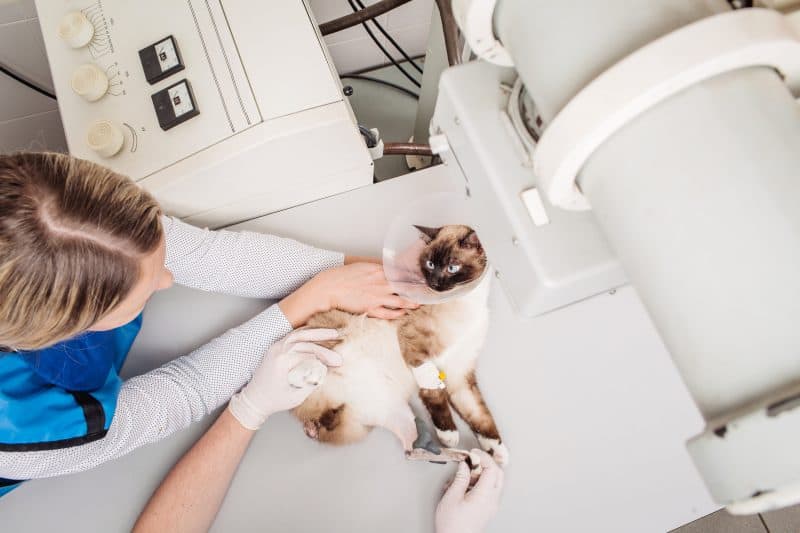
Emergency intervention is essential for fractures to prevent the cat's quality of life from being affected for too long and to prevent the problem from worsening. Jaw fractures cause great pain in cats. Jaw fractures are often accompanied by other physical traumas. Therefore, painkillers are given to the cat before any tests are performed. In jaw fractures, the first thing to check is whether there is swelling or an open wound. Because there is very little tissue in the jaw area, in some fractures the jawbone tears through the skin and protrudes. The cat's condition must be stabilized before any tests. Stabilizing the cat's condition is especially important in cases of multiple injuries and blood loss.
To answer the question "How to recognize a jaw fracture in cats?", an X-ray or CT scan is performed. A CT scan serves the same purpose as an X-ray, but thanks to computer technology, more detailed images of the affected area can be obtained. Therefore, computed tomography is preferred when the fracture or its effects are severe.
How is a Jaw Fracture Treated in Cats?
“Will a cat with a broken jaw recover?” is one of the difficult questions for cat owners to ask. The treatment of a jaw fracture varies depending on the fracture. In mild fractures, it is possible to achieve healing by using only a muzzle. In cases where the jaw fracture has pierced the skin and protruded, surgery is required. Implants are placed to hold the jaw in place. After healing is complete, these implants and pins are removed. In some cases, wires may also be used to stabilize the jaw.
It is not possible to give a single answer to the question, “How long does it take for a jaw fracture in cats to heal?” The healing process varies depending on the severity of the fracture. However, cats are generally expected to be discharged within one or two days if they do not have more serious problems. However, this period is longer in cases of serious injuries.
The answer to the question "How to feed a cat with a broken jaw?" is quite important. Cats need to be fed both healthily and adequately. Cats can start eating soft foods about 1-2 days after being discharged from the hospital. If wires are used in the treatment of the cat's jaw, it is necessary to thoroughly clean the food residue left on these wires to prevent dermatitis. Using painkillers for a while is also part of the treatment. Most cats with jaw fractures usually recover completely in 4-6 weeks. After healing is complete, normal feeding is resumed. During this process, it is very important that the cat is fed as recommended by the veterinarian.
Advertisement
Advertisement
Keep exploring
Continue reading

Cat Lifestyle & Guides
What is Cat Soup? Is it Beneficial for Cats?
If your cat rarely visits its water bowl, is sometimes reluctant to eat dry food, or shows interest in different textures, liquid products may catch…
Read guide →
Cat Lifestyle & Guides
How to Give Rewards and Snacks to a Neutered Kitten?
The Feline Veterinary Medical Association supports neutering kittens until they are five months old.
Read guide →
Cat Lifestyle & Guides
Benefits of Colostrum for Cats and Dogs
Colostrum is the first milk produced by mother cats and dogs after birth. Thanks to its antibodies and high nutrient content, it responds to the…
Read guide →
Cat Lifestyle & Guides
Why is Gut Health Important in Cats?
In cats, bowel health is linked to many areas, from digestive regularity and immune system-related processes to energy levels and daily comfort.
Read guide →