What Materials are Needed to Set Up an Aquarium?
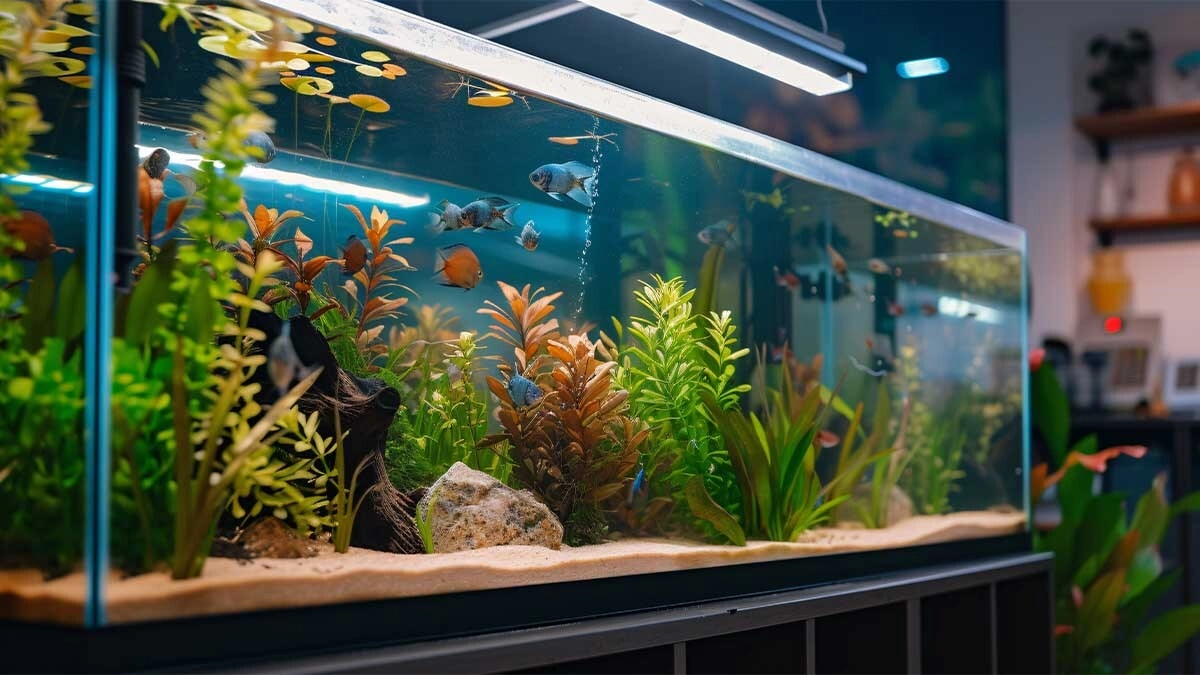
When setting up your first aquarium, encountering countless products from filters and motors to sand and test kits can be confusing. To avoid this confusion, you need to determine the equipment that best suits the type of fish you choose, the tank size, and your purpose of setup.
Advertisement
When setting up your first aquarium, encountering countless products from filters and motors to sand and test kits can be confusing. To avoid this confusion, you need to determine the equipment that best suits the type of fish you choose, the tank size, and your purpose of setup.
In addition to basic necessities like aquarium tanks, filters, water conditioners, and food, choices such as heaters, lighting, and decorations should also be shaped according to the details of your setup.
In this article, you can find detailed information about basic aquarium materials, filter and motor types, food options, and maintenance products. This way, you can evaluate the products you need for your first aquarium setup according to their intended use and priorities.
Warning: This content is a general guide to product selection for aquarium setup. Needs vary greatly among fish species, and the conditions of each aquarium are unique.
How to Choose an Aquarium and Setup Type?

Tank selection affects all subsequent equipment decisions, from filter capacity to heater power. According to the RSPCA and OATA, temperature and pH fluctuations decrease as water volume increases. Therefore, choosing a larger tank, as space and budget allow, provides a more balanced living environment.
The required volume should primarily be determined according to the adult size of the species to be kept. The number of fish, whether the species lives in schools, and the swimming space it needs should also be taken into account. For example, a heater may be necessary for tropical species, while some cold-water fish may not need a heater. Planted, standard, or breeding setups also change the equipment list.
The location of the tank should also be planned from the beginning. A full aquarium is quite heavy. The tank should be placed on a sturdy stand that can safely support the weight and positioned near a grounded outlet.
Akvaryum Filtreleri
 The filter is the core component of the entire setup and is essential in every fish aquarium. Its function is not limited to keeping the water clear; it provides a living space for beneficial bacteria that convert ammonia, which is toxic to fish, first into nitrite and then into the less toxic nitrate.
According to the Merck source, filtration is divided into three functions: mechanical filtration, which filters out coarse particles; biological filtration, which houses bacteria; and chemical filtration, which works with activated carbon. The main criterion when choosing an aquarium filter is that the filter capacity should be suitable for the aquarium volume and fish load.
Types of Aquarium Filters
Filter selection is made according to the aquarium volume, fish load, maintenance expectations, and the space available for the device. Each filter type has a different area of use and capacity.
Hang-on filter: Used by hanging it on the side of the aquarium. It is a practical option in small and medium-sized tanks because it is easy to install. Filter cartridges and other materials require regular maintenance.
External filter: Also known as a canister filter, this system operates outside the tank. Thanks to its large filter media capacity, it can be preferred in large-volume aquariums or aquariums with high live populations. Sufficient space must be left outside the tank for installation.
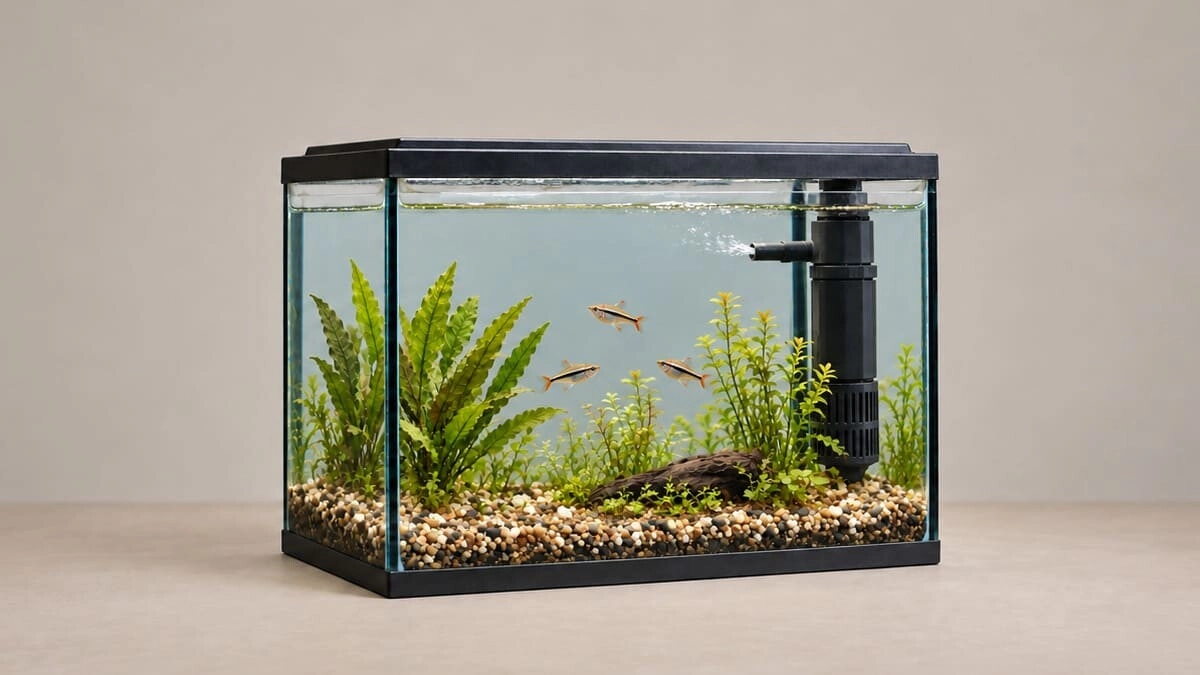
Internal filter: An economical and easy-to-use filter type placed inside the tank. It can be used in small and medium-sized aquariums. Its main disadvantages are the space it takes up inside the tank and its limited filter media capacity.
Top filter: Located in the upper part of the aquarium and passes the water over the filter media. Accessing and maintaining the filter media is easy. A model compatible with the tank lid and layout should be selected.
UV sterilizer: This is a supporting piece of equipment that allows the water to come into contact with UV light inside the device. When properly selected, it can reduce some microorganisms in the water column and free-floating algae that cause green water. It does not process ammonia and nitrite. It does not replace mechanical or biological filters and does not clean algae that settle on surfaces. It is not necessary in most beginner aquariums.
Filter Materials: The performance of the filter depends on the type and order of the materials inside.
- Sponge and fiber are the first step of mechanical filtration.
- Ceramic and biological filter materials offer a large surface area for nitrification bacteria due to their porous structure.
- Activated carbon and chemical filter materials, on the other hand, retain color-causing compounds and some chemicals in the water. Water must first pass through mechanical, then biological material.
The most important rule in aquarium filter maintenance is to protect beneficial bacteria. Therefore, the filter sponge should not be washed with tap water. Water containing chlorine can harm the bacteria that support biological filtration. The sponge should be gently rinsed in water taken from the aquarium during water changes.
Not all filter materials are replaced at the same frequency. Fiber can be replaced when clogged. Activated carbon should be replaced at the end of the manufacturer's specified lifespan. Sponge and permanent biological media should not be routinely discarded. When they are physically worn out, it is more appropriate to replace them gradually to maintain bacterial balance. Having spare filter materials in stock beforehand will make the process easier.
Aquarium Motors

Aquarium motors move the water and provide oxygen. They may not be necessary in every aquarium. The need varies depending on the volume and fish population.
Air Pumps
An air pump pushes air into the aquarium through a hose and usually works in conjunction with an air stone. The contribution of the bubbles is to move the surface and increase gas exchange. It is useful in densely populated aquariums, during hot periods, or in oxygen-sensitive aquariums. If you are using a sponge filter, the air pump also operates the filter.
Head and Circulation Motors
A head pump, or powerhead, creates water circulation within the tank, preventing the formation of stagnant areas. Homogeneous flow helps to evenly distribute the temperature and waste reaching the filter. It is preferred in medium and large volume aquariums to support filter flow.
Wave Motors
A wave motor produces a strong and rhythmic current. It is mostly used in marine aquariums and setups requiring high flow; it is often not necessary in an average freshwater aquarium.
Air Stones, Hoses and Check Valves
These parts are complementary to the motor system. The air stone breaks the incoming air into small bubbles and increases surface movement. The hose and fittings connect the motor to the air stone. The check valve is a one-way valve that prevents water from being sucked back through the hose and damaging the motor when the power is cut off.
Aquarium Heater, Thermometer and Lighting

Heater, thermometer and lighting are considered together to manage the temperature and light regulation in the aquarium. Product selection varies depending on tank volume, the needs of the species kept, environmental conditions and plant plan.
Aquarium Heaters
The need for a heater depends on the species. According to Merck, a heater is necessary for both freshwater and saltwater tropical fish. The heater should be chosen according to the aquarium volume, as a weak heater cannot maintain the temperature.
While a heater is often not needed for temperate or cold water species such as goldfish, the water temperature should be kept within the appropriate range for the species and protected from sudden changes. For safe use, the heater should not be operated before the tank is full of water. Otherwise, the glass tube may overheat and crack. All heaters should be controlled with a thermostat. Aquarium Temperatures A thermometer is a control tool independent of the heater's display and should be present in every setup. The RSPCA recommends checking the temperature daily with a separate thermometer, as thermostats or heaters can malfunction. Glass thermometers are economical, digital models are easy to read, and adhesive strip thermometers are practical but can be affected by room temperature. Aquarium Lighting Lighting maintains the fish's day-night rhythm and meets the light needs of plants in planted aquariums. While ordinary lighting is sufficient for a standard fish aquarium, planted aquariums require stronger light with the correct spectrum. For most species, a cycle of 8-10 hours of lighting per day, with the light turned off at night, is recommended.
Akvaryum Dereceleri
A thermometer is a control tool independent of the heater's display and should be present in every setup. The RSPCA recommends checking the temperature daily with a separate thermometer because thermostats or heaters can malfunction. Glass thermometers are economical, digital models are easy to read, and adhesive strip thermometers are practical but can be affected by room temperature.
Aquarium Lighting
Lighting maintains the fish's day-night rhythm and meets the light needs of plants in planted aquariums. While standard lighting is sufficient for a standard fish aquarium, planted aquariums require stronger light with the correct spectrum. For most species, an 8-10 hour cycle per day, with the light turned off at night, is recommended.
A timer can be used as leaving the light on for longer than necessary can increase algae growth. This way, the lighting duration can be kept regular. The aquarium should not be placed in front of a window as direct sunlight can heat the tank.
Aquarium Sand and Decorations

Sand and decorations together shape the substrate and living space of the aquarium. When choosing, the behavior of the species kept, the plant plan, water parameters, and ease of care should be considered.
Aquarium Sands
Sand is not mandatory for every aquarium. However, it can support the natural behaviors of some fish such as digging, foraging, and hiding. When choosing substrate material, the fish species and the plant plan should be evaluated together.
Inert sand and gravel are generally substrate materials that do not significantly alter water chemistry. Plant substrate and nutrient substrates are developed for aquarium plants that feed through their roots.
The grain size of aquarium sand should be chosen to suit the species to be kept. According to Merck, some fish can take fine sand into their mouths and pass it through their gills, while some species may swallow large grains. Inert sand and gravel can be rinsed until the water runs clear, unless the manufacturer instructs otherwise. This helps reduce dust that can clog the filter. For active soil and nutrient substrates, product instructions should be followed. It is not recommended to wash some of these materials before setup.
Aquarium Decorations
Aquarium decorations provide visual enhancements to the aquarium while also creating areas where fish can hide and establish their own territories. Decorations such as rocks, roots, and caves can be used for this purpose. Products with sharp edges, paint-leaving areas, or narrow spaces where fish can get stuck should be avoided. The chosen material should be suitable for the species being kept and the water characteristics of the aquarium. Large and heavy decorations should be placed before adding water and secured so that they do not slide or tip over. Plant Care Equipment Some additional products may be needed when setting up a planted aquarium, but it is not necessary to obtain all of these products from day one. Plant fertilizers support the growth of plants that feed directly from the water column. Since fertilizer needs vary depending on light intensity, plant type, and water parameters, they may not be necessary at the beginning of every setup.
Products with sharp edges, paint shedding, or narrow gaps where fish can get stuck should be avoided. The chosen material should be suitable for the species being kept and the water characteristics of the aquarium. Large and heavy decorations should be placed before adding water and secured so they won't slide or tip over. Plant Care Equipment.
Some additional products may be needed when setting up a planted aquarium, but it's not necessary to acquire all of them from day one.
Plant fertilizers support the growth of plants that feed directly from the water column.
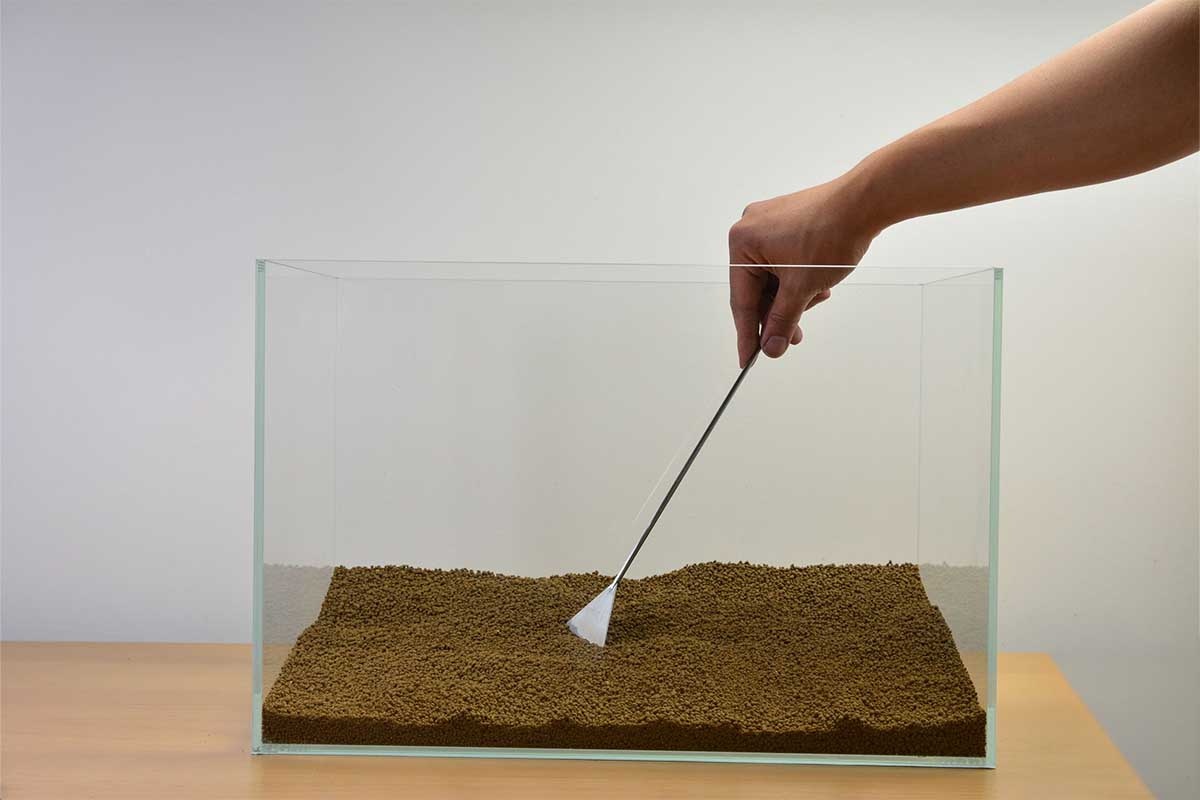
Fertilizer needs vary depending on light intensity, plant type, and water parameters, so they may not be necessary initially with every setup. SEGMENT ID S069474 START Pellet bait SEGMENT ID S069475
Aquarium tweezers and scissors make planting and routine pruning processes quite practical. Lighting and substrate selection should be planned together according to the needs of the plants you want to grow.
Aquarium Chemistry and Maintenance
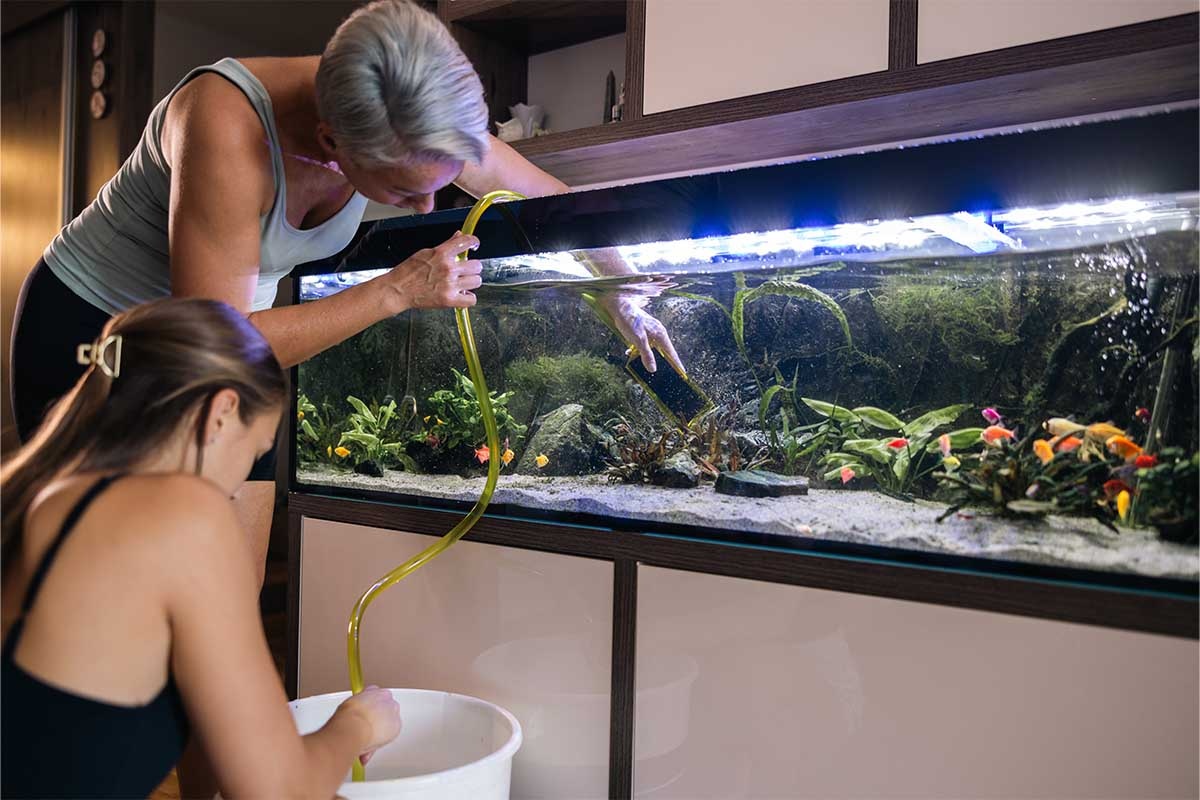
Aquarium chemistry and maintenance products help maintain the water in suitable conditions for living organisms and ensure regular maintenance.
Water Conditioners
Water conditioner is used to neutralize chlorine and chloramine in tap water according to the product's scope of effect. The dose indicated on the packaging should be applied during the initial setup and with each water change where tap water is added.
Letting the water sit can reduce the amount of free chlorine. However, this method does not reliably remove chloramine. Since the disinfection method used in tap water may vary, choosing a product that is also effective against chloramine is a more controlled approach.
A water conditioner alone does not bring all the properties of the water to the appropriate level. Other values such as temperature, pH, ammonia and nitrite should be controlled separately. When choosing a product, the scope of effect, dosage information and the amount of water to be prepared should be evaluated together.
Akvaryum Testleri
Aquarium tests allow you to monitor changes in the water that are not visible to the naked eye. Ammonia and nitrite should be measured first during the initial setup process. After the cycle is complete, nitrate and pH monitoring should be continued. GH and KH tests may be necessary depending on the fish species and the water used.
The goal is for ammonia and nitrite to reach 0 mg/L in the test. Although nitrate has lower toxicity, its accumulation should be monitored. Acceptable nitrate levels may vary depending on the inhabitants of the aquarium and the type of setup.
pH indicates the degree of acidity or alkalinity of the water. GH assesses general hardness, while KH assesses carbonate hardness and the water's buffering capacity against pH changes. Results should not be interpreted in isolation but should be compared with the needs of the species being kept.
pH, GH and KH Regulators
pH indicates the acidic or basic nature of the water. GH refers to the level of dissolved minerals such as calcium and magnesium in the water. KH is carbonate hardness, which determines the water's resistance to pH changes. While these three values are related, they do not measure the same thing.
pH, GH and KH regulators are not routinely used in every aquarium. If tap water is suitable for the species being fed and the values are stable, chemical intervention may not be necessary. These products are mostly used in reverse osmosis water mineralization, in the care of species that require very soft or hard water, and in aquariums where pH fluctuations are observed due to low KH.
Before selecting a product, pH, GH, and KH should be measured separately. In particular, using only pH reducers or raisers may not yield lasting results. Interventions made without considering KH can lead to pH changes or sudden fluctuations in a short time.
Yosun Giderici ve Temizleyiciler
Algae remover products can help reduce the existing amount of algae. However, they do not eliminate the cause of algae appearance alone. Factors such as long lighting periods, direct sunlight, overfeeding, and increased organic load should be considered.
Before using the product, the lighting setup, feeding amount, water parameters, and maintenance frequency should be checked. If a chemical product is preferred, its compatibility with fish, plants, and invertebrates should be examined. The label dosage should not be exceeded, and the organisms should be closely monitored after application.
What Materials are Needed for Aquarium Cleaning?

Basic maintenance equipment such as a siphon or sand cleaner, gravel vacuum cleaner, surface squeegee, net, bucket, and hose are needed for aquarium cleaning. The products to be used should be selected according to the volume of the aquarium, the substrate structure, and the maintenance schedule.
Siphons and sand cleaners facilitate the removal of food remnants and other waste accumulated at the bottom during partial water changes. Grazing vacuum cleaners can also be used for bottom cleaning. Care should be taken not to mix the sand excessively during use.
Aquarium wipers are used to clean algae from glass or acrylic surfaces. Choosing a wiper suitable for the surface type can reduce the risk of scratching the surface during cleaning.
The net should be selected according to the body size and fin structure of the fish. Models that are too small or have a hard mesh structure can increase the risk of fins getting caught. Fish should not be chased with the net unless necessary.
A bucket dedicated to the aquarium should not come into contact with detergents, soaps, or household cleaners. Hoses and fittings also support safe water transfer.
Types of Fish Food
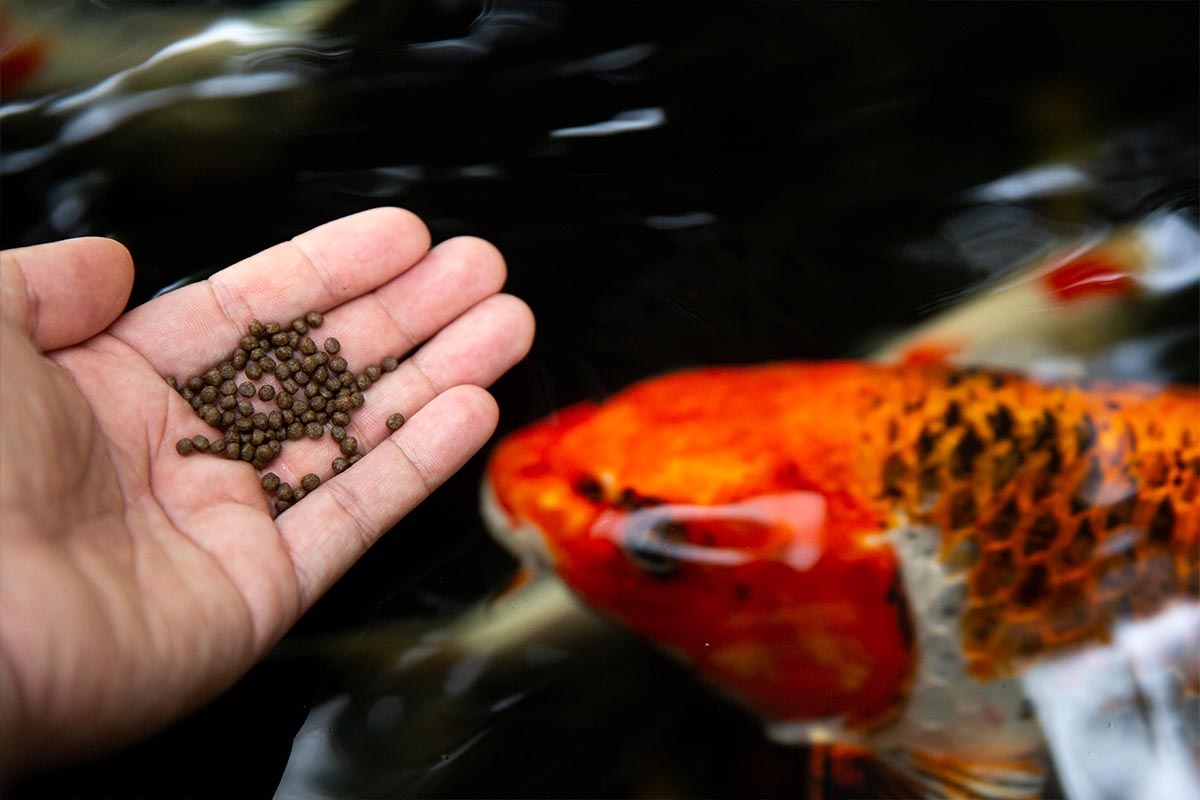
Fish foods differ in shape, particle size, density, and movement in water. The form of the food directly affects at what water level the fish will reach the food. Since the floating and sinking properties of products sold under the same name may vary depending on the brand, packaging information should be checked.
Granular fish food
It is a feed form consisting of small and compressed granules. Micro, small, medium and large granule options are available. Floating granules reach fish that feed from the surface, slow-sinking granules reach fish that swim in the middle level, and fast-sinking granules reach fish that feed in the lower regions. Small granule options allow fish with narrow mouths to consume the food more easily. When choosing granules, in addition to the granule size, it should also be examined whether the product is floating, slow-sinking or fast-sinking.
Flake food
It is produced in the form of fine and light pieces. When placed in the water, it usually stays on the surface, softens as it absorbs water and moves towards the middle levels. It is a form frequently used for small fish that feed on the surface and in the middle region. Large flakes can be broken down into smaller pieces before being given to fish with small mouths. This may not be sufficient on its own for species that feed continuously at the bottom, as a large portion of the food may be consumed by other fish before reaching the bottom.
Stick fish food
This is a type of food prepared in long and large pieces. It is usually found in options aimed at medium and large fish with larger mouth structures. There are varieties that stay on the surface, sink slowly, or sink directly to the bottom. The thickness and length of the stick should be such that the fish can easily consume it. The target fish group, particle size, and behavior in the water should be checked on the packaging.
Tablet food
This is a dense form created by compressing powder or small pieces of food. Most tablets sink to the bottom when placed in the water, making it easier for bottom-feeding fish to access the food. Some models can be fixed by pressing them onto the aquarium glass. Tablets that adhere to the glass can make it easier to monitor the feeding of fish that swim in the middle level. Pellet food Consists of dense and compact pellets. They can be produced in different sizes, from very small micro-pellets to larger pellets for larger fish. Floating pellets are for fish that feed on the surface, slow-sinking varieties for mid-level fish, and fast-sinking options for fish that feed in the lower regions. The pellet size should be suitable for the fish's mouth structure. Since the name "pellet" alone does not indicate the area of use, the content, pellet size, and sinking characteristic should be evaluated together. Chip food Chip food A form of food prepared in the form of flat and pressed pieces. Its fine structure can make it easier for fish with different mouth sizes to grasp the piece. Some chip baits float on the surface while others sink slowly by absorbing water. This behavior varies depending on the density and production method of the product. Before purchasing, the target fish species, particle size, and sinking information should be checked.
Pellet yem
Consists of dense and compact pellets. They can be produced in various sizes, from very small micro-pellets to larger pellets for bigger fish. Floating pellets are for surface-feeding fish, slow-sinking varieties for mid-level fish, and fast-sinking options for bottom-feeding fish. The pellet size should be suitable for the fish's mouth structure. Since the name "pellet" alone does not indicate its intended use, the content, pellet size, and sinking properties should be evaluated together. SEGMENT ID S069476 START Chip bait
Cips yem
S069477 START This is a bait form prepared in the form of flat and pressed pieces. Its fine structure can make it easier for fish with different mouth sizes to grasp the piece. Some chip baits stay on the surface, while others sink slowly by absorbing water. This behavior varies depending on the density and production method of the product. Before purchasing, the target fish species, pellet size, and sinking information should be checked.
The names granule, pellet, and chip may not be used interchangeably across brands. Two similar-looking products may have different particle sizes, contents, or sinking speeds. Therefore, when making a choice, the fish species, content, particle size, and movement in the water should be considered more than the product name.
How to Choose Fish Food?
The right fish food should be chosen according to the fish species, feeding habits, and the water level at which it takes the food. The key points to consider are:
- Not all fish require the same nutritional content. The food should be compatible with the target fish group specified on the product label.
- The needs of carnivorous, herbivorous, and omnivorous fish differ. The product's content should be evaluated according to the fish's natural feeding habits.
- The kibble size and nutritional content of feeds developed for juvenile, adult, and senior fish may vary. The product should be selected according to the fish's developmental stage.
- The kibble size should be such that the fish can easily take and consume it. Excessively large feeds may remain uneaten. Very small kibbles may not be noticed by some fish.
- Floating feeds are suitable for surface-feeding fish, while slow-sinking feeds are suitable for mid-level-feeding fish. For bottom-dwelling fish, tablet, granule, or pellet options that reach the bottom should be considered.
- The name "flake," "granule," or "pellet" alone does not indicate the product's behavior in water. The labels indicating floating, slow sinking, or fast sinking should be checked.
Fish Vitamins

Fish vitamins are not an essential aquarium product that replaces a balanced diet. Routine supplementation is often unnecessary if fresh, high-quality food suitable for the species' diet is used.
Vitamin supplementation in fish may be considered when malnutrition or deficiency is suspected. The product should be selected according to the fish species, and the dosage and application method on the label should be followed.
Caution: Symptoms such as loss of appetite, discoloration, weight loss, or swimming difficulties should not be directly attributed to vitamin deficiency. These findings may develop due to various reasons ranging from water quality problems to infections.
Otomatik Yemleme Makineleri

An automatic fish feeder is a device that dispenses fish food into the aquarium at set times and in pre-set portions. It helps ensure regular feeding of fish, especially during holidays, travel, and busy work periods.
An automatic aquarium feeder should be tested for a few days before use. The amount of food dispensed by the device should be adjusted according to the number of fish and the type of food used. Excessive food can lead to water pollution and increased filter load.
When choosing an automatic fish feeder, models compatible with flake food, granular food, or pellet food should be preferred. The food container should be protected from moisture, and the outlet should be checked regularly. Automatic aquarium feeders facilitate daily maintenance, but they do not eliminate the need to check the aquarium.
What Equipment is Needed for a Breeding and Fry Aquarium?

The equipment to be used in a breeding aquarium is selected according to the breeding method of the species and the care needs of the fry. In some species, it may be necessary to separate the eggs or fry from the adults. In species that show parental care, a different arrangement may be established.
In fry aquariums, sponge filters that provide low flow can be preferred. Models of appropriate capacity contribute to mechanical and biological filtration. Compared to powerful filters with open inlets, they reduce the risk of fry being pulled out. An air pump and hose of appropriate capacity are required to operate the system.
A heater and thermometer help to maintain the water temperature at a stable level, which is needed by sensitive fry. Equipment such as spawning tubes, breeding caves, or spawning mats should be selected directly according to the natural breeding behavior of the species.
Plastic or mesh breeding boxes can be used for temporary separation in some species. Long-term use should be evaluated according to the size of the breeding box, water circulation, number of fry, and the needs of the species. A separate fry aquarium is not mandatory for every species.
Fry food should be selected with a fineness suitable for the mouth structure of the fry. A fine-mesh net, pipette, or small bottom siphon will facilitate the care process by removing food scraps from the environment and safely transporting the fry.
How to Set Up an Aquarium Step by Step?
- Place the tank and stand on a sturdy surface that does not receive direct sunlight.
- Spread the sand according to the instructions, and position large decorations before adding water.
- Install the filter, heater, and motors (if any), but do not start the engine yet.
- Suyu yavaşça ekleyip su düzenleyiciyle hazırlayın.
- Perform initial measurements for ammonia, nitrite, nitrate, and pH.
- Use the ammonia-based fish-free cycle product according to the product instructions and run the filter.
- Measure ammonia, nitrite, and nitrate levels regularly. Ammonia and nitrite should initially rise, then consistently return to zero.
- Döngü testlerle doğrulandıktan sonra balıkları kademeli biçimde ekleyin. Sürü türlerinin grup ihtiyacını göz ardı etmeyin.
Akvaryum Türüne Göre Hazır Alışveriş Listeleri

Standard freshwater aquarium: The basic items are a tank, a sturdy stand, a filter suitable for the volume, a thermometer, a water conditioner, and water tests. Species-appropriate food, a siphon, and an aquarium-specific bucket are also needed. Sand, decorations, lighting, and an air pump are selected according to the setup plan.
Tropical aquarium: A heater is added to the standard list. A thermometer for temperature monitoring and additional aeration when needed become important.
Planted aquarium: Depending on the setup, plant substrate or nutrient substrate, lighting suitable for the plant species, tweezers and scissors, and plant fertilizer if necessary are added to the basic list.
Fry and breeding aquarium: The equipment list varies according to the breeding method of the species. A separate tank or breeding box can be used if necessary. A low-flow sponge filter, air pump, thermometer, fry food, and a fine-mesh net can be considered. The need for a heater is determined according to the species' temperature range.
Large volume aquarium: Filter capacity and water circulation are planned according to the tank dimensions and the live population. Depending on the setup, an external filter, additional circulation, aeration, UV sterilizer, or heater is considered.
Mistakes Made During Initial Aquarium Setup
- Purchasing products without determining the species leads to incompatible equipment later on.
- Choosing a filter unsuitable for the volume will not purify the water sufficiently.
- Adding fish before the cycle is complete exposes the fish to toxic ammonia before sufficient bacteria have formed.
- Using a heater without a thermometer makes it difficult to detect malfunctions.
- Adding water chemistry products without testing is intervening without seeing the problem.
- Assuming all products are necessary for every aquarium unnecessarily strains the budget.
Frequently Asked Questions
What should I buy for my first aquarium?
The basic list includes a tank and a sturdy stand, a filter suitable for the volume, a water conditioner, a thermometer, test kits, especially for ammonia and nitrite, species-appropriate food, a siphon, and a bucket specific to the aquarium. If you are keeping tropical species, a heater is added.
Are a filter and an air pump the same thing?
No. The filter strains the water and provides a habitat for nitrification bacteria. These bacteria convert toxic ammonia first into nitrite, and then into nitrate, which has lower toxicity. The air pump increases surface movement, supporting gas exchange. If a sponge filter is used, the air pump also operates the filter.
Is a heater necessary in every aquarium?
No, the need for a heater depends on the species. Tropical species require a heater to maintain the water within the appropriate temperature range. The water temperature should remain within the appropriate range for the species and should not change suddenly.
Is it mandatory to add sand to the aquarium?
Sand is not a basic necessity but a preference depending on the setup. It supports the natural behavior of some species and is beneficial for rooting plants in planted aquariums as a nutrient substrate.
Which water tests should be performed?
First, ammonia and nitrite tests are required; the safe value for both is zero. Then nitrate and pH, and if necessary, GH and KH are measured.
When can fish be added to a new aquarium?
After the cycle has been confirmed by testing. The determining factor is not the duration, but the rise of ammonia and nitrite and their consistent return to zero. This usually takes a few weeks, and fish are added gradually.
Kaynaklar
https://www.merckvetmanual.com/all-other-pets/fish/providing-a-home-for-fish
https://www.merckvetmanual.com/exotic-and-laboratory-animals/aquatic-systems/aquatic-life-support-system-components
https://www.rspca.org.uk/adviceandwelfare/pets/fish/environment
https://www.rspca.org.uk/adviceandwelfare/pets/fish/diet
https://ornamentalfish.org/wp-content/uploads/How-to-set-up-and-maintain-a-freshwater-aquarium-Sept-2022.pdf
https://ornamentalfish.org/wp-content/uploads/How-to-understand-test-water-quality-in-freshwater-aquariums-Sept-2022.pdf
Advertisement
Advertisement
Keep exploring
Continue reading
Aquarium & Fish
Why Does Aquarium Water Smell?
The water is clear, the fish appear normal. However, a strong odor is present when approaching the aquarium.
Read guide →
Aquarium & Fish
How to Choose Aquarium Lighting?
The whole atmosphere of an aquarium can change the moment you turn on the light. Colors become more vibrant, the depth of the water and movement…
Read guide →
Aquarium & Fish
What are Aquarium Filter Materials? In What Order are They Used?
The water cleaning power of an aquarium filter depends on the materials inside it performing their functions correctly.
Read guide →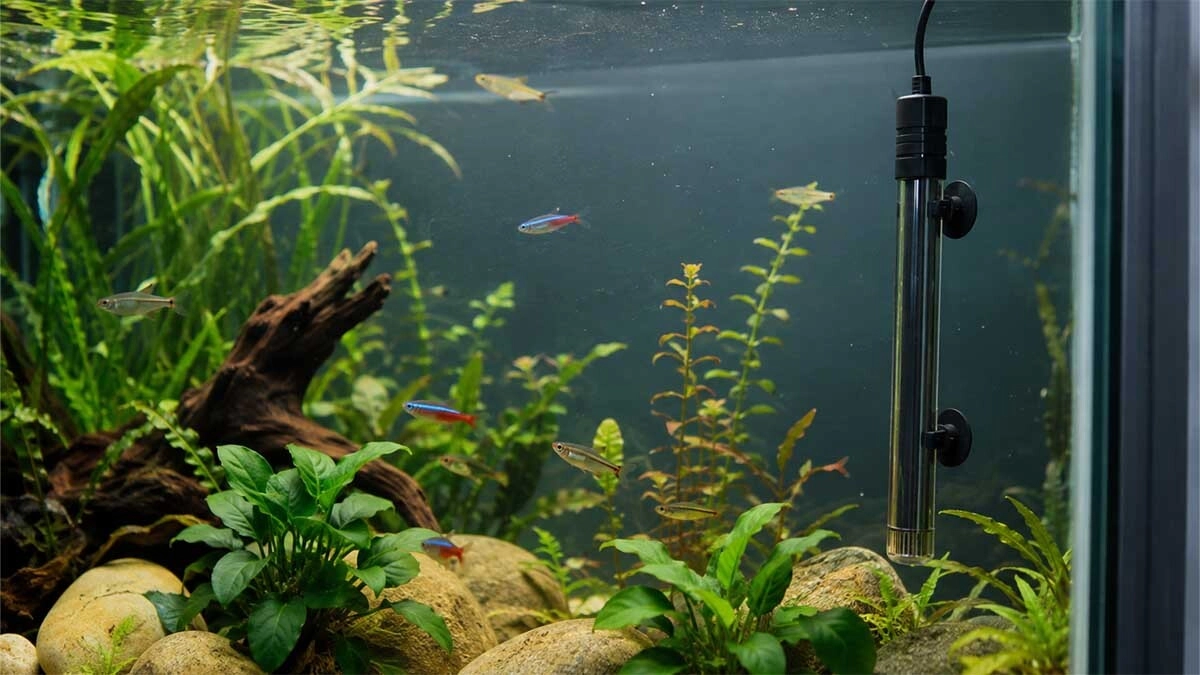
Aquarium & Fish
What is an Aquarium Heater, How to Choose One? How Many Watts of Heater are Needed?
The water in the aquarium is the entire environment in which the fish live. Excessively cold water or frequent temperature changes can cause stress…
Read guide →