Why Do Cats Hiccup? How to Stop It?
Have you ever seen your cat hiccup? Do you know the answers to the question, "Why do cats hiccup?" In this article, you can find information about the causes of hiccups in cats, as well as other important topics that people living with cats should know.

Advertisement
Have you ever seen your cat hiccup? Do you know the answers to the question, "Why do cats hiccup?" In this article, you can find information about the causes of hiccups in cats, as well as other important topics that people living with cats should know.
Hiccups can be observed in cats, just as they can in humans. Young and kitten cats are known to hiccup more frequently than adult cats. Hiccups often occur as a result of involuntary contractions of the diaphragm as the opening of the trachea closes, and under normal circumstances, they end quickly. Hiccups in cats can appear suddenly, just like in humans; however, unlike humans, cats may not produce distinct sounds when hiccuping. Hiccups in cats are usually indicated by contractions felt when the abdominal area is touched. In some cats, hiccups may occasionally last longer than expected, for several minutes, and become an unusually frequent symptom. In such a case, it is advisable to consult a veterinarian. If hiccups in cats are accompanied by various complaints such as vomiting, coughing, and difficulty breathing, it is recommended to consult a veterinarian without delay.
What Causes Hiccups in Cats?
The causes of hiccups in cats can be extremely diverse, and identifying these causes can help determine the correct measures to take against hiccups. An unusual frequency and duration of hiccups will require veterinary examination.
Eating Quickly
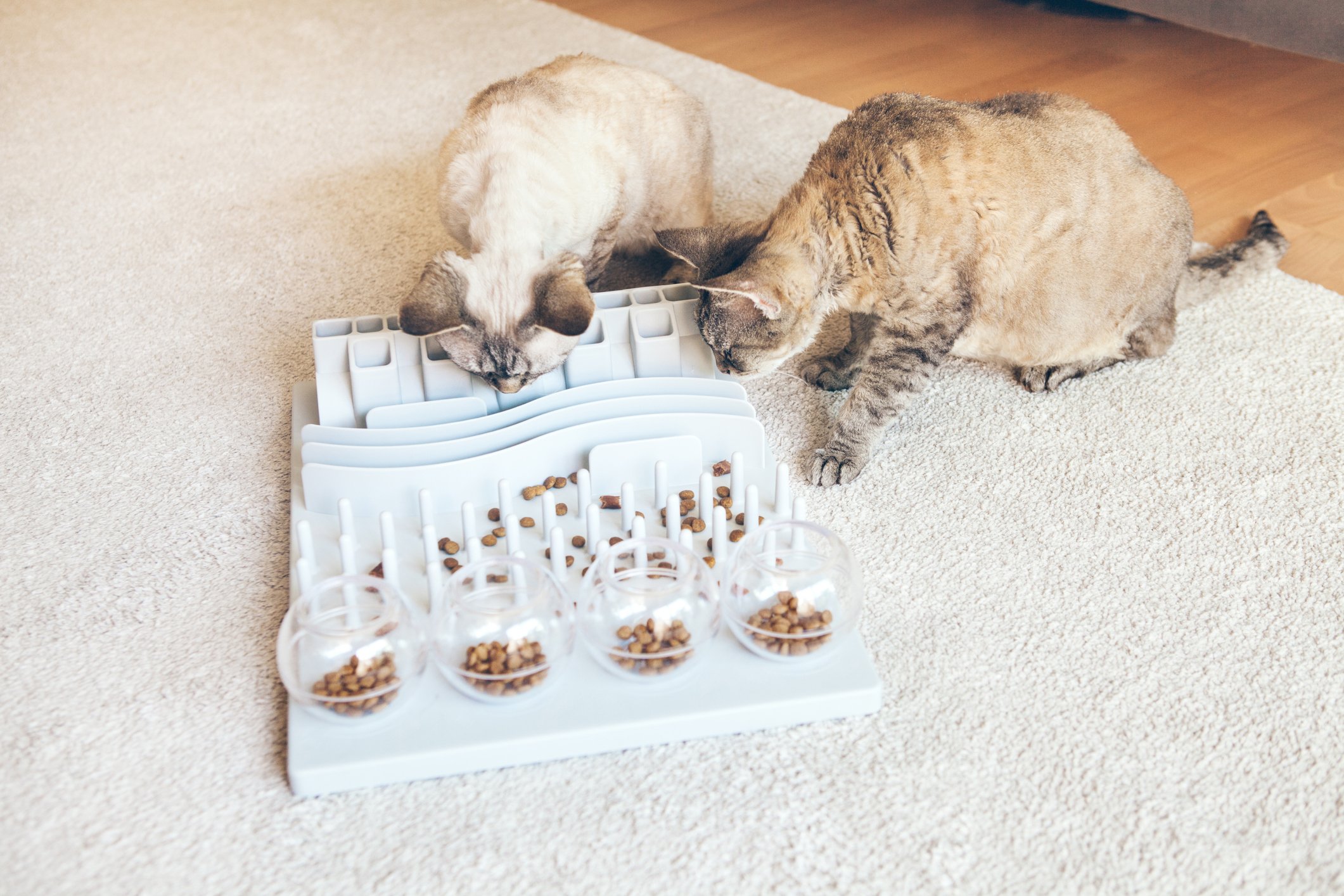
The phrenic nerve is located very close to the diaphragm. Swallowing air can activate this nerve, causing involuntary contraction of the diaphragm. Eating quickly is among the main factors that cause cats to swallow air. There can be many reasons behind cats eating quickly. You can find detailed information on this topic in our article titled "Common Eating Disorders in Cats and Effective Solutions". Sometimes caused by prolonged periods of hunger, and sometimes by competition with other animals in the house, the habit of eating quickly can be minimized by increasing the number of meals while reducing the quantity, and by using food and water bowls designed for slow eating. You can click here to choose from food and water bowls for cats.
Insufficient Chewing
Swallowing food kibble or wet food without chewing it sufficiently reduces the amount of saliva cats produce and causes their stomachs to fill up quickly. Swallowing food without chewing can also lead to air swallowing and hiccups. Like all nutritional deficiencies, swallowing food without chewing it sufficiently can cause stomach upset in cats. It is important to discover what size kibble cats chew if they don't chew their food enough. Of course, at this point, it will also be necessary to investigate any health problems that may be causing them discomfort while chewing. Swallowing food without chewing can be a sign of a problem with the teeth and/or gums. You can easily notice if your cat has chewing problems by observing it while eating.
Hairballs
Cats are animals that can swallow hair while grooming themselves. Many cats experience hairball problems in their gastrointestinal tract at some point in their lives, which damage the digestive process. Cats that vomit to expel hairballs may have irritated throats, resulting in hiccups. You can find detailed information about hairballs in cats in our content.
Hairball formation, another cause of hiccups that can occur due to breathing difficulties or eating disorders, is purring. In some cases, hiccups in cats can be triggered by purring. During purring, cats produce more saliva than normal, and air can be swallowed along with the saliva.
Finally, some health problems in cats can also cause hiccups. Inflammation, food allergies, and intestinal infections can trigger gas formation. In this case, the stomach and diaphragm may be irritated, and hiccups may occur. If symptoms such as appetite problems, changes in stool, and weight changes are observed, it is recommended to contact a veterinarian.
How to Stop Hiccups in Cats? How to Prevent Hiccups?
It is possible to try practical methods to prevent hiccups in cats. To stop hiccups in cats, it is primarily necessary to avoid stressing the hiccuping cat and to avoid causing anxiety. Giving the cat space is important for stopping the hiccups. Behaviors that are thought to stop hiccups in humans will not work in cats, and some methods will cause them to become stressed. Normally, hiccups in cats stop on their own.
Ways to Prevent Hiccups in Cats: Practical Tips
Methods to prevent hiccups in cats may vary depending on the causes of the hiccups. However, it can be stated that some measures are generally valid.
Ensuring that cats always have access to clean and fresh water also helps with the digestive process. Another way to prevent hiccups, especially in cats that eat quickly, is to limit the amount of food consumed at meals and to use food bowls designed to encourage them to eat slowly. It is also possible to increase the frequency of meals in cats that eat too much and too quickly. When hairballs are the cause of hiccups in cats, it may be necessary to use cat malts, formulated to help swallowed hairs be naturally expelled from the body, as recommended by veterinarians. You can browse cat malts with healthy ingredients here.
Advertisement
Advertisement
Keep exploring
Continue reading

Cat Lifestyle & Guides
What is Cat Soup? Is it Beneficial for Cats?
If your cat rarely visits its water bowl, is sometimes reluctant to eat dry food, or shows interest in different textures, liquid products may catch…
Read guide →
Cat Lifestyle & Guides
How to Give Rewards and Snacks to a Neutered Kitten?
The Feline Veterinary Medical Association supports neutering kittens until they are five months old.
Read guide →
Cat Lifestyle & Guides
Benefits of Colostrum for Cats and Dogs
Colostrum is the first milk produced by mother cats and dogs after birth. Thanks to its antibodies and high nutrient content, it responds to the…
Read guide →
Cat Lifestyle & Guides
Why is Gut Health Important in Cats?
In cats, bowel health is linked to many areas, from digestive regularity and immune system-related processes to energy levels and daily comfort.
Read guide →