Why do cats run around the house like crazy?
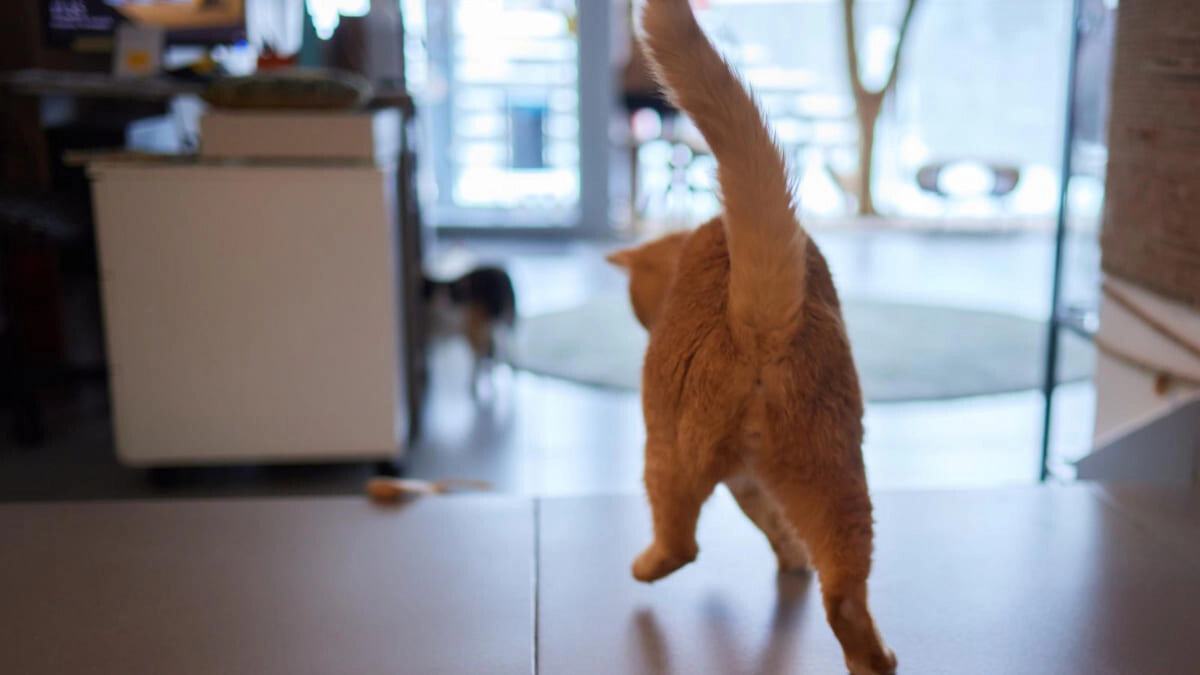
Are you one of those who are surprised when your cat suddenly jumps off the sofa and starts running at full speed down the hallway, then hopping from room to room?
Advertisement
Are you one of those who are surprised when your cat suddenly jumps off the sofa and starts running at full speed down the hallway, then hopping from room to room?
These sudden bursts of energy are scientifically known as “zoomies” or “periods of frenetic random activity (FRAPs)” and are characterized by short periods of intense activity. As PetMD explains, it is generally associated with releasing pent-up energy and expressing the cat's natural instincts.
While sudden activity is a completely normal and healthy cat behavior in most cases, in some circumstances it can become one of the first signs of stress, environmental changes, or health problems. Making the right distinction is important for maintaining your cat's well-being and managing the order in the house more easily.
In this article, you can find information about the main reasons for cats' sudden running behavior in the house, its psychological and physical background, in which situations it can be considered normal, and when it should be monitored more closely.
Main Reasons for Cats' Sudden Running Behavior in the House

Cats suddenly starting to run fast is often a reflection of their instinctive hunting behavior in the home environment. In the wild, cats are hunters who, after accumulating energy for a long time, launch very short but intense attacks towards their prey. Even without actual prey, the nervous system of domestic cats still functions according to this pattern.
A shadow, a sudden sound, or even just noticing their own body movement can trigger a short-lived hunting mode. Therefore, a cat's sudden running behavior can often be thought of as chasing imaginary prey.
This activity is fundamentally a kind of sudden burst of energy. Cats, who spend most of the day sleeping, tend to quickly release their accumulated energy during the short periods they are awake. PetMD notes that zoomies behavior is more common in young and active cats, especially when they haven't played enough or haven't been active during the day.
A cat's biological rhythm also contributes significantly to this picture. Cats are not entirely nocturnal; they are crepuscular creatures that are more active during twilight hours. In other words, their increased activity during the early morning and evening hours, coinciding with the most suitable hunting times, is a species characteristic. The lack of stimuli in the home environment is another factor that increases sudden runs. Cats that are not offered enough toys, scratching posts, hiding places, or interactive play create their own play scenarios to release their accumulated energy. Running quickly from one room to another, jumping on furniture, or making sudden changes of direction in the hallway become a source of physical and mental stimulation. Behind all this, there is also the safe space effect. When a cat does not feel threatened, is accustomed to the home environment, and knows its surroundings well, it behaves much more freely in displaying its natural reflexes. Therefore, your cat's occasional speeding up and running around the house can, in most cases, be considered a sign that it feels safe and secure in that environment.
Lack of stimuli in the home environment is another factor that increases sudden changes in behavior. Cats that aren't provided with enough toys, scratching posts, hiding places, or interactive play create their own play scenarios to release pent-up energy. Running quickly from one room to another, jumping on furniture, or making sudden changes of direction in the hallway become a source of physical and mental stimulation.
Behind all this is the safe space effect. When a cat doesn't feel threatened, is accustomed to the home environment, and knows its surroundings well, it behaves much more freely in exhibiting its natural reflexes. Therefore, your cat's occasional speeding up and running around the house can often be interpreted as a sign that it feels safe and secure in that environment.
Psychological and Emotional Reasons Why Cats Run Around the House
Emotional states can also be behind cats suddenly speeding up and running around the house. Some cats use sudden movements to release tension accumulated during the day. Changes in the home environment, a new item, moving, guests arriving at the house, or the presence of another animal can create mild but constant stress in a cat. This tension is not always silently hidden, and a few seconds of uncontrolled running sometimes becomes a kind of relief.
Zoomies behavior is also linked to pleasure and the desire to play. Business Insider states that many cats experience bursts of energy when they are in a playful, cheerful mood, and in most cases, this is a completely natural behavior. Your cat may suddenly speed up and start running from room to room when it sees a favorite toy, engages in a short play session with you, or feels safe inside the house.
Some emotional triggers are also related to overstimulation. Cats, especially those in crowded homes, noisy environments, or exposed to many stimuli during the day, may suddenly speed up and then retreat to a corner; this can be a complex response where stress and excitement are simultaneously at play.
When multiple cats live in the same house, sudden running can sometimes be part of chase games or mild competition. One cat might suddenly start running to invite another to play, and the other might respond by following. These types of interactions are often motivated by play and social interaction, not fear. However, if the running behavior is accompanied by growling, hissing, or avoidance, it should be kept in mind that this could be a sign of tension.
In some cats, sudden running behavior may be indirectly linked to loneliness and the expectation of attention. A cat that has been left alone for a long time during the day may simultaneously express both happiness and pent-up energy when you return home.
Can Health Problems Trigger a Sudden Will to Run in Cats?

In some cases, it is one of the first signs of an underlying physical ailment. In particular, a cat that was previously calm suddenly starting to run more frequently, more intensely, and restlessly should not be interpreted simply as releasing energy.
VCA Hospitals emphasizes that a veterinary check-up may be necessary when there is a significant change in the frequency and intensity of zoomies behavior. Therefore, it is important to evaluate your cat's activity level along with other signs in its daily routine.
Problems affecting the skin are among the most common physical causes of sudden running. Fleas or other external parasites can cause intense itching, leading your cat to suddenly jump up and run, and persistently lick and bite certain areas of its body. Allergic skin diseases, fungal infections, or contact with sensitivities can also create a similar restless behavior in cats. Some internal diseases can also manifest as excessive activity and a sudden urge to run. Overactive thyroid Increased appetite or weight loss Night restlessness If you notice your cat becoming increasingly agile and restless as it ages, instead of calmer, it's advisable to discuss this behavior with your veterinarian. Similarly, pain or discomfort in internal organs can also cause your cat to exhibit short-term escape responses followed by hiding.
Some internal diseases can also manifest as excessive activity and a sudden urge to run. These include:
- hyperthyroidism, increased appetite
- or weight loss, and
- restlessness at night.
If you notice your cat becoming increasingly restless and agitated as it ages, instead of calmer as you might expect, it's wise to discuss this behavior with your veterinarian. Similarly, pain or discomfort in internal organs can also lead to short-lived escape responses followed by hiding.
Post-toilet running behavior can sometimes be associated with physical discomfort. For most cats, quickly moving away from the litter box is part of the instinctive tendency to relieve themselves and leave a space after using the toilet.
Anal irritation or mild discomfort felt during defecation can also cause these types of escape responses. If these moments are accompanied by loud meowing, prolonged grooming, avoidance of the litter box, or changes in stool/urine, lower digestive or urinary tract problems should be evaluated.
What Can Be Done to Reduce Cat Running Around the House?

It is often impossible to completely eliminate your cat's sudden bursts of energy; because this behavior is a natural part of being healthy and active. You can reduce the frequency and intensity of runs by properly adjusting the home environment. Increasing daily playtime is one of the most effective ways to manage excess energy. Short but regular play sessions allow your cat to experience its hunting instincts in a controlled manner. Toys that mimic the role of a hunter, tunnels, and games involving hide-and-seek help your cat feel satisfied both mentally and physically. Enriching the environment is also an important support in this process. Providing scratching posts, climbing platforms, comfortable cat beds, and resting areas at different levels helps your cat spread its energy throughout the day. Maintaining a regular routine can reduce your cat's sudden movements due to restlessness. When feeding times, playtimes, and rest periods are repeated in a similar flow, cats feel more secure.
- Increasing daily playtime is one of the most effective ways to manage excess energy. Short but regular play sessions allow your cat to experience its hunting instincts in a controlled manner. Toys that mimic the role of a hunter, tunnels, and hide-and-seek games help your cat feel satisfied both mentally and physically.
- Environmental enrichment is also an important support in this process. Providing scratching posts, climbing platforms, comfortable cat beds, and resting areas at different levels helps your cat spread its energy throughout the day.
- Maintaining a regular routine can reduce your cat's sudden movements due to restlessness. When feeding times, playtime, and rest periods repeat in a similar flow, cats feel more secure.
To reduce increased nighttime running, scheduling a targeted play session in the evening can also be helpful. A few rounds of active play before bedtime will help lower your cat's energy levels, contributing to a calmer sleep. During this time, choosing toys that they can actually catch and experience a sense of accomplishment with, rather than uncatchable toys like lasers, can reduce post-play restlessness.
When is it Normal and When is it Not for Cats to Suddenly Start Running?

The most important clues in determining whether it's normal for cats to suddenly start running around the house for short periods are frequency and context. If they run for a few minutes after waking up, after using the toilet, or immediately after a short play interaction, and then calm down, this is often a natural energy release cycle.
The situation may change if there are signs such as a significant increase in sudden running in a short time, acting as if it is running away from something, repeatedly looking at the same point, constantly wandering day and night, persistent meowing, or hiding for a long time after running. In this case, it is safest to opt for a veterinary examination instead of relying on home-based measures.
Frequently Asked Questions

Now, let's give short answers to the most frequently asked questions about your cat's behavior.
Why do cats run more, especially at night?
Cats are naturally more active during twilight and night hours. This is because their hunting instinct is activated during this time. They often release the energy they have accumulated during the day by running during these hours.
Is it normal for cats to run after using the litter box?
Many cats quickly running away from the litter box after using it is related to both a feeling of relief and a desire to quickly leave the litter box environment, and is often normal. However, if there are signs such as a pained expression, loud meowing, or avoidance of using the litter box, a veterinary check is necessary.
Is there a difference between the sudden running behavior of kittens and adult cats?
Sudden running and jumping behavior is more common in kittens and young cats because they explore the world through play. In adult cats, bursts of energy are generally less frequent and dependent on specific triggers. If it suddenly increases in older cats, the possibility of another underlying problem should be considered.
Is it a behavioral problem for cats to knock over things while running suddenly?
Changing direction and braking during sudden runs can lead to things falling over, especially in confined home environments. This is often a side effect of speed, not intentional destructiveness. Making the environment safer and simpler can make this behavior more manageable by reducing the risk of breakage.
Does cats' sudden running behavior decrease over time?
In most cats, energy levels balance out with age, and the frequency of sudden running behavior decreases, although occasional short runs may continue. The important thing is that this behavior is consistent with your cat's overall health and that a sudden increase is not accompanied by other symptoms.
Kaynaklar:
https://www.petmd.com/cat/behavior/why-do-cats-get-zoomies
https://vcahospitals.com/shop/articles/cat-zoomies-explained?utm
https://www.petmd.com/cat/behavior/why-do-cats-get-zoomies?utm
https://www.merckvetmanual.com/behavior/behavior-of-cats/behavior-problems-of-cats?
https://www.businessinsider.com/reference/cat-zoomies
https://www.dailypaws.com/cats-kittens/behavior/common-cat-behaviors/cat-zoomies
https://www.thesprucepets.com/crazy-cat-554821
Advertisement
Advertisement
Keep exploring
Continue reading

Cat Lifestyle & Guides
What is Cat Soup? Is it Beneficial for Cats?
If your cat rarely visits its water bowl, is sometimes reluctant to eat dry food, or shows interest in different textures, liquid products may catch…
Read guide →
Cat Lifestyle & Guides
How to Give Rewards and Snacks to a Neutered Kitten?
The Feline Veterinary Medical Association supports neutering kittens until they are five months old.
Read guide →
Cat Lifestyle & Guides
Benefits of Colostrum for Cats and Dogs
Colostrum is the first milk produced by mother cats and dogs after birth. Thanks to its antibodies and high nutrient content, it responds to the…
Read guide →
Cat Lifestyle & Guides
Why is Gut Health Important in Cats?
In cats, bowel health is linked to many areas, from digestive regularity and immune system-related processes to energy levels and daily comfort.
Read guide →