Abyssinian Cat Characteristics, Care and Feeding
If you have an Abyssinian cat at home, you've probably noticed it making eye contact countless times a day, circling around your feet every time you enter the kitchen. These intelligent cats, who wake you up with playful antics in the mornings and leap out from behind the sofa in the evenings…
Advertisement
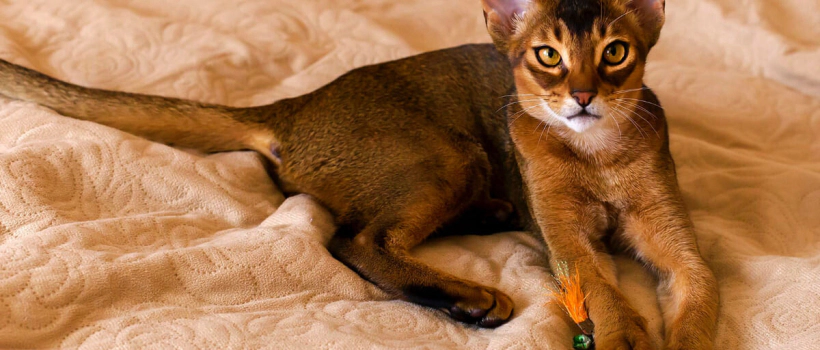
If you have an Abyssinian cat at home, you've probably noticed it making eye contact countless times a day, circling around your feet every time you enter the kitchen. These intelligent cats, who wake you up with playful antics in the mornings and leap out from behind the sofa in the evenings demanding play, never run out of energy. Moreover, their passion for meticulously examining every new object and exploring every corner of the house makes simply watching them a joy.
Although its genetic origins lie in Ethiopia, the Abyssinian cat was systematically developed in England in the 19th century and is one of the oldest and most unique breeds among modern domestic cats. Recent genetic studies point to the Indian Ocean coast and Southeast Asia as the origins of the Abyssinian cat.
Known for their active, social, and playful nature, this breed easily adapts to home life while also requiring significant mental and physical stimulation. In this article, you can find detailed information about the characteristics, temperament, care routines, health status, and nutritional needs of Abyssinian cats, which bring joy to their owners' homes.
Abyssinian Cat at a Glance
Other Names: Abyssinian, Abys
Character: Intelligent, playful, social, attentive
Weight: 2.5 – 5.4 kg
Shoulder Height: 23 – 28 cm
Eye Color: Gold, amber, green
Fur Length: Short
Fur Colors: Red, blue, chocolate, silver, cinnamon
Fur Patterns: Tabby, without classic stripes or spots
Shedding: Low – Medium
Hypoallergenic?: No
Care Requirements: Low – Medium
Compatibility with Children: Good
Compatibility with Other Pets: Good
Energy Level: High
Average Lifespan: 12 – 15 years
Origin: Ethiopia (Abyssinia)
What Do Abyssinian Cats Eat, How Should They Be Fed?
 The Abyssinian cat is a high-energy, muscular, and very active breed. Therefore, its daily calorie needs are slightly higher compared to calmer cat breeds. A protein-based diet can positively influence its behavioral balance.
The hunting instinct is still very strong in this breed, and animal proteins play an indispensable role in its diet. When planning an Abyssinian cat's diet, high-quality cat foods with high-quality animal protein sources such as meat, chicken, turkey, or fish should be prioritized.
Dry foods specifically formulated for active cats are quite successful in meeting the energy needs of this breed. Foods containing high-quality protein are ideal for maintaining muscle mass and supporting coat health. Products containing taurine, omega-3 fatty acids, and a balanced vitamin-mineral content should be prioritized. These types of foods make significant contributions to improving eye health, the immune system, and coat quality. In addition to dry food, canned cat food can also be used as a supplement. Wet food is considered beneficial for increasing fluid intake, especially in cats with low water consumption. In mixed feeding, wet food portions should be carefully controlled to maintain balance against the risk of obesity. Daily calorie requirements vary depending on the cat's age, weight, and activity level; therefore, portion sizes should be determined using the tables on the food packaging and the veterinarian's recommendations. Consequently, cat treat consumption should also be planned carefully. Kittens should be fed 3-4 meals a day during their growth period; after reaching adulthood, this number of meals should be reduced to 2. While free-feeding can be preferred from time to time for such an active breed, it should be remembered that portion control may become difficult.
In addition to dry food, canned cat food can also be used as a supplement. Wet food is considered beneficial for increasing fluid intake, especially in cats with low water consumption. In mixed feeding, wet food portions should be carefully controlled to maintain balance against the risk of obesity.
Daily calorie requirements vary depending on the cat's age, weight, and activity level; therefore, portion sizes should be determined using the charts on the food packaging and the recommendations of a veterinarian. Consequently, cat treat consumption should also be carefully planned.
During the growth period, Abyssinian kittens should be fed 3-4 meals a day; after reaching adulthood, this number should be reduced to 2 meals. While free-feeding may be preferred occasionally for such an active breed, it should be remembered that portion control can be difficult.
Some additional points to consider in the feeding regimen are:
- Omega-3-containing foods are beneficial for coat health. Even if their fur is short, shedding may occur periodically.
- Dry food and chew treats can be used to support oral health.
- The water bowl should be clean and filled with fresh water every day.
- The food should not contain artificial sweeteners, colorings, or fillers.
- Malt paste can be used additionally during feeding. This can help reduce the formation of hairballs.
Common Diseases in Abyssinian Cats

Known for their intelligence and active nature, Abyssinian cats are generally a healthy and resilient breed. However, due to their genetic origins, they are known to be predisposed to certain hereditary diseases. Early detection of these diseases, regular veterinary checkups, and proper care make their management possible. PetMD lists the diseases the breed is prone to as follows:
Progressive Retinal Atrophy (PRA)
PRA, one of the most common health problems in Abyssinian cats, is a hereditary disease that causes the retina of the eye to deteriorate over time. The first symptoms appear as night blindness, and in later stages, it can lead to complete vision loss. Carrier status can be detected through genetic testing.
Unfortunately, there is no cure for the disease, but the quality of life of cats with vision loss can be preserved by adjusting their living environment. In our article "Tips for Living with Blind Cats," you can find suggestions to improve your pet's comfort.
Pyruvate Kinase Deficiency
This disease is caused by a deficiency of the enzyme pyruvate kinase, which is located in red blood cells and is responsible for energy production. In this case, the cells cannot produce enough energy and are prematurely destroyed. It can manifest itself with symptoms such as anemia, weakness, weight loss, and pale gums. Since it is a genetic disease, it is recommended that carrier cats not be bred.
Periodontal Diseases (Gum Problems)
Abyssinian cats may be prone to dental and gum diseases. Bad breath, tartar buildup, and bleeding gums are the most common symptoms. Dental and gum health can be supported with measures such as dental-friendly foods, chewing products, and regular brushing. Amyloidosis Although rare, this disease, which can have serious consequences, is caused by the accumulation of abnormal proteins called amyloid in the liver and kidneys. It can lead to kidney dysfunction. Symptoms include excessive thirst, loss of appetite, and weight loss. Early diagnosis is of great importance. It is noted that Abyssinian cats may mask symptoms due to their energy levels, and regular veterinary check-ups are therefore even more important.
Amyloidosis
Although rare, this disease, which can have serious consequences, is caused by the accumulation of abnormal proteins called amyloid in the liver and kidneys. It can lead to kidney dysfunction. Symptoms include excessive thirst, loss of appetite, and weight loss. Early diagnosis is of great importance.
It is noted that Abyssinian cats can mask symptoms due to their energy levels, and therefore regular veterinary check-ups are even more important.
Hyperesthesia
Hyperesthesia, listed among the diseases seen in Abyssinian cats in the WebMD source, is a condition in which cats experience excessive sensitivity in a specific area of their bodies. This condition usually causes discomfort and stress in the cat. A cat with hyperesthesia may react negatively, or even exhibit aggressive behavior, when the sensitive area is touched.
More importantly, it risks harming itself by constantly licking, chewing, or scratching the sensitive area. When this condition progresses, it can lead to more serious health problems such as skin irritation, injuries, and infections. When symptoms of hyperesthesia are noticed, it is important to consult a veterinarian to determine the underlying cause and apply appropriate treatment.
Physical Characteristics and Appearance of the Abyssinian Cat
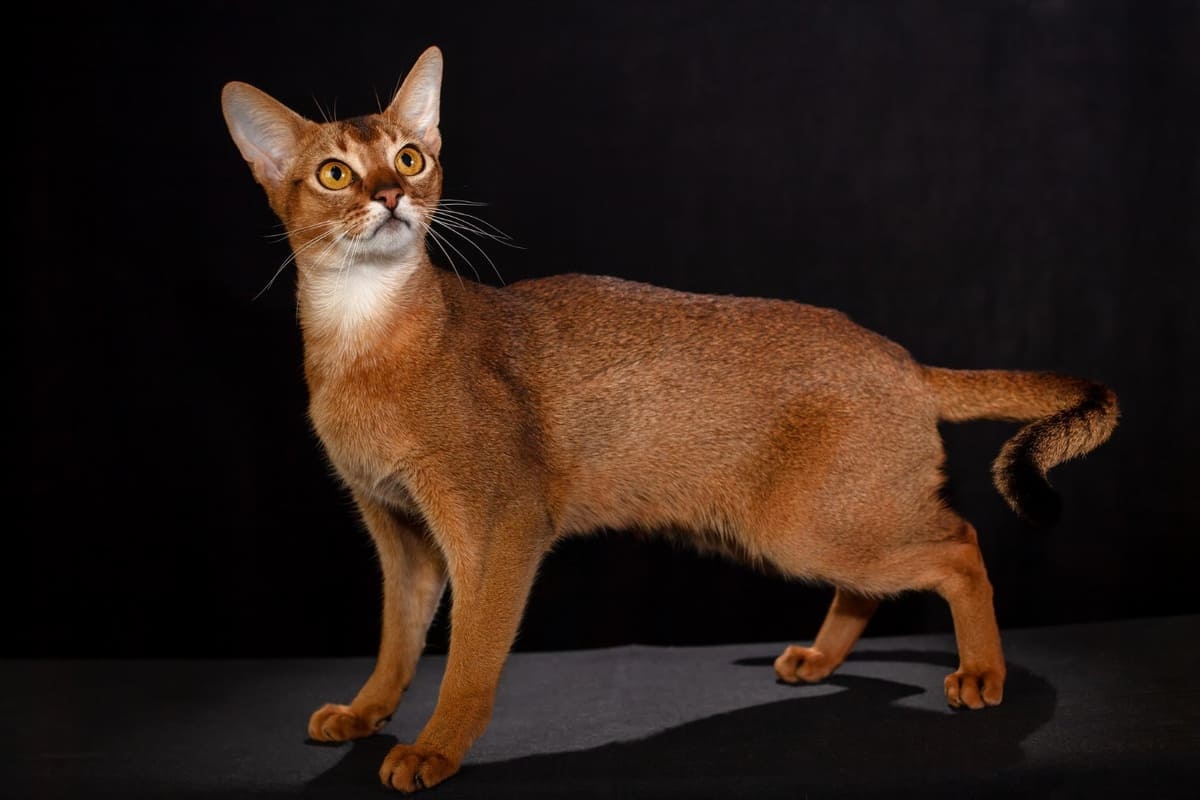
The most prominent physical characteristics of the Abyssinian cat are:
- It is medium-sized, elegant, and muscular. Its body structure is neither short and large nor excessively long; it is balanced and proportionate. It appears lively and agile.
- Their height from the shoulder to the ground averages between 23 and 28 cm. Their body structure is proportionate in length.
- Females generally weigh 2.5–3.5 kg, while males weigh 3.5–4.5 kg. Muscle mass is prominent: Their body is not large, but has a "firm" structure.
- Their eyes are almond-shaped, large, and bright. There are light-colored rings and thin dark lines around the eyes. Their colors are in shades of gold, amber, and green.
- Their head is slightly rounded in the shape of a wedge. There is a gentle slope between the nose and the forehead. The forehead is wide and extends uninterruptedly towards the ears.
- The ears are large, broad-based, and have a striking appearance. They taper moderately and are seamlessly integrated with the overall contours of the head.
- The tail is of medium length and thick in origin. It tapers slightly towards the tip.
- Their legs are slender-boned, elegant but strong. Their paws are small, oval, and compact. They stand well on the ground; they generally maintain a toe-like stance.
- Their fur is soft, silky, and supple. Each hair tip contains different bands. This pattern is known as "ticking".
- Their fur can be warm red and black, reddish-cinnamon and chocolate, blue, and light brown. The undercoat is lighter in tone, while the tips are darker. Dark lines emanating from the eyes, cheek shadows, and whisker area points are characteristic markings.
The ideal appearance of an Abyssinian cat is a combination of a balanced and muscular body and distinctive facial features. This external structure reflects both its physical agility and its unique character.
Abyssinian Cat Character

Be prepared for a friend who constantly follows you around the house, peeks inside every cupboard door that opens, and settles onto the computer keyboard before you do. It offers an interaction far beyond standard cat behavior. It understands your daily routine, reads your facial expressions, and develops its own new ways of communication. With these characteristics, the Abyssinian cat's temperament gives many cat owners the feeling of being both a friend and a little confidant.
The character traits of an Abyssinian cat can be listed as follows:
- Every corner of the house is a new world to be explored for it. It is the first to notice every change.
- He loves playing with educational toys. He can open cupboard doors and other doors and is eager to learn.
- They don't like being alone; having someone else at home is a great source of comfort for them. The Spruce Pets source states that they hate being alone.
- He remains active at every stage of his life, regardless of age. He loves toys, moving objects, and interactive games.
- He doesn't meow much, but he communicates what he wants through his gaze and body language. It can also be said that some of them love to chat.
- Although they don't like being held, they enjoy close contact with you.
- They can form fun relationships, especially with energetic children.
- They may occasionally feel the need to be alone, which is a natural behavior.
- They can set their own rules. They may show a dominant character when living with other cats. A good introduction process is necessary for adaptation.
- They follow you step by step, adopt your sleeping place, and are the first to greet you when you return home.
Abyssinian Cat Care and Tips

Although Abyssinian cat care is generally considered effortless, it requires some daily routines that demand attention. Their intelligence and activity level transform the care process into a structure that encompasses not only physical but also mental needs. Therefore, a planned and regular care program should be adopted for both their appearance and general health.
Abyssinian cat grooming is quite easy thanks to their short and fine fur. Although their fur is not prone to shedding, moderate shedding may be observed during seasonal changes. Brushing 1-2 times a week is sufficient.
Cat combs and brushes should be preferred during brushing. This process helps both to remove dead hairs and to allow the skin to breathe. Cat grooming products can be used to support a shiny coat appearance.
Due to the active nature of Abyssinian cats, they may develop sensitivity to external factors. In particular, contact with low-quality cleaning products can cause dryness or irritation of the skin. Bathing is infrequent; if necessary, cat-specific shampoos should be used. After bathing, make sure that the fur is completely dry.
There is no genetic or structural predisposition to discharge around the eyes. As a result of their active nature and entering and exiting dusty areas, slight dirt may be seen around the eyes. Once a week, the corners of the eyes should be gently wiped with a damp cotton cloth. If redness, excessive discharge, or watering of the eyes are observed, veterinary assistance should be sought. The ears are large, which can cause dust and dirt to accumulate more easily. The inside of the ears should be checked once a month, and if necessary, gently cleaned using cat ear cleaners. As previously mentioned, gum disease is common in this breed. Therefore, brushing their teeth several times a week is recommended. Cat-specific toothbrushes and oral care products should be preferred. A diet mainly consisting of dry food contributes to dental health due to its mechanical cleaning effect. Professional cleaning under the supervision of a veterinarian may also be necessary to prevent tartar buildup. The Abyssinian cat has a much greater need for play compared to ordinary house cats. It absolutely needs physical activity and mental stimulation on a daily basis. Therefore, the home environment should be arranged in a way that allows it to move around.
Because the ears are large, they can more easily accumulate dust and dirt. The inside of the ears should be checked once a month, and if necessary, gently cleaned using cat ear cleaning products.
As previously mentioned, gum disease is common in this breed. Therefore, brushing their teeth several times a week is recommended. Cat-specific toothbrushes and oral care products should be preferred. A diet mainly consisting of dry food contributes to dental health due to its mechanical cleaning effect. Professional cleaning under the supervision of a veterinarian may also be necessary to prevent tartar buildup.
Abyssinian cats have a much greater need for play compared to ordinary house cats. They absolutely need physical activity and mental stimulation daily. Therefore, the home environment should be arranged in a way that allows them to move around.
Abyssinian Cat Training
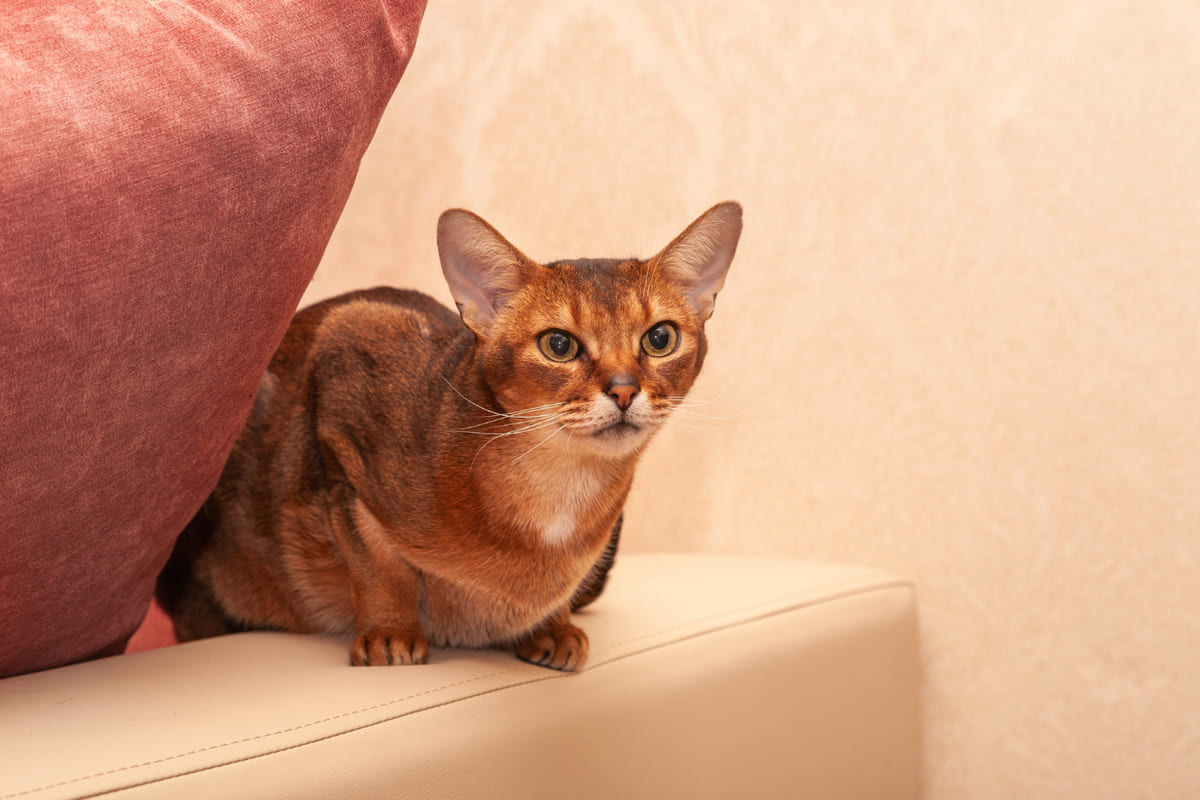
Intelligent, highly observant, and constantly interacting with their environment, Abyssinian cats are one of the most trainable cat breeds. They have a rapid learning ability and quickly grasp repetitions. Their advanced intelligence does not make them an "easy to train" breed.
Abyssinian cats have an independent character; learning a behavior depends on that behavior being meaningful to them. Basic training such as toilet training, directing to the scratching post, and staying away from forbidden areas can be successfully completed if started at an early age. Reward-focused and play-integrated training methods are the most effective.
Things to Know When Adopting an Abyssinian Cat

Before adopting an Abyssinian cat, clearly understanding the breed's needs, character traits, and care expectations will improve the quality of life for both you and your cat in the long run.
This playful, intelligent, and social cat breed can develop behavioral problems when left alone or insufficiently stimulated. Therefore, the following points should be considered before adoption:
- It has a high need for socialization. It should not be left alone for long periods.
- It needs physical activity and play. It should be provided with toys and scratching posts where it can expend its energy.
- It expects attention but is not a lap cat. It likes to be with you, but may not want constant affection.
- It is a cat suitable for indoor living. Letting it outside is not recommended; areas such as windows and balconies should be made safe. In this context, the use of cat safety products is a necessity rather than a preference.
- It is generally compatible with other pets. However, due to its dominant character, a careful introduction process is necessary.
- It is suitable for families with children. It gets along well with children who are a little older and can understand cat behavior.
- Litter training is easy. It values cleanliness; the cat litter box should be cleaned every day.
- Food selection is important. High-quality cat food with a high protein content should be preferred.
- Veterinary check-ups should not be neglected. Due to their susceptibility to hereditary diseases, they should have a general examination at least once a year.
Frequently Asked Questions About Abyssinian Cats

The Abyssinian cat, which stands out with its intelligence, social skills, and energetic nature, raises the same questions in the minds of many cat lovers. Below, you will find short and clear answers to the most frequently asked questions that should be known before adopting. Each one can help you open the door to a long-lasting friendship with the right decision.
Are Abyssinian cats intelligent?
Yes, they are quite intelligent. They quickly learn commands, easily notice environmental changes, and learn games in a short time. They have a strong interest in educational toys. They quickly adopt the basic rules of the home.
Can an Abyssinian cat live in an apartment?
Yes, they are suitable for apartment living. Due to their energetic nature, they should be given space to move around and time should be set aside to play with them during the day. Careful play planning and scratching posts are very useful for quiet neighborly relations.
Do Abyssinian cats get along well with children?
They generally get along well with children. They especially enjoy interacting with children of play age. Of course, children should also be made to respect the cat's boundaries. Providing supervised environments for shared play supports the safety of both parties.
How long do Abyssinian cats live?
The average lifespan is 12–15 years. Quality nutrition, regular health checkups, and a stress-free living environment can extend this period. Early screening for genetic predispositions can positively affect their lifespan.
Are Abyssinian cats hypoallergenic?
No, they are not among the hypoallergenic cat breeds. Due to their short fur and moderate shedding, they may cause less of a reaction in some allergic individuals. Regular brushing and the use of air filters in the living space are recommended to reduce the risk of allergies.
Do Abyssinian cats shed a lot?
Shedding levels are between low and moderate. Weekly brushing can minimize shedding. Shedding can increase during seasonal changes. Balanced nutrition and foods that support coat health are effective in reducing shedding. Do Abyssinian cats bite? Normally, they are not aggressive. Mild bites may occur when they are bored, uncomfortable, or when boundaries are crossed during play. This behavior can be easily managed with training. Directed playtime and stimulating toys are effective in reducing biting. Are Abyssinian cats very expensive? The cost of care varies depending on the quality of food chosen, health checkups, and needs such as toys. They have a moderate cost range. Can Abyssinian cats be kept indoors?
Do Abyssinian cats bite?
Under normal circumstances, they are not aggressive. Mild bites may occur when they are bored, uncomfortable, or when boundaries are crossed during play. This behavior can be easily managed with training. Directed playtime and stimulating toys are effective in reducing biting.
Are Abyssinian cats very expensive?
Maintenance costs vary depending on the quality of food chosen, health checks, and needs such as toys. It has a moderate cost range.
Can an Abyssinian cat be kept at home?
Yes, it is quite suitable for home life. There is no need to go outside. A safe, enriched indoor space is sufficient to meet all its needs.
Kaynaklar:
https://www.purina.co.uk/find-a-pet/cat-breeds/abyssinian
https://cfa.org/breed/abyssinian/
https://www.thesprucepets.com/abyssinian-cat-breed-profile-4797632
https://fifeweb.org/cats/breeds/abyssinian/
https://www.gccfcats.org/getting-a-cat/choosing/cat-breeds/abyssinian/
https://vcacanada.com/know-your-pet/cat-breeds/abyssinian
https://www.petmd.com/cat/breeds/abyssinian
https://www.purelypetsinsurance.co.uk/blogs/a-guide-to-the-abyssinian-breed/
https://www.petfinder.com/cats-and-kittens/breeds/abyssinian/
https://www.webmd.com/pets/cats/what-to-know-about-abyssinian-cats
https://www.omlet.co.uk/breeds/cats/abyssinian/
https://www.rover.com/blog/abyssinian-cats/
https://www.zooplus.co.uk/magazine/cat/cat-breeds/abyssinian
Advertisement
Advertisement
Keep exploring
Continue reading

Cat Nutrition
The Importance of Fiber in Cat Food: Its Role in Digestion, Hairballs, and Weight Control
Most people just glance at the "crude cellulose" line in the analysis table on the cat food packaging.
Read guide →
Cat Nutrition
The Importance of Wet Food Consumption in Cats During Summer
When temperatures rise, cats, just like us, may have difficulty maintaining their fluid balance.
Read guide →
Cat Nutrition
Mineral Balance in Dry Cat Foods: The Role of Calcium and Phosphorus
The suitability of cat food for a cat in the long term is not determined solely by protein, fat, or calories.
Read guide →
Cat Nutrition
Essential Cat Food Ingredient Terms for Cat Owners
If you are a cat parent with at least one cat eagerly awaiting your return and nourished by your love in addition to the food you provide, this…
Read guide →