Caring for Orphaned Kittens
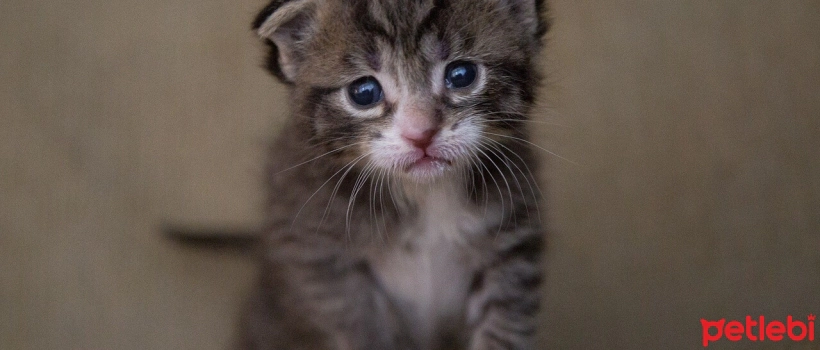
Newborn kittens are less capable of caring for themselves compared to other mammals. Therefore, they need to be cared for by their mothers for a while. Mother's milk is especially important for the growth and health of kittens.
Advertisement
Newborn kittens are less capable of caring for themselves compared to other mammals. Therefore, they need to be cared for by their mothers for a while. Mother's milk is especially important for the growth and health of kittens. The mother's good nutrition during pregnancy and lactation, good general health, and care of the kittens after birth play a key role in the health of the kittens. The mother's milk produced in the first few days is called colostrum or first milk. This first milk is very rich in protein and provides the kitten with elements important for its immune system. Kittens need to benefit from this milk as much as possible to have a strong immune system and be protected from disease.
The mother's milk that comes in the first few days is called colostrum or first milk. This first milk is very rich in protein and provides the kitten with elements important for its immune system. It is essential for kittens to benefit from this milk as much as possible to have a strong immune system and be protected from disease.
However, if the mother cat is unable to care for the kittens, it means that the kittens' needs for survival must be met in other ways. In such cases, it is very important to ensure that the kittens are kept at the correct temperature. Other vital needs such as feeding, litter box use, cleaning, and social stimulation must also be carefully met. With a little care and attention, kittens that have lost their mother can reach adulthood quite healthily.

Things to Consider When Caring for Kittens
One of the most important things to do to ensure kittens grow up comfortably and healthily is to record their daily routines. This makes it easier to identify potential problems related to insufficient development in advance. Tracking the weight of kittens, writing down important milestones in their development, and recording their routines are very important.
Keeping records of when their eyes open, when their teeth come in, the amount of food they eat, and their toilet habits allows you to successfully track their development. However, it is very important to separate the kittens from each other to prevent the records from getting mixed up. Marking a few of their front claws with different colored nail polish is one harmless method that comes to mind for this. Collar use can also be preferred to separate kittens, but collar use may not be very comfortable for newborn kittens; it is better to wait until the kittens are a little older before using a collar. Weight Monitoring Monitoring the weight of each newborn kitten is very important for monitoring their development. Kittens should be weighed every day or every other day during the first period of their lives. The frequency of weighing should be as consistent as possible during the first 4 weeks. From the 5th week onwards, weighing once a week is sufficient for monitoring. Kittens weigh between 80 and 120 grams on average when they are born. They are expected to gain 100 grams per week in the first 6 months of their lives. During this period, they need to gain at least 7 grams per day.

Kilo Takibi
Monitoring the weight of each newborn kitten is crucial for tracking their development. Kittens should be weighed daily or every other day during their first few weeks. Weighing should be as frequent as possible during the first 4 weeks. From the 5th week onwards, weekly weighing is sufficient for tracking.
Cats weigh an average of 80-120 grams at birth. They are expected to gain 100 grams per week during the first 6 months of their lives. During this period, they need to gain at least 7 grams per day.

Nutrition
Water is extremely important for cats throughout their lives, including kittenhood. Kittens consume relatively more water. They need 155-230 ml of water per kilogram of body weight per day. This means that newborns should consume approximately 180 ml of total fluid per kilogram of body weight per day. This calculation includes supplements used to replace mother's milk.
Mother's milk is highly digestible and high in calories. Compared to cow's milk, mother's milk contains more than twice the protein. Therefore, feeding kittens cow's milk leads to malnutrition. Instead of cow's milk or special homemade mixtures, kittens should consume milk powder and other liquids specifically prepared for kittens. You can find information about kitten milk powders here. The milk powder used must meet certain essential nutritional needs.
Kittens can easily be fed from bottles specifically designed for them. Feeding should continue until the kittens are completely full and move away from the bottle. At this point, it is necessary to ensure that the bottle's opening is open so that only one drop flows out at a time. If the food flows too quickly, it can enter the kitten's lungs, leading to pneumonia and death.
When feeding kittens, the kitten should be lying horizontally with its head in a normal position. If the kitten is too weak to suckle, then alternative feeding methods recommended by a veterinarian should be applied. When feeding kittens, it is necessary to handle them and ensure they are in the correct position. This also contributes significantly to their socialization.
It is necessary to strictly adhere to the kittens' feeding schedule. Feeding kittens every 2-4 hours is crucial for their development and health. Two-week-old kittens can get their daily nutritional needs in 4-5 meals. To prevent diarrhea in small breed kittens, they should receive 10-15 ml of liquid per feeding during the first week. Milk powders specifically developed for kittens make it easy to calculate the daily feeding amount. You can calculate how much to give per meal by dividing the amount of 180 ml per kilogram of body weight by the number of daily meals. It is recommended that the liquid to be fed to cats be at a temperature of 38 degrees Celsius. You need to make sure that the food is not excessively hot. If the mixture is cold, it causes the cat to absorb the food more quickly. As a result, problems such as vomiting, bloating, diarrhea, or food aspiration into the lungs may occur.
Specially developed milk powders for kittens make it easy to calculate daily feeding amounts. You can calculate how much to give per feeding by dividing the amount of 180 ml per kilogram of body weight by the number of daily feedings.
It is recommended that the liquid for feeding kittens be at a temperature of 38 degrees Celsius. You need to make sure the food is not excessively hot. If the mixture is cold, it causes the cat to consume the food more quickly. As a result, problems such as vomiting, bloating, diarrhea, or food aspiration into the lungs may occur.
If diarrhea occurs in kittens, the amount of food should be reduced. Overfeeding kittens is worse than underfeeding them. Weight monitoring should be done to ensure that the amount of food reduced does not lead to malnutrition. For the first 3-4 weeks, kittens should be fed with special food. Afterwards, other feeding methods can be introduced with the veterinarian's approval. While continuing with milk powder and wet food-focused feeding plans, a gradual transition to dry food can also be planned. You can review suitable canned cat foods for kittens by clicking here, and dry foods by clicking here.

Tuvalet
Kittens cannot use the toilet on their own until they are three weeks old. They need to be stimulated by their mother to use the toilet. Kittens that have lost their mother need to be stimulated by their caregivers to be able to use the toilet. After feeding, gently rubbing the kitten's genital area with a warm, damp cotton ball or soft cloth is enough to trigger their toilet reflexes. Veterinarians can easily demonstrate how to do this. Around the end of the third week, kittens are usually able to use the toilet independently. Hygiene Hygiene is also extremely important for the healthy growth and development of kittens. The feeding bottle should be sterilized with boiling water after each feeding. Prepared food should be used within a maximum of 24 hours and stored only in the refrigerator. Food left at room temperature for more than one hour should absolutely not be used.

Hijyen
Hygiene is also extremely important for the healthy growth and development of kittens.
- The feeding bottle should be sterilized with boiling water after each feeding.
- Prepared formula should be used within a maximum of 24 hours and stored only in the refrigerator.
- Formula left at room temperature for more than one hour should absolutely not be used.
- Kittens should be gently cleaned with a damp cloth once or twice a week.
By paying attention to feeding, litter box use, and hygiene, you can ensure that kittens grow up without problems. Although this process may seem daunting at first, it is actually easily overcome with a little more attention than usual.
Advertisement
Advertisement
Keep exploring
Continue reading

Cat Care
Is My Cat Coughing or Trying to Pass a Hairball?
Seeing your cat crouch down, stretching its neck, and trying to expel something with a strange sound can be unsettling.
Read guide →
Cat Care
York Chocolate Cat Characteristics, Care and Temperament
With its dark brown fur, watchful eyes, and observant demeanor, the York Chocolate is a cat that sparks curiosity at first sight.
Read guide →
Cat Care
Tiffanie Cat Characteristics, Care and Temperament
Silky fur, on its neck With its frilly mane and large, curious eyes, the Tiffanie cat immediately catches the eye.
Read guide →
Cat Care
Snowshoe Cat Characteristics, Character and Care
The Snowshoe cat is a unique breed developed by the controlled mating of Siamese cats and American Shorthair cats.
Read guide →