Cat Anatomy and Organs: Body Structure, Health Signs and Relationship with Diseases
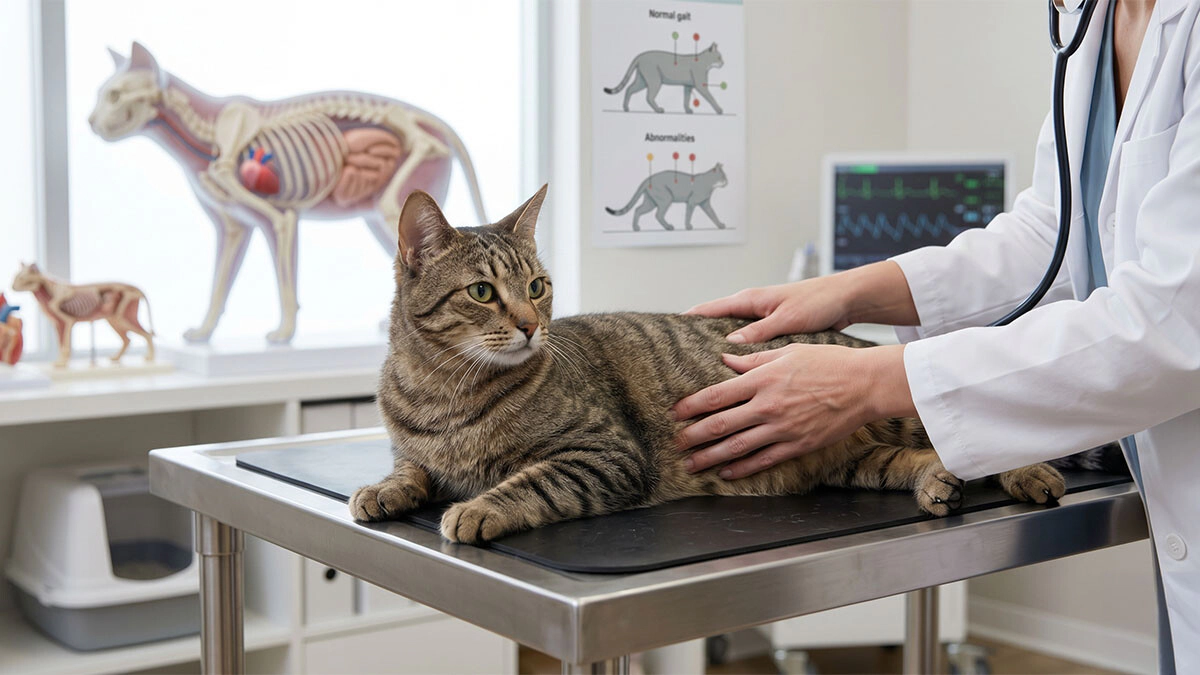
A slight change in posture, a slight limp in gait, or a difference in litter box habits in cats can give clues about their body systems. Therefore, having basic knowledge about cat anatomy and organs is important to make daily observations more meaningful.
Advertisement
A slight change in posture, a slight limp in gait, or a difference in litter box habits in cats can give clues about their body systems. Therefore, having basic knowledge about cat anatomy and organs is important to make daily observations more meaningful.
In this article, you can find basic information about the anatomy of cats; you can evaluate the relationship between the skeleton, muscles, internal organs, nervous system, and sensory organs and cat health in a more understandable way.
Warning: This content is prepared to explain the anatomy of cats and general health signs related to their body systems. It does not replace diagnosis, treatment, or medical guidance.
What is Cat Anatomy and Why is it Important for Cat Health?
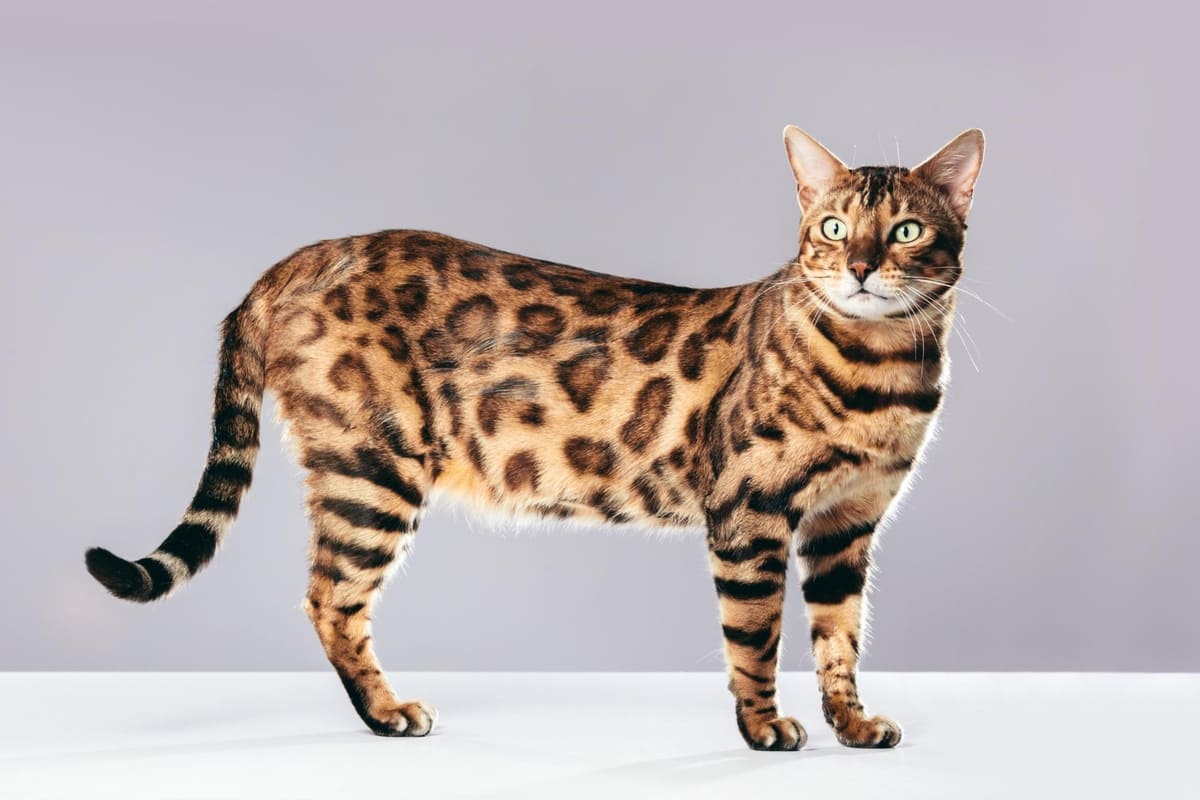
Cat anatomy is the totality of biological structures that enable a cat's flexibility, balance, mobility, ability to perceive its environment, and vital functions. Bones, muscles, internal organs, the nervous system, and sensory organs form the basic parts of this whole.
Each of these structures has a visible counterpart in a cat's daily life. The skeletal system provides support to the body. Muscles enable movements such as jumping, running, and climbing. Internal organs are involved in vital processes such as respiration, circulation, digestion, and urine production. The nervous system plays a role in the coordination of movements, reflexes, and responses to the environment.
The relationship between cat anatomy and health becomes clear at this point. Changes in a cat's gait, breathing patterns, appetite, water intake, toilet habits, or posture may be related to different body systems.
Cat Skeletal Structure and Bone System
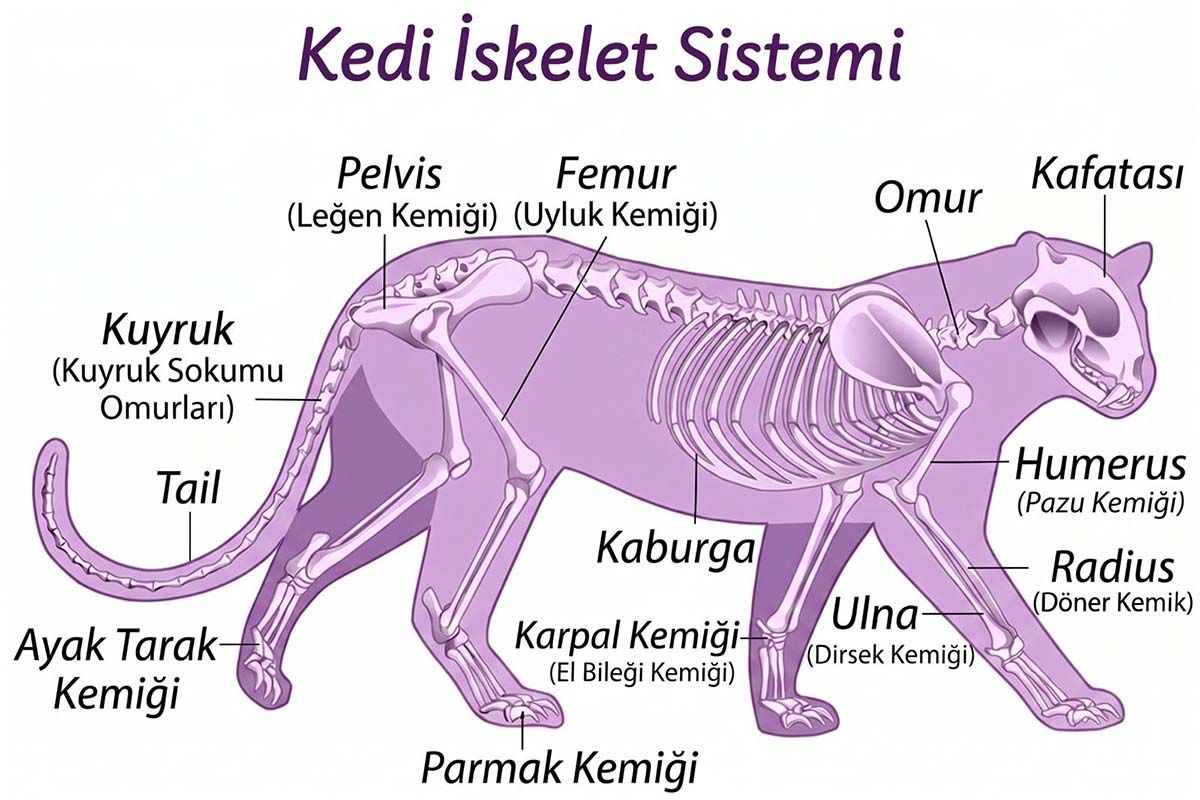
Image is representative.
Cats have a light, flexible, and strong skeleton. It is stated that adult cats have approximately 230 bones. This number may vary due to tail length and individual anatomical differences.
As shown in IMAIOS vet-Anatomy's feline osteology atlas, the cat skeletal structure consists of the skull, spine, rib cage, forelimbs, hindlimbs, and tailbone.
- The skull contains the cranium, mandible, maxilla, nasal bone, and zygomatic bone.
- The spine consists of the cervical vertebrae, thoracic vertebrae, lumbar vertebrae, sacrum, and caudal vertebrae.
- The rib cage contains the ribs and sternum.
- The forelimbs contain the scapula, humerus, radius, and ulna; In the hind legs, the pelvis, femur, tibia, and fibula protrude forward.
- Patilerde ise metacarpal/metatarsal kemikler ve phalanges (parmak kemikleri) bulunur.
One of the most surprising features of this system is the clavicle. Unlike humans, cats' clavicles are not attached to the rib cage by bone. They are embedded in muscles and float.
Functions of the Spine, Ribs, Legs, and Tailbones
The spine supports the cat's back and provides flexibility to the body. The ability of cats to curl up, change direction suddenly, and regain their balance while jumping is related to this structure.
The ribs form the rib cage. They surround the area where the heart and lungs are located, providing a protective frame. The movement seen in the chest area when a cat breathes is related to this area.
The leg bones support walking, running, jumping, and climbing. The front legs help with balance during landings. The hind legs provide powerful propulsion during jumps and acceleration.
The tail, considered a continuation of the spine, helps the cat maintain balance when walking in narrow spaces and changing direction quickly. The cat's tail contains movable vertebrae called caudal vertebrae, and their number can vary from cat to cat.
As emphasized in the Catster resource, cats' tails also play an important role in cat body language expression. For detailed information, you can read our content on the Meanings of Cat Body Language.
How Do Bone and Joint Problems Affect Cat Movement?
Bones move thanks to joints. Joints are structures where two or more bones connect. Healthy joint function is necessary for a cat to walk, jump, and climb comfortably.
Cartilage is found at the ends of joints. Cartilage is a protective tissue that helps bones slide more easily during movement. When problems develop in the cartilage, movement may be restricted or pain may occur.
Kedi Kas Sistemi ve Hareket Kabiliyeti
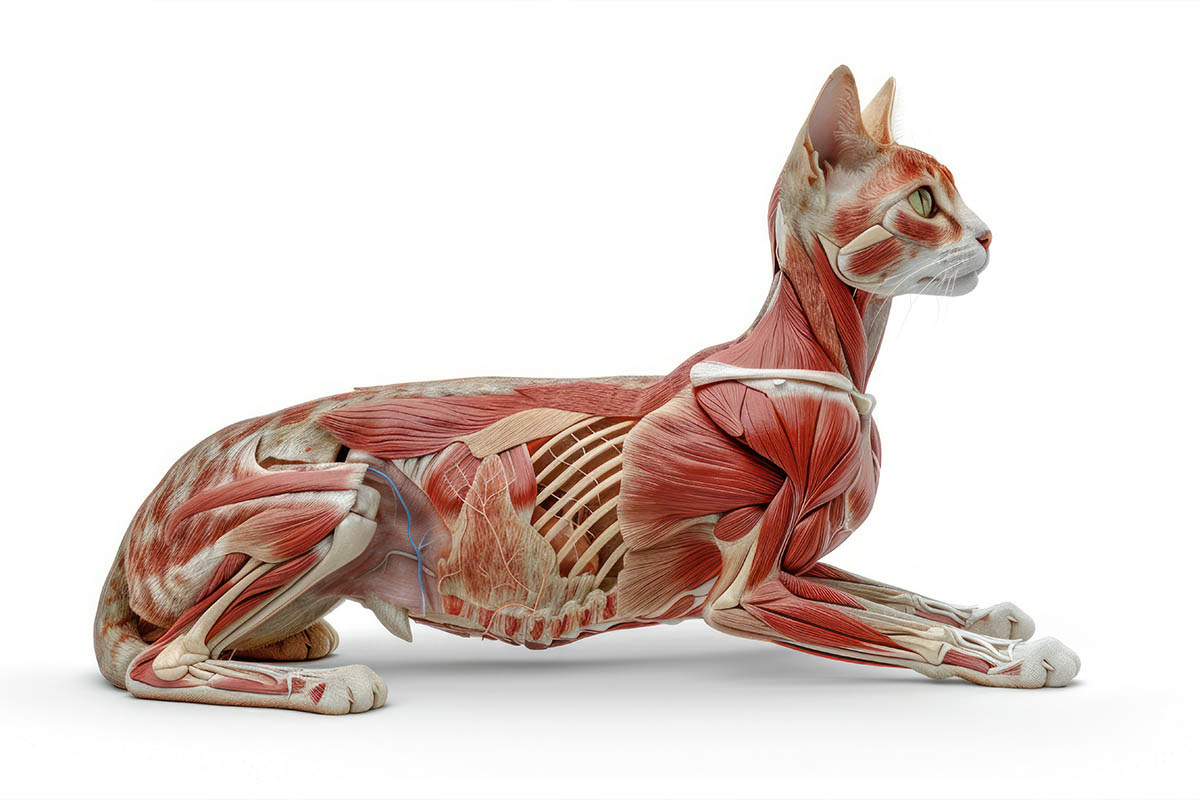
Image is for illustrative purposes only.
It's no coincidence that cats can quietly climb onto the edge of a chair, maintain their balance on a narrow surface, or suddenly accelerate after a toy. Behind these movements lies a strong, flexible, and responsive muscular system.
The cat's muscular system, working together with bones and joints, enables the cat to walk, jump, climb, and maintain balance.
Muscles initiate movement; tendons transmit this power to the bones, and ligaments help the joints move in a controlled manner.
Therefore, the cat's muscular system and mobility cannot be considered separately. When a cat jumps, it uses its hind legs for power, balances the landing with its front legs, and quickly recovers its body. Even a seemingly ordinary jump in daily life requires the harmonious working of muscles, bones, joints, and the nervous system.
Signs of Muscle Pain, Strain, and Restricted Movement in Cats
Muscle pain or strain in cats is not always noticeable with a clear meow or sudden reaction. Often the signs are more subtle. The cat may not want to climb as high as before, may stop playing more quickly, or may act as if protecting one paw while walking.
Restricted movement is sometimes visible in the cat's routine choices. It may be noticeable that it climbs to lower places, pauses on stairs, waits a long time before jumping, or avoids turning its body in a certain direction. If these changes are repeated, a veterinary evaluation should not be neglected.
The Role of the Muscular System in Jumping, Running, and Climbing Behaviors
Cats' agility is most noticeable when jumping, running, and climbing. In these movements, muscles, bones, joints, and tendons work together. Muscles initiate movement; tendons transfer this power to the bones; ligaments help the joints move more controllably.
The Merck Veterinary Manual states that skeletal muscles are responsible for posture and movement; tendons connect muscles to bones; and ligaments support and stabilize joints.
During climbing, muscle strength is accompanied by paws and claws. Cats' paw pads help them grip surfaces; sharp and curved claws support holding on. Therefore, climbing is related not only to strong muscles but also to the structure of the paws and claws.
When there is a malfunction in this system, the cat may change its behavior. Playing less, avoiding high places, or appearing unsteady while walking should not be considered a simple change in temperament. Veterinary examination is necessary, especially if accompanied by pain, lameness, or significant weakness.
Cat Internal Organs and Their Basic Functions
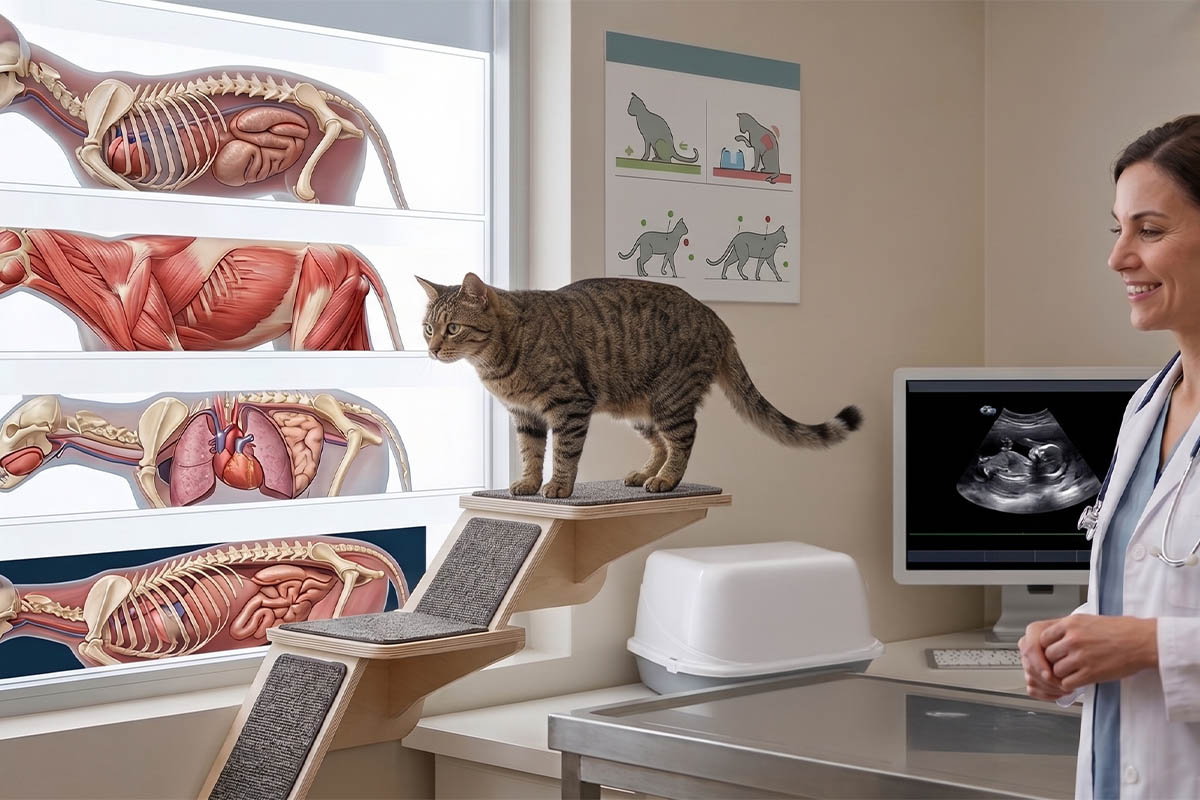
Visual representation.
Cat internal organs manage many processes, from the cat's breathing and feeding to its energy and toilet habits. Decreased appetite, changes in breathing, vomiting, diarrhea, constipation, frequent urination, or lethargy may be related to different internal systems. Heart and Circulatory System The heart is the organ that pumps blood throughout the body. Vessels carry this blood to the tissues, helping to supply them with oxygen and nutrients. A cat getting tired easily, not wanting to move, changes in breathing, or showing noticeable lethargy may be related to the circulatory system. These symptoms alone do not constitute a diagnosis. However, they are among the observations that should be shared with a veterinarian. Important: VCA Animal Hospitals emphasizes that changes in energy level, general appearance, and breathing in cats are among the symptoms that should be shared with a veterinarian.
Heart and Circulatory System
The heart is the organ that pumps blood throughout the body. Vessels carry this blood to the tissues, helping to supply them with oxygen and nutrients.
The cat getting tired easily, not wanting to move, changes in breathing, or showing noticeable weakness may be related to the circulatory system. These symptoms alone do not constitute a diagnosis. However, they are observations that should be shared with a veterinarian.
Important: VCA Animal Hospitals emphasizes that changes in energy levels, general appearance, and respiration in cats are among the signs that should be shared with a veterinarian.
Lungs and Respiratory System
The lungs allow the cat to take in oxygen and remove carbon dioxide from the body. Air enters through the nose, passes through the trachea and airways, and reaches the lungs.
Open-mouth breathing, rapid breathing, wheezing, or difficulty breathing with abdominal movement in cats should be taken seriously. Difficulty breathing, especially at rest, requires immediate veterinary evaluation.
Stomach, Intestines, and Digestive System
Digestion begins in the mouth; it continues through the stomach, intestines, and defecation. The cat's digestive system breaks down and absorbs food and removes waste from the body.
Vomiting, diarrhea, constipation, loss of appetite, increased salivation, or difficulty defecating in cats may be related to the digestive system. However, not every instance of vomiting directly indicates a stomach problem. Therefore, the overall picture should be evaluated in cases of recurring symptoms.
Kidneys, Bladder, and Urinary System
The kidneys are vital filtering organs. The bladder temporarily stores urine, and the urethra, or urinary canal, allows urine to be expelled.
Frequent entry and exit from the litter box, difficulty urinating, bloody urine, or urinating outside the litter box may be related to the urinary system. Pollakiuria (frequent urination) and hematuria (blood in the urine) are also examples of prominent findings in this area.
Important: Inability to urinate requires immediate veterinary evaluation. This symptom should not be ignored, especially in male cats.
The Role of the Liver and Pancreas in Metabolism
The liver and pancreas are organs involved in digestion and energy balance. The liver plays a role in many metabolic processes in the body. The pancreas is involved in digestive secretions and hormones related to blood sugar.
Problems with these organs are not always understood with a single symptom. Loss of appetite, weight loss, vomiting, lethargy, or changes in stool may occur together.
The most valuable thing you can do at home is to recognize your cat's normal routine. If changes in water intake, appetite, stool, urine, energy, and behavior are noted, more precise information can be given during a veterinary examination.
Cat Nervous System and Sensory Organs
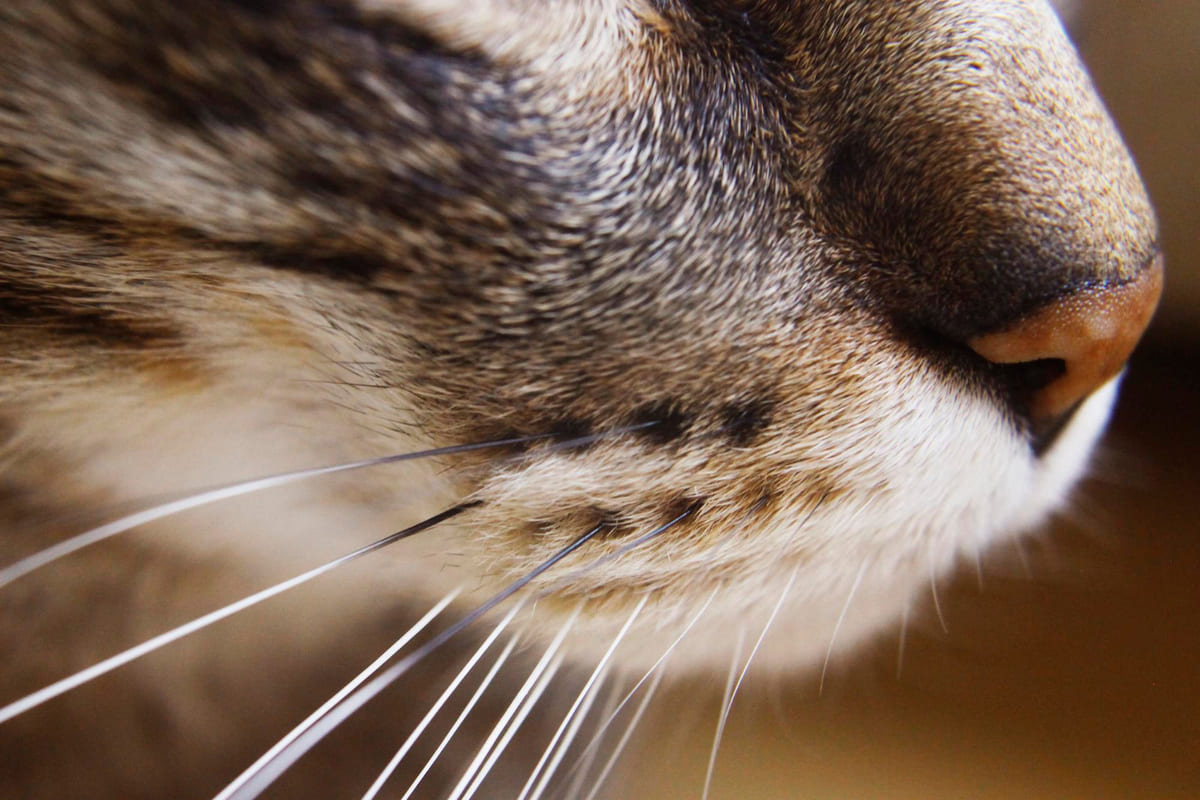
The agility of cats cannot be explained solely by muscle strength. The eyes following a moving toy, the paws changing position at the right moment, and the body maintaining balance are all related to the nervous system.
The cat nervous system consists of the brain, spinal cord, and nerves extending throughout the body. The brain plans movements, the spinal cord communicates between the brain and the body, and the nerves carry messages to the muscles and organs.
Thanks to this structure, cats walk, jump, change direction, react to sounds, and perceive risks in their environment. A developed nervous system and strong reflexes give cats the fast, attentive, and balanced structure we know.
The Role of the Brain, Spinal Cord, and Nerves in Movement Control
The brain is the main center that controls a cat's movements. The cerebrum (big brain) is associated with behaviors and conscious responses. The cerebellum (small brain) is responsible for balance and coordination.
The spinal cord acts as the main communication line between the brain and the body. Nerves carry messages along this line to the muscles, skin, and organs.
When this system works harmoniously, the cat can easily jump into a narrow space, change direction without falling, and quickly regain its balance. If sudden imbalance, trembling, weakness, or loss of coordination is noticed, a veterinary examination is necessary.
The Role of Eyes, Ears, Nose, and Whiskers in a Cat's Perception of the Environment
Cats read their environment using many senses. The eyes track movement, the ears help distinguish the direction of sound, and the nose carries olfactory information.
Whiskers, or vibrissae, are specialized hairs that help a cat perceive its environment. When they come into contact with a surface or vibrate with air currents, they contribute to the transmission of information about the environment through nerves in the hair follicles.
This sensory system affects a cat's hunting, hiding, playing, and security behaviors. Changes related to vision, hearing, smell, or balance can be noticed in daily behaviors.
What Could Balance, Reflex, and Coordination Problems Indicate?
Cats are known for their excellent body control. Therefore, changes such as "they're walking a little strangely today," "they seem unable to maintain their balance," or "they look like they're about to bump into something" should be taken seriously. Stumbling, tilting the head to the side, falling, bumping into things, or sudden disorientation should be carefully monitored.
Slowed reflexes, uneven paw placement, or the cat appearing unsteady while moving may be related to the nervous system. Since ear structures also play a role in balance, it is not correct to interpret the situation based on a single symptom.
Important: If the symptom started suddenly, appeared after trauma, or is accompanied by seizure-like movements, veterinary evaluation should not be delayed.
The Relationship Between Cat Anatomy and Diseases
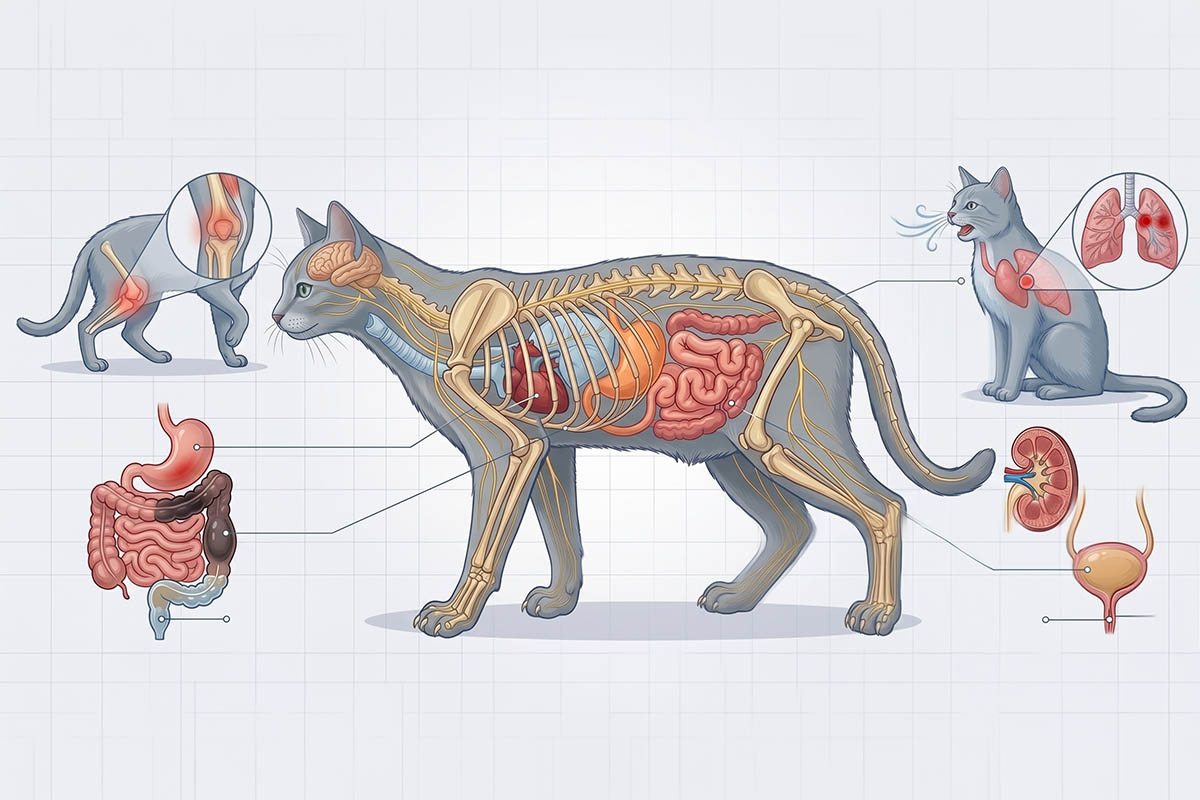
This is a visual representation.
The relationship between cat anatomy and diseases is often noticeable in a cat's daily routine. A cat's gait, breathing pattern, appetite, toilet habits, coat care, and posture can provide clues about different systems in the body.
For example, if a cat;
- Limps, bone, joint, muscle, tendon, or ligament tissue may be affected.
- Difficulty breathing, the respiratory system should be evaluated.
- Vomiting, diarrhea, or constipation may be related to the digestive system.
- Frequent urination, difficulty urinating, or blood in the urine are considered signs of a urinary system problem.
The critical point here is not to interpret symptoms in isolation. The same symptom may be related to different systems. For example, vomiting is sometimes related to the digestive system, and sometimes it may be a symptom of another problem in the body. Therefore, while observation at home is valuable, it does not replace diagnosis.
How to Use Anatomical Information to Support Cat Health?
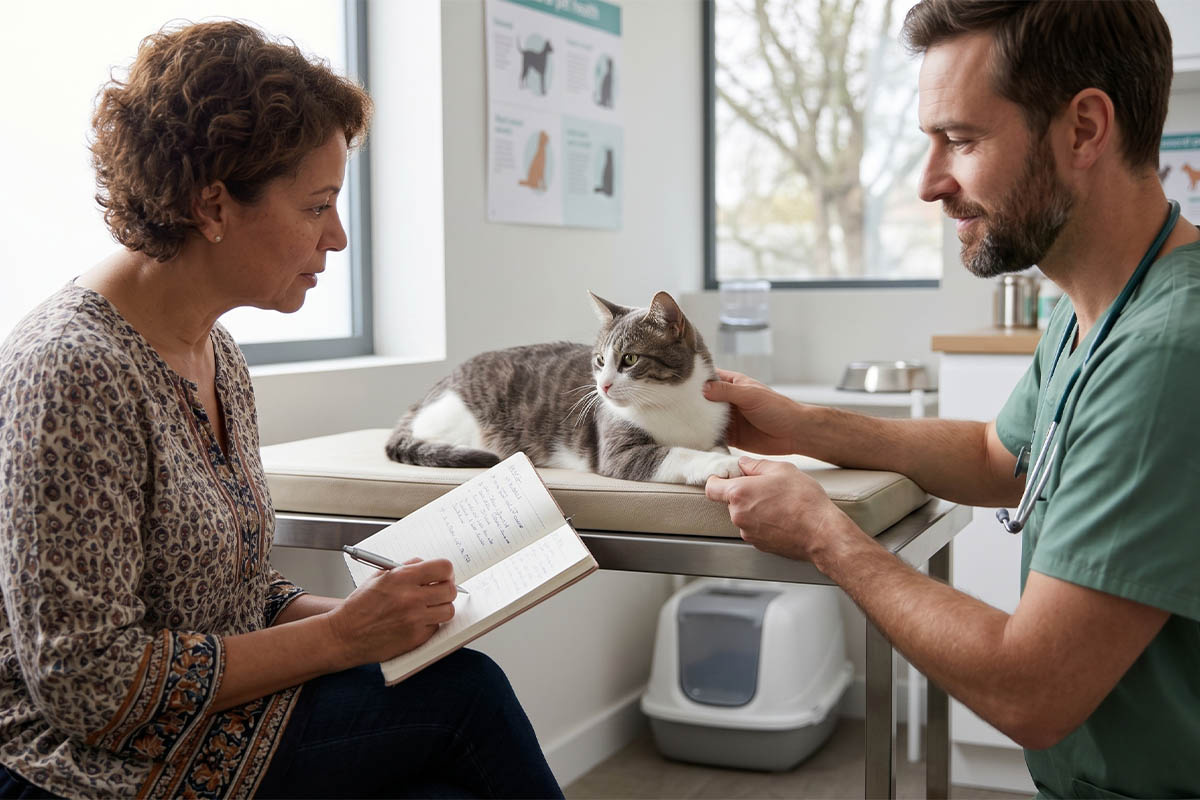
The link between cat anatomy and health is more visible in daily life than we realize. A cat's gait, jumping, breathing, eating, and litter box habits provide powerful clues to the pet owner.
Therefore, instead of simply saying "a little sluggish lately" during routine veterinary checkups, it's valuable to share more specific observations: How long has it been jumping less? Has its appetite changed? Has its water intake increased? Is it going to the litter box more often? How many times has it vomited or changed its stool?
All the details mentioned help the veterinarian to better understand the situation. It also provides a practical way for the pet owner to observe their cat more consciously. When the musculoskeletal system, internal organs, nervous system, and sensory organs are considered together, small changes at home become much more meaningful.
Frequently Asked Questions
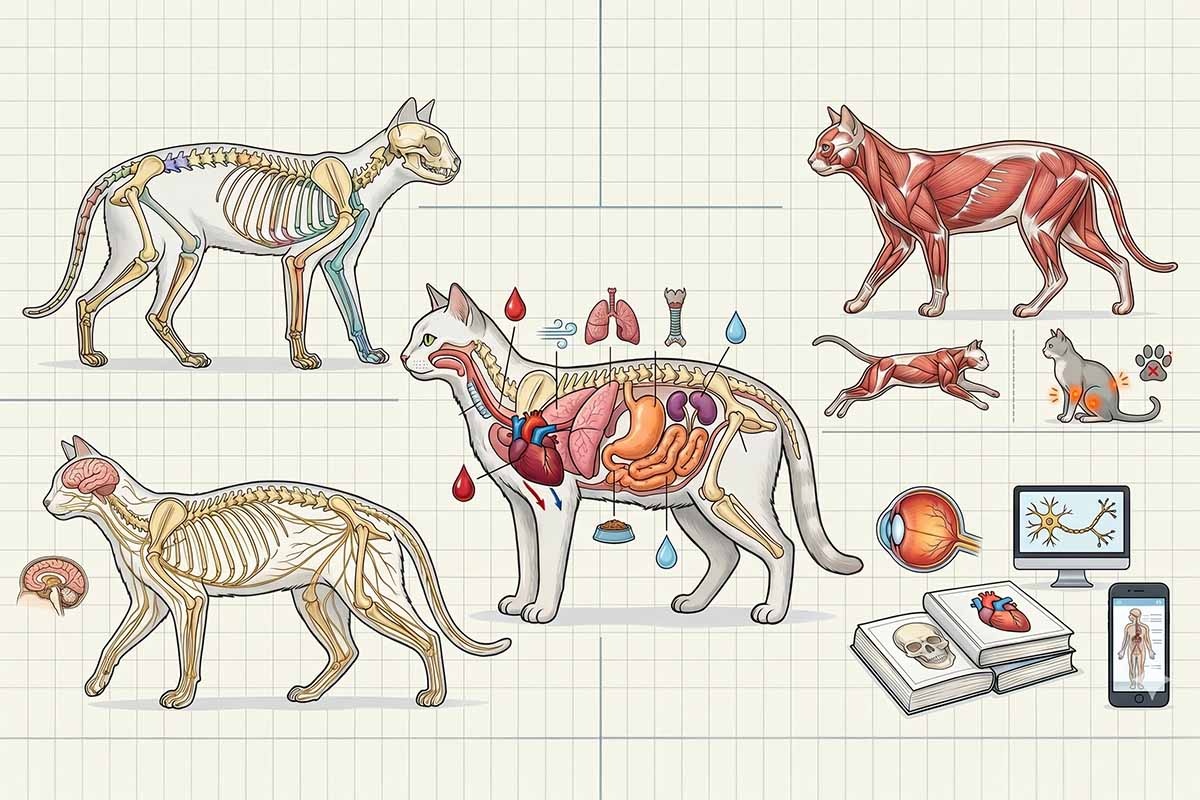
Image is for illustrative purposes only.
How is the cat's skeletal structure formed and what bones are used to make it up?
The cat's skeletal structure consists of the skull, spine, ribs, forelimbs, hind limbs, and tailbone. The number of bones in cats is generally given as approximately 230-250 in sources. This range is related to individual differences, especially in the tail vertebrae.
How does the cat's muscular system work and what are the causes of muscle pain?
The cat's muscular system works in conjunction with bones and joints. Reduced movement, avoidance of jumping, or limping should be carefully monitored.
What are the functions of the cat's internal organs and how do they affect health?
The heart is involved in blood circulation, the lungs in respiration, the stomach and intestines in digestion, and the kidneys and bladder in the urinary system. The liver and pancreas are connected to metabolic and digestive processes. Problems with a cat's internal organs can be noticed through changes in appetite, breathing, stool, urine, and energy levels.
How does the feline nervous system control the cat's movement system?
The feline nervous system consists of the brain, spinal cord, and nerves. The brain directs movements, the spinal cord provides communication between the body and the brain, and the nerves carry messages to the muscles. Thanks to this system, the cat maintains its balance, gives reflexes, and reacts quickly to its environment.
What resources and methods are recommended for learning cat anatomy?
To understand cat anatomy, veterinary medicine resources, anatomy atlases, skeletal drawings, and organ diagrams can be used. Visuals can make it easier to understand how bones, organs, and basic structures related to the movement system are generally positioned.
Why is cat bone structure important for cat health?
Cat bone structure supports the body, protects internal organs, and provides solid surfaces for muscles to attach to. Bone and joint problems can affect a cat's walking, jumping, climbing, and play behavior. If lameness or avoidance of movement is noticed, a veterinary check-up is necessary.
How can cat anatomy visuals be used in the educational process?
It is truly beneficial to examine the anatomical structures of cats step by step with the help of visuals. Skeletal drawings will make it easier to understand the bones, organ diagrams the internal structure, and moving visuals the muscle and joint connections. Simple drawings prepared for children and detailed diagrams for adults will be more appropriate.
Kaynaklar
https://www.merckvetmanual.com/cat-owners/introduction-to-cats/physical-description-of-cats
https://www.merckvetmanual.com/cat-owners/bone-joint-and-muscle-disorders-of-cats/components-of-the-musculoskeletal-system-in-cats https://www.merckvetmanual.com/cat-owners/bone-joint-and-muscle-disorders-of-cats/lameness-in-cats
https://www.imaios.com/en/vet-anatomy/cat/cat-osteology2
https://www.merckvetmanual.com/circulatory-system/cardiovascular-system-introduction/the-cardiovascular-system-in-animals
https://www.merckvetmanual.com/respiratory-system/respiratory-system-introduction/the-respiratory-system-in-animals
https://www.merckvetmanual.com/cat-owners/digestive-disorders-of-cats/introduction-to-digestive-disorders-of-cats
https://www.merckvetmanual.com/cat-owners/brain-spinal-cord-and-nerve-disorders-of-cats/parts-of-the-nervous-system-in-cats
https://vcahospitals.com/know-your-pet/recognizing-signs-of-illness-in-cats
https://www.catster.com/cat-health-care/cat-anatomy/
Advertisement
Advertisement
Keep exploring
Continue reading
Cat Health
Why Do Cats Get Thinner as They Age? Symptoms and Treatment
When stroking an aging cat's back, the spine or hip bones may feel more prominent than before, which is the first change most cat owners notice.
Read guide →
Cat Health
How to Acclimate Cats to Carrier Bags?
Does your cat hide, hiss, or resist with all its might the moment it sees the carrier? This reaction is described as carrier phobia in most homes…
Read guide →
Cat Health
What Should Be Considered After Vaccination in Cats?
Following your cat's vaccination schedule for health and a long life is one of the most critical decisions you will make as a pet owner.
Read guide →
Cat Health
Pica Syndrome in Cats and Dogs
Have you noticed your pet constantly gravitating towards non-edible materials like plastic, fabric, or stone?
Read guide →