Do Cats Miss Their Owners? Signs That Your Cat Misses You
“Do cats miss their owners?”, “Do our furry friends miss our presence when we are not home?” We are sure that many people who share their lives with them wonder about the answers to these questions.
Advertisement
“Do cats miss their owners?”, “Do our furry friends miss our presence when we are not home?” We are sure that many people who share their lives with them wonder about the answers to these questions. Although it is quite common to think that cats are independent creatures who do not need human presence, the truth is that our cute friends can form stronger bonds with us than we think.
We all have a special bond with our cats, and although we want them to be with us all the time when we're home, our relationships can be shaped by the cats' own routines and preferences. Since our cats show us attention all the time and don't make their presence felt as much as dogs, the answer to the question "Do cats miss their owners?" remains unclear for many people. In this article, we will present various opinions on whether cats miss their owners.

Do Cats Miss Their Owners?
Cats can bond with their owners in different ways. While it's not accurate to directly associate them with the feeling of longing we experience, we can say that there are many studies that question the relationship between cats and humans, especially whether cats miss their owners. The results of these studies show that cats can bond with their owners. Bonding refers to a psychological connection that motivates the individual to maintain closeness and contact with the person responsible for their care. It is thought that a similar form of attachment, a survival technique used by infants to obtain security and resources, exists between cats and humans. Indeed, research confirms this claim. A 2019 study found that cats have various attachment styles similar to those of dogs and humans. Three attachment models were tested in the study. The knowledge that secure attachment exists between cats and humans refers to the depth of the human-cat relationship. In other words, the answer to the question "Do cats miss their owners?" can be considered yes; only the bond they form and the signs of longing they show when their owners return are unique to them! Furthermore, cats, like dogs, can experience separation anxiety. While they may not react as strongly and destructively as dogs when separated from their owners, cats can also develop anxiety when separated. It is known that abandoned cats or those who are not properly socialized have a higher risk of developing separation anxiety. This information brings us back to the secure attachment we just discussed. Separation anxiety is less likely to develop in cats that are securely attached! Therefore, how we communicate with them is crucial. It's also important to know the signs of separation anxiety in cats. When cats "miss" their owners and develop anxiety, they may vomit, urinate on the bed or people's clothes, and put on an exaggerated welcome when their owners return. It's also important to know that some may show signs of depression and physical illness.
A study conducted in 2019 found that cats share various attachment styles similar to dogs and humans. Three attachment models were tested in the study. The fact that secure attachment exists between cats and humans refers to the depth of the human-cat relationship. In other words, the answer to the question "Do cats miss their owners?" might be yes; however, the bond they form and the signs of longing they show when their owners return are unique to them!
Furthermore, cats, just like dogs, can experience separation anxiety. While they may not react as strongly or destructively as dogs when separated from their owners, cats can still develop anxiety when separated. It is known that abandoned cats or those who haven't been properly socialized are at a higher risk of developing separation anxiety. This brings us back to the secure attachment we just discussed. Cats with secure attachments are less likely to develop separation anxiety than others! Therefore, how we interact with them is crucial. It's also important to know the signs of separation anxiety in cats. When cats "miss" their owners and develop anxiety, they may vomit, urinate on the bed or people's clothes, and put on an exaggerated welcome when their owners return. It's also important to know that some may show signs of depression and physical illness.

How Do Cats Show They Miss Us?
Putting aside all scientific research, we sometimes instinctively feel that our cats really miss us. If we're lucky enough, we can observe from their body language that they miss us and are at least happy to see us. Being greeted with a tail held high the moment you open the door is the clearest sign of great happiness. Cats actively use their tails to express their emotions, and a tail held high during a greeting can be interpreted as "welcome, it's good that you're here." If they also touch your legs and let you hear their lovely meows, know that you are truly missed. For those who answer "yes" without hesitation to the question "Do cats miss their owners?", purring is also among the most important signs of longing. Our feline friends, who start purring when they see their owners coming home, and who get up from where they are lying and stretch and curl up more, tell us their love and longing in their own language. Then there are playful cats who, after a loving welcome, may bring their favorite toys to their humans. They may even let you pet their bellies during this time. However, the signs of longing in cats aren't always as loving as those mentioned above. Every cat is unique, and just as humans sometimes express their longing with happiness and sometimes with indifference, it should not be forgotten that cats can also exhibit similar differences. Cats experiencing separation anxiety may be completely unresponsive when their owners return home, may have already made a mess, may have urinated on furniture or outside their litter box, and, although rare, may exhibit lethargic behavior to the point of giving the impression that they are ill.
The signs of longing in cats may not always be as loving as we just mentioned. Every cat is unique, and just as humans sometimes express their longing with happiness and sometimes with indifference, it should not be forgotten that cats can also have similar differences. Cats experiencing separation anxiety may not be at all interested when their owners return home, they may have already messed up the house, they may have urinated on furniture or outside their litter box, and, although rare, they may exhibit lethargic behavior to the point of giving the impression that they are ill.
Advertisement
Advertisement
Keep exploring
Continue reading
Cat Health
Why Do Cats Get Thinner as They Age? Symptoms and Treatment
When stroking an aging cat's back, the spine or hip bones may feel more prominent than before, which is the first change most cat owners notice.
Read guide →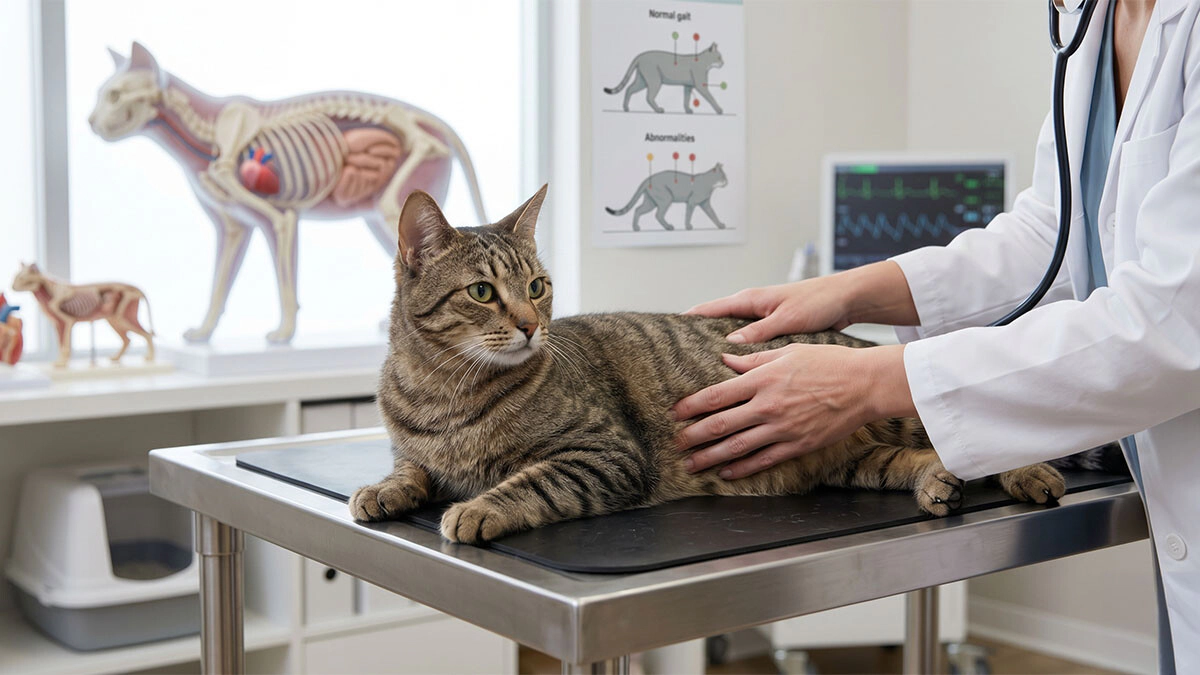
Cat Health
Cat Anatomy and Organs: Body Structure, Health Signs and Relationship with Diseases
A slight change in posture, a slight limp in gait, or a difference in litter box habits in cats can give clues about their body systems.
Read guide →
Cat Health
How to Acclimate Cats to Carrier Bags?
Does your cat hide, hiss, or resist with all its might the moment it sees the carrier? This reaction is described as carrier phobia in most homes…
Read guide →
Cat Health
What Should Be Considered After Vaccination in Cats?
Following your cat's vaccination schedule for health and a long life is one of the most critical decisions you will make as a pet owner.
Read guide →