Frequently Asked Questions About Stingrays: Species, Habitat and Feeding Habits
The stingray is among the most interesting creatures of the seas with its unique body structure and lifestyle. It differs from other fish with its flattened body, broad fins resembling wings, and its mostly bottom-dwelling lifestyle.

Advertisement
The stingray is among the most interesting creatures of the seas with its unique body structure and lifestyle. It differs from other fish with its flattened body, broad fins resembling wings, and its mostly bottom-dwelling lifestyle.
The creatures referred to as stingrays are not all the same type. Stingray species living in the seas, freshwater stingrays, and some bottom-dwelling fish commonly known as "dwarf stingrays" in the aquarium world have different characteristics. Therefore, it is important to make the correct classification when evaluating their habitats, feeding habits, and care requirements.
In this article, you can learn about the most frequently asked questions about stingrays, from their basic characteristics and species to their natural habitats and feeding habits.
Warning: This content is for general informational purposes only. Expert advice should be sought regarding stingray species selection, aquarium setup, water parameters, care plans, or injuries after contact.
What is a Stingray?
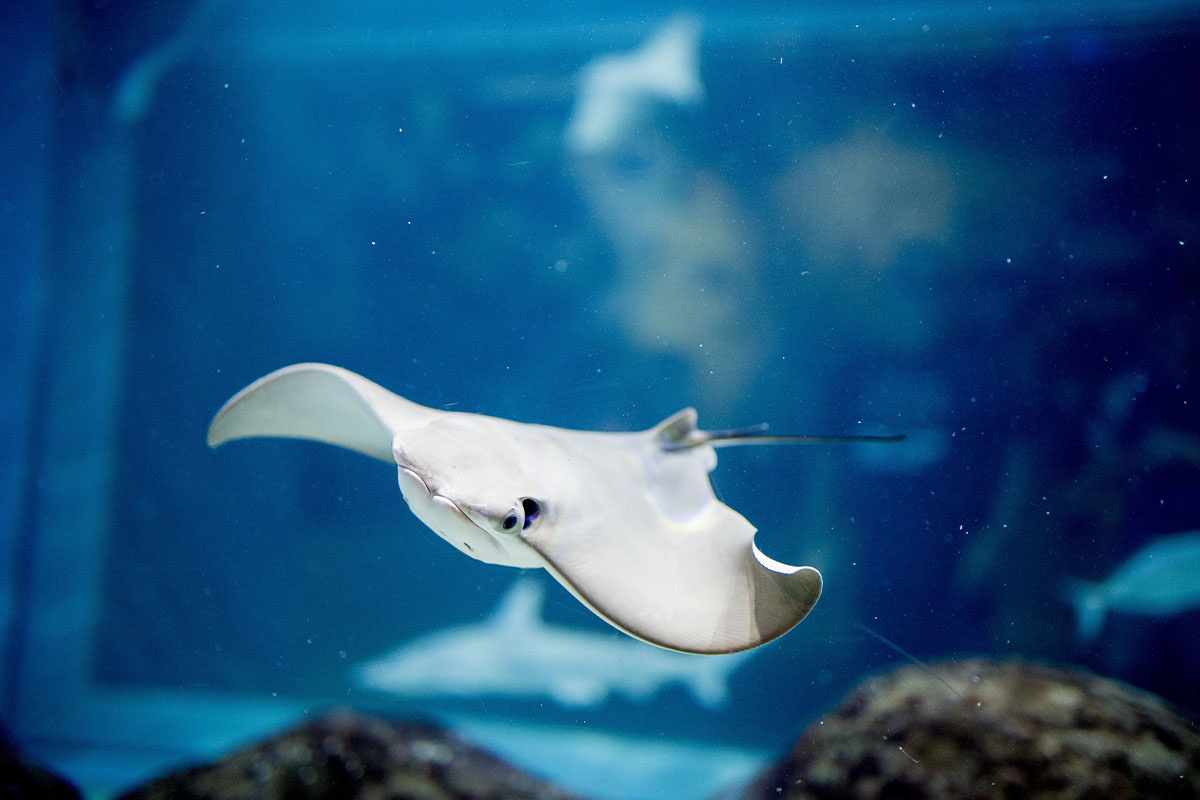
A stingray is a flat-bodied fish with a more flexible skeletal structure than bony fish.
As emphasized in BBC Earth's general description of stingrays, it is not correct to describe these creatures with a single behavioral pattern. Some species live close to the seabed, while others move in wider areas. Bottom-dwelling fish known as "stingrays" in aquariums should be considered separately.
The most striking feature of stingrays is their flattened body structure. Thanks to this structure, stingrays can glide easily on sandy or muddy bottoms.
The Florida Museum Biology emphasizes that having their eyes on top and their mouths on the bottom provides a significant advantage for species searching for food on sandy or muddy bottoms.
Another important thing to know about stingrays is that they don't rely solely on their sense of sight when searching for crustaceans, mollusks, worms, and small creatures on the bottom. They have sensory systems that help them sense the movements and location of creatures under the sand.
Some stingrays have spines on their tails. These spines are used for self-defense, not hunting. When threatened, a stingray can reflexively move its tail.
Differences Between Stingrays and Sharks
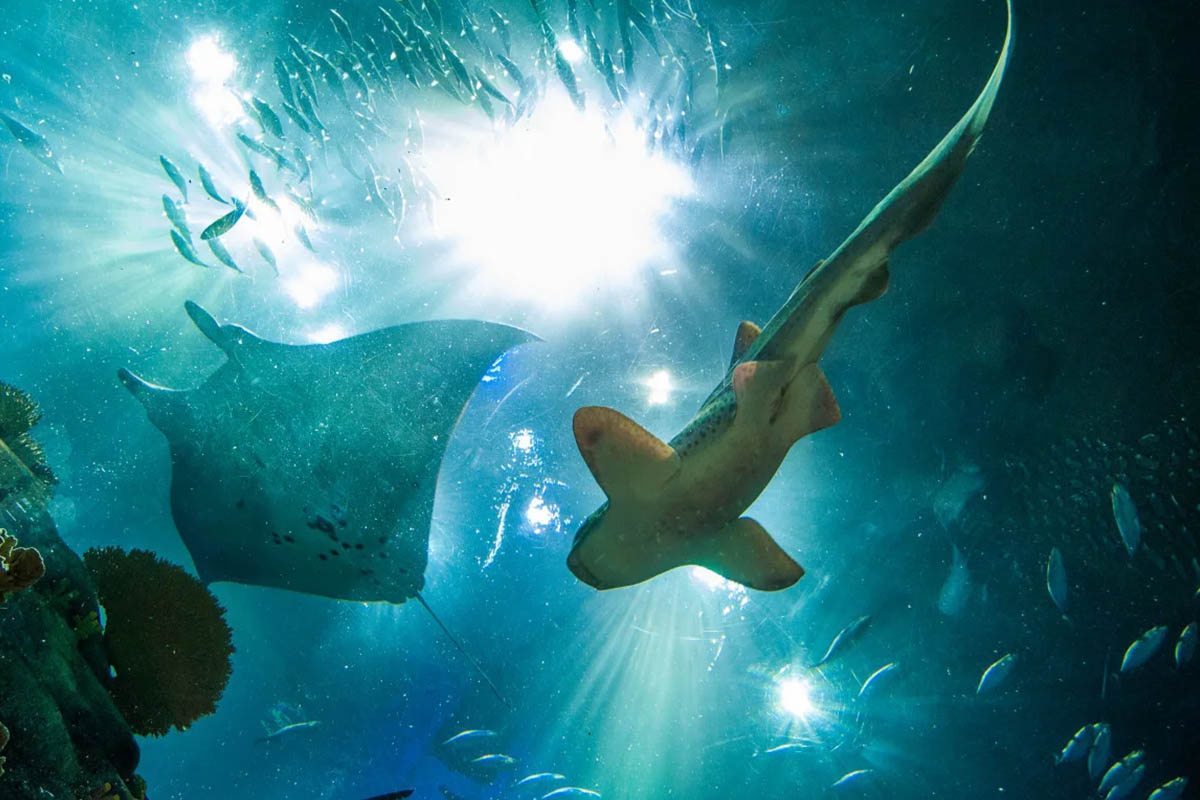
Stingrays and sharks belong to the same large group of fish. Both have different skeletal structures than bony fish. Despite this, their appearances and lifestyles are quite different.
Sharks are mostly long-bodied creatures adapted to swimming in open water. Stingrays have flatter bodies. Their broad fins look like wings. The mouth is located on the underside.
Since stingrays and sharks belong to the same fish group, the question is, "Are stingrays dangerous?"
Stingrays are generally not creatures that target humans. The risk is greater in shallow waters from being stepped on unnoticed, attempts to handle, or being cornered.
Poison Control states that most stingray injuries are not caused by the animal attacking humans, but by contact such as being stepped on or handled unintentionally. In species with tail spines, contact can lead to severe pain, puncture wounds, and tissue damage.
This is especially relevant when walking barefoot in shallow waters. In areas where stingrays are seen, it is safer not to touch the animal, not to handle a caught stingray, and to be careful when walking on the bottom.
Caution: Seek medical attention if there is a deep wound, severe pain, bleeding, or contact with the abdomen, chest, or neck area after stingray contact. In an aquarium, the risk varies depending on the species, size, and keeping conditions. Therefore, single-sentence statements like "completely harmless" or "definitely dangerous" are not accurate for stingrays.
What are the Types of Stingrays?
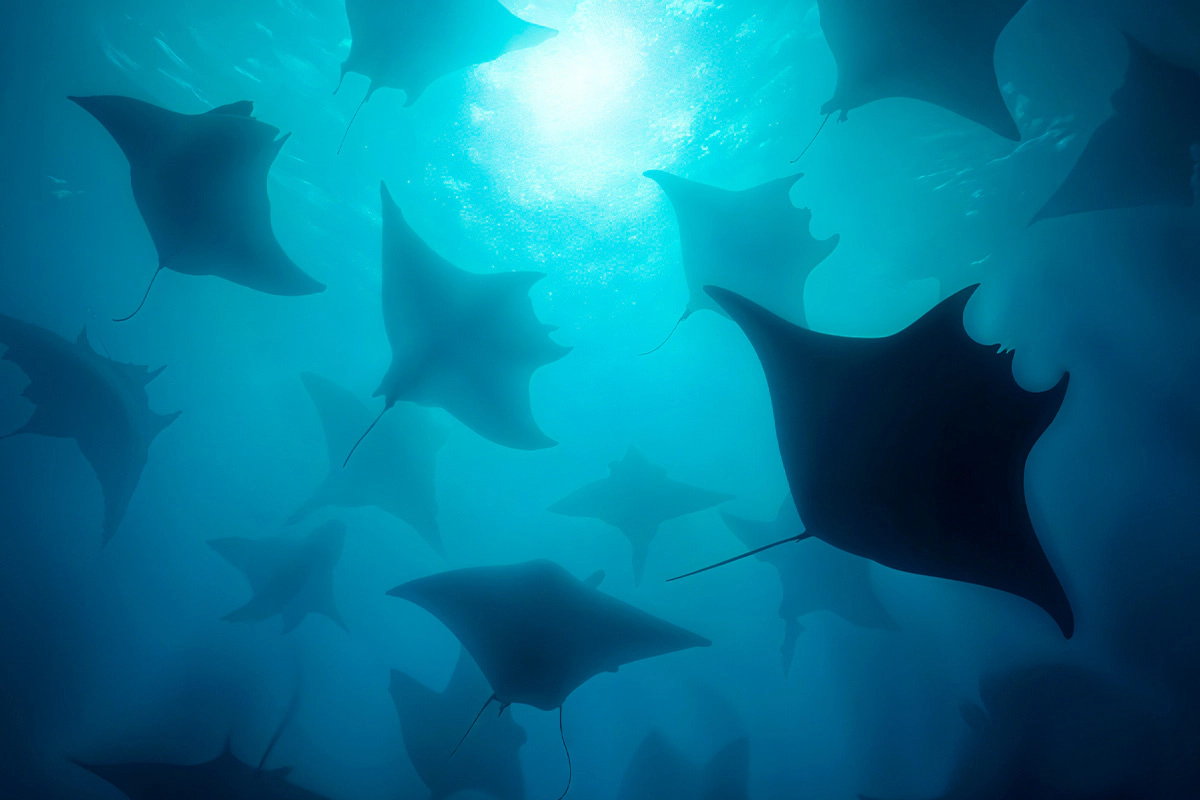
Stingray species vary according to habitat, body structure, tail shape, adult size, and feeding habits. Some stingrays live in the sea. Some are found in freshwater rivers. Some fish sold as "stingrays" in aquariums are not true stingrays.
The Florida Museum Species Profiles includes different examples such as the southern stingray, blue-spotted stingray, eagle stingray, and manta ray species. These species differ from each other in terms of body shape, tail structure, habitat, and adult size.
Making this distinction is also necessary for care purposes. Stingrays, freshwater stingrays, and dwarf stingrays found in aquariums do not have the same needs.
Stingrays
Stingray is a general term used for species of stingrays that live in saltwater. Britannica states that stingrays have a wide distribution in the world's oceans and that many species live near the seabed. These creatures can live in sandy shores, around rocky and coral areas, in shallow waters, or in areas close to the seabed.
Some stingrays have a tail spine. The spine is used more for defense than for catching prey. When a stingray feels threatened, it can move its tail rapidly.
Stingrays are not uniform. Some species live closer to the bottom. Some species move over a wider area in the water. Body size, tail length, and habitat vary from species to species. The most well-known species of sea stingray can be listed as follows:
Southern stingray: The southern stingray is a true sea stingray found in sandy and muddy coastal bottoms. It is known for its broad, diamond-shaped body and movement close to the bottom. It can feed on bottom-dwelling mollusks, crustaceans, and small fish. The spine on its tail is for defense; it should not be touched by hand when seen in nature.
Blue-spotted stingray: The blue-spotted stingray is easily distinguished by the bright blue spots on its body. It can be found in tropical reef environments, sandy areas, and shallow waters. Its diet may include crustaceans, worms, mollusks, and small fish. It is a species that carries a tail spine.
Spotted Eagle Ray: The spotted eagle ray is known for its light-colored spots on its dark body. Thanks to its broad pectoral fins, it moves through the water with a movement that resembles a bird's wing. It can be seen in coastal waters, bays, and reef environments. Its mouth structure is suitable for crushing hard-shelled creatures.
Manta Ray: The manta ray is considered in a different group than the classic spiny tail rays. It glides in open water with its broad fins and feeds on plankton instead of hunting from the bottom. It can reach large sizes and is not suitable for aquariums.
Freshwater Rays
The term freshwater ray is used to describe true rays that live in river systems. Although it may seem interesting to those who want to set up an aquarium, it should not be considered as an ordinary bottom-dwelling fish.
Motoro freshwater stingray: The Motoro is one of the known freshwater stingrays originating from South America. Its round disc structure and patterned body attract the attention of aquarium enthusiasts. In its natural habitat, it lives in river systems; it can feed on crustaceans, invertebrates, and small fish. It is a species that requires a large substrate area, strong filtration, and experience.
Amazon freshwater stingray: Freshwater stingrays living in the Amazon basin are true stingrays that have adapted to river ecosystems instead of saltwater. Their bodies are disc-shaped, and they feed at the bottom. They give birth to live young. In an aquarium, their care requires much more comprehensive conditions than small bottom-dwelling fish.
Aquarium Stingrays
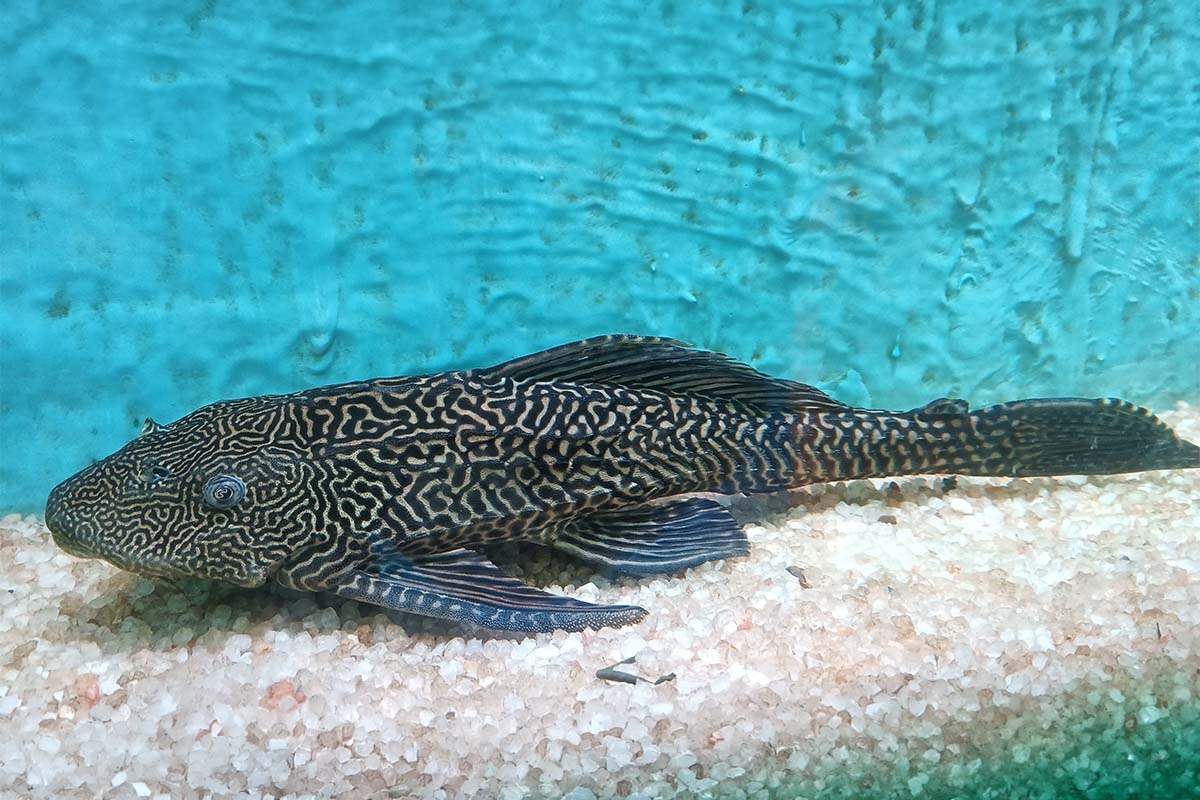
In aquariums, the name "stingray" is used in two different meanings. The first is true freshwater stingrays. These are creatures that require specialized knowledge, a large aquarium, and careful care.
Secondly, there are bottom-dwelling fish known as dwarf stingrays. These fish are not the same as the true stingrays with spiny tails found in the sea. They are aquarium fish that generally feed on glass surfaces, around decorations, or at the bottom.
Ancistrus: Ancistrus is one of the small, armored bottom-dwelling fish commonly found in aquariums. It is not a true stingray; it belongs to the Loricariidae family. In males, the distinctive extensions around the nose can be a distinguishing feature. Aquarium care includes providing suitable hiding places, plant-based foods, bottom-feeding food, and regular water monitoring.
Leopard stingray: Pterygoplichthys species sold under the name leopard stingray are large aquarium bottom-dwelling fish with patterned bodies. They are not true stingrays, but are known by this name in aquarium terminology. Because their adult size can be much larger than smaller species, they require a large aquarium. They are not suitable for long-term care in small tanks.
L144 Stingray: L144 is a common name used for light-colored Ancistrus varieties. It is not a true stingray, but belongs to the armored bottom-dwelling fish group. It can be seen foraging for food on glass, roots, and decorative surfaces. Despite its small size, it requires hiding places, proper feeding, and regular water parameters.
Where Do Stingrays Live?
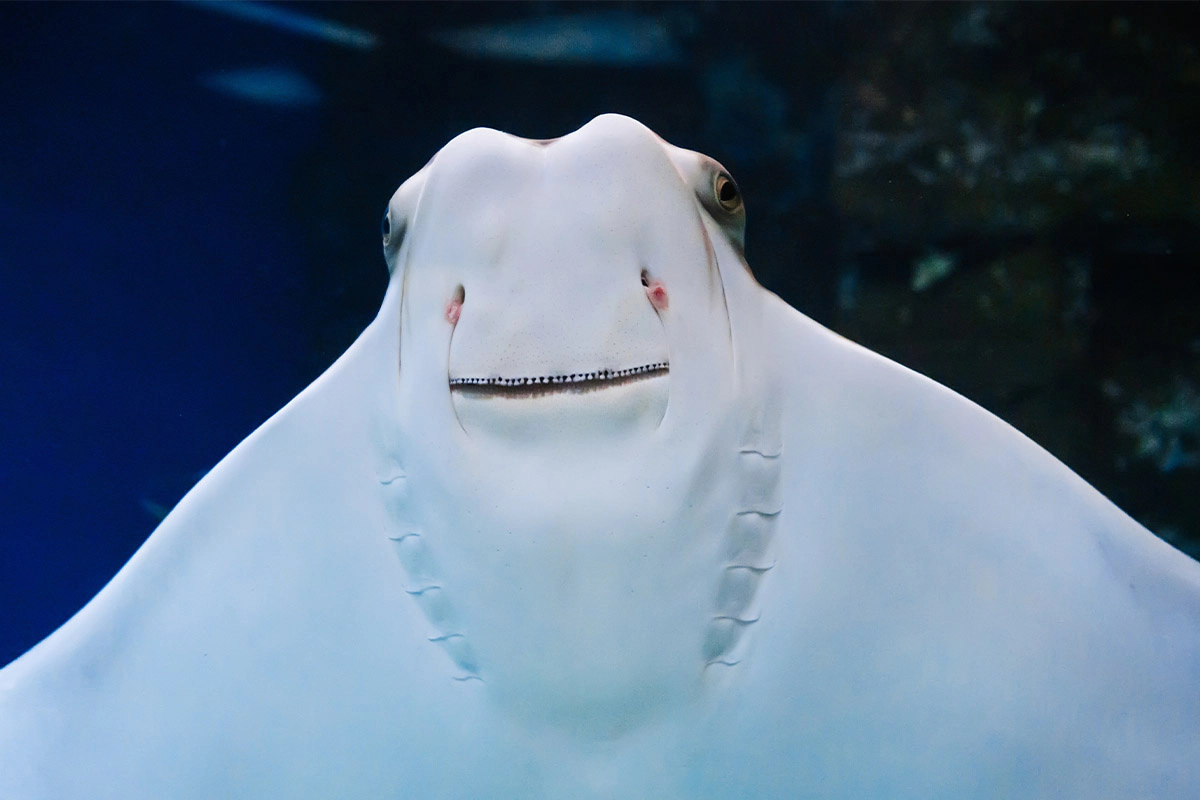
There is no single answer to the question, “Where do stingrays live?” Some stingray species live in tropical coastal areas, while others are found in open seas or freshwater; this diversity makes stingrays a biologically rich group.
The majority of stingrays live in the sea. Some species can be found in freshwater or areas where freshwater mixes with seawater. Many stingrays live near sandy or muddy bottoms. Their flattened body structure makes movement easier in these environments. The natural habitats of stingrays are often connected to the bottom of the water. Sandy bottoms, muddy bottom areas, shallow areas near the shore, rocky and coral environments may be suitable for different species. Species living in the sea can be found in warm and temperate waters. Freshwater species are found in more limited areas. Therefore, when describing stingrays, it is important to first clarify which species is being referred to. Some stingrays may remain partially buried in the sand in shallow waters. This behavior can be observed while hiding, resting, or searching for prey. It makes them difficult to spot from the outside.
The natural habitats of stingrays are often connected to the bottom of the water. Sandy bottoms, muddy bottom areas, shallow areas near the shore, rocky and coral environments may be suitable for different species.
Species living in the seas can be found in warm and temperate waters. Freshwater species are found in more limited areas. Therefore, when describing a stingray, it's important to first clarify which species is being referred to.
Some stingrays may remain partially buried in the sand in shallow water. This behavior can be observed while hiding, resting, or searching for prey. They are difficult to spot from the outside.
Freshwater species live in river systems. Some stingrays can also be found in areas where freshwater and saltwater mix. Bottom regions are areas compatible with the stingray's body structure and feeding habits.
How Do Stingrays Behave According to Their Habitat?
The behavior of a stingray can vary depending on its environment. Species living on sandy bottoms move close to the bottom. Some integrate with their surroundings by burying themselves in the sand.
For species kept in aquariums, information about their natural habitat is a guide for the care plan. The bottom structure, hiding places, water quality, and feeding schedule should be adjusted according to the species.
What Do Stingrays Eat?
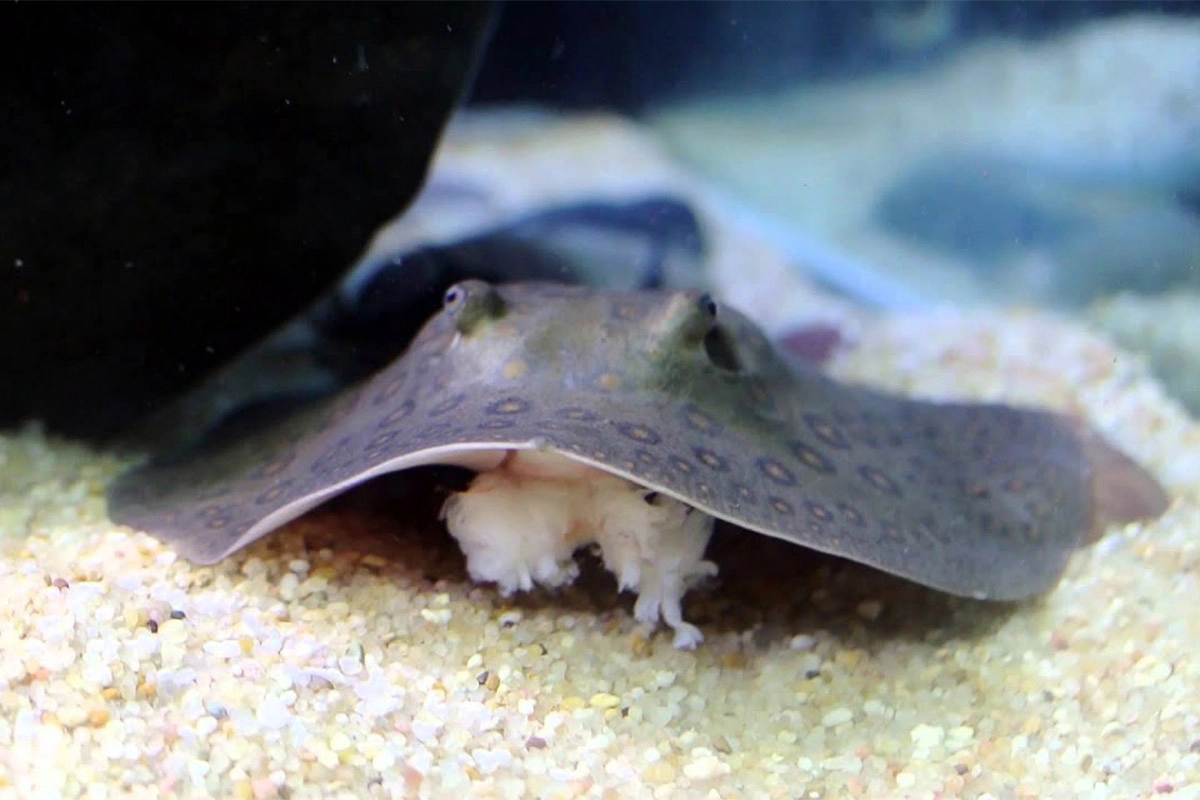
Searches mainly feed on crustaceans, mollusks, worms, and small bottom-dwelling organisms. Freshwater species may consume crustaceans, small aquatic organisms, and some small fish.
Search Feeding in Nature
Search feeding habits are mostly based on bottom-dwelling organisms. Because the mouth is located on the underside, the stingray searches for prey in areas close to the bottom of the water. It can find small organisms hidden under the sand by smelling, touching, and sensing movements in its environment.
Species that eat hard-shelled organisms have a strong jaw structure. Not all stingray species consume the same foods. Habitat and body structure affect the feeding pattern.
Stingrays often don't chase their prey in open water. They glide along sandy or muddy bottoms, searching for creatures hidden at the bottom.
Some species can stir up the bottom with fin and mouth movements, allowing them to reach crustaceans or soft-bodied creatures beneath the sand. Indeed, most stingray species hunt this way: their hunting strategy is based more on silent searching and finding bottom-dwelling creatures than on fast chasing.
How to Feed Stingrays in an Aquarium?
True freshwater stingrays and aquarium fish known as dwarf stingrays should not be fed the same food.
For bottom-feeding aquarium fish, the food must reach the bottom. Tablet food and bottom feed are therefore frequently preferred. However, food selection must be made according to the species.
Too much food can pollute the water. Insufficient nutrition can lead to the weakening of bottom-dwelling fish. Therefore, the amount of food should be monitored together with other living things in the aquarium and water quality.
How Do Stingrays Hunt and Defend Themselves?
 Most species do not chase their prey in open water. They move close to the bottom, trying to find creatures hidden under the sand or at the bottom.
Stingrays mostly search for their prey at the bottom. The fact that their mouths are located on the bottom is suitable for this feeding method.
Crustaceans, mollusks, and small creatures hidden under the sand are a food source for many stingrays. Stingrays can reach their prey by sensing movements and smells in their surroundings.
Some stingrays may remain partially buried in the sand in shallow coastal waters. As National Geographic has noted, this behavior makes stingrays difficult to spot.
The sandy bottom is a hiding and hunting ground for stingrays. This is also why some unwanted contact with humans occurs.
Important:
Stingray fishing may be subject to legal regulations depending on the species and region. In Turkey, fisheries are regulated under headings such as period, region, species, fishing gear, and distinction between amateur and commercial fishing. Current regulations should be checked if catching any species is considered.
Safety should also be considered. In species with tail spines, manual handling can cause injury. It is safer not to touch a stingray that has been caught or seen near the shore.
Can Stingrays Be Kept in an Aquarium?
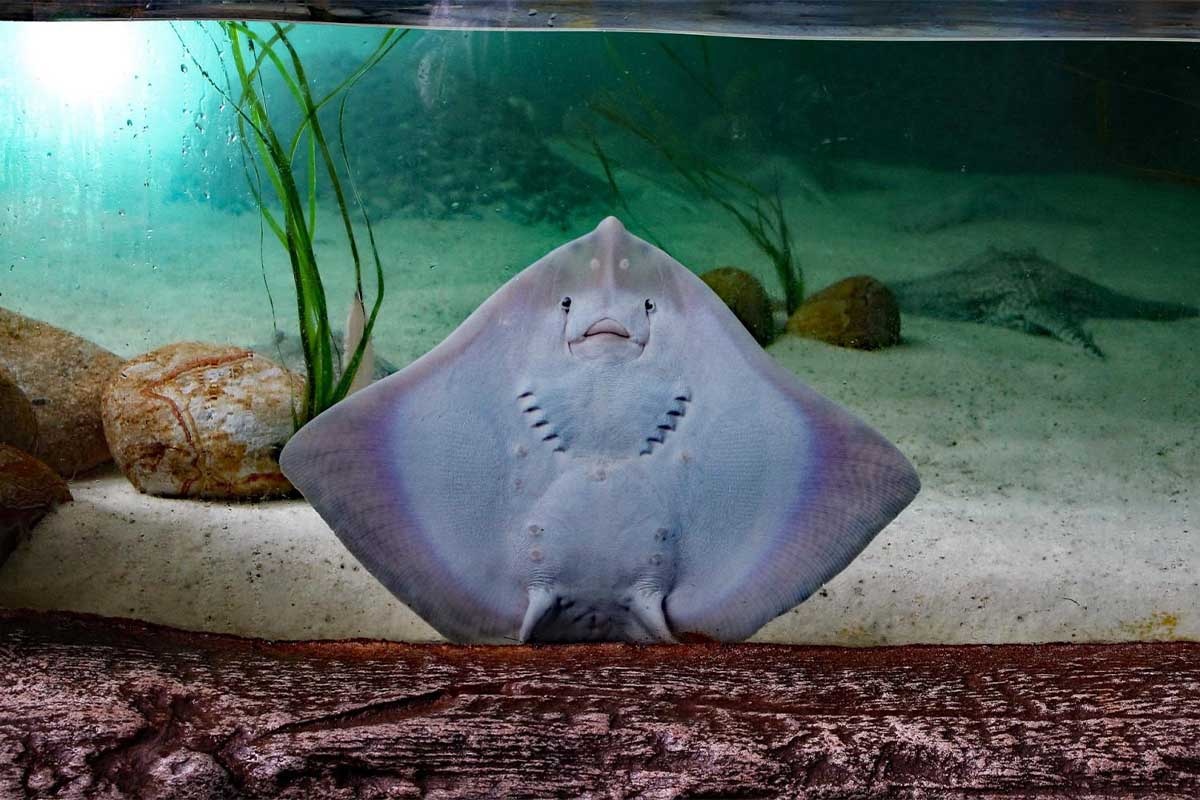
The answer depends on the stingray species. True freshwater stingrays require ample space, special care, and regular water monitoring. Fish known as dwarf stingrays in aquariums belong to a different group.
Suitable Aquarium Conditions for Keeping Stingrays in an Aquarium
Aquarium stingray care should not be planned before the species name is clear. In true freshwater stingrays, adult size, substrate area, and water quality are determining factors. For dwarf catfish, hiding places, bottom-reaching food, and balanced water parameters should be provided.
Aquarium Size, Substrate and Hiding Places
Aquarium size varies depending on which creature is being referred to as a "catfish". True freshwater catfish are not suitable for small home aquariums. For a single adult individual, sources recommend a volume of approximately 680 liters or more, a large substrate area, and strong filtration. Aqulator states that approximately 75–95 liters is considered the lower limit for dwarf catfish species in aquariums. Larger volumes should be preferred for group keeping or mixed aquariums.
Sharp decorations can create a risk of injury to the sensitive abdominal area. Suitable substrate and hiding places help bottom-dwelling fish move more safely.
Feeding and Water Quality for Stingrays in Aquariums
For bottom-feeding species, the food must reach the bottom. Tablet food or bottom feed can be used.
Overfeeding can pollute the water. Dirty water, a weak water purification system, and irregular maintenance can create problems for bottom-dwelling fish. Water cleanliness and balance should be regularly monitored.
Reproduction and Growth Process of Stingrays
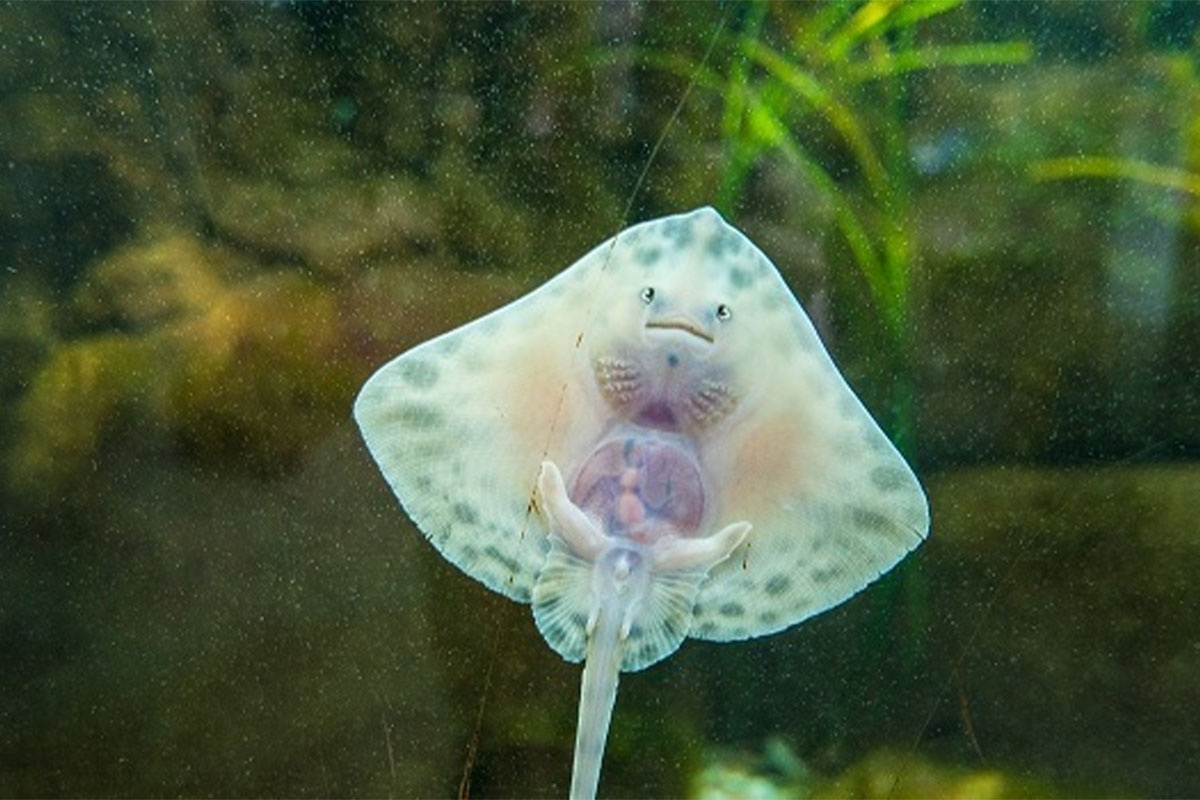
Stingray reproduction also has details that vary according to the species. In true stingrays, the offspring develop inside the mother's body and are born.
At this point, there may be confusion with some flatfish that look similar to stingrays. Some closely related species lay eggs. True stingrays reproduce by birth.
When they are born, baby stingrays are small but have an appearance similar to adults. Gestation period, number of offspring, and growth rate vary depending on the species.
It is not accurate to give a single measurement for stingray size. Small aquarium fish and large sea stingrays are not evaluated on the same scale.
The Role of Stingrays in the Ecosystem
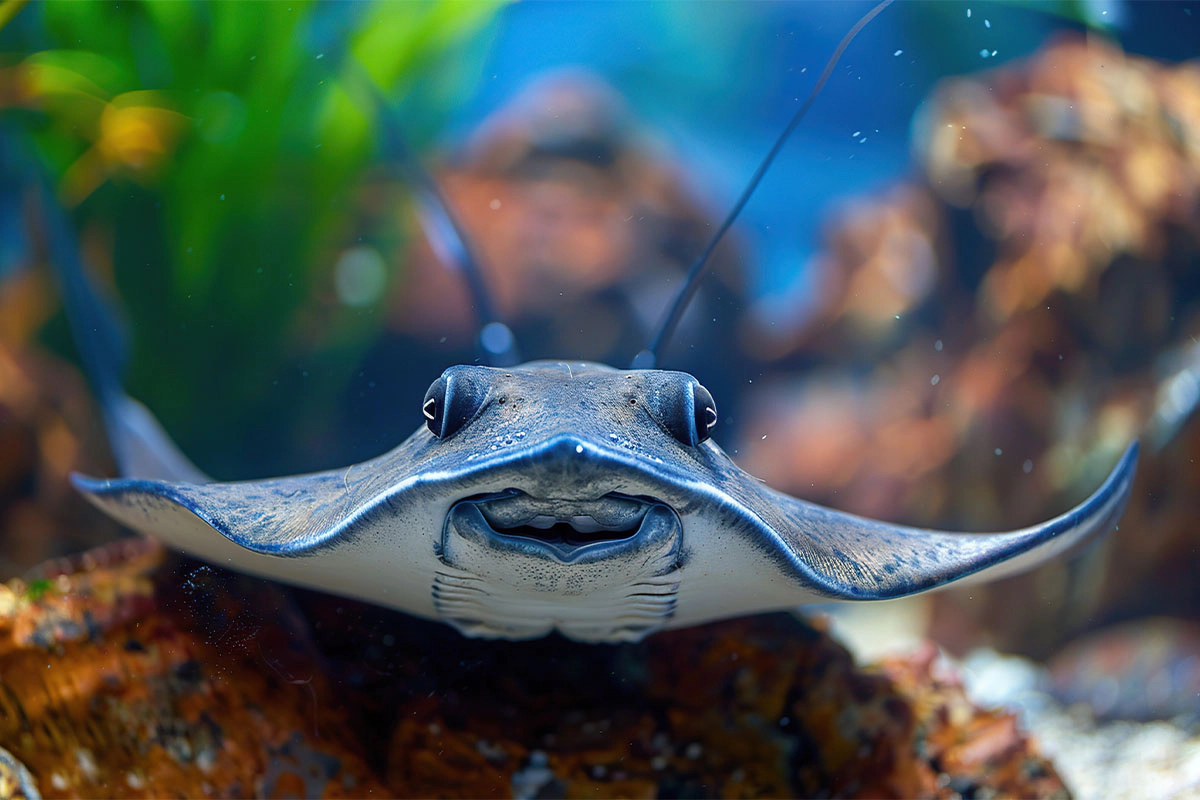
Stingrays can feed on crustaceans, mollusks, worms, and small bottom-dwelling organisms. They may disturb the bottom while searching for prey in sandy or muddy bottoms. This behavior is part of the natural relationship established with small bottom-dwelling organisms. However, this effect cannot be described in the same way for every species.
Stingrays can also be prey for some large fish and sharks. In this respect, they have a dual place in the food chain. They feed on some organisms and can be a food source for some species.
A bottom-dwelling fish living in a closed system like an aquarium does not replicate its life in its natural environment.
Frequently Asked Questions About Stingrays
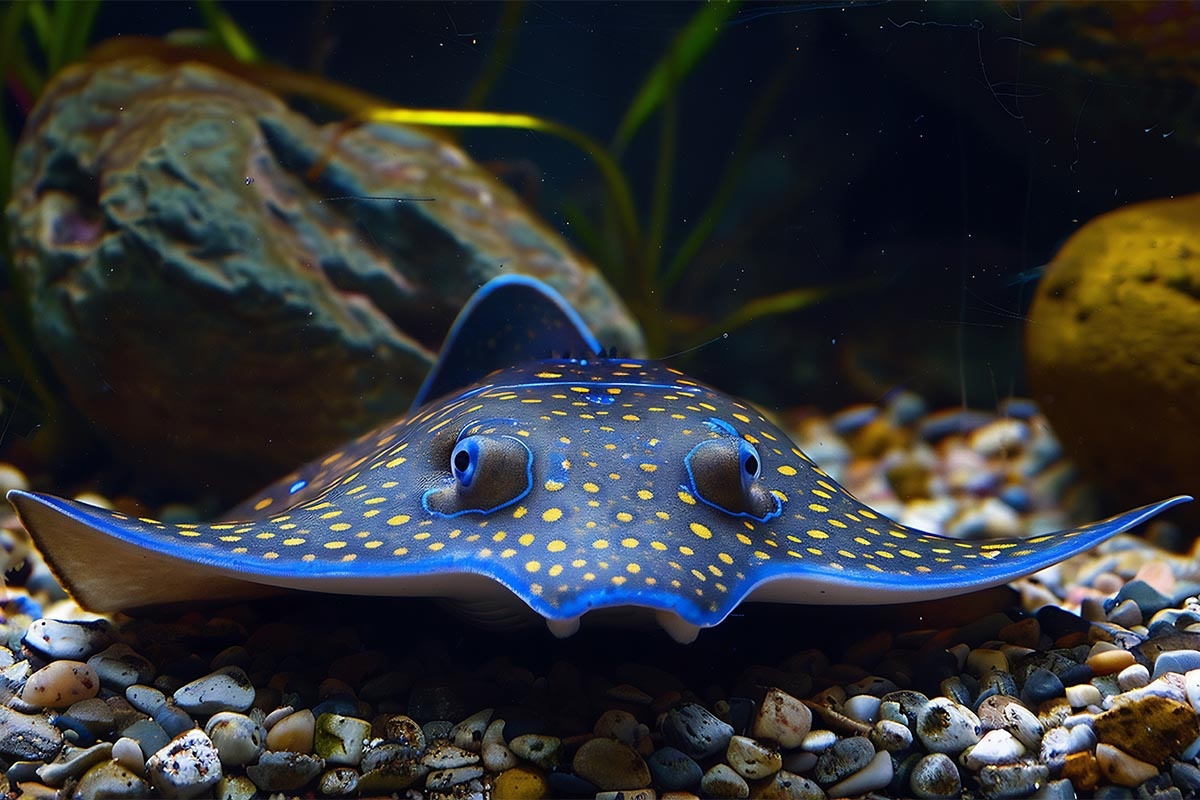
What are the characteristics of stingrays?
The characteristics of stingrays include a flattened body, wide fins, a mouth located on the underside, and a life close to the bottom. Some species have a tail spine used for defense. Its flexible skeletal structure is one of the main differences that distinguishes it from bony fish.
Where do stingrays live and what habitats do they prefer?
The answer to the question of where stingrays live varies depending on the species; they can be found in seas, river systems, areas where seawater and freshwater mix, and bottom areas. Many species live near sandy or muddy bottoms. Freshwater species are found in specific river basins.
What are the most common stingray species and what are their characteristics?
Common examples include the southern stingray, blue-spotted stingray, eagle stingray, freshwater stingrays, and manta ray species. Stingray species differ in body shape, tail structure, habitat, and adult size. Dwarf stingrays should not be considered in the same group as these species.
How big are stingrays and what are their growth processes?
The size of stingrays varies greatly depending on the species. The Smithsonian National Zoo states that freshwater stingrays can reach a disc width of approximately 46 cm and a tail length of 30.5 cm. According to the Monterey Bay Aquarium, female southern stingrays can grow to approximately 2 m disc width and 97 kg weight; in males, the disc width is approximately 0.8 m.
This difference is a critical point in aquarium planning. A stingray that appears small as a juvenile may need a much larger substrate area as an adult. Some species sold as small bottom-dwelling fish in aquariums should not be evaluated on the same scale as real stingrays. Therefore, when giving size information, the animal must be identified by its species name.
Are stingrays dangerous and harmful to humans?
Stingrays are generally not creatures that target humans. The risk increases if you step on one unintentionally, try to catch it, or come into contact with its tail spine. Medical attention should be sought if there is an injury.
Can stingrays be kept in an aquarium and what should be considered?
The question of whether stingrays can be kept in an aquarium should not be answered without knowing the species name. True freshwater stingrays require a large space, a suitable substrate, a strong water cleaning system, and careful water monitoring. For aquarium stingray care, adult size, feeding schedule, and water parameters should be evaluated together.
What is the spawning period and reproductive characteristics of stingrays?
True stingrays do not lay eggs; the offspring develop inside the mother's body and are born. Male stingrays have specialized structures that aid in reproduction. Gestation period, number of offspring, and growth rate can vary depending on the species.
Kaynaklar:
https://www.britannica.com/animal/stingray
https://www.bbcearth.com/factfiles/animals/fish/stingray
https://nationalzoo.si.edu/animals/freshwater-stingray
https://www.montereybayaquarium.org/animals-the-ocean/animals-a-to-z/southern-stingray
https://www.nationalgeographic.com/animals/fish/facts/stingrays
https://www.poison.org/articles/how-to-prevent-and-treat-stingray-injuries-201
https://www.aqulator.com/articles/bristlenose-pleco-care-guide
https://www.floridamuseum.ufl.edu/discover-fish/skates-rays/species-profiles/
https://www.floridamuseum.ufl.edu/discover-fish/skates-rays/biology
Advertisement
Advertisement
Keep exploring
Continue reading

Pet Lifestyle & Guides
Basset Hound Dog Characteristics, Care and Temperament
A short walk with a Basset Hound can unexpectedly become longer with breaks to examine scents.
Read guide →
Pet Lifestyle & Guides
Alaska Malamute Dog Characteristics, Care and Temperament
When it comes to dogs that can withstand cold weather, one of the first that comes to mind is the Alaska Malamute, a strong sled dog bred to pull…
Read guide →
Pet Lifestyle & Guides
Boston Terrier Dog Characteristics, Care and Temperament
The Boston Terrier is a compact and well-balanced breed classified as a small breed of dog. Its short, glossy coat, erect ears, large round eyes…
Read guide →
Pet Lifestyle & Guides
American Cocker Spaniel Dog Characteristics, Care and Temperament
The American Cocker Spaniel's gentle gaze, silky fur, and cheerful demeanor make it easy to quickly bond with this breed.
Read guide →