Great Dane Characteristics, Care and Temperament
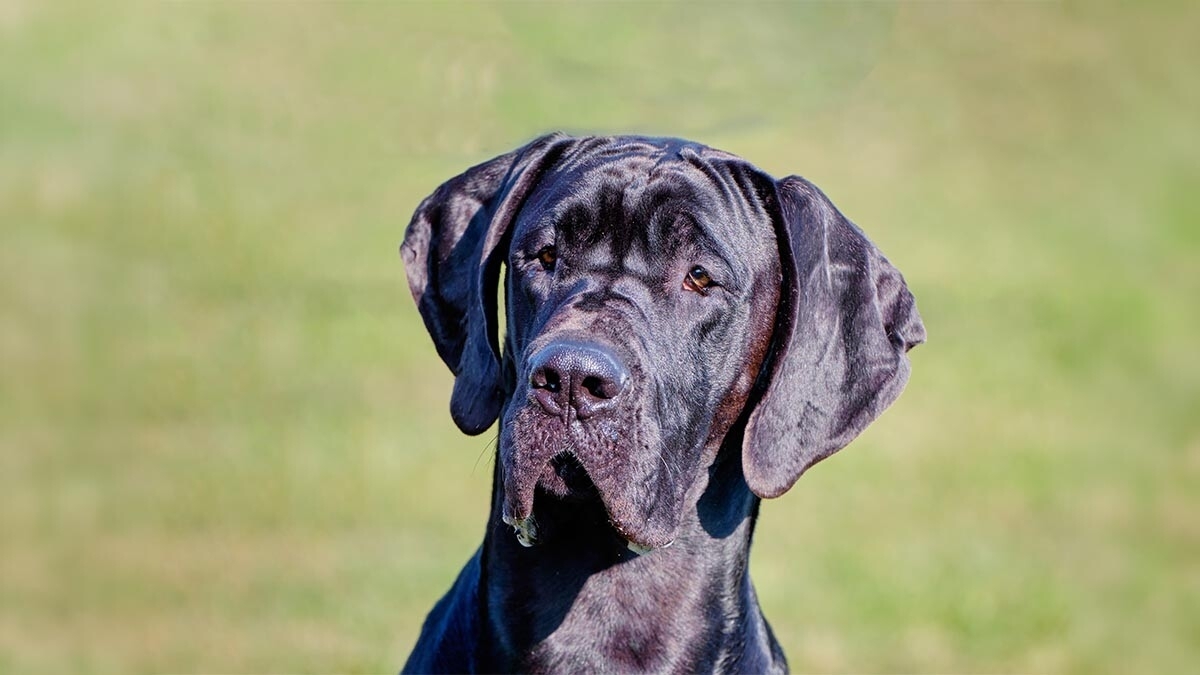
When a Great Dane enters a room, its high shoulders, long strides, and powerful body draw all eyes to it. Behind this majestic stance is a dog that follows its family around the house, lies down beside them, and seeks closeness.
Advertisement
When a Great Dane enters a room, its high shoulders, long strides, and powerful body draw all eyes to it. Behind this majestic stance is a dog that follows its family around the house, lies down beside them, and seeks closeness. The sense of distance created by its size is often not reflected in its character.
The Great Dane's calm temperament should not be interpreted as easy to care for. Its rapidly growing body requires proper nutrition and controlled exercise. Its physical strength necessitates that training begin in puppyhood. Living space, as well as the care budget and potential health expenses, should be considered before adoption.
Warning: Breed characteristics may not be the same in every Great Dane. Age, breeding conditions, health history, and individual temperament can alter care needs. Consult your veterinarian for an assessment of health signs and a personalized care plan.
General Characteristics of Great Danes
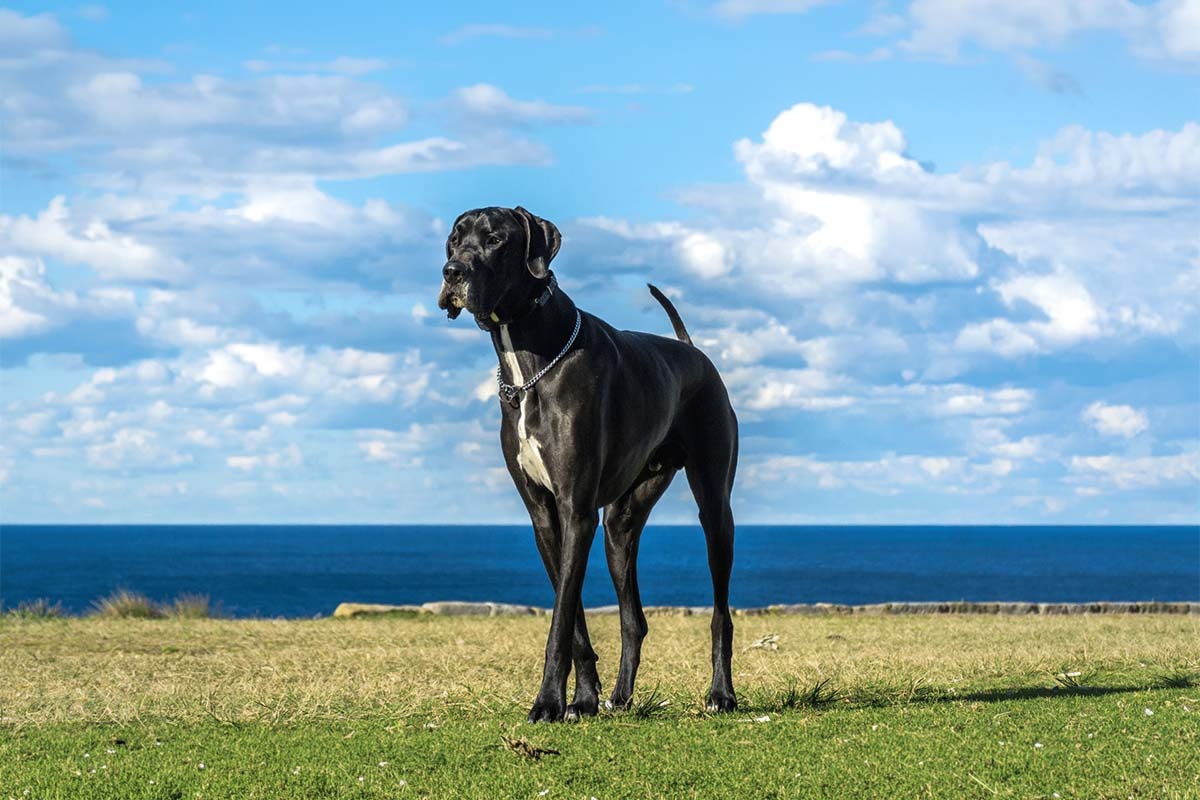
One of the largest dog breeds, the Great Dane is a balanced and elegant breed. Despite its large body, it is not clumsy. Its long strides, strong hind legs, and balanced body proportions allow for fluid movement.
Adult males have a wider skeleton and more pronounced bone structure than females. The fact that body length and shoulder height are close to each other gives the breed a nearly square appearance.
According to the AKC breed standard, adult male Great Danes have a shoulder height of at least 76 cm, and females 71 cm. These measurements represent the lower limits used for evaluation, not the average adult height.
The Great Dane's head is long, angular, and proportionate to the body. Its eyes are deeply set. Its ears are long and fold towards its cheeks. The long, muscular neck transitions smoothly into the broad chest. The tail is thick at the base, tapers gradually, and extends downwards when at rest.
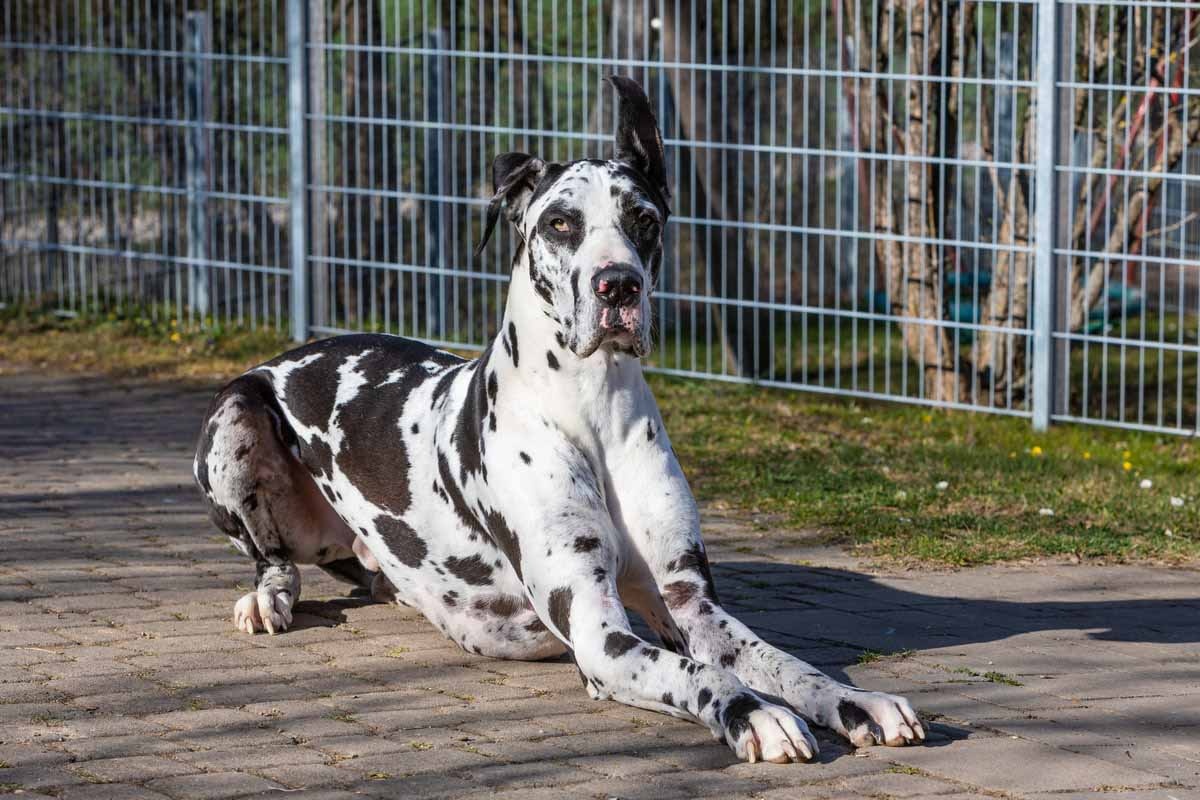
The Great Dane's coat is short, dense, and glossy. The breed standard defines seven colors or patterns: brindle, golden yellow, steel blue, black, white with black patches, black back with white markings, and grey with black patches.
Great Dane Character and Adaptation to Family Life

The Great Dane's people-oriented character can make it easier for them to form strong bonds with family members. This same characteristic can also cause them to struggle when left alone for long periods. It is recommended that people who are away from home for long hours during the day plan in advance how the dog's need for attention and mental engagement will be met.
The Great Dane's large size can create shyness in strangers. The breed's approach varies depending on its socialization experience and individual temperament. While some Great Danes may calmly greet visitors, others may initially maintain their distance. Encouraging protective behavior based on physical appearance can lead to reactions that are difficult to manage. Caution is best.
When living with children, the main issue is often not firmness, but the size difference between them. A young Great Dane may not be able to regulate its speed during play and could unintentionally knock a small child over. Their affection for each other doesn't eliminate the need for supervision. The child should be taught to respect the dog's resting area, food bowl, and boundaries.
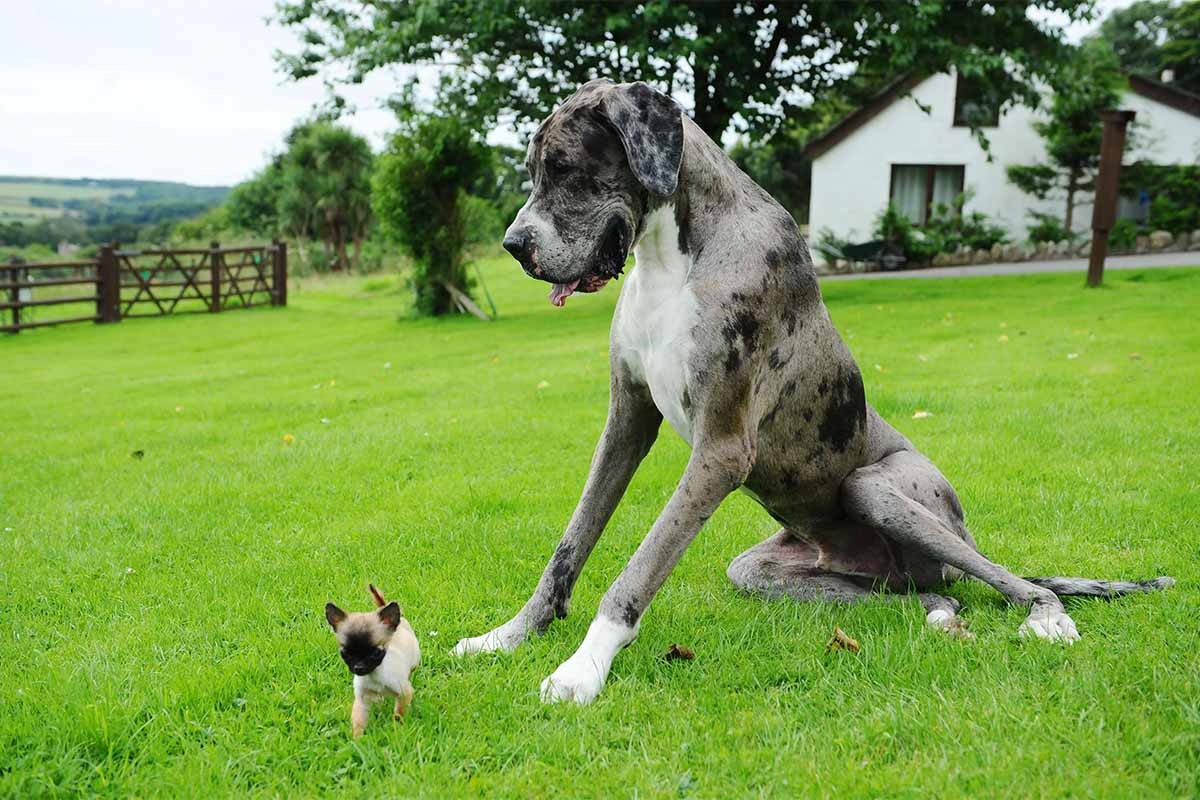
Adaptation to other animals also depends on early experiences. They may accept dogs and cats they grew up with as part of the family group. Initial introductions should be controlled, as small animals that quickly run away can trigger a desire to chase.
Can a Great Dane be Kept in an Apartment or a House with a Garden?
A spacious house with a garden is more suitable for a Great Dane. They can also live in an apartment with an elevator, spacious passageways, and regular outdoor access.
Their large bed and food area take up a significant amount of space in the house. Dense furniture, slippery floors, and stairs can make daily movement difficult. A transportation plan for veterinary visits and emergencies should also be prepared in advance. Walks, training, and time spent with family should be maintained as part of the daily routine. Great Danes left alone for long periods may exhibit barking or chewing on objects. Great Dane Training and Socialization Needs An untrained Great Dane's physical strength can turn minor behavioral problems into safety risks. Basic skills should be worked on during puppyhood, not left for adulthood. Pulling on the leash is one of the most obvious examples of this. When an adult Great Dane suddenly turns towards another animal during a walk, it can throw its owner or cause the leash to slip. Loose-leash walking and call-to-call training should be gradually introduced in controlled areas.
Walks, training, and time spent with family should be maintained in the daily routine. Great Danes left alone for long periods may bark or chew on objects.
Great Dane Training and Socialization Needs
The physical strength of an untrained Great Dane can turn minor behavioral problems into safety risks. Basic skills should be worked on during puppyhood, not in adulthood.
Leash pulling is one of the most obvious examples of this. When an adult Great Dane suddenly turns towards another animal during a walk, it can throw its owner or cause the leash to slip. Loose-leash walking and call-on-call training should be gradually introduced in controlled areas.
Jumping on people, leaning against someone, and pulling on the leash are behaviors that The Spruce Pets particularly emphasizes in Great Dane training. Leaning, a sign of affection often used by young dogs, can leave children and people with mobility limitations unsteady. A Great Dane suddenly rushing to the door when it rings may bump into a guest or run out through an open door.
Priority should be given to sit, wait, come, leave, and go to your place commands during training. Short exercises and consistent boundaries facilitate learning. Reward-based training with food, toys, or praise encourages the repetition of desired behaviors.
Great Dane Care, Coat Structure, and Exercise Needs

The Great Dane's short, dense coat can be kept under control with weekly brushing. A rubber glove or a brush suitable for short hair helps to collect loose hairs. Since shedding short hairs can get stuck between furniture and fabrics, house cleaning can be more challenging than it seems.
Due to their large size, bathing and nail trimming can be quite challenging. Indeed, it is not easy to lift an adult Great Dane who does not want to get into the bathtub. Preparing a non-slip surface and getting the dog used to water from puppyhood makes it easier to control during grooming. Thick nails should be trimmed regularly with appropriately sized equipment.
Due to their drooping lips, it may be necessary to wipe the area around their mouth after drinking water. When they shake their head, saliva can get on surrounding objects. Ears should be checked regularly, and teeth should be brushed as often as recommended by the veterinarian.
Daily activity can be divided into morning and evening walks, sniffing exercises, and short play sessions. The duration of exercise should be adjusted according to the dog's age, condition, and health status.
Caution: Although Great Dane puppies can approach adult dog size within a few months, their skeletal development continues. Long runs, high jumps, and repetitive intense movements on hard surfaces should be limited during the growth period. Walking pace and duration can be planned in consultation with a veterinarian.
Great Dane Nutrition

Great Danes generally approach adulthood in terms of physical development between 18–24 months. Although height increase is very rapid in the first year, bone and muscle development takes longer.
It should be remembered that while a one-year-old Great Dane can approach adult size, the growth period continues. Therefore, the use of large breed puppy food should not be stopped simply because they have completed 1 year. These formulas are designed to provide controlled energy intake and minerals involved in bone development. Excess energy can accelerate growth, increase body weight, and increase the load on developing joints.
The transition to adult food is considered for many Great Danes around 18 months of age. The timing of the transition should be determined by evaluating the dog's growth rate, body condition, and the characteristics of the food used.
Using a large breed formula that matches the life stage and ensuring that treats do not exceed 10% of daily calories are among the basic recommendations. Calcium, vitamins, or joint supplements should not be added to the feeding plan without a veterinarian's recommendation.
Puppies' daily food can be divided into three or four small meals. At least two meals are preferred for adults. For fast-eating dogs, bowls that extend the eating time can be used. Adhering to the rest interval recommended by the veterinarian for intense activity around mealtimes is part of gastric torsion risk management. Health Problems That Can Be Seen in Great Danes Health monitoring in Great Danes should begin in puppyhood. Rapid growth can affect joint and skeletal development, a deep chest structure can pose digestive system risks, and a long neck can bring about some neurological problems. Weight control and regular veterinary checkups support early detection of changes. Gastric Dissection and Torsion (GDV) Gastric dissection and torsion (GDV), also called gastric dilation-volvulus, is characterized by the stomach expanding with gas or contents and torsion around itself. The torsion can disrupt blood flow to the stomach and spleen, leading to shock in a short time.
Health Problems That Can Be Seen in Great Danes
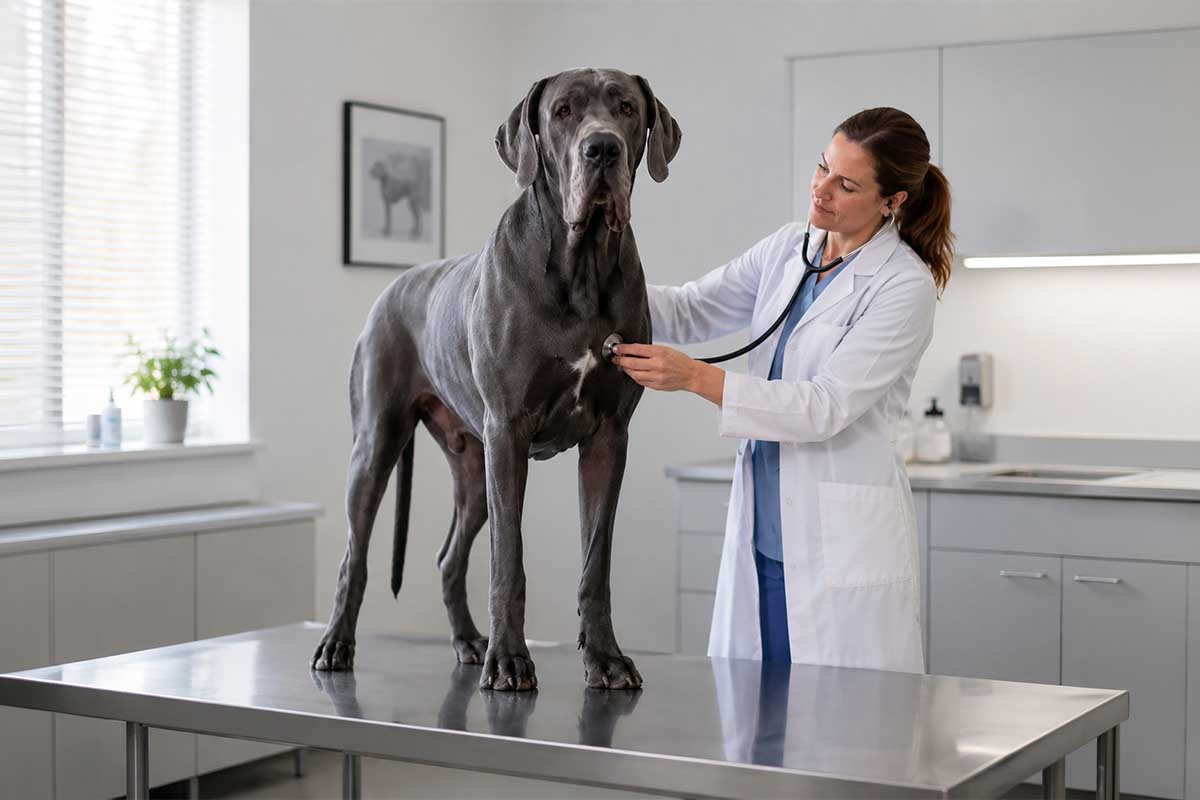
Health monitoring in Great Danes should begin in puppyhood. Rapid growth can affect joint and skeletal development, a deep chest structure can pose digestive system risks, and a long neck can bring about some neurological problems. Weight control and regular veterinary checkups support the early detection of changes.
Gastric Volvulus (GDV)
GDV, also called gastric dilation-volvulus, is characterized by the stomach expanding and twisting around itself due to gas or contents. The twisting can disrupt blood flow to the stomach and spleen, leading to shock in a short time.
Unsuccessful vomiting attempts, abdominal swelling, restless gait, rapid breathing, and inability to find a comfortable position are urgent signs. This condition should be evaluated at an emergency veterinary clinic without delay. Time should not be wasted by giving food, water, or medication at home.
Hip Dysplasia
Hip dysplasia, which has a significantly increased risk in large breed dogs, causes the hip joint to not develop harmoniously and to become loose over time. The uneven load distribution on the joint surfaces can cause pain, limited movement, and arthritis in later stages.
Difficulty standing, limping in the hind legs, reluctance to use stairs, and significant stiffness after movement should be evaluated. Diagnosis is made by veterinary examination and radiographic imaging.
Wobbler Sendromu
Wobbler syndrome is a neurological disorder affecting the cervical vertebrae and spinal cord region. It can cause wobbly gait, imbalance, weakness in the hind legs, and neck pain. In advanced cases, the front legs may also be affected.
Dilate Kardiyomiyopati
Dilated cardiomyopathy leads to a decrease in the pumping power of the heart muscle due to enlargement and weakening. The disease may not cause significant symptoms in the early stages. Symptoms may include easy fatigue, cough, rapid breathing, loss of appetite, and difficulty resting.
Fainting, shortness of breath, cyanosis of the tongue or gums, and sudden collapse require immediate evaluation. Cardiac examination, electrocardiography, and echocardiography may be used as deemed necessary by the veterinarian.
Mutlu Kuyruk Sendromu
A Great Dane's long and powerful tail can repeatedly hit walls, furniture, or door frames. The wound at the tip of the tail may bleed again with each shake.
Wounds at the tip of the tail can easily recur and take a long time to heal. Arranging the area to reduce impact may be beneficial. Bleeding, swelling, or a wound that does not close should be evaluated by a veterinarian.
Things to Know Before Adopting a Great Dane

Adopting a Great Dane requires planning daily life according to the needs of a giant dog. Its loving character can make this decision appealing. Physical strength, care costs, and health risks require long-term preparation.
The AKC's clearest warning to those wishing to adopt a Great Dane is not to underestimate the breed's size, weight, and strength. The following conditions should be realistically evaluated before adoption:
- A regular daily schedule for walks, training, and time spent together should be established. A reliable care plan should be prepared to meet the dog's need for attention and exercise during long working hours.
- An adult Great Dane can be as heavy as many people. Walking, getting into a vehicle, or guiding a dog that is not leash-trained can be difficult.
- A large bed, ample feeding area, and comfortable passageways are needed. Breakable items should be removed from tail height, and safe movement areas should be created on slippery surfaces.
- Food, preventative health routines, and medication costs can increase with the dog's weight. Bedding, transport equipment, training, and potential emergency treatment costs suitable for giant breeds should be added to the budget.
- Gastric torsion, hip dysplasia, and heart disease may require prompt intervention or further investigation. A nearby emergency veterinary clinic should be identified in advance, and a health budget should be planned.
A Great Dane can be a strong companion for individuals whose time, budget, living space, and physical management skills allow for this responsibility. The decision should be made based on the daily life to be established with the adult dog before the appearance of a puppy.
Frequently Asked Questions

Can a Great Dane be left alone?
Great Danes can learn to be left alone for short periods. Due to their people-oriented nature, some may show restlessness within a few hours. The time left alone should be gradually increased from puppyhood; signs such as barking, destroying objects, or excessive drooling should be monitored.
How many years do Great Danes live?
Differing information may be found in sources. While some sources state that the average lifespan of a Great Dane is approximately 7–10 years, others give this range as 6–8 years. Genetic history, body condition, preventive health check-ups, and breed-specific diseases can affect lifespan.
How big does a Great Dane grow, what is its height and weight?
Adult male Great Danes can reach approximately 76–86 cm shoulder height and weigh 54–91 kg. Females are mostly measured between 71–81 cm and weigh 45–59 kg. Body structure, genetic lineage, and condition can create wide variations in these values.
Do Great Danes drool a lot?
Yes, due to their drooping lips, noticeable drooling can be seen. Drooling may increase especially after drinking water, eating, and excitement. If sudden increases in drooling are accompanied by gagging, abdominal distension, or restlessness, an urgent veterinary evaluation is required.
Is a Great Dane suitable for first-time dog owners?
Great Danes can be challenging for first-time dog owners. Their physical strength, training needs, care budget, and health risks require experienced management. Prepared individuals can manage the process more safely by seeking support from a competent trainer from puppyhood.
Can Great Danes be kept in apartments?
Yes, they can live in a spacious and accessible apartment. Elevators, comfortable passageways, and regular opportunities to go outside make daily life easier. Restlessness and vocal reactions may develop in an apartment setting where they are left alone for long periods or their need for movement is not met.
Is Great Dane training easy?
Great Danes can learn basic commands quickly, although they may show resistance at times. Not pulling on a leash, waiting at the door, coming when called, and not jumping on people are primary skills. Do Great Danes get along well with children? With early socialization and proper training, Great Danes can get along well with children. Their large body and strong tail can cause young children to accidentally fall during play. Contacts should be maintained under adult supervision, and the child should be taught to respect the dog's boundaries. Do Great Danes shed a lot of hair? Great Danes shed year-round, and shedding can increase during certain periods. Short hairs can get caught in carpets and upholstery, making them more visible than expected in the home. Weekly brushing will reduce the spread of loose hair throughout the house.
Do Great Danes get along well with children?
With early socialization and proper training, Great Danes can get along well with children. Its large body and powerful tail can cause young children to accidentally fall during play. Contact should be maintained under adult supervision, and the child should be taught to respect the dog's boundaries.
Does a Great Dane shed a lot?
Great Danes shed year-round, and shedding can increase during certain periods. Short hairs can get caught in carpets and upholstery, making them more visible than expected indoors. Weekly brushing will reduce the spread of loose hairs throughout the house.
How much exercise should a Great Dane get per day?
For a healthy adult Great Dane, approximately 1–2 hours of exercise per day is a suitable starting range. This can be achieved through walks, sniffing exercises, and controlled play spread throughout the day. The schedule for puppies and dogs with health problems should be determined in consultation with a veterinarian.
Kaynaklar:
https://www.greencrossvets.com.au/pet-library/dogs/breed-guides/great-dane-owners-guide/
https://www.pdsa.org.uk/pet-help-and-advice/looking-after-your-pet/puppies-dogs/large-dogs/great-dane
https://www.royalkennelclub.com/search/breeds-a-to-z/breeds/working/great-dane/
https://www.webmd.com/pets/dogs/what-to-know-great-danes
https://www.thesprucepets.com/great-dane-dog-breed-profile-1117971
https://www.akc.org/dog-breeds/great-dane/
https://www.chewy.com/education/dog-breeds/great-dane
https://www.petmd.com/dog/breeds/great-dane
https://images.akc.org/pdf/breeds/standards/GreatDane.pdf https://www.omlet.co.uk/breeds/dogs/great_dane/
Advertisement
Advertisement
Keep exploring
Continue reading
Pet Lifestyle & Guides
Basset Hound Dog Characteristics, Care and Temperament
A short walk with a Basset Hound can unexpectedly become longer with breaks to examine scents.
Read guide →
Pet Lifestyle & Guides
Alaska Malamute Dog Characteristics, Care and Temperament
When it comes to dogs that can withstand cold weather, one of the first that comes to mind is the Alaska Malamute, a strong sled dog bred to pull…
Read guide →
Pet Lifestyle & Guides
Boston Terrier Dog Characteristics, Care and Temperament
The Boston Terrier is a compact and well-balanced breed classified as a small breed of dog. Its short, glossy coat, erect ears, large round eyes…
Read guide →
Pet Lifestyle & Guides
American Cocker Spaniel Dog Characteristics, Care and Temperament
The American Cocker Spaniel's gentle gaze, silky fur, and cheerful demeanor make it easy to quickly bond with this breed.
Read guide →