How Should Baby Budgies Be Cared For?
Baby budgies can surprise you when they are first born. While budgies attract attention with their vibrant colors and eye-catching postures, you may look at the frail and tiny chicks that have just hatched from the egg with astonishment. We have some good news for you.
Advertisement
Baby budgies can surprise you when they are first born. While budgies attract attention with their vibrant colors and eye-catching postures, you may look at the frail and tiny chicks that have just hatched from the egg with astonishment. We have some good news for you. You don't need to put in too much effort to care for baby budgies; the parent birds will be experts in newborn budgie care. To care for baby budgies, people need to provide the necessary resources to allow parents to comfortably care for their chicks, and be a good observer to ensure the chicks' development is progressing normally. In this article, you can find answers to frequently asked questions about budgie chick care.
Prepare the Nesting Box and Necessities for Care
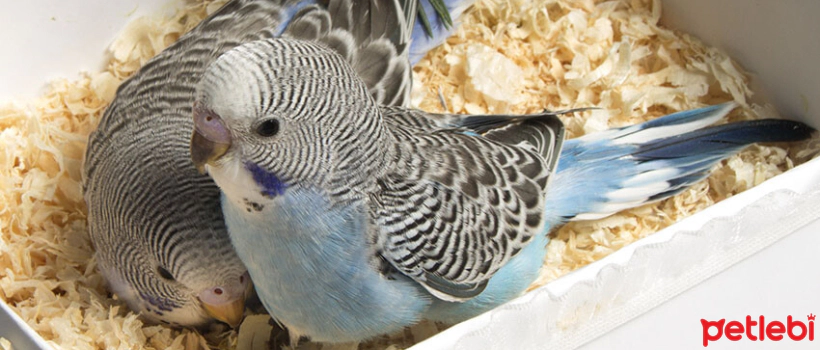
Although we mentioned that parents will fulfill the requirements for budgie chick care, they also have some needs to create a suitable environment for their chicks. The nest where the chicks will be born must meet certain conditions, but there are preparations that parents need to make inside the nest. It is necessary to provide access to materials that birds can use to build a nest, such as pine sawdust. Preparing a suitable bed for the chicks is of great importance, especially to prevent the development of flat legs.
Since the parents' entire focus will be on the chicks during the chick care process, and they will also provide their feeding, they may need more food. Therefore, providing birds with more birdseed, supplements, and fruits and vegetables suitable for their diet is also important for properly meeting the care needs of the chicks. Provide a Dry, Dark, and Warm Space Baby budgies are born featherless and blind. Therefore, they are completely vulnerable to environmental factors such as light, heat, cold, and humidity. They need a sheltered area to develop and feel comfortable. Providing a closed, dry, and dark box for the chicks to stay in is sufficient. The parents will already turn the box you provide into a nest with their own instincts. Wooden boxes are a much more reliable choice, as cardboard boxes can be a flimsy option. The interior of the box should be large enough to allow the birds to move around, but small enough to make them feel safe and enclosed. When this nest is in a form that can be attached to the outside of the cage, it is necessary that the parents have easy access to the nest. You can browse bird nests that you can choose to create a safe space for your birds' chicks by clicking here.

Provide a Dry, Dark, and Warm Space
Baby budgies are born featherless and blind. Therefore, they are completely vulnerable to environmental factors such as light, heat, cold, and humidity. They need a sheltered space to develop and feel comfortable. Providing a closed, dry, and dark box for the chicks to stay in is sufficient. The parents will instinctively turn the box you provide into a nest. Wooden boxes are a much more reliable choice, as cardboard boxes can be a flimsy option. The interior of the box should be large enough to allow the birds to move around, but small enough to make them feel safe and secure. If the nest is in a form that can be attached to the outside of the cage, it is essential that the parents have easy access to the nest. You can examine bird nests that you can choose from to create a safe space for your birds' chicks by clicking here.
Let the Parents Take Care of It
The most valuable information to know about newborn budgie care is that the process should be left to the parents. It is important to remember that there are adult parent budgies at home that will take care of the baby budgies and that the process should be left to them. Especially in the first few weeks after the chicks hatch from the eggs, it is necessary to touch and interfere as little as possible. Providing the right environment for the parents to care for the chicks is usually sufficient for the chicks to develop without problems. If you need to handle the chicks in any situation, be sure to wash your hands thoroughly with soap and water and dry them thoroughly before touching the chicks. Newborn budgies have long necks that do not fully support their heads, so you should be careful to support their heads when handling them and move very gently.

Pay Attention to Hygiene
Baby budgies are cleaned by their parents after they are born. However, cleaning the nest may still become necessary. The materials used for the birds to sleep in the nest should be changed at regular intervals. When the chicks start to fledge, you should clean the nest regularly, at least once a week. When cleaning, you can place the chicks in a temporary area you have prepared by placing soft towels in a large container.
Observe
Even if you don't interfere with the care of baby budgies, it is important to observe them. Observation is important so that you can reach a veterinarian early if a disease develops. You should see that the chicks start to gain weight a few days after hatching. A chick that is not gaining weight or that looks smaller than the other chicks may need to be checked. The beaks of the chicks should be checked at regular intervals. A piece of food stuck in the beak can cause feeding problems and, consequently, developmental problems. It may be necessary to gently remove the stuck food with a toothpick; early intervention and cleaning by the parents is possible, but observation is necessary to take precautions. Chicks should not spread their legs in the early stages. If you think the chick is starting to spread its legs, you can add a few pieces of towel or small pillows to the nest you have prepared to make it comfortable. If you observe that the chick cannot walk, stand upright, or perch in the later stages, you should check if its legs are bending to the sides and consult a veterinarian if necessary.

Prepare for When It's Ready to Fly from the Nest
The period during which baby budgies must be cared for by their parents is approximately 2 weeks. During this period, the birds' eyes open, their feathers begin to grow slightly, and they take their first steps towards weight gain. While ideally they should still be cared for by their parents after 2 weeks, if necessary, humans can take on the responsibility of feeding the baby birds, provided they exercise due care. The feeding and care needs of the chicks will change as they grow. Up to the 2nd week, baby budgies need to be fed every 3 hours; this need decreases as they grow. Newborn budgie care continues with parent birds or humans until the 8th week. From the 8th week onwards, it's time for them to leave the nest. Caring for a 2-month-old budgie is fundamentally similar to caring for an adult budgie. The bird should be placed in a separate cage and its care should continue in this cage. For information on adult budgie care, you can check our blog post titled "Budgie Care from A to Z".
Advertisement
Advertisement
Keep exploring
Continue reading
Bird Care
Comprehensive Guide to Amazon Parrot Care, Feeding and Training
Caring for an Amazon Parrot isn't as simple as putting food in the cage, keeping an eye on the water, and getting through the day.
Read guide →
Bird Care
Things to Consider When Choosing Bird Food
As stated in PetMD, a significant portion of errors in bird nutrition stem from not selecting feed according to the species and needs.
Read guide →
Bird Care
Canary Characteristics, Care and Feeding
If you want a cheerful, loving, and lively energy in your home, canaries can start a wonderful change in your life.
Read guide →
Bird Care
Common Misconceptions About Bird Care: Debunking Myths with Scientific Facts
We can only understand how sensitive and special pet birds are when we own them. The chirping of a budgie or the affectionate gaze of a parrot gives…
Read guide →