Japanese Bobtail Cat Characteristics, Care and Temperament
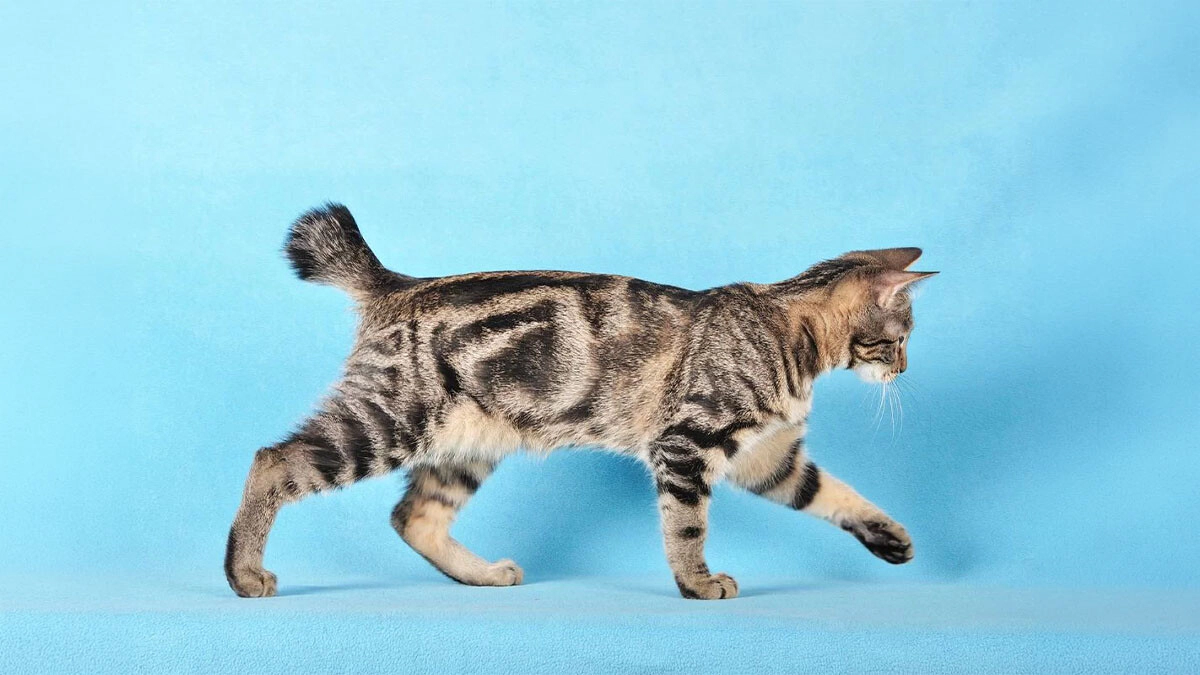
One of the short-tailed cat breeds The Japanese Bobtail cat, also known as the Japanese curled tail, is memorable for its pom-pom-like tail, which, like a fingerprint, varies from cat to cat. However, as you get to know it, it stands out for its lively, intelligent, and sociable nature.
Advertisement
One of the short-tailed cat breeds The Japanese Bobtail cat, also known as the Japanese curled tail, is memorable for its pom-pom-like tail, which, like a fingerprint, varies from cat to cat. However, as you get to know it, it stands out for its lively, intelligent, and sociable nature.
It is a cat that responds when invited to play, observes its surroundings with curiosity, and enjoys social interaction. Therefore, when considering adoption, its daily routine, need for attention, care routine, and health monitoring should be considered simultaneously.
To understand a Japanese Bobtail, you need to look beyond its short tail. Information about its character, care needs, adaptation to home life, and health monitoring can be found in our article.
Warning: This content is for general informational purposes only. Breed characteristics may not be the same in every cat. Age, genetic structure, living environment, and care routine may create individual differences.
General Characteristics of the Japanese Bobtail Cat
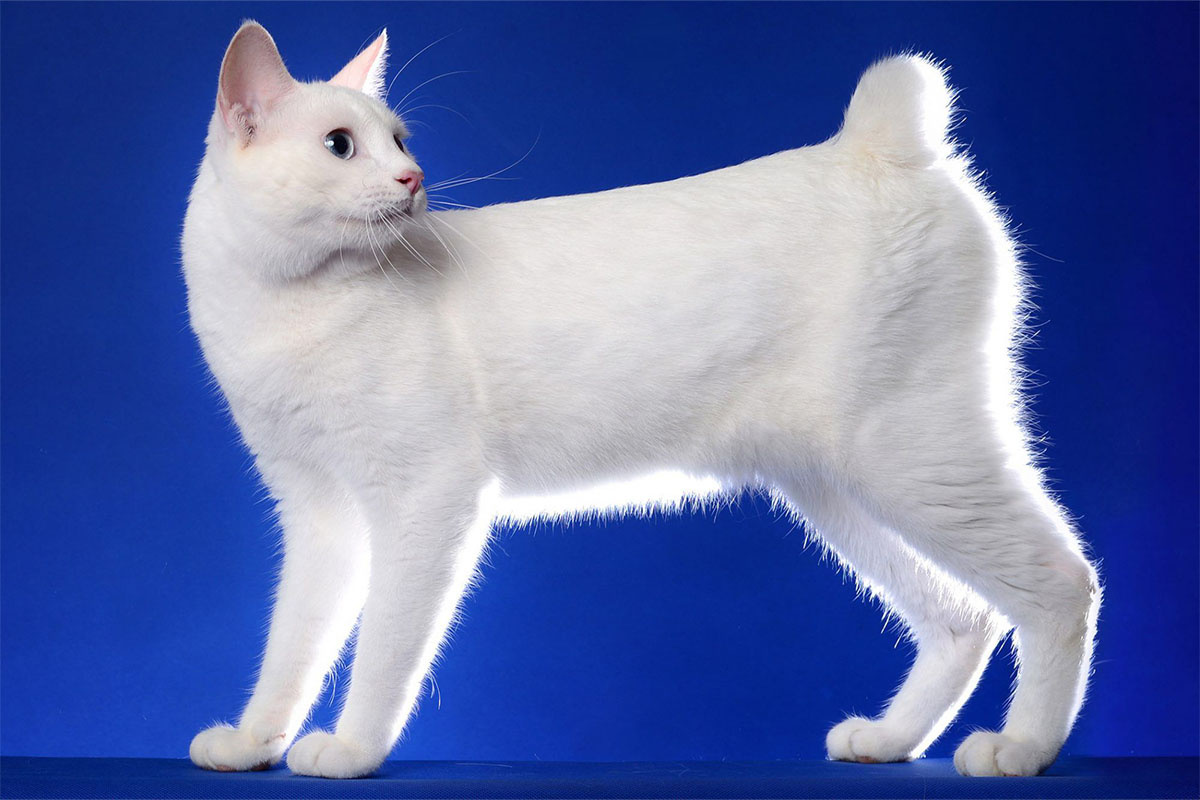
The first characteristic that distinguishes the Japanese Bobtail from many other cat breeds is its short, curled, and full tail.
The Cat Fanciers’ Association (CFA) states that this tail resembles a rabbit's tail, and because the tail hairs cover the underlying bone structure, the breed is known for its pom-pom tail appearance.
This short tail is not a newly emerged characteristic of the breed; it is stated that the Japanese Bobtail is a breed that has been registered within the last 50 years. Nevertheless, it is reported that the naturally curled tail variants that define the breed were documented centuries ago in the Far East. Thus, the short-tailed cat appearance of the Japanese Bobtail is associated with a cultural history older than modern breed records.
Regarding the physical characteristics of the Japanese Bobtail cat, we can state that this cat has a medium-sized, long-lined, and well-balanced body. Its hind legs are longer than its front legs, and when standing, its back line does not rise significantly. Its head appears close to a triangle, its ears are large and erect. Its eyes are wide and oval. They can have short or long fur, and their fur colors and patterns are also varied.
Important: A 2015 study examined the short tail characteristic using X-ray and genetic data. It is reported that the short tail in Japanese Bobtails does not carry the T-Box mutation (gene region associated with tail development) associated with taillessness in Manx cats. Although differences were observed in the tail vertebrae, these differences were not associated with disease or death in the cats in the study. In other words, it is stated that the short tail structure should not be evaluated under the heading of Manx syndrome.
Japanese Bobtail Cat Character and Temperament

It is no coincidence that sources describe the Japanese Bobtail cat's character as friendly, curious, alert, and loving. Japanese Bobtails are active members of the household rather than quiet observers. They notice who enters through the door, quickly turn to the sound of a toy, and don't want to miss any activity in the house.
PetMD also states that this breed enjoys close contact with people, is active, and loves to play. Jumping, running, and reacting to their surroundings can be particularly noticeable behaviors.
In this breed, playfulness is often more than just a short-lived whim. They can carry their toys, show interest in fetch, and easily learn certain skills. Therefore, it's a good idea to plan short but regular play sessions with them at home.
Toy mice, fishing rod cat toys, climbing areas, and toys that keep the mind active help them use their daily energy in a healthier way.
Communication is also one of the details that makes this breed endearing. They can use their voice and respond with different tones when spoken to. Although this is not seen with the same intensity in all of them, it is possible that they have a high vocal tendency.
Is the Japanese Bobtail Cat Suitable for Home Life?
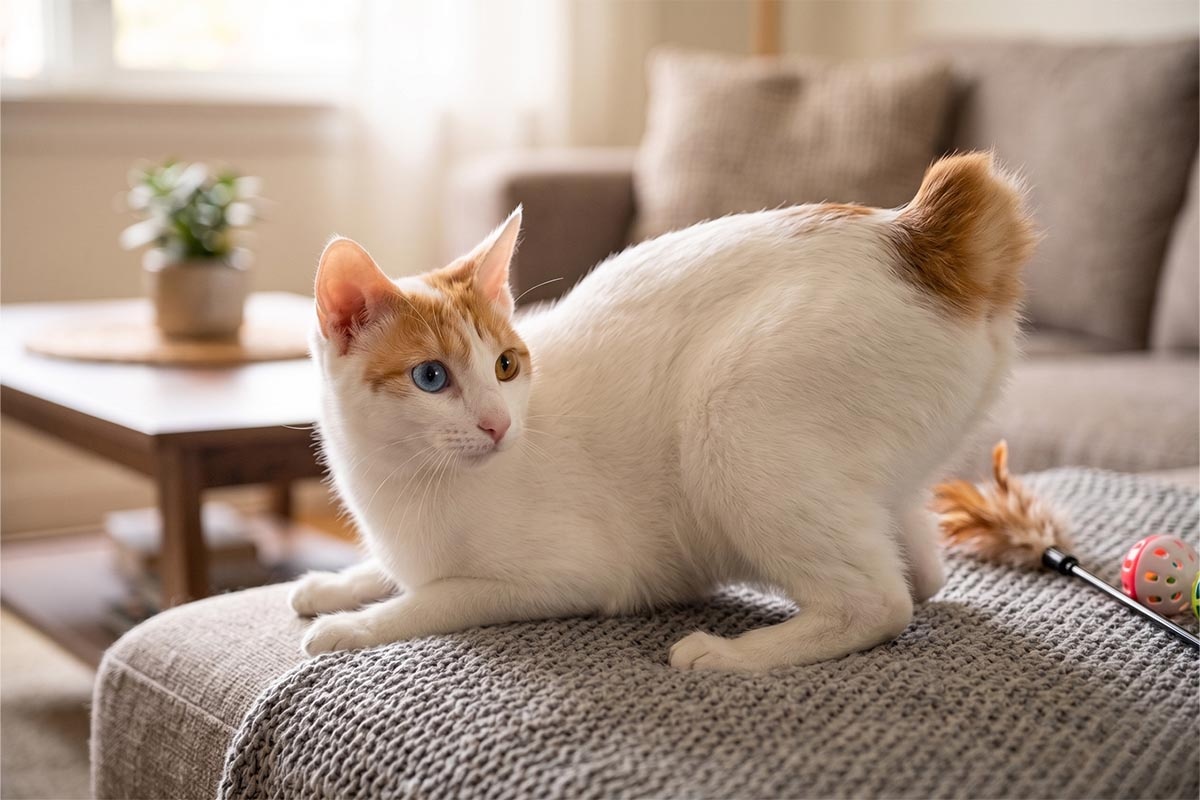
The answer to the question "Can a Japanese Bobtail cat be kept as a pet at home?" is; If the home environment is supported by movement, play, and attention, then yes, it can be given as a positive answer. This breed is not one of those cats that sit unseen in a corner of the house for long hours. They like to stay by their owner's side, observe their surroundings, and participate when called to play.
Vetstreet states that Japanese Bobtails get along well with children and other pets, including dogs. The same assessment indicates that this breed is suitable for homes that offer love, attention, and play. However, contact with children should start in a controlled manner. Their tails should not be pulled, and attempts to hold them should proceed according to the cat's limits.
A home where they will be left alone for long periods may not be the ideal choice for this social breed. For working individuals, climbing areas, a safe observation point by the window, and interactive toys support the daily routine. A safe indoor life is a better choice in terms of protection from outdoor risks.
How to Care for a Japanese Bobtail Cat?

Caring for a Japanese Bobtail cat can generally be done by establishing a few simple routines. Cat care should include fur, teeth, nails, ears, eyes, and play routines. Although the tail is short in this breed, it should be treated as a sensitive area, and harsh pulling or guiding by holding the tail should be avoided. Japanese Bobtail Cat Coat Care Short-haired Japanese Bobtails, which do not have a distinct undercoat, can be brushed a few times a week. Brushing should be done more frequently in long-haired cats. A fine-toothed comb is suitable for collecting shedding hair. Bathing should not be considered a routine necessity unless there is a lot of soiling. Oral and Dental Care of Japanese Bobtail Cats If bad breath, red gums, increased salivation, or reluctance to chew food are noticed, a check-up should not be delayed. Regular brushing of teeth is recommended as part of oral and dental care. During this time, grooming products specifically made for cats can help ensure a safe experience.
Japanese Bobtail Cat Fur Care
Short-haired Japanese Bobtails, which do not have a distinct undercoat, can be brushed a few times a week. Brushing should be done more frequently in long-haired cats. A fine-toothed comb is suitable for collecting shedding hair. Bathing should not be considered a routine necessity unless there is a lot of soiling.
Oral and Dental Care of Japanese Bobtail Cats
If bad breath, red gums, increased salivation, or reluctance to chew food are noticed, a check-up should not be delayed.
Regular brushing of teeth is recommended as part of oral and dental care. During this time, cat-specific care products can help ensure a safe experience.
In addition, nails can be trimmed in short, gentle sessions when they grow long. The ears and eye area should be monitored for discharge, bad odor, or redness.
Keeping the litter box clean is also a quiet but crucial part of care. Dirty litter can trigger the behavior of urinating outside the litter box in some cats. Of course, different results can also be seen. For detailed information, see How to Clean Cat Litter? You can read our article titled Cleaning Methods and Frequency.
Japon Bobtail Kedisi Beslenmesi
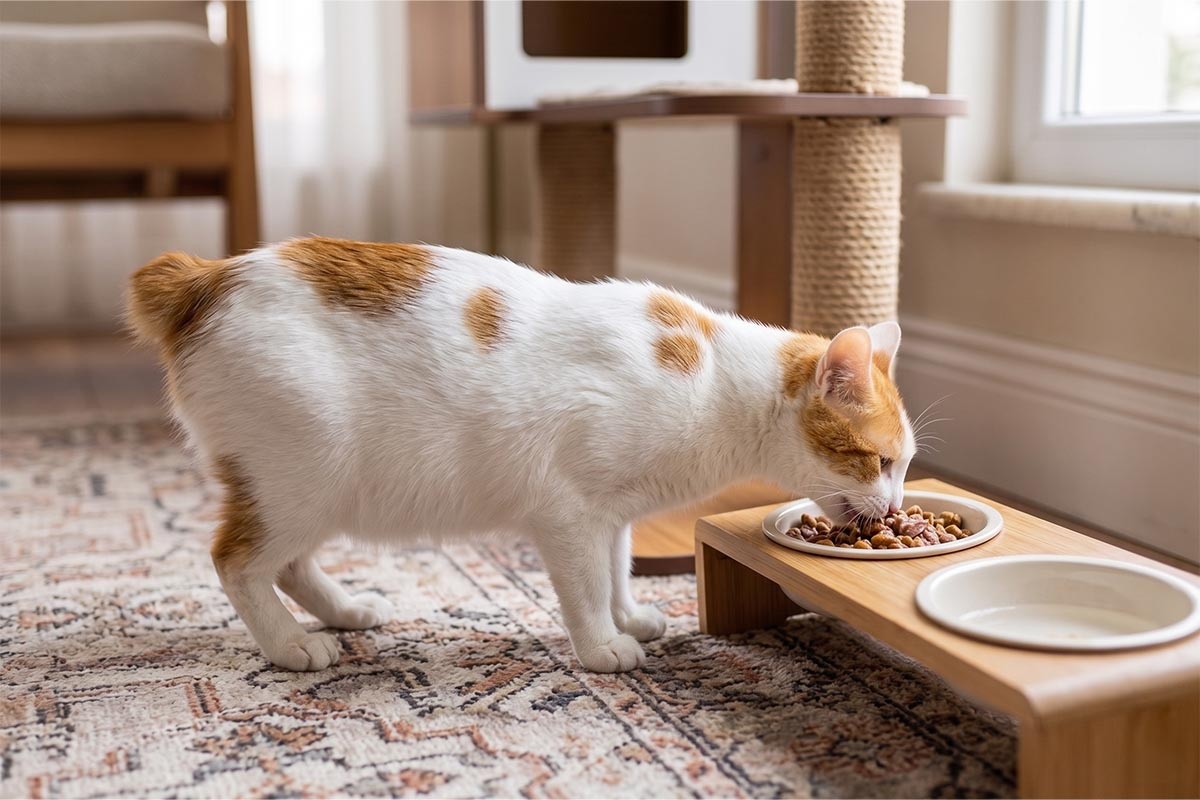 There is no specific breed diet defined for Japanese Bobtail cats; the main thing is that the bowl is compatible with the cat's daily life. The Spruce Pets states that quality cat food and a balanced diet appropriate to the age and general health condition of this breed are sufficient, and that overfeeding and too many treats can lead to obesity.
It is not correct to increase portion sizes thinking that these cats will burn off calories because they love to play. Even a cat that appears active indoors can gain weight if it consumes more calories than it needs. Treats, in particular, should be limited to small pieces during training and play. The daily amount of food should be monitored according to the cat's body condition.
A practical way to monitor weight is as follows: When viewed from above, the waistline should be visible, and the ribs should be gently felt without pressing. If a change in food is necessary, the transition should be spread over a few days. Sudden changes can cause vomiting, softened stools, or appetite fluctuations in some cats. Clean water should be available throughout the day.
Common Diseases in Japanese Bobtail Cats

There is no definitive list of major hereditary diseases for Bobtails in the literature. Vetstreet states that the Japanese Bobtail is generally considered healthy and that no major health problems have been reported in association with the breed. However, this does not mean that the cat will never get sick. Like any cat, regular check-ups, vaccinations, and weight control are necessary.
In addition to the study mentioned, WebMD also states that the Japanese Bobtail does not carry the gene mutation associated with health problems in Manx cats. While no known tail-related problems have been reported, examination should not be delayed if lameness, weakness in the hind legs, or changes in toilet control are observed.
In daily life, the main focus should be on general cat health issues:
- Bad breath, gum redness, and reluctance to chew can indicate dental problems.
- Rapid weight gain can be seen even in active cats.
- Changes in appetite, water consumption, litter box habits, and desire to play should be monitored.
All these small changes can be the first sign of many health problems.
Things to Know Before Adopting a Japanese Bobtail Cat

When deciding to adopt a Japanese Bobtail, the energetic, social, and communicative nature of this breed should be taken into consideration. The primary priority is determining how suitable you are for the cat, as well as how suitable the cat is for you.
- This breed is suitable for those who want an active, curious, and sociable cat at home.
- It lives more harmoniously with people who can dedicate time to short play sessions during the day.
- It may get bored in homes where it will be left completely unattended for long hours. Toys, climbing areas, and window observation points provide support.
- It has a high chance of adapting to families with children. Children should be taught to pet the cat gently and not to pull its tail.
- It can live with other cats or dogs; initial introductions should be slow, controlled, and supervised.
- Grooming is not challenging. However, regular brushing, nail trimming, ear and eye checks, and dental care should not be neglected. A regular budget should be allocated for food, litter, veterinary checkups, vaccinations, toys, and grooming products. Before adopting, the cat's general health status, vaccination history, parasite treatments, and any past illnesses should be inquired about. Frequently Asked Questions Why is the tail of a Japanese Bobtail cat short? The tail is short due to its natural genetic structure. The tail is not shaped later. It can be curled, angled, or twisted. The tail shape may appear different in every cat. Does the tail of a Japanese Bobtail cat require special care?
- A regular budget should be allocated for food, litter, veterinary check-ups, vaccinations, toys, and grooming products.
- Before adopting, you should inquire about the cat's general health, vaccination history, parasite treatments, and any past illnesses.
Frequently Asked Questions
Why is the Japanese Bobtail cat's tail short?
The tail is short due to its natural genetic structure. The tail is not shaped later. It can be curved, angled, or twisted. The tail shape may appear different in every cat.
Does the Japanese Bobtail cat's tail require special care?
Yes, the tail should be held gently and not pulled. Although it may appear short, there is a bony structure underneath. Therefore, children should be taught to be careful when touching the cat's tail. Harsh movements around the tail should also be avoided during brushing.
Is the Japanese Bobtail cat hypoallergenic?
No, the Japanese Bobtail cat is not hypoallergenic. People with allergies should spend time in the same environment before adopting.
Is the Japanese Bobtail cat a rare breed?
Yes, it is considered a rare breed in some countries. It is particularly noted that in the United States, the number of breeders is low and finding kittens can take time. It is more common in Japan.
Does a Japanese Bobtail cat shed?
Like many other cats, a Japanese Bobtail cat can shed. Healthy eating, regular brushing, and regular health checkups are important to minimize shedding. Brushing may be needed more in spring and autumn.
Can a Japanese Bobtail cat be left alone?
It can be left alone for short periods, but long hours of neglect are not ideal. It is a cat that loves contact with humans and wants play and interaction. Having scratching posts, toys, and a window observation point in the house supports its daily routine.
Does a Japanese Bobtail cat get along with children?
Yes, with proper introduction and supervised interaction, they can get along well with children. Children should be taught to pet the cat without crowding it, not to pull its tail, and to respect its resting area.
How long do Japanese Bobtail cats live?
The average lifespan of a Japanese Bobtail cat is related to genetic makeup, weight control, diet, indoor safety, and regular veterinary checkups. According to WebMD, with good care, their lifespan can reach 15-18 years.
Who are Japanese Bobtail cats suitable for?
This breed is suitable for people who want a social, active, and communicative cat at home. They thrive better with families who can dedicate daily playtime, maintain a consistent grooming routine, and provide a safe space for the cat's curious nature. They may not be the right choice for those seeking a quiet, very independent, and low-interaction cat.
Does a Japanese Bobtail cat meow a lot?
They are not considered very quiet cats. It is reported that they can communicate with different sounds and express themselves through chirping and meowing.
Kaynaklar:
https://cfa.org/breed/japanese-bobtail/
https://pmc.ncbi.nlm.nih.gov/articles/PMC11104057/
https://www.thesprucepets.com/japanese-bobtail-cat-breed-profile-4774909
https://cfa.org/cat-talk/what-you-dont-know-about-japanese-bobtails/
https://www.vetstreet.com/cats/japanese-bobtail
https://www.petmd.com/cat/breeds/c_ct_japanese_bobtail
https://www.webmd.com/pets/cats/what-to-know-about-the-japanese-bobtail
Advertisement
Advertisement
Keep exploring
Continue reading

Cat Care
Is My Cat Coughing or Trying to Pass a Hairball?
Seeing your cat crouch down, stretching its neck, and trying to expel something with a strange sound can be unsettling.
Read guide →
Cat Care
York Chocolate Cat Characteristics, Care and Temperament
With its dark brown fur, watchful eyes, and observant demeanor, the York Chocolate is a cat that sparks curiosity at first sight.
Read guide →
Cat Care
Tiffanie Cat Characteristics, Care and Temperament
Silky fur, on its neck With its frilly mane and large, curious eyes, the Tiffanie cat immediately catches the eye.
Read guide →
Cat Care
Snowshoe Cat Characteristics, Character and Care
The Snowshoe cat is a unique breed developed by the controlled mating of Siamese cats and American Shorthair cats.
Read guide →