Kedilerde Haw’s Sendromu Nedir?
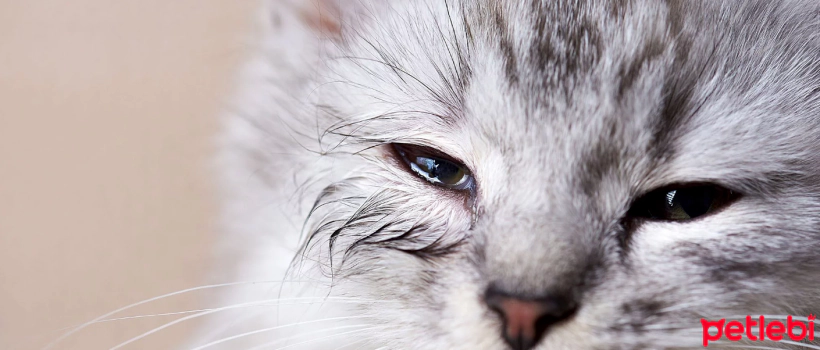
Haw's syndrome is a rare eyelid problem in cats. This syndrome is defined as the drooping of the third eyelid in both eyes in cats. Eyelid drooping can occur due to many reasons. When Haw's syndrome occurs suddenly, it is usually accompanied by diarrhea and intestinal problems.
Advertisement
Haw's syndrome is a rare eyelid problem in cats. This syndrome is defined as the drooping of the third eyelid in both eyes in cats. Eyelid drooping can occur due to many reasons. When Haw's syndrome occurs suddenly, it is usually accompanied by diarrhea and intestinal problems. This syndrome can occur in cats of all ages, but it is more common in young adult cats.

What is a Third Eyelid?
The third eyelid, also known as the nictitating membrane, is a structure that sweeps the surface of the eye to allow tears to spread across the cornea and protect the eye. The third eyelid is found in cats and many other mammals. It is usually possible to see the edge of the third eyelid, located at the lower corner of the eye near the nose. The third eyelid is pale pink, but may have dark pigment on its surface.
Haw's syndrome is not the only cause of third eyelid drooping in cats. Anesthesia, conjunctivitis, corneal ulcers, uveitis, glaucoma, cherry eye disease, masses in the eye, cysts around the eye due to various causes, and Horner's syndrome are other causes that can lead to third eyelid drooping in cats. While some of these require serious treatment, others may resolve spontaneously.
Apart from discomfort, excessively relaxed or sleepy cats may also have a protruding third eyelid. You may see the third eyelid on the eye while your cat is sleeping or immediately after waking up. The eyelid will return to its place as the cat wakes up and comes to its senses. This is a perfectly normal occurrence. Although cat owners who encounter a protruding third eyelid for the first time are often a little worried, there is no need to worry.

How Does Haw's Syndrome Occur in Cats?
There can be many reasons for the protruding third eyelid. However, a drooping third eyelid is not always considered Haw's syndrome. For Haw's syndrome, diarrhea or other intestinal problems must also be present along with the drooping eyelid.
Cases where the exact cause of the syndrome is unknown are considered idiopathic. In most cases, Haw's syndrome is caused by tapeworm infestations or viral infections. Toro-like viruses can cause this syndrome, but not every viral infection causes Haw's syndrome. Because it is accompanied by diarrhea, it is usually associated with infections that cause diarrhea. There is not much information about the contagiousness of the syndrome. However, sometimes other cats in the house can also be affected.
The affected cat may appear immobile, lethargic, or depressed. Loss of appetite usually occurs with the syndrome in cats. In such cases, the cat may need to be thoroughly examined by a veterinarian. There may be other causes for the protruding third eyelid and diarrhea. These causes are considered during the examination and ruled out with various tests.

Treatment Methods for Haw's Syndrome in Cats
It may take 4-6 weeks for the first signs of the syndrome to appear. Cats with Haw's syndrome usually recover completely after a short time. However, if the drooping of the third eyelid persists for more than four months, the diagnosis needs to be reconsidered. When the condition causing diarrhea is diagnosed, a specific treatment is applied. Depending on the cause of the diarrhea, dietary changes or treatment to eliminate worms in cases of worm infestation are among the most frequently applied methods. The drooping of the third eyelid usually does not cause problems in the eye. However, in very extreme cases, the drooping of the third eyelid can seriously impair the field of vision. In extreme cases where vision is obstructed by the third eyelids covering most of the eye, eye drops can be used to temporarily reverse the protrusion of the third eyelid. However, the use of eye drops does not resolve the problem more quickly.
When a condition causing diarrhea is diagnosed, a specific treatment is applied. Depending on the cause of the diarrhea, dietary changes or, in cases of worm infestation, treatment to eliminate the worms are among the most frequently applied methods.
A drooping third eyelid usually does not cause problems in the eye. However, in very extreme cases, a drooping third eyelid can seriously impair the field of vision. In extreme cases where vision is obstructed by the third eyelid covering most of the eye, eye drops can be used to temporarily reverse the protrusion of the third eyelid. However, using eye drops does not resolve the problem more quickly.
Advertisement
Advertisement
Keep exploring
Continue reading
Cat Health
Why Do Cats Get Thinner as They Age? Symptoms and Treatment
When stroking an aging cat's back, the spine or hip bones may feel more prominent than before, which is the first change most cat owners notice.
Read guide →
Cat Health
Cat Anatomy and Organs: Body Structure, Health Signs and Relationship with Diseases
A slight change in posture, a slight limp in gait, or a difference in litter box habits in cats can give clues about their body systems.
Read guide →
Cat Health
How to Acclimate Cats to Carrier Bags?
Does your cat hide, hiss, or resist with all its might the moment it sees the carrier? This reaction is described as carrier phobia in most homes…
Read guide →
Cat Health
What Should Be Considered After Vaccination in Cats?
Following your cat's vaccination schedule for health and a long life is one of the most critical decisions you will make as a pet owner.
Read guide →