Oriental Shorthair Cat Characteristics, Care and Temperament
Imagine a cat accompanying your morning coffee, following you around all day and chatting with you. That's exactly the kind of companion an Oriental Shorthair cat is. This breed, which attracts attention with its elegant and slender body, huge ears, and incessant chatter, is a colorful member of…

Advertisement
Imagine a cat accompanying your morning coffee, following you around all day and chatting with you. That's exactly the kind of companion an Oriental Shorthair cat is. This breed, which attracts attention with its elegant and slender body, huge ears, and incessant chatter, is a colorful member of the Siamese family.
So what kind of cat is an Oriental Shorthair? In short: social, energetic, intelligent, and extremely devoted. They love attention, dislike loneliness, and have a character that never stops playing. Of course, there's more to it, let's discover it together.
Warning: This content is for general informational purposes only. Every cat is unique, and even the characteristics stated as breed-specific may vary from cat to cat. For a definitive assessment of your cat's health, behavior, or diet, always consult a veterinarian. Oriental Shorthair Cat General Characteristics The Oriental Shorthair shares the same body structure as the Balinese and Oriental Longhair, which are members of the Siamese breed group. Its distinguishing feature is its short, glossy fur, which can come in a wide variety of colors. Originating in England in the 1950s, the Oriental Shorthair is a breed developed by humans. After World War II, as the Siamese gene pool narrowed, breeders of the time crossbred Siamese cats with Russian Blue cats, British Shorthairs, Abyssinians, and tabby house cats. Physically, it has a medium-sized, long, and muscular body. Its head is shaped like an equilateral triangle, its ears are large and wide at the base, and its eyes are almond-shaped and vibrant green. Its fur is short, silky, and clings to the body. Weight varies according to sources, but is generally stated to be between 2.5 and 5.5 kilograms. Color is the signature of this breed. Oriental Shorthairs are seen in hundreds of color and pattern combinations, from solid colors to tabby, tortoiseshell to silver and smoke. Some sources mention more than 300 variations. This richness has earned the breed nicknames such as "Ornamental" and "designer-gene Siamese". Oriental Shorthair Cat Character and Temperament Sociability stands out among the character traits of Oriental Shorthairs. This cat becomes deeply attached to its people, wants to spend most of the day with them, and thrives on attention. A type that jumps from lap to lap, greets guests, and crawls under the covers in bed. However, when ignored, they can visibly withdraw.
General Characteristics of Oriental Shorthair Cats
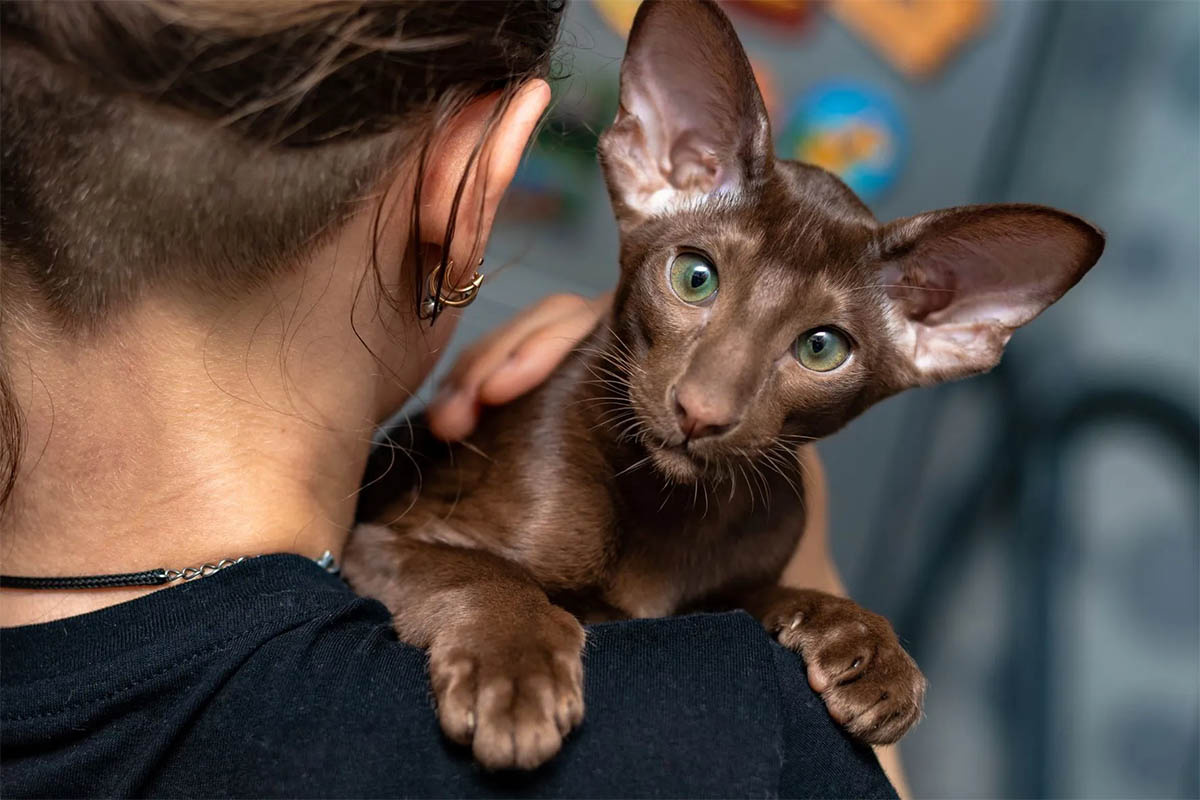
The Oriental Shorthair shares the same body structure as the Balinese and Oriental Longhair, which are members of the Siamese breed group. What distinguishes it from the rest of the group is its short, glossy fur, which can come in a wide variety of colors.
Originating in England in the 1950s, the Oriental Shorthair cat is a breed developed by humans. After World War II, as the Siamese gene pool narrowed, breeders of the time crossbred Siamese cats with Russian Blue cats, British Shorthairs, Abyssinians, and tabby house cats.
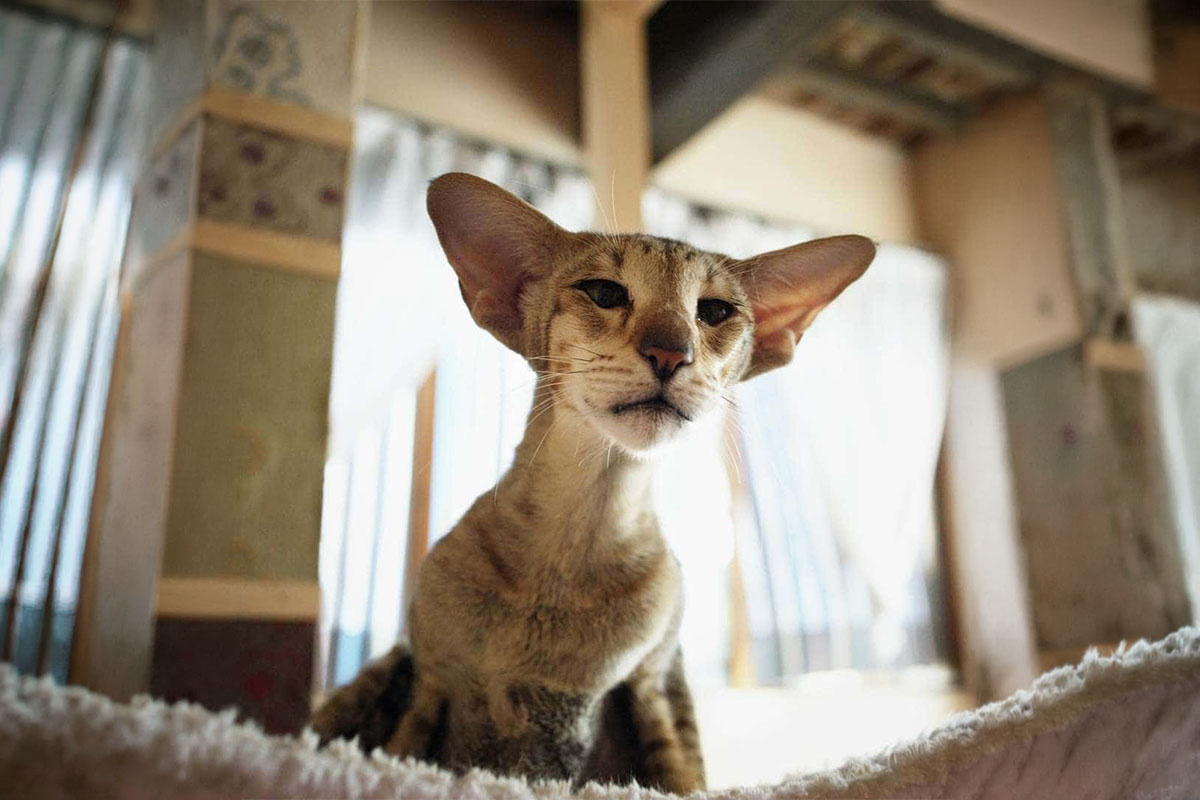
Physically, it has a medium-sized, long and muscular body. Its head is equilateral triangle-shaped, its ears are large and broad at the base, and its eyes are almond-shaped and bright green. Its coat is short, silky, and clings to the body. Weight varies according to sources, but is generally stated to be between 2.5 and 5.5 kilograms.
Color is the signature of this breed. Oriental Shorthairs are seen in hundreds of color and pattern combinations, from solid colors to tabby, tortoiseshell to silver and smoke. Some sources mention more than 300 variations. This richness has earned the breed nicknames such as "Ornamental" and "designer-gene Siamese".
Oriental Shorthair Cat Character and Temperament
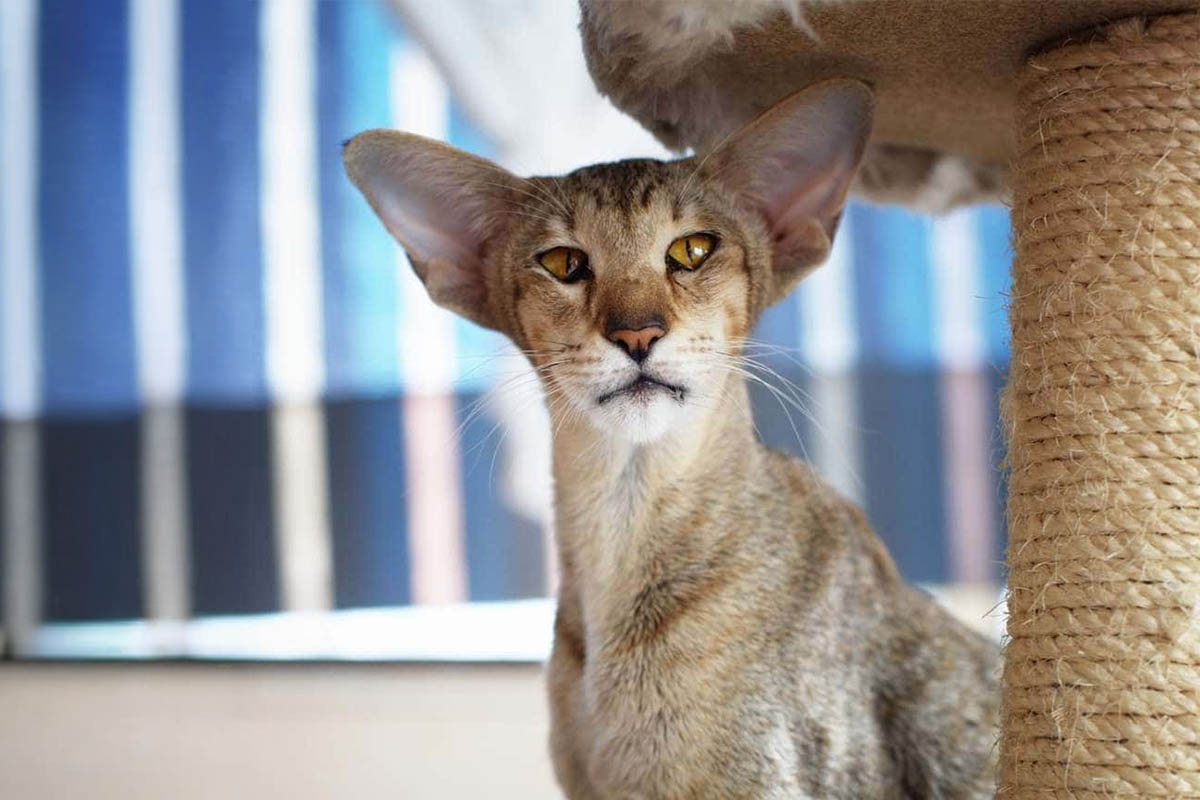
Sociability stands out among the character traits of the Oriental Shorthair. This cat becomes deeply attached to its people, wants to spend most of the day with them, and thrives on attention. It's the type that jumps from lap to lap, greets guests, and snuggles under the covers in bed. When neglected, it can visibly withdraw.
Their talkativeness is legendary. To those who ask, "Are Oriental Shorthairs talkative?", sources give a clear answer: yes, very much so. They'll tell you about their day, comment on what you're doing, and make repeated sounds to let you know they want something. According to Chewy, their meows sometimes resemble a car horn or a baby's cry. They have a wide repertoire of trills, chirps, and high-pitched sounds.
Their intelligence and athleticism are the other half of their character. They may show interest in fetch games, climb high shelves, and display their agility. There is a widespread consensus that they retain their puppy spirit throughout their lives, remaining curious and outgoing.
It is not suitable for someone who wants a quiet life and expects their belongings to stay in place. On the other hand, it can be an ideal companion for someone looking for an interactive, fun and loyal friend.
Is the Oriental Shorthair Cat Suitable for Indoor Living?
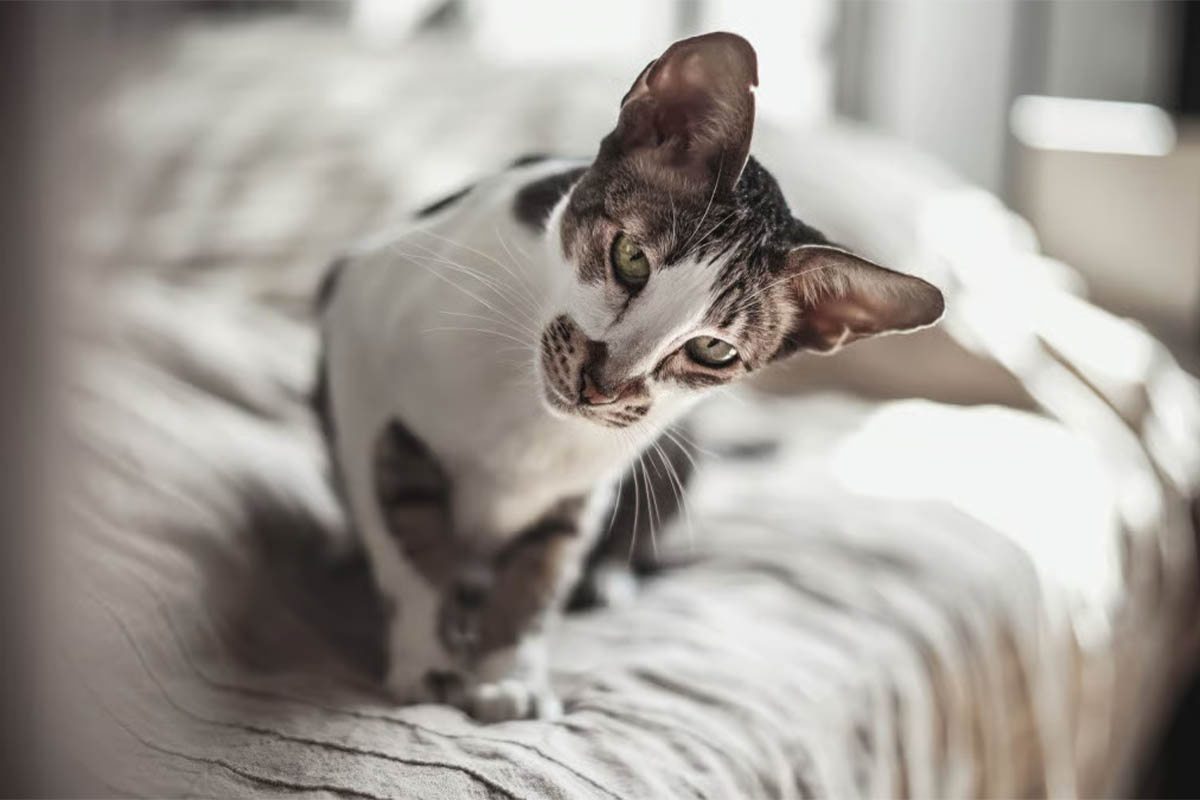
The Oriental Shorthair can adapt to indoor living, but this adaptation depends on one condition: an enriched environment. For the safety of the breed, it is not recommended to let it roam freely outside. It is recommended that it be kept indoors, and in return, provided that there is plenty of vertical space.
A cat tree, wall shelves, climbing platforms, and puzzle toys can help channel its energy in the right direction. It's also a good idea to remove any fragile trinkets. A curious Oriental cat enjoys moving shiny little objects and clearing shelves.
Its relationship with children is generally classified as positive. TICA and GCCF state that this breed gets along well with children, other cats, and dogs. Chewy also adds that, when properly introduced, it is compatible with respectful children and other pets.
Of course, as with all cats, its ability to adapt depends on its needs being met and the introduction being done patiently and under supervision.
How to Care for an Oriental Shorthair Cat?
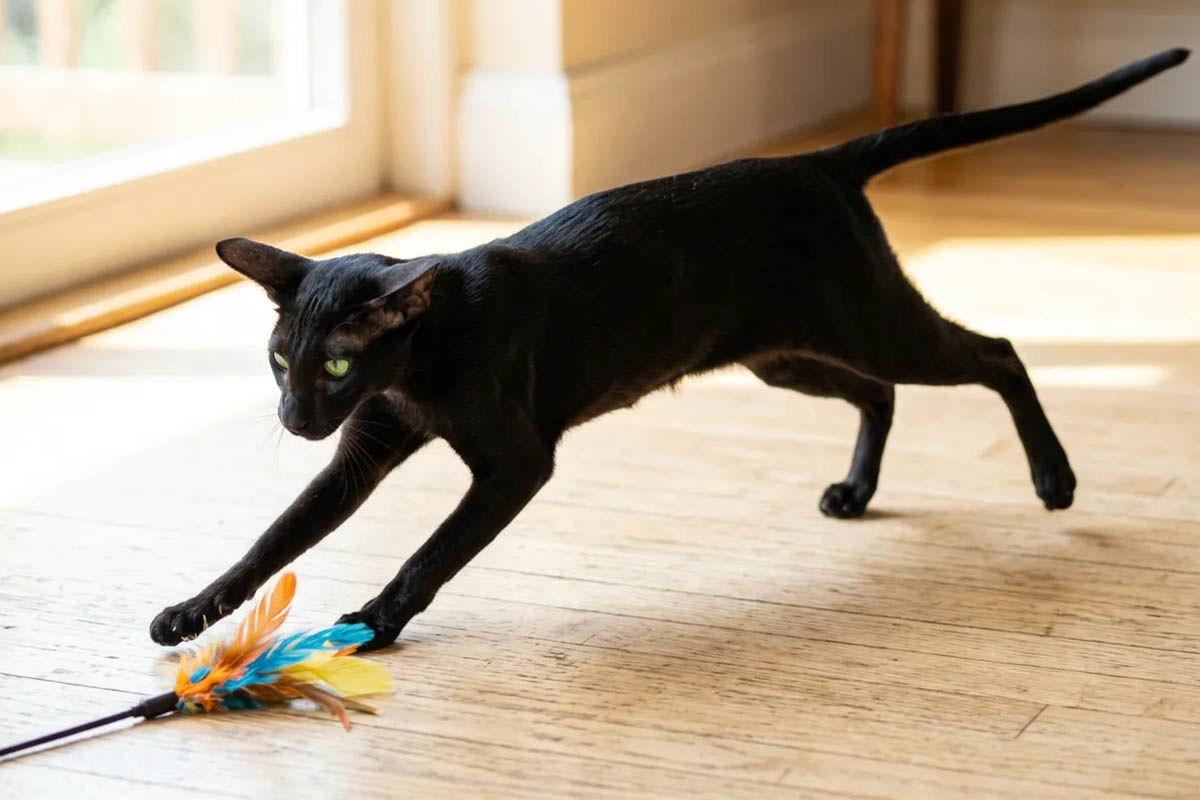
Oriental Shorthair care cannot be reduced to just grooming. The need for care is primarily focused on attention and mental stimulation.
Oriental Shorthair Cat Grooming
The short, silky, and close-fitting coat requires low maintenance. Brushing once a week with a soft brush or stainless steel comb is sufficient for most cats. You can also use brushing time as an opportunity to check the skin for any wounds or parasites.
Brushing may be more frequent during seasonal changes as shedding may increase slightly. They generally shed a low amount of hair; if hair loss increases significantly, you should consult a veterinarian.
Oriental Shorthair Cat Oral and Dental Health
Dental care is a routine that should not be neglected in this breed. Regular brushing with cat toothpaste can reduce the risk of tartar and gum disease and support overall health. In addition to brushing at home, it is beneficial to schedule professional dental cleanings at intervals recommended by your veterinarian.
Oriental Shorthair Cat Ear and Eye Care
Ear and eye cleaning is also on the weekly checklist. The Oriental's large ears, wide at the base, are prone to accumulating dirt and debris. Ear care products can be used to clean the ears as needed. However, be aware: Since the inner ear is a sensitive area, it is safe to learn the first application from your veterinarian.
Nails should be trimmed at the tips every two to four weeks. The toenails, or thumb nails, tend to grow towards the paw pad, so these nails should be monitored closely. Oriental Shorthair Cat Exercise Needs Daily exercise is not a luxury for them, it's a necessity. Veterinarians who have commented at Chewy recommend 20-30 minutes of interactive play per day, broken down into short sessions of five to ten minutes. Fishing rod toys, feathered toys, and moving toys that can trigger their hunting instincts are ideal. Vertical space is just as important as play. Due to their ability to climb and jump, Orientals can turn your bookshelves and cabinets into their own play area when given no other choice. Tall cat trees and wall-mounted shelves provide a healthy outlet for this energy.
Exercise Needs of Oriental Shorthair Cats
Daily exercise is not a luxury for them, it's a necessity. Veterinarians who spoke to Chewy recommend breaking up 20-30 minutes of interactive play per day into shorter sessions of five to ten minutes. Fishing rod toys, plush toys, and moving toys that can trigger hunting instincts are ideal.
Vertical space is just as important as play. Due to their climbing and jumping abilities, Orientals can turn your bookshelves and cabinets into their own play areas if given no other choice. Tall cat trees and wall-mounted shelves provide a healthy outlet for this energy.
A bored Oriental Shorthair might learn to open a cupboard or play with a light switch. It's possible for it to do even more. Therefore, providing mental stimulation is recommended.
Oriental Shorthair Kedisi Beslenmesi
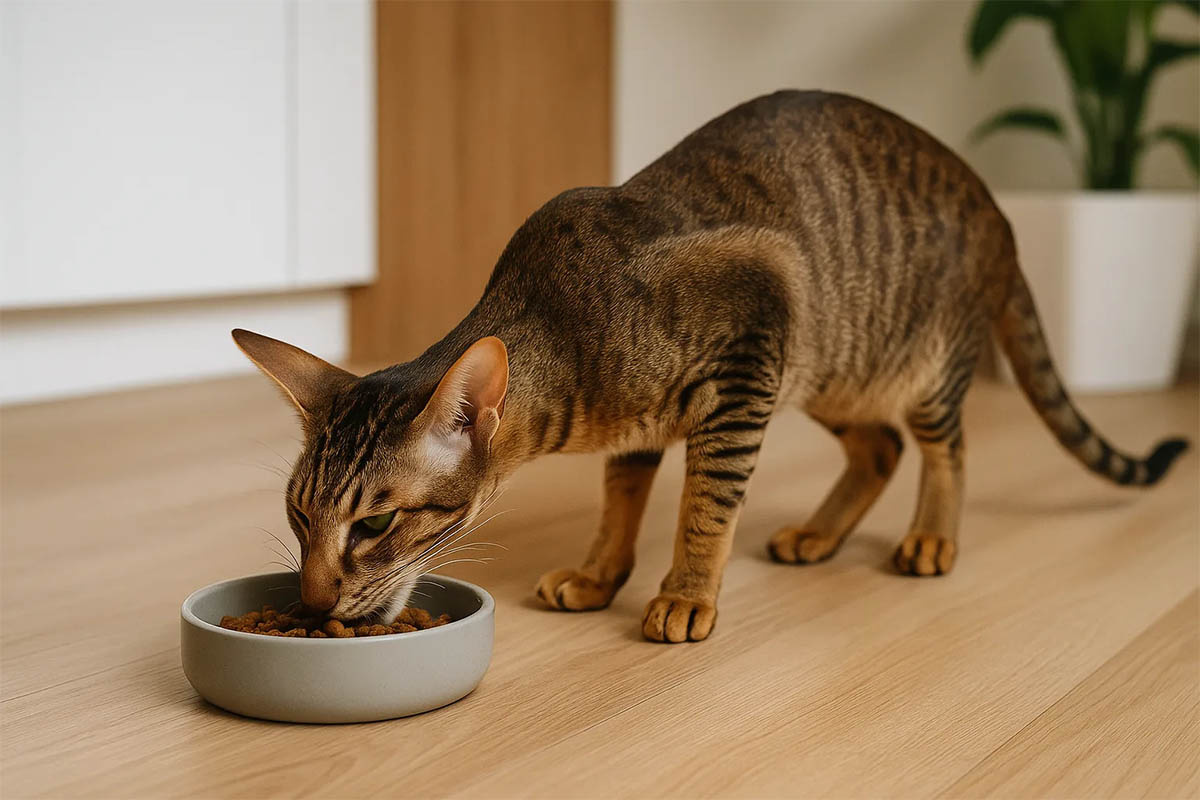
The main goal in Oriental Shorthair nutrition is to establish a balanced and controlled routine. A high-quality cat food with complete and balanced ingredients helps meet daily nutritional needs. After choosing the appropriate food, establishing regular meal times is just as important as the food itself.
Adult Oriental Shorthairs are recommended to be fed at least two meals a day. Kittens, on the other hand, generally need three or four meals a day because they expend more energy during their growth period. Wet foods can help increase daily fluid intake thanks to their high water content. Portion control is paramount in this breed. While some sources suggest that Oriental Shorthairs are not prone to weight gain due to their active nature, other veterinarians state that these cats have a hearty appetite and can easily gain weight if food is constantly left available. Therefore, the safest approach is to offer regular meals in measured portions and monitor their condition at regular intervals, rather than leaving food readily available throughout the day. Slow-feeding bowls and puzzle toys, some models of which also help control the amount of food, can help slow down the eating speed of fast-eating Oriental Shorthairs. Adequate water intake is also an important part of daily care. Automatic water dispensers can also encourage many cats to drink more water.
Portion control is paramount in this breed. While some sources suggest that Oriental Shorthairs are not prone to overweight due to their active nature, some veterinarians state that these cats have a good appetite and can easily gain weight if food is constantly left available. Therefore, the safest approach is to offer regular meals in measured portions instead of leaving food readily available throughout the day, and to monitor their condition at regular intervals. Slow-feeding bowls and puzzle toys, some models of which also help control the amount of food, can help slow down the eating speed of fast-eating Oriental Shorthairs.
Adequate water intake is also an important part of daily care. Automatic water dispensers can also encourage many cats to drink more water.
Common Diseases in Oriental Shorthair Cats
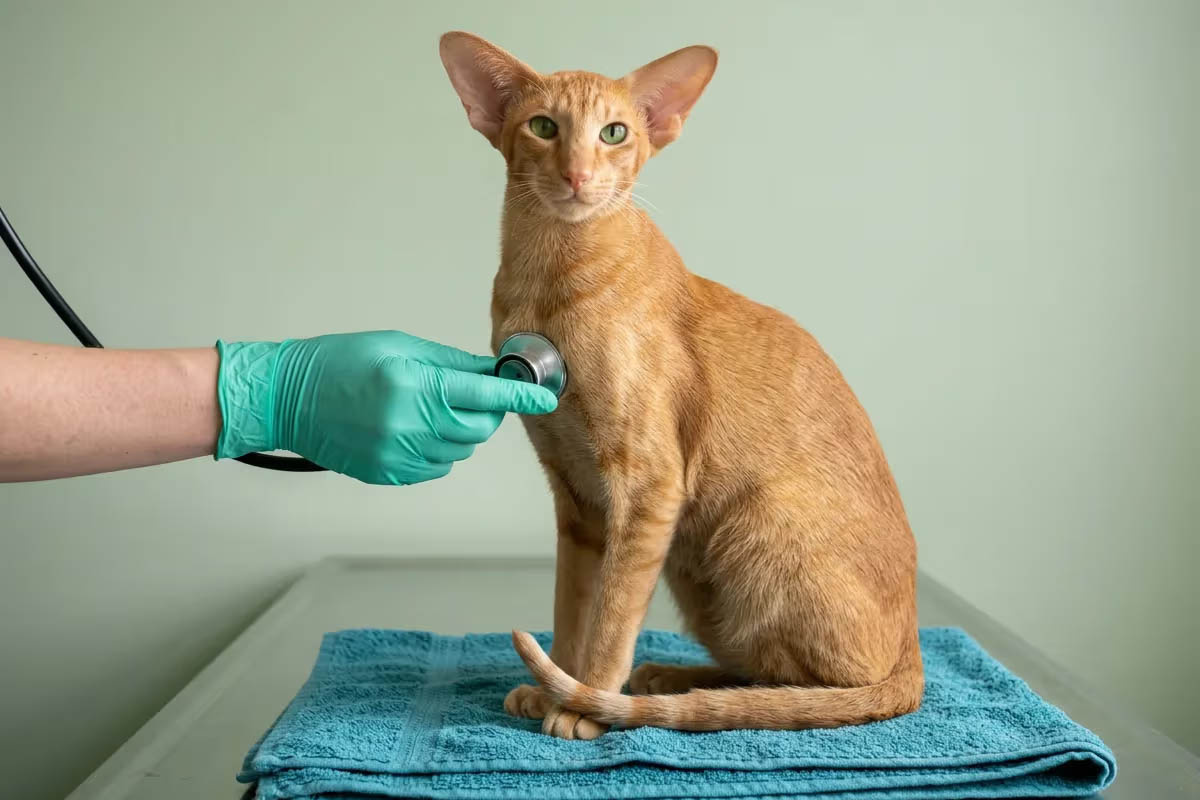
Oriental Shorthairs are generally a healthy breed, but it can be stated that they have some hereditary predispositions stemming from their Siamese ancestry.
Progressive Retinal Atrophy (PRA)
This is among the health issues to be aware of in this breed. PRA is a group of eye diseases inherited through autosomal recessive inheritance, in which the retina gradually degenerates, and can lead to blindness as it progresses.
The first sign is usually night blindness, which may be followed by complete vision loss, and cataracts may develop secondarily. According to Catster, symptoms appear in most cats around the age of 3-5 years.
Amyloidosis
Familial AA-amyloidosis in Siamese and Oriental cats was documented in the 1997 study by Van der Linde-Sipman et al.
Amyloidosis is a serious condition in which abnormal proteins called amyloid accumulate in the tissues of organs such as the liver and kidneys, impairing their function, and Oriental Shorthairs may be more susceptible to this disease than other breeds.
Although it is usually seen in older cats, it can appear as early as 1-4 years in this breed. Symptoms include weight loss, mouth ulcers, persistent vomiting, and dehydration. Since the kidney is the most affected organ, it can lead to kidney failure.
Feline Asthma and Bronchial Diseases
Oriental Shorthairs, due to a predisposition inherited from their Siamese ancestors, may be prone to feline asthma and lower respiratory tract diseases. Feline asthma is a life-threatening disease affecting approximately 5% of cats. Chronic bronchitis, on the other hand, can present a slowly progressing and irreversible condition. The first sign is often a dry or barking cough, and breathing may become difficult over time.
If coughing, wheezing, or difficulty breathing is noticed, a veterinarian should be consulted immediately. Keeping the home environment free from smoke and strong odors helps reduce the risks.
Heart Diseases
Several hereditary heart diseases can be seen in this breed. Dilated cardiomyopathy, a condition where the heart enlarges and loses its contractile power, is not as common as it used to be with the addition of taurine to the food, but it still occasionally occurs in Oriental Shorthair, Siamese, Burmese, and Abyssinian cats. It is useful to be aware of symptoms such as loss of appetite, weakness, and lethargy. Definitive diagnosis is made with electrocardiography, X-ray, and echocardiography. Annual check-ups with heart screenings are the best way to catch problems early. Flat Chest Kitten Syndrome Flat chest kitten syndrome, also known as “Flat chested kitten syndrome,” is a condition where the rib cage does not develop normally and can lead to respiratory difficulties. The GCCF states that this syndrome can be seen in the Oriental family. This condition, which appears in kittenhood, can be managed with veterinary monitoring if detected early.
It's worthwhile to be alert for symptoms such as loss of appetite, lethargy, and sluggishness. A definitive diagnosis is made with electrocardiography, X-rays, and echocardiography. Annual checkups with heart scans are the best way to catch problems early.
Flat Chest Kitten
Syndrome, also known as “flat chested kitten syndrome,” is a condition where the rib cage doesn't develop normally, potentially leading to respiratory difficulties. The GCCF states that this syndrome can occur in the Oriental family. This condition, which appears in kittenhood, can be managed with veterinary follow-up if detected early.
Strabismus
Strabismus, common in Siamese cats, is also seen in Oriental Shorthairs. One or both eyes turn inward towards the nose. Although the appearance is worrying, this condition does not harm the cat. The affected cat usually sees without problems and does not require treatment. It is mostly congenital in this breed. However, if strabismus develops suddenly in a cat, it should be shown to a veterinarian to rule out head trauma or a neurological cause.
Pika
Some Oriental Shorthairs may develop a habit of eating non-edible objects such as fabric, plastic, or string. Swallowed objects can lead to dangerous digestive blockages. Keeping small objects away from floors and countertops is a protective approach to prevent these curious and intelligent cats from opening cupboards. If this behavior is noticed repeatedly, a veterinarian should be consulted.
Caution: Seek immediate veterinary attention for any signs of vomiting, weight loss, coughing, shortness of breath, difficulty urinating, vision loss, or any swelling or sores you notice under the skin. Observation at home is valuable, but it does not replace diagnosis and treatment.
Things to Know Before Adopting an Oriental Shorthair Cat
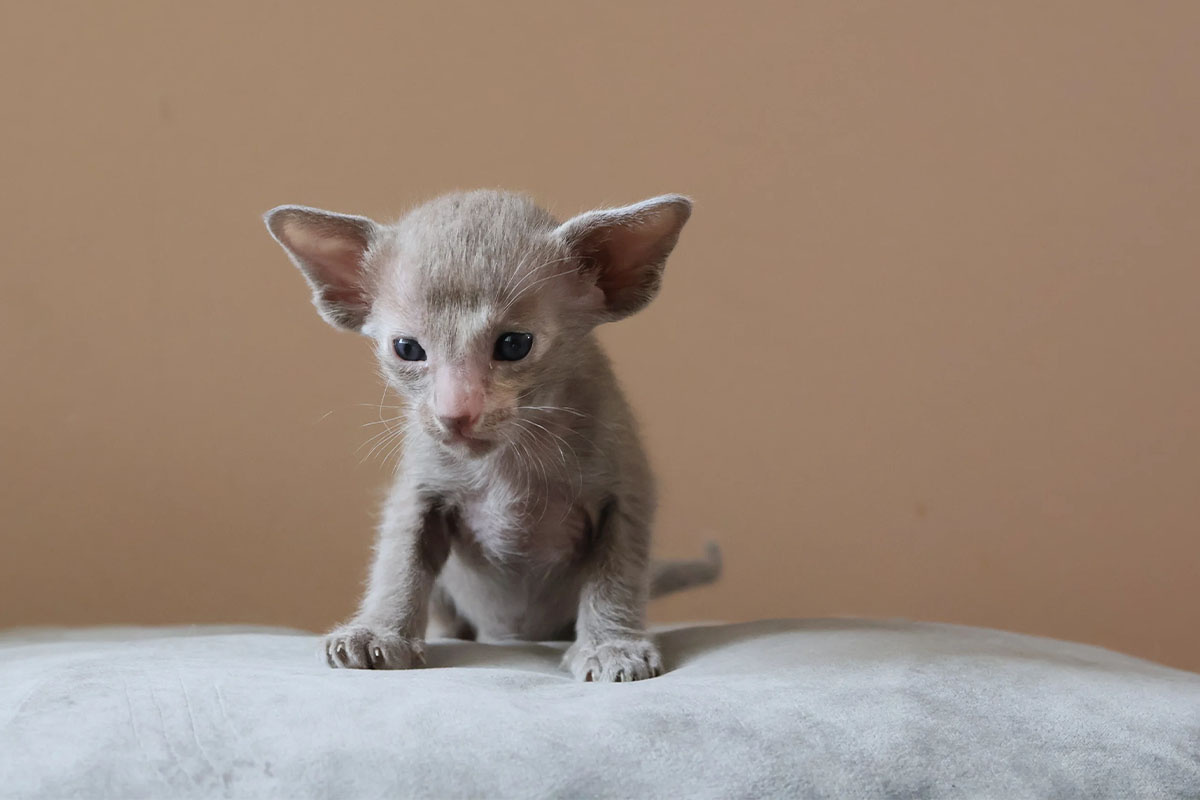
The first question to ask before adopting an Oriental Shorthair is: How much time do I have at home? This breed is insatiable and cannot tolerate loneliness. A quiet and sedentary life with no one home all day is not suitable for them.
Care responsibilities are light on the fur side, but intense on the attention and mental stimulation side. Daily play, vertical space, puzzle toys, and regular conversation form the basis of this cat's happiness.
If its needs are not met, distress and behavioral problems may develop. Considering a companion with similar energy levels is often a good solution for situations where it will be left alone.
Care should be taken against diseases to which it may be genetically predisposed. If any changes are observed in its health or behavior, it is necessary to consult a veterinarian. Regular health checkups are also among the basic responsibilities of those who adopt.
Frequently Asked Questions
Is the Oriental Shorthair cat very active?
Yes, and extremely active. This breed is athletic, energetic, and retains its kitten spirit throughout its life. 20-30 minutes of interactive play a day, vertical surfaces to climb on, and mental stimulation are among its top needs.
Does an Oriental Shorthair cat meow a lot?
It is one of the most talkative cats. This trait can be challenging for someone who prefers silence.
Does an Oriental Shorthair cat resemble a Siamese cat?
Yes, very similar. The Oriental Shorthair is actually a Siamese cat that does not carry the color-pointed gene; it shares the same slender, tube-shaped body, triangular head, large ears, and almond eyes. The main difference is in color and eye color: Orientals come in every color except the typical "pointed" patterns of Siamese cats, and their eyes are a vibrant green.
Oriental Shorthair kedisi hangi renklerde olur?
Almost every color imaginable. They can be solid, tabby, tortoiseshell, smoke, shaded, and bicolor. There is a wide range from marbled to chocolate, lavender to cinnamon.
Do Oriental Shorthair cats shed?
Yes, they shed, but under normal conditions, the shedding rate is low. Low shedding does not mean that this breed is hypoallergenic.
Can an Oriental Shorthair cat be left alone at home?
They can tolerate short periods of loneliness, but prolonged loneliness is not suitable for this breed. Orientals are deeply attached to their humans and may become withdrawn and develop separation anxiety if they don't receive enough interaction.
Do Oriental Shorthair cats get along well with children?
Generally, they get along well. Thanks to their social and outgoing nature, they are compatible with children who respect their boundaries. Proper introduction and supervised interaction are crucial here. Because the cat has a high need for attention and time, some sources recommend homes with older children.
How many years do Oriental Shorthair cats live?
The average lifespan of an Oriental Shorthair cat is generally stated as 12-15 years. Life expectancy is a combination of genetics, nutrition, weight management, regular veterinary check-ups, and adequate mental and physical enrichment. In other words, no single factor is the determining factor.
References
https://tica.org/breed/oriental-shorthair/
https://www.gccfcats.org/getting-a-cat/choosing/cat-breeds/oriental/
https://fifeweb.org/cats/breeds/oriental-shorthair/
https://www.purina.co.uk/find-a-pet/cat-breeds/oriental-short-hair
https://vcahospitals.com/know-your-pet/cat-breeds/oriental
https://www.chewy.com/education/cat-breeds/oriental-shorthair
https://www.catster.com/cat-health-care/oriental-shorthair-cat-health-problems/
Van der Linde-Sipman J. S. ve ark., "Generalized AA-amyloidosis in Siamese and Oriental cats", Veterinary Immunology and Immunopathology, 1997.
Advertisement
Advertisement
Keep exploring
Continue reading

Cat Care
Is My Cat Coughing or Trying to Pass a Hairball?
Seeing your cat crouch down, stretching its neck, and trying to expel something with a strange sound can be unsettling.
Read guide →
Cat Care
York Chocolate Cat Characteristics, Care and Temperament
With its dark brown fur, watchful eyes, and observant demeanor, the York Chocolate is a cat that sparks curiosity at first sight.
Read guide →
Cat Care
Tiffanie Cat Characteristics, Care and Temperament
Silky fur, on its neck With its frilly mane and large, curious eyes, the Tiffanie cat immediately catches the eye.
Read guide →
Cat Care
Snowshoe Cat Characteristics, Character and Care
The Snowshoe cat is a unique breed developed by the controlled mating of Siamese cats and American Shorthair cats.
Read guide →