Parasite Vaccine for Cats: What it is, How it is Done, and Side Effects
For cats to live a healthy life, their vaccination schedules and parasite controls should not be neglected. Although the products used in parasite control are commonly referred to as "parasite vaccines," they are mostly antiparasitic drugs, not vaccines.

Advertisement
For cats to live a healthy life, their vaccination schedules and parasite controls should not be neglected. Although the products used in parasite control are commonly referred to as "parasite vaccines," they are mostly antiparasitic drugs, not vaccines. These applications help prevent health problems that may arise from internal and external parasites or to control existing parasites.
While it is thought that cats living indoors will not encounter parasites, the risk from other animals going outside, people's shoes, and the cat's access to areas such as balconies or gardens does not completely eliminate the risk. The product to be used and the frequency of application should be determined by a veterinarian by evaluating the cat's living conditions and individual risks.
In this article, you can find the most frequently asked questions about internal and external parasite applications for cats.
Warning: This content is for general information purposes only. The appropriate parasite control plan for your cat should be determined by a veterinarian.
What is the purpose of parasite vaccination in cats?

Practices known as parasite vaccinations in cats primarily help prevent internal or external parasites and control existing parasites.
Cats can experience parasite problems unexpectedly. Internal parasites such as roundworms, hookworms, and tapeworms can affect the digestive system, leading to nutrient loss and digestive problems. External parasites such as fleas and ticks can cause skin damage, itching, and various infections.
For example, heartworm, which causes quite serious health problems for cats, is transmitted through the bite of infected mosquitoes. Since some parasites can be transmitted to humans, parasite control should also be considered in terms of the health of people who share the same living space with the cat.
Not every antiparasitic product is effective against all types of parasites, and the duration of protection may vary depending on the product. It is important that the appropriate product is determined by a veterinarian, taking into account the cat's age, health status, lifestyle, and the parasites it may encounter.
Should Indoor Cats Receive External Parasite Vaccinations or Medication?
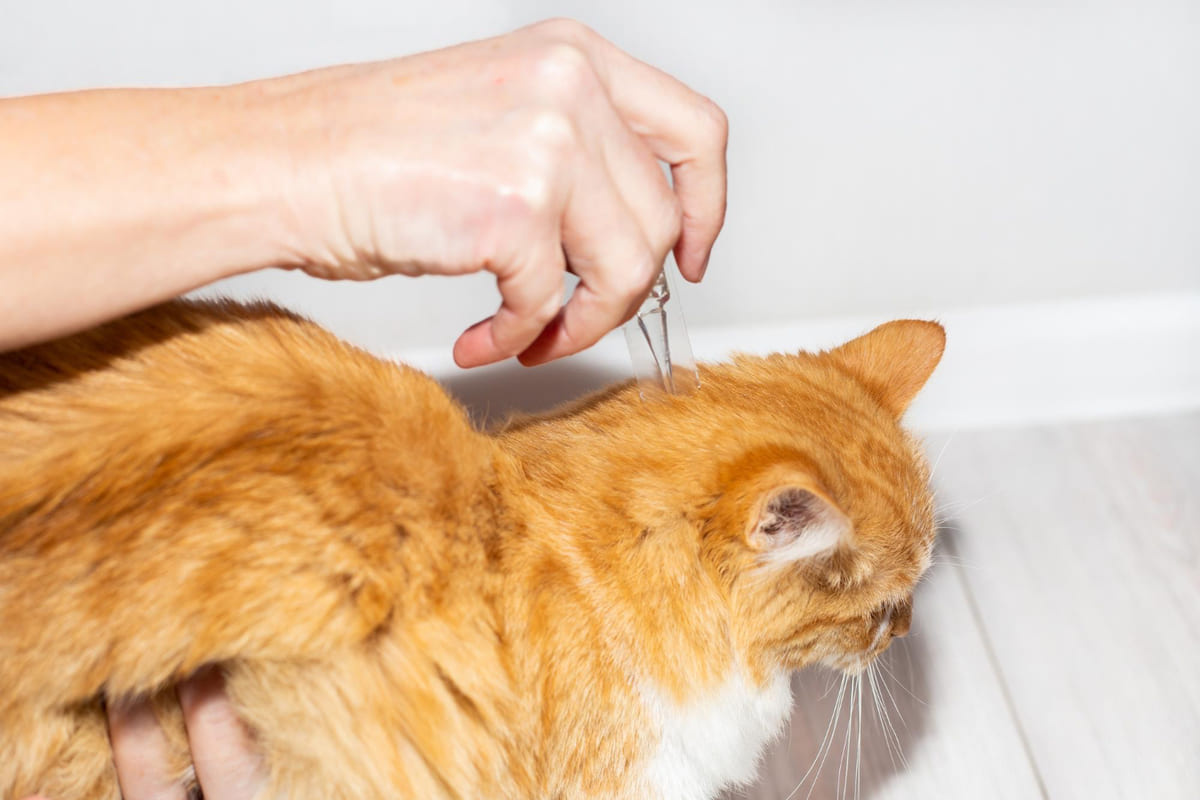
Whether or not to administer external parasite treatment to indoor cats should be determined by evaluating the cat's living conditions and the risk of encountering parasites. While living indoors can reduce the likelihood of encountering fleas, ticks, and mites, it does not completely eliminate the risk.
Fleas can be brought into the home on people's shoes or by pets that regularly go outside. A cat going out onto a balcony or garden, being walked on a leash, or entering areas with other animals during travel or boarding stays can also increase the likelihood of contact.
These possibilities should not be interpreted as meaning that the same product should be applied to every house cat at the same intervals. The veterinarian should assess the cat's individual risks to determine whether regular protection is needed, which parasites to target, and the appropriate application interval.
How Do External Parasites Affect Cats?

The effects of external parasites on cats can vary depending on the type and density of the parasite and the cat's sensitivity. Fleas, ticks, and mites can cause itching, skin damage, and an increased risk of infection. Cats that develop hypersensitivity to fleas may experience flea allergy dermatitis, which can significantly affect the cat's quality of life.
Fleas and ticks can carry certain infectious agents. If a cat swallows an infected flea, it can also transmit certain types of tapeworms. A high flea or tick infestation can cause weakness and anemia, especially in kittens; severe cases can be life-threatening. Some cats may carry external parasites but show no noticeable signs. Frequent grooming can also make it difficult to detect parasites in the fur. Since itching or skin changes alone do not constitute a diagnosis of parasites, a definitive assessment should be made by a veterinarian. How is Parasite Vaccination Performed in Cats? Medications used for parasite control in cats can be applied topically or orally, depending on the product's form and the parasites it targets. Topical external parasite products are commonly applied by dropping them onto the nape of the neck. The product should be applied to the skin in the area specified in the packaging instructions, not to the fur.
Some cats may carry external parasites but not show any noticeable symptoms. Frequent grooming by cats can make it difficult to detect parasites in their fur. Since itching or skin changes alone do not constitute a diagnosis of parasites, a definitive assessment should be made by a veterinarian.
How is Parasite Vaccination Performed in Cats?
Medications used for parasite control in cats can be applied topically or orally, depending on the product form and the parasites it targets. Topical external parasite products are commonly applied by dropping them onto the nape of the neck. The product should be applied to the skin in the area specified in the packaging instructions, not to the fur.
Terrey Hills Animal Hospital's cat parasite control guide states that most topical products are designed to be applied to the nape of the neck, an area the cat cannot lick. Contact, drying, and washing times specified in the product instructions should be followed after application.
Internal parasite medications may be in tablet or oral liquid form, depending on the targeted parasite and the product's properties. Some topical products may be effective against external parasites such as fleas and ticks, as well as certain intestinal parasites. Taking oral medication at the recommended dose is important for its effectiveness.
If there is difficulty in applying the product, the cat should not be forced; veterinarians should be consulted for application assistance or information about a different product form.
Are Parasite Medications Effective and Safe for Cats?

Antiparasitic drugs developed for cats can be effective against the parasites they target when used at the correct dose and at the recommended intervals. However, not every product targets all internal and external parasites. The effectiveness of a product depends on its active ingredient, the targeted parasite, and correct application.
A veterinary review published in Veterinary Times states that when selecting a product, both efficacy against the target parasite and safety of the product for the cat in question should be evaluated. The suitability of the product for use in kittens, pregnant or lactating cats should be specifically checked.
Important: External parasite medications produced for dogs should not be used in cats. The product to be used should be selected with the recommendation of a veterinarian and applied according to the packaging instructions. Products whose active ingredient is unknown, whose suitability for cat use cannot be verified, or which are not obtained from a reliable source should not be used.
What are the Side Effects of Parasite Vaccination in Cats?

Possible side effects of antiparasitic products in cats may vary depending on the active ingredient used, the dose, and the route of administration. The safety profiles of topical, oral, and other forms of application are not the same. Therefore, it would not be accurate to provide a single list of side effects applicable to all products.
If an unexpected change is observed in the cat's skin, digestion, general condition, or behavior after administration, a veterinarian should be contacted. If the symptoms are severe, rapidly worsening, or if it is suspected that the wrong product or dose has been used, treatment should not be delayed. The MSD Veterinary Manual also recommends following the program recommended by the veterinarian for the prevention and treatment of parasites.
Some cats may want to remain alone for a while after returning home from a visit to the veterinary clinic. This behavior should not be interpreted as a drug-related side effect alone; the cat's general condition and accompanying symptoms should be evaluated together.
How Often Should Cats Be Vaccinated Against Parasites?

The frequency of parasite vaccinations in cats can vary. The application interval is determined according to the duration of protection of the product used, the type of parasite targeted, the cat's age, health status, and living conditions. Therefore, it is not entirely accurate to say that internal and external parasite treatments should be given every cat every three months.
When determining the frequency of routine internal parasite treatments, whether the cat goes outside and the possibility of contact with other cats should be evaluated. Hunting behavior or the presence of other animals that go outside in the house can also differentiate the risk of encountering parasites.
There are also variables specific to the products preferred: Some products may have a shorter protection period, while others may have a longer one. The application interval indicated on the product packaging should not be exceeded, and the schedule recommended by the veterinarian should be followed. The existing parasite control plan should be re-evaluated when there are changes in the cat's living conditions. Caution: Using parasite repellent collars, also called flea collars, instead of external parasite vaccination in cats is not sufficient on its own. How to Protect Cats from Internal and External Parasites? Protection against parasites in cats relies on the combined application of medication appropriate to individual risks, regular veterinary check-ups, and hygiene measures that limit transmission routes. Since internal and external parasites can be transmitted in different ways, the protection plan should be prepared according to the targeted parasites.
Caution: Using parasite repellent collars, also called flea collars, alone is not sufficient instead of external parasite vaccination in cats.
How to Protect Cats from Internal and External Parasites?

Protection against parasites in cats; Treatment relies on the combined application of medication appropriate to individual risks, regular veterinary checkups, and hygiene measures that limit transmission routes. Since internal and external parasites can be transmitted through different routes, the prevention plan must be tailored to the targeted parasites.
Prevention of Internal Parasites
To prevent internal parasites, the risk of contact between the cat and feces, infected prey, and parasite-carrying fleas should be reduced. Frequent cleaning of the litter box and washing hands after cleaning are among the basic precautions that can be taken against parasites that can be transmitted through feces.
Preventing the cat from eating prey such as rodents can reduce the risk of encountering some intestinal parasites. Since fleas can carry certain tapeworm species, effective flea control is also part of an internal parasite prevention plan.
Especially in kittens or cats that go outside, it is recommended to examine the feces for parasite eggs once a year or more frequently depending on the risk. The frequency of fecal examination and the need for preventive medication should be determined by a veterinarian. The absence of symptoms does not definitively indicate that the cat does not have internal parasites.
Protection Against External Parasites
Products used against external parasites should be specific to cats, their effectiveness against the targeted parasites should be verified, and they should be applied at intervals recommended by a veterinarian. Regularly checking the cat's fur can help detect the presence of fleas or ticks earlier.
Frequent vacuuming of carpets and fabric-covered surfaces, and carefully removing the vacuum cleaner bag, helps limit the development of fleas in the living space. If there are other animals in the house that go outside, their parasite control programs should also be evaluated with the veterinarian.
Frequently Asked Questions

Are the white, rice-grain-like particles in the cat's stool parasites?
Pieces resembling grains of rice, which can move when fresh or take on the appearance of sesame seeds when dry, may be tapeworm segments. While this appearance provides a strong clue, a veterinary examination is necessary for a definitive diagnosis. Standard stool examination may not always show tapeworms.
When should internal parasite treatment be started in kittens?
Internal parasite control in kittens is planned in the first weeks of life. Some veterinary guidelines recommend starting treatment against roundworms at three weeks of age, continuing every two weeks until weaning, and then monthly until six months of age. The exact schedule should be determined by a veterinarian, as minimum age and weight limits for products may vary.
How is an internal parasite test performed in cats?
Intestinal parasites in cats are usually investigated by microscopic examination of a fresh stool sample for eggs or cysts. Since some parasites shed eggs or cysts intermittently, a single negative result does not always rule out infection. The veterinarian may order examination of samples taken on different days or additional stool tests.
Can parasites recur in cats after treatment?
Yes, a cat can become reinfected after successful treatment. Ingestion of infected fleas, hunting rodents, or contact with feces and the environment contaminated with parasites can lead to reinfection. Re-detection of the parasite shortly after treatment does not always indicate that the medication is ineffective; the likelihood of reinfection should be evaluated by a veterinarian based on the parasites covered by the product, the dosage, and the method of administration.
Can cats have fleas in winter?
Yes, cats can have fleas in winter. Heated homes, carpets, and upholstered surfaces can create a favorable environment for fleas to complete their life cycle. A winter protection plan should be prepared by evaluating the cat's flea allergy, other animals living in the house, previous flea problems, and individual risks.
Kaynaklar:
https://www.msdvetmanual.com/cat-owners/caring-for-cats/parasites-in-cats
https://onlinelibrary.wiley.com/doi/abs/10.1002/9781394158256.ch20
https://terreyhillsvet.com.au/2026/04/01/vaccination-and-parasite-control-routines-for-less-than-cooperative-cats/
https://www.royalcanin.com/ph/cats/kitten/internal-parasites-in-cats
https://vcahospitals.com/know-your-pet/internal-parasites-in-cats
https://www.avma.org/resources-tools/pet-owners/petcare/intestinal-parasites-cats-and-dogs
https://www.avma.org/resources-tools/pet-owners/petcare/external-parasites
https://www.vettimes.com/news/vets/small-animal-vets/preventive-health-care-advice-for-indoor-cats
https://www.lakecross.com/site/blog-huntersville-vet/2022/03/30/indoor-cat-vaccines
https://www.vet.cornell.edu/departments-centers-and-institutes/cornell-feline-health-center/health-information/feline-health-topics/gastrointestinal-parasites-cats
Advertisement
Advertisement
Keep exploring
Continue reading

Cat Health
Why Do Cats Get Thinner as They Age? Symptoms and Treatment
When stroking an aging cat's back, the spine or hip bones may feel more prominent than before, which is the first change most cat owners notice.
Read guide →
Cat Health
Cat Anatomy and Organs: Body Structure, Health Signs and Relationship with Diseases
A slight change in posture, a slight limp in gait, or a difference in litter box habits in cats can give clues about their body systems.
Read guide →
Cat Health
How to Acclimate Cats to Carrier Bags?
Does your cat hide, hiss, or resist with all its might the moment it sees the carrier? This reaction is described as carrier phobia in most homes…
Read guide →
Cat Health
What Should Be Considered After Vaccination in Cats?
Following your cat's vaccination schedule for health and a long life is one of the most critical decisions you will make as a pet owner.
Read guide →