Rottweiler Characteristics, Care and Feeding
It's no surprise that it's one of the first that comes to mind when you think of German dog breeds. Its powerful physique, appearing like a giant shadow at the door, then a huge smile that melts away as it runs towards you… Although those looking from the outside may still see it as a breed with a…

Advertisement
It's no surprise that it's one of the first that comes to mind when you think of German dog breeds. Its powerful physique, appearing like a giant shadow at the door, then a huge smile that melts away as it runs towards you… Although those looking from the outside may still see it as a breed with a tough temperament, Rottweiler owners know very well what a flood of love there is at home.
Waking you up in the mornings by resting its nose on your arm, frequently turning around during walks as if to say "I'm here, don't worry," and most importantly, the unwavering loyalty it shows when it bonds with its family…
With their history dating back to the Roman Empire, Rottweiler dogs have played an active role in many tasks throughout history thanks to their strong build. Over time, they assisted tradesmen in the town of Rottweil, especially butchers, as working dogs. With industrialization, their duties were lightened, and today this special breed has become an indispensable part of family life. In this article, we will comprehensively examine the characteristics, care, and nutritional needs of the Rottweiler dog breed. If you are ready, let's begin to explore the world of Rottweilers step by step.
This article will comprehensively examine the characteristics, care, and nutritional needs of the Rottweiler dog breed. If you're ready, let's begin exploring the world of Rottweilers step by step.
Other Names: Rottie, Rott, the Butcher's Dog
Character: Brave, alert, determined, reliable, family-oriented
Weight: 35–60 kg
Shoulder Height: 56–69 cm
Eye Color: Dark brown
Coat Length: Short
Coat Colors: Rust markings on a black background
Coat Patterns: Distinct tan points
Shedding: Seasonal, moderate level
Hypoallergenic?: No
Care Requirement: Moderate
Getting Along with Children: Good with proper socialization
Getting Along with Other Pets: Depends on training and socialization
Energy Level: Medium-high
Average Lifespan: 9–10 years
Origin: Germany
What Does a Rottweiler Dog Eat, How Should It Be Fed?
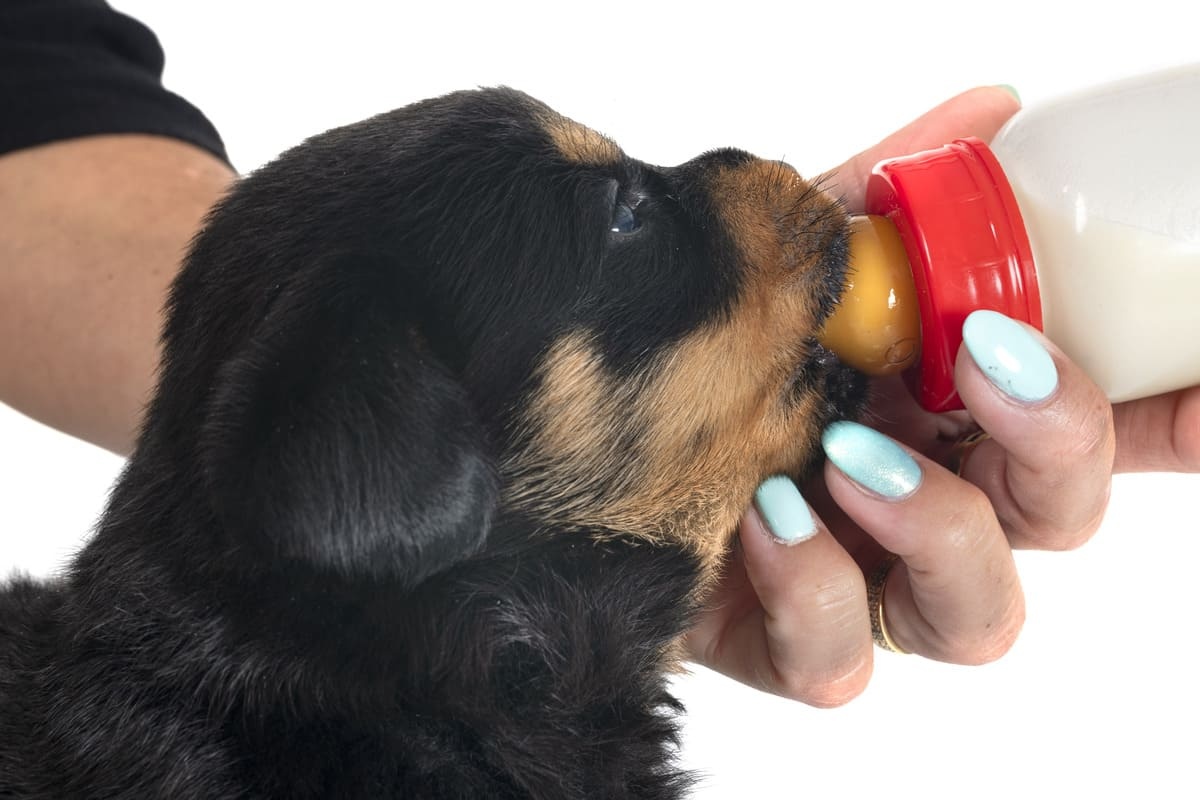
Rottweiler nutrition is one of the most critical aspects for this powerful breed to maintain a healthy life. Nutrition should be planned according to the Rottweiler's daily energy needs, activity level, and age.
While puppies need more frequent meals, an adult Rottweiler can maintain its ideal form with two meals a day. Dog foods preferred for a healthy feeding plan should contain ingredients that support the digestive system, an appropriate protein ratio, and formulas that support muscle development.
As a large breed dog, the Rottweiler tends to grow rapidly, so joint health becomes important. Large breed dog foods formulated specifically for large breeds form the backbone of nutrition during this period. Choosing the right food can contribute to joint development and reduce the risk of future orthopedic problems. As mentioned in PetMD, controlled weight management is essential for overall condition in large breed dogs like Rottweilers. Experts emphasize the importance of portion control in high-energy-density foods. Excess weight can reduce mobility and trigger joint problems in this breed. Protein is indispensable for muscle development in Rottweiler nutrition. To maintain the breed's strong muscle structure, it is best to choose foods containing high-quality protein. In addition, the fatty acids in the food can contribute to skin and coat health in addition to the immune system. When choosing food, the dog's overall health should not be neglected. Veterinarians' recommendations should always be prioritized. Feeding Rottweiler puppies requires a different approach. During the growth period, excessively rapid development can put a strain on the joints, so puppy foods specifically formulated for large breeds that control growth rate should be preferred: Large breed puppy foods provide the puppy with a balanced amount of energy while supporting the proper development of the skeletal system.
), controlled weight management is essential for overall condition in large breed dogs like Rottweilers. Experts emphasize the importance of portion control in high-energy-density foods. Excess weight can reduce mobility and trigger joint problems in this breed.
In Rottweiler nutrition, protein is essential for muscle development. To maintain the breed's strong muscular structure, it's best to choose foods containing high-quality protein. Additionally, the fatty acids in the food can contribute to skin and coat health, as well as the immune system. When choosing food, the dog's overall health should not be neglected. Veterinary recommendations should always be prioritized.
Nutrition of Rottweiler puppies requires a different approach. Since excessively rapid growth during the growth period can put a strain on the joints, large breed puppy foods that control growth rate should be preferred: Large breed puppy foods provide the puppy with a balanced amount of energy while supporting the correct development of the skeletal system.
Daily water consumption should also not be overlooked in Rottweiler nutrition. Continuous access to clean water is important for digestion, circulation, and body temperature regulation. Water consumption naturally increases in Rottweilers with long exercise periods. Owners should be careful about this.
Common Diseases in Rottweiler Breed Dogs
 Rottweilers have a robust and athletic build, yes, but they can still be prone to some hereditary and structural health problems. Regular health checkups, balanced nutrition, and an appropriate exercise program play an important role in health management.
Hip Dysplasia
Hip dysplasia, a structural disorder resulting from the improper development of the hip joint, can cause pain, limited movement, and eventually lameness in the joint. As mentioned in PetMD, the risk of dysplasia is generally high in large breed dogs such as Rottweilers, and early diagnosis is considered critical for management. Regular X-ray examinations, controlled weight management, and an appropriate exercise program can slow the progression of symptoms.
Dirsek Displazisi
Elbow dysplasia can lead to pain and lameness as a result of abnormalities in the development of the elbow joint. This condition, common among large breed dogs, becomes apparent during physical activity. Symptoms such as reluctance to move, difficulty climbing stairs, and avoidance of jumping may be observed.
Aortic Stenosis (Subaortic Stenosis)
This is a serious heart condition affecting blood flow from the heart. It is more common in large breeds. In mild cases, there may be no symptoms, while in advanced cases, fainting, weakness, and exercise intolerance may occur. Regular cardiological check-ups are important for early diagnosis.
Regular veterinary examinations, evaluation of heart sounds, and echocardiography when deemed necessary are valuable in this regard.
Osteosarcoma
Rottweilers are among the breeds considered prone to osteosarcoma, also known as bone cancer. This disease mostly occurs in long bones and tends to progress rapidly. Lameness, significant pain, and swelling in the affected area are common symptoms. Treatment of osteosarcoma may be more successful with early diagnosis.
Gastric Dilatation and Volvulus
This is a health problem requiring urgent intervention, seen in large-bodied and deep-chested breeds. Sudden abdominal distension, restlessness, vomiting attempts, and rapid breathing may be among the symptoms of this condition. Avoiding strenuous exercise after meals and practicing portion control instead of large meals can reduce the risk of stomach torsion in dogs. Eye Diseases Rottweilers may experience eye conditions such as cataracts, retinal problems, and entropion. Veterinary examination is important if signs of redness, watering, or decreased vision are noticed. Early intervention can prevent permanent damage. It is not accurate to generalize that all Rottweilers will experience these health problems. Knowing the risks allows for early detection.
Eye Diseases
Rottweilers can experience eye conditions such as cataracts, retinal problems, and entropion. Veterinary examination is important if signs of redness, watering, or decreased vision are noticed. Early intervention can prevent permanent damage.
It is not accurate to generalize that all Rottweilers will experience these health problems. Knowing the risks allows for early detection.
Physical Characteristics and Appearance of the Rottweiler Dog
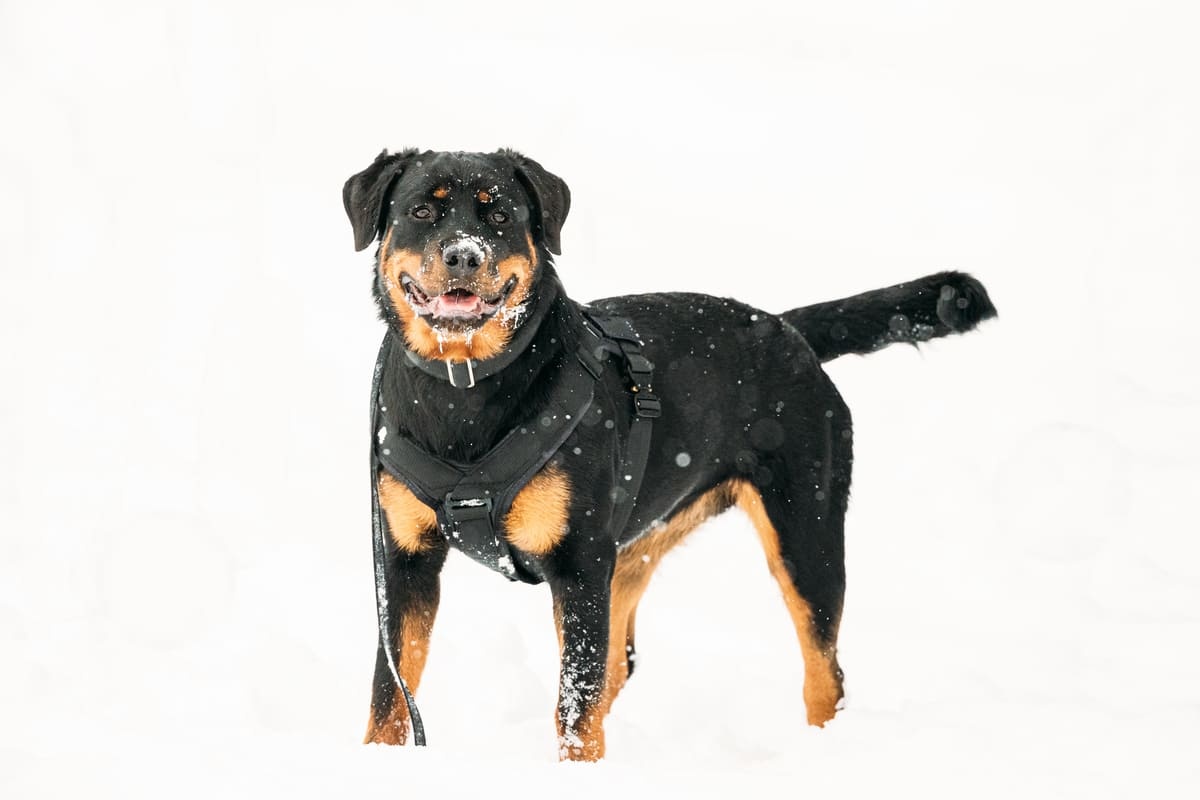 The physical characteristics of Rottweilers, renowned for their strength and imposing presence, can be listed as follows:
- They are a broad-chested, strong-boned, compact but heavy working dog.
- Shoulder height is approximately 56–69 cm, males are generally larger than females.
- Their weight averages between 35–60 kg. It is recommended to monitor their body condition with a veterinarian.
- Their eyes are generally dark brown, widely set, and have an attentive, alert expression.
- Rottshires have broad heads. With their prominent forehead and strong jaws, they possess the typical head shape of a working dog.
- Their ears are medium-sized, triangular in shape, drooping forward, and making their head appear wider than it is.
- Their natural tail is thick and strong. It is straight during a calm walk, but can be carried higher when excited.
- Their legs are muscular and strong, their feet are rounded, their toes are firm, and they are well-suited for a strong grip on the ground.
- They have a short, dense, double-layered coat that sits close to the body.
- Their base color is black; there are rust-colored markings on the cheeks, chest, legs, and eyebrows.
Rottweiler Dog Character
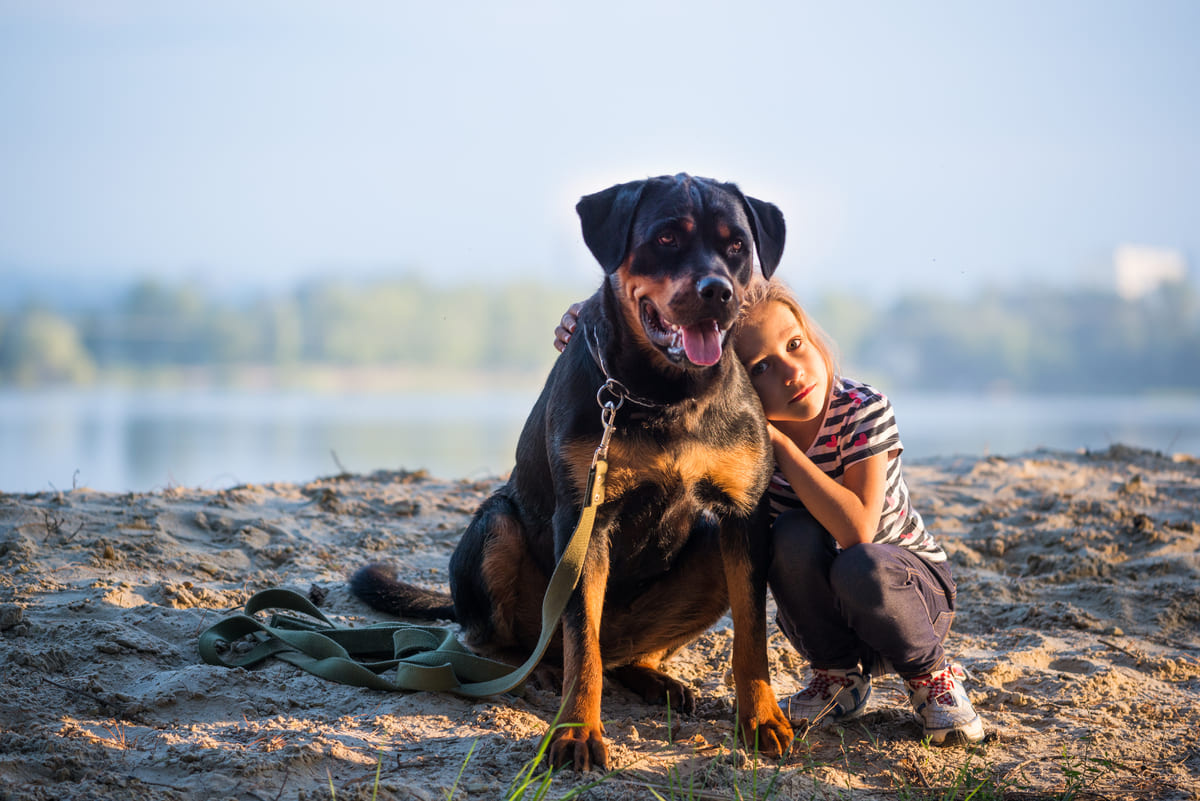 The Rottweiler character has a special structure that combines strength and calmness. Someone looking at it from the outside initially sees a serious and distant demeanor. However, after spending a few minutes with its family, it is easy to understand how affectionate and devoted a Rottweiler actually is.
The prominent character traits of the Rottweiler are:
- It shows deep attachment to its family and enjoys close contact.
- It is attentive and protective, constantly evaluating its surroundings.
- It establishes a strong bond with its owner and can focus on given commands.
- They may be reserved towards strangers; early socialization is important for them to exhibit ideal behavior.
- They are intelligent and successful at learning complex commands.
- Their energy level is controlled and balanced with regular exercise.
- They are self-confident and can remain calm in unexpected situations.
- They are patient with family members and can get along with children when properly guided.
Care Needs of Rottweiler Dogs
 The answers to the question "How to care for a Rottweiler?" are frequently wondered by those who want to adopt a Rottie. Although generally considered easy to care for, certain key elements must be known. Rottweilers are not considered a suitable breed for first-time dog owners. Those unfamiliar with dog behavior may not be able to control Rottweilers, who have a dominant personality and are physically very strong. They need to be socialized early on after adoption. For details on this topic, you can read our article "What Should You Do If Your Dog Doesn't Socialize with Other Dogs?". In addition to socialization, sufficient attention must be paid to the training process of Rottweilers. Receiving basic obedience training will ensure a comfortable process for both them and their owners. In addition to basic obedience training, lifelong training will play an important role in bringing out the strong and good-natured character of Rottweilers. Rottweiler care should not be separated from proper nutrition planning. Rottweiler dogs should be fed according to their age, general health, and activity level. You can find dog food options that provide a complete and balanced diet here. Inadequate nutrition can trigger health problems. Overfeeding can also lead to weight gain in Rottweilers. Rottweiler care includes ensuring they get an ideal amount of exercise, and incorporating games into their exercise routine. These steps, which strengthen their bond with humans, will also contribute to their health. A Rottweiler that cannot expend its energy may exhibit destructive behavior indoors and develop behavioral problems. Rottweilers have short, dense fur. They shed moderately. Their fur should be brushed and combed a few times a week, except during seasonal changes. Nail length should be checked: Rottweilers who get an ideal amount of exercise and spend time outdoors can naturally file down their nails. If their nails don't naturally file down and shorten, they should be trimmed. Brushing their teeth is recommended to support oral and dental health. It's not easy for them to get used to all these grooming processes later on, so Rottweiler dog grooming should begin early after adoption. Rottweiler Dog Training The cornerstone of Rottweiler training is early socialization and consistent command application. This breed has an intelligent nature that quickly adapts to its owner's attitude, so the training process needs to proceed with clear boundaries and regular repetition. Basic commands given during puppyhood prevent unwanted protective tendencies, shy behavior, or disobedience. The Chewy source also emphasizes that the Rottweiler is a highly motivated working dog, and regular mental activities and short but consistent training sessions significantly increase the learning speed.
Rottweilers are not considered a suitable breed for first-time dog owners. Those who are not familiar with dog behavior may not be able to control Rottweilers, who have a dominant character and are physically very strong. They need to be socialized early after adoption. For details on this topic, you can read our article "What Should You Do If Your Dog Doesn't Socialize with Other Dogs?". In addition to socialization, sufficient attention must be paid to the training process of Rottweilers. Basic obedience training will ensure a comfortable experience for both the dog and its owner. In addition to basic obedience training, lifelong training will play an important role in developing the strong and good-natured character of Rottweilers.
Rottweiler care should not be separated from proper nutrition planning. Rottweiler dogs should be fed according to their age, general health condition, and activity level. You can find dog foods that can be preferred for complete and balanced nutrition here. Inappropriate nutrition can trigger health problems. Overfeeding can also cause Rottweilers to face weight problems.
As part of Rottweiler care, they should be provided with an ideal amount of exercise, and games should be included in their exercise routines. These steps, which strengthen the bond between them and humans, will also contribute to their health. A Rottweiler that cannot release its energy may exhibit destructive behaviors in the house and develop behavioral problems. Rottweilers have short, dense fur. They shed moderately. Their fur needs to be brushed and combed a few times a week, except during seasonal changes. Nail length should be checked: Rottweilers who get an ideal amount of exercise and spend time outdoors can naturally file down their nails. If their nails don't naturally file down and shorten, they should be trimmed. Brushing their teeth is recommended to support oral and dental health. They don't easily adapt to all these grooming processes later on, so Rottweiler dog care should begin early after adoption. Rottweiler Dog Training The cornerstone of Rottweiler training is early socialization and consistent command application. This breed is intelligent and adapts quickly to its owner's attitude, so the training process needs to proceed with clear boundaries and regular repetition.
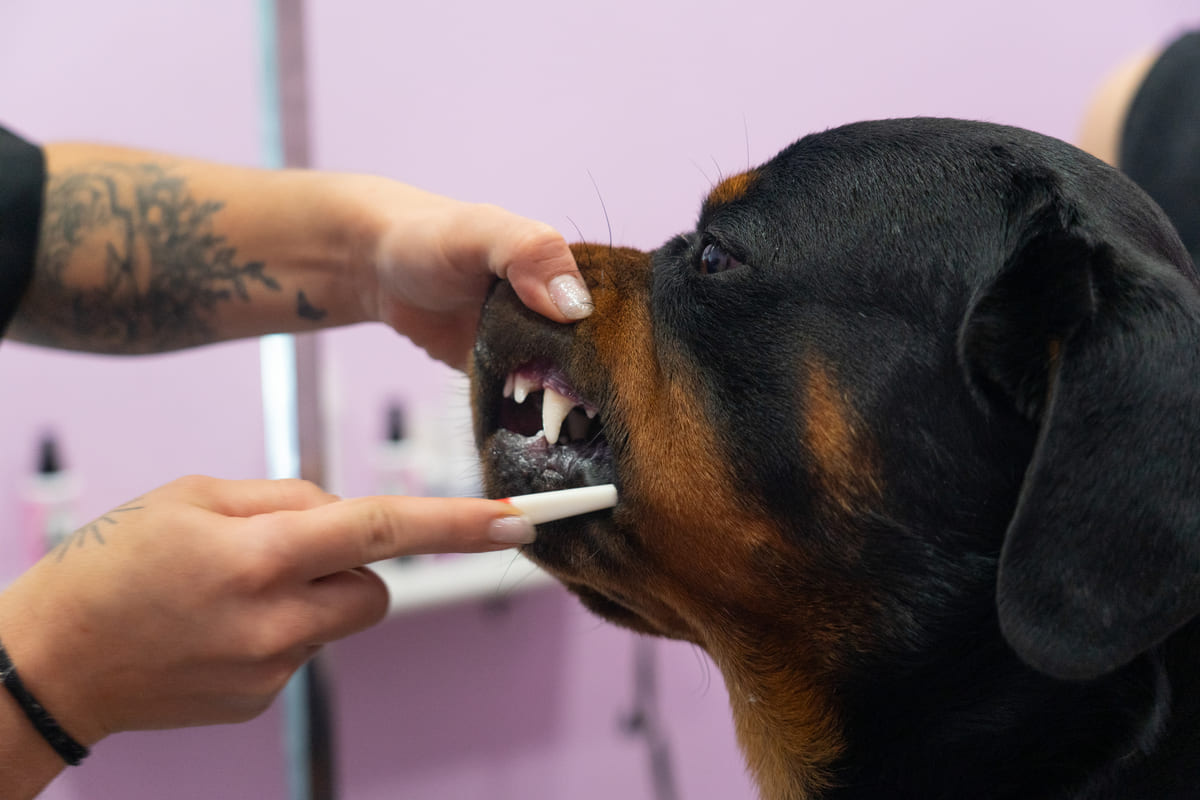
Rottweilers have short, dense coats. They shed moderately. Their coats need to be brushed and combed a few times a week, except during seasonal changes. Nail length should be checked: Rottweilers who get an ideal amount of exercise and spend time outdoors can naturally file down their nails. If their nails don't naturally file down and shorten, they should be trimmed. Brushing their teeth is recommended to support oral and dental health. They don't easily adapt to all these grooming processes later on, so Rottweiler dog care should begin early after adoption.
Rottweiler Dog Training
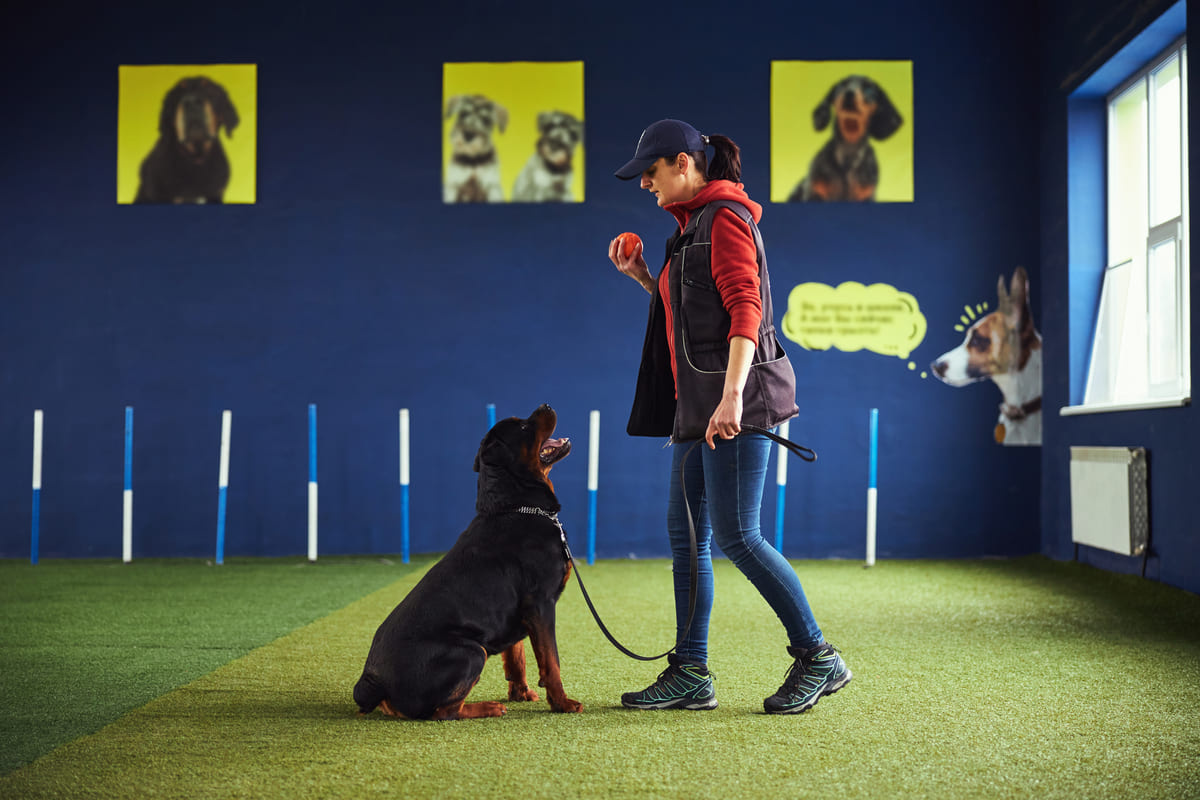 The cornerstone of Rottweiler training is early socialization and consistent command application. This breed is intelligent and quickly adapts to its owner's attitude, so the training process needs to proceed with clear boundaries and regular repetition.
Basic commands given during puppyhood prevent unwanted protective tendencies, shy behavior, or disobedience. The Chewy source also emphasizes that the Rottweiler is a highly motivated working dog, and regular mental activity and short but consistent training sessions significantly increase the learning speed.
Another critical element in Rottweiler training is socialization. A Rottweiler that is introduced to different people, animals, and environmental stimuli in a controlled manner will exhibit a more balanced character in adulthood.
Because of their high sense of duty, they may be well-suited to advanced obedience, tracking, or protection sports; professional trainer support is strongly recommended in such disciplines. Incorrect guidance can unintentionally reinforce overprotective behaviors. It is important to remember that in Rottweiler training, proper guidance is as important as discipline.
Rottweiler Sahiplenirken Bilinmesi Gerekenler
 Living with a Rottweiler is undoubtedly wonderful, but some elements need to be clearly defined beforehand. If you want to adopt a Rottweiler, you should know the following beforehand:
- It requires a lifestyle that can handle the responsibility of a large breed. Because Rottweilers are a strong, intelligent, and active breed, daily exercise, mental stimulation, and consistent training are essential. Early socialization is crucial. A Rottweiler not introduced to different people, animals, and environmental stimuli may develop overly protective behaviors later in life. Regular training sessions provide security for family members. With clear boundaries, a Rottweiler can become an excellent family dog. Getting along with children depends on guidance and supervision. Rottweilers can be patient, but due to their strong build, interaction should always be controlled. The social structure of the home should be evaluated. Some Rottweilers may be more sensitive to environments with high guest traffic and constant noise. The need for exercise should not be ignored. Improper channeling of energy can lead to restlessness or undesirable behaviors. Weight control and proper nutrition are important for long-term health. Foods formulated with large breed ingredients support joint and muscle development. Regular veterinary checkups are necessary. Routine examinations should not be neglected due to risks such as hip and elbow dysplasia, heart disease, and eye diseases. A house with a garden is advantageous but not mandatory. Rottweilers can live in apartments as long as they get sufficient exercise and mental stimulation. Professional training support may be needed. As a working breed with a strong protective instinct, expert trainer guidance is very beneficial for some individuals.
- Early socialization is essential. A Rottweiler not introduced to different people, animals, and environmental stimuli may develop overly protective behaviors later in life.
- Regular training processes provide security for family members. With clear boundaries, a Rottweiler can become an excellent family dog.
- Harmony with children depends on guidance and supervision. Rottweilers can be patient, but due to their strong build, interaction should always be controlled.
- The social structure of the home should be evaluated. Some Rottweilers may be more sensitive to environments with high guest traffic and constant noise.
- Exercise needs should not be ignored. Improper channeling of energy can lead to restlessness or unwanted behavior.
- Weight control and proper nutrition are important for long-term health. Foods formulated with large breed ingredients support joint and muscle development.
- Regular veterinary checkups are necessary. Routine examinations should not be neglected due to risks such as hip and elbow dysplasia, heart disease, and eye disease.
- A house with a garden is advantageous but not mandatory. Rottweilers can live in apartments as long as they get sufficient exercise and mental stimulation.
- Professional training support may be needed. As a working breed with a strong protective instinct, expert trainer guidance is very beneficial for some individuals.
Frequently Asked Questions About Rottweilers
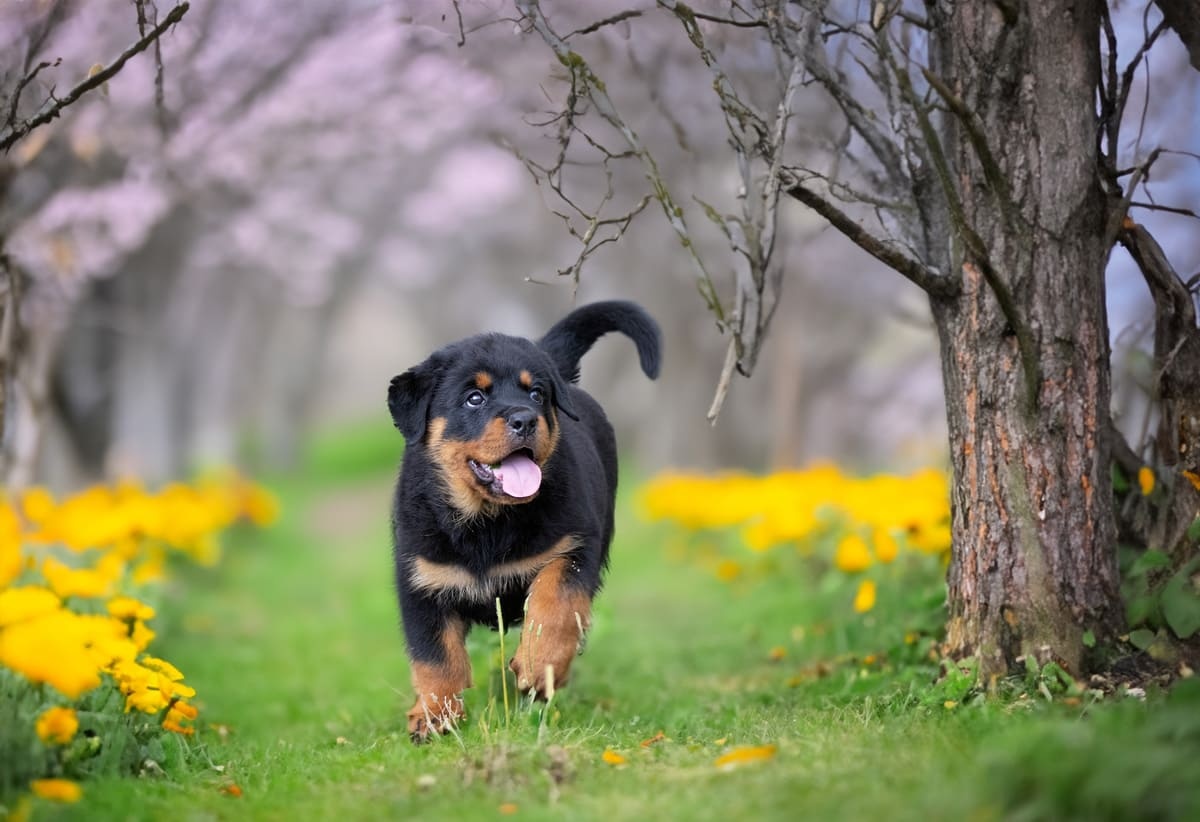
When you see the responsibilities of owning a Rottweiler, you may still have a few questions lingering in your mind. Questions like, "Does it fit my lifestyle?", "How does it go with children, an apartment, and my work schedule?" cross the minds of almost every Rottweiler enthusiast. At this point, addressing your questions one by one will make it easier to understand whether you are truly compatible with this powerful yet sensitive breed.
Is a Rottweiler a good family dog?
When properly socialized and guided by a consistent training program, a Rottweiler can exhibit a balanced and reliable character within the family. Their attachment increases when they interact daily with family members, and they adapt more easily to the home environment.
Are Rottweiler dogs intelligent?
Rottweilers are working dogs with a high learning capacity and can quickly grasp commands. Their problem-solving skills become more pronounced when supported by dog toys and training exercises that keep their minds occupied.
Can a Rottweiler live in an apartment?
With sufficient exercise and mental activity, they can adapt to apartment living. Daily walks, controlled play, and clear rules allow them to behave more calmly indoors.
Do Rottweiler dogs bark a lot?
Generally, they don't have a high tendency to bark unnecessarily. As they are dogs that monitor their surroundings, they may make warning sounds, especially when their guarding instinct is triggered.
Do Rottweiler dogs get along well with children?
A balanced, social, and well-managed Rottweiler can be compatible with children. When boundaries are taught to both child and dog, they can spend safe and enjoyable time together.
How long do Rottweilers live?
The average lifespan is stated to be between 9–10 years. Regular health checkups, weight management, and a suitable exercise program can positively affect this lifespan.
Are Rottweiler dogs hypoallergenic?
No, Rottweilers are not a hypoallergenic breed. In fact, it is not accurate to say that any dog is 100% hypoallergenic. The key issue here is exposure to the Fel d1 protein. Those who live with low-shedding dogs are less exposed to this allergen. Individuals with allergy sensitivities may benefit from short trial contacts before living with this breed. Do Rottweilers shed a lot? Moderate shedding is observed. Increasing the frequency of weekly brushing with a suitable dog brush during seasonal changes helps reduce the spread of hair indoors. Do Rottweilers bite? Like any dog, they may exhibit biting behavior when they perceive a threat. Obedience training and controlled socialization given at an early age are the most important factors in reducing this risk. Are Rottweiler dogs very expensive?
Do Rottweilers shed a lot of hair?
Moderate shedding is observed. Increasing the frequency of weekly brushing with a suitable dog brush during seasonal changes helps reduce the spread of hair indoors.
Do Rottweilers bite?
Like any dog, they may exhibit biting behavior when they perceive a threat. Obedience training and controlled socialization given at an early age are the most important factors in reducing this risk.
Are Rottweiler dogs very expensive?
Considering food, grooming costs, training, and accessories, the cost of care is moderate to high. Due to its large size, regular budget planning is necessary for food consumption and potential health expenses.
Can a Rottweiler be kept at home?
Yes. It can live in a home environment if provided with sufficient exercise, mental stimulation, and a calm lifestyle. Offering a safe space to rest and establishing a routine will facilitate the adaptation process.
Kaynaklar:
https://www.akc.org/dog-breeds/rottweiler/
https://www.petmd.com/dog/breeds/rottweiler
https://www.purina.co.uk/find-a-pet/dog-breeds/rottweiler
https://www.chewy.com/education/dog-breeds/rottweiler
https://www.hillspet.co.za/dog-care/dog-breeds/rottweiler
https://www.dogster.com/dog-breeds/types-of-rottweiler
https://www.omlet.co.uk/breeds/dogs/rottweiler/
Advertisement
Advertisement
Keep exploring
Continue reading
Pet Lifestyle & Guides
Basset Hound Dog Characteristics, Care and Temperament
A short walk with a Basset Hound can unexpectedly become longer with breaks to examine scents.
Read guide →
Pet Lifestyle & Guides
Alaska Malamute Dog Characteristics, Care and Temperament
When it comes to dogs that can withstand cold weather, one of the first that comes to mind is the Alaska Malamute, a strong sled dog bred to pull…
Read guide →
Pet Lifestyle & Guides
Boston Terrier Dog Characteristics, Care and Temperament
The Boston Terrier is a compact and well-balanced breed classified as a small breed of dog. Its short, glossy coat, erect ears, large round eyes…
Read guide →
Pet Lifestyle & Guides
American Cocker Spaniel Dog Characteristics, Care and Temperament
The American Cocker Spaniel's gentle gaze, silky fur, and cheerful demeanor make it easy to quickly bond with this breed.
Read guide →