What is Licking Granuloma in Dogs?
Although not as much as cats, dogs are also curious creatures and use different methods to better understand the world around them. One of these is licking. Dogs love to lick almost everything they are curious about.

Advertisement
Although not as much as cats, dogs are also curious creatures and use different methods to better understand the world around them. One of these is licking. Dogs love to lick almost everything they are curious about. Whether it's a strange-looking stain on the carpet or the face of someone living in the house, it doesn't make much difference to your dog.
A similar situation applies when they are cleaning or scratching themselves. Dogs licking themselves is mostly good and normal, but some dogs may go a little too far. Although it may seem like a harmless act, dogs constantly and excessively licking themselves damages the layers of the skin, disrupting its structure and causing painful sores that cause great discomfort.
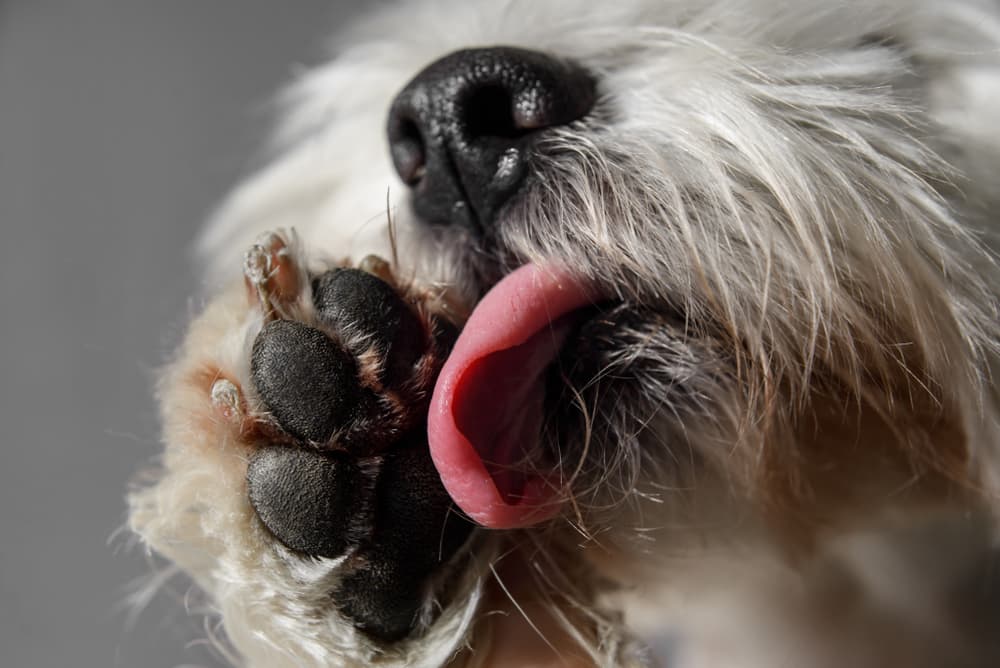
Licking granuloma is a skin condition that occurs when a dog's licking habits exceed the standard level. Also known as acral licking dermatitis, licking granuloma appears as painful lesions as a result of chronic, compulsive, and constant licking of a specific area.
Licking granuloma leads to a vicious cycle that continues unless treated. The wound, caused by constantly licking the same area, leads to an itchy sensation, which in turn results in more licking of that area. While the initial itching may have any source, the subsequent constant licking is a soothing action that only makes the area worse and may lead to the dog scratching its skin. The more swollen, red, and itchy the area becomes, the more your dog will lick it in an attempt to soothe itself.
How is it Diagnosed?
Because the lesions caused by licking granuloma appear and develop in different ways, it can sometimes be difficult to diagnose. The most important characteristic of granuloma is that it is most often seen in areas of the body that are easily accessible when the dog is in a sitting position. The most common locations for granuloma include the upper and outer parts of the front legs, the hind limbs, and the base of the tail, especially the carpal joint and wrist. However, if your dog is somewhat flexible, there is a risk of it appearing anywhere on its body. Sometimes, a dog may have more than one licking granuloma at the same time. The most common signs of licking granuloma include: Alopecia in the form of nodules or plaques, Erythema or skin redness, Inflammation, Open sores, Hyperpigmentation. When you take your dog to the veterinarian for examination, you should describe any changes that have occurred at home that could be causing the problem. In addition to changes affecting the dog's routine, information such as how long the licking has been going on, how often the dog licks the same area (if any), and in what situations is this happening is also important for diagnosing the problem. Any medical history, including any surgeries or trauma, should be explained in detail to the veterinarian.
- ), Erythema or skin redness (
- ), Inflammation (
- ), Open wounds (
- ), and Hyperpigmentation (
- ).
When you take your dog to the vet for an examination, you should describe any changes that have occurred at home that could be causing the problem. Information such as changes affecting the dog's routine, how long the licking has been occurring, how often the dog licks the same area (if any), and in what situations is this important for diagnosing the problem. Any medical history, such as surgery or trauma, should also be explained in detail to the vet.
Licking granuloma, which is quite common among dogs and can be seen in almost every dog, is more frequently observed in some dog breeds. Dog breeds prone to licking granuloma include:
- Golden Retriever,
- Labrador Retriever,
- Doberman Pinscher,
- Irish Setter,
- Great Dane.

Treatment Methods
There is no single standard treatment method for licking granulomas. In order to effectively treat the lesion and prevent recurrence, the reason why the dog exhibits this behavior must be determined.
The main causes of licking granulomas include conditions that can cause itching, such as joint pain, infection, allergies, and insect bites. In such cases, treatments such as antibiotic therapy, antimicrobial spray, and anti-inflammatory drug therapy are applied to eliminate the condition causing the granuloma. In granulomas caused by joint problems, surgery may be necessary to eliminate the joint problem.
Licking granulomas can also occur as a result of psychological problems. Obsessive-compulsive disorder, anxiety, fear, trauma, or boredom are among the most common psychological problems that can trigger excessive licking behavior that can cause licking granulomas. In such cases, it is necessary to spend more quality time with the dog, play with it regularly, and show it attention. You can browse toys that your dog might enjoy playing with by clicking here.
Advertisement
Advertisement
Keep exploring
Continue reading

Dog Lifestyle & Guides
The Unseen Risks of Excess Weight in Small Breed Dogs
Small breed Weight gain in dogs sometimes progresses unnoticed. Extra food added to the food bowl, treats given during the day, food offered from the…
Read guide →
Dog Lifestyle & Guides
Dental Health and Its Importance in Dogs
Dental health in dogs is often Bad breath doesn't become a concern until it's noticed. However, the problem often begins before the odor: Plaque…
Read guide →
Dog Lifestyle & Guides
Hachiko: The True Story and Monument of the Dog Symbolizing Loyalty
The crowd gathered in front of the Hachiko statue in Shibuya shows that a wait that began years ago is not forgotten today.
Read guide →
Dog Lifestyle & Guides
Nasal Discharge in Dogs
If your dog has a runny nose, the first question that usually comes to mind is: Is this normal, or is there something I should be concerned about?
Read guide →