What You Need to Know About Deafness in White-Furred Cats
With their white fur, colorful eyes, and innocent gaze, it's impossible to resist them, just like any other cat. While white-furred cats possess magnificent beauty, there may be a sad situation hidden beneath this beauty: Deafness is quite common in white-furred cats, especially those with blue…

Advertisement
With their white fur, colorful eyes, and innocent gaze, it's impossible to resist them, just like any other cat. While white-furred cats possess magnificent beauty, there may be a sad situation hidden beneath this beauty: Deafness is quite common in white-furred cats, especially those with blue eyes, and it is genetic.
Deafness in white-furred cats is a well-known fact in society. In our country, Van and Ankara cats are cat breeds characterized by their white fur, and it is thought that deafness in cats belonging to this breed is a breed characteristic. However, deafness is a common condition in white-furred cats, regardless of breed.
Are All White-Furred Cats Deaf?
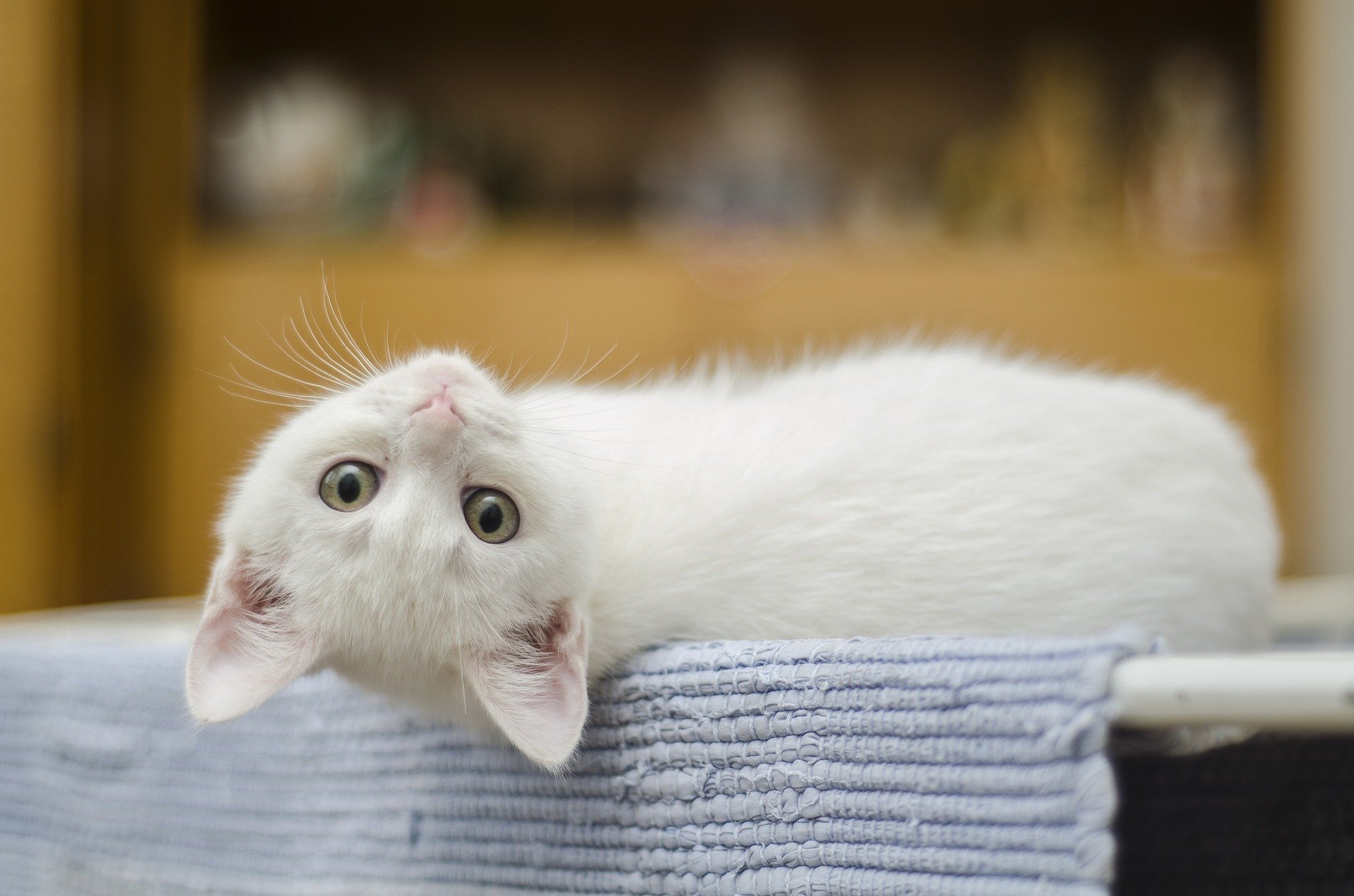
Not every cat with white fur is deaf. Deafness occurs in approximately 5% of completely white-furred cats. This can be compared to the 2-3% prevalence of blondness in the human population.
White-furred cats are not albinos, but they also lack melanin, the pigment that gives fur its color. According to research, 17% to 22% of white-furred cats are born deaf. Eye color has also been observed to be a very determining factor in deafness research in cats.
Are Blue-Eyed Cats Deaf?
Blue eye color has attracted attention in studies on deafness in cats. The rate of deafness varies in cats with white fur if their eyes are blue. In cats with only white fur but no blue eyes, the rate of deafness varies between 17% and 22%, as mentioned earlier.
If one of a cat's eyes is blue, the rate of deafness can reach up to 40%. In cats with only one blue eye, deafness occurs on the side with the blue eye. Having one blue eye is a condition that can be seen in cats. This condition is called heterotomy. Besides cats, it is also possible to see two different eye colors in humans, horses, and dogs.
In cases where both eyes are blue, the rate of deafness in white cats varies between 65% and 85%.
How is the Relationship Between White Fur Color and Deafness Established?
We mentioned that the reason for white fur color in cats is melanin deficiency. In cats, the stem cells necessary to form the area in the inner ear where hearing takes place are the same as the stem cells that produce melanin. In this case, the absence of cells that will transform into melanin can become the cause of deafness in cats. Because the cells are deficient, the vital structures in the inner ear that enable hearing cannot complete their functions, and deafness occurs.
Can Deafness Occur in Cats That Are Almost White?

White fur does not always mean melanin deficiency. It should be remembered that an abundance of white fur can mask other fur, and in these cases, there will not be a tendency towards deafness. If a cat is completely white but has a slight difference in coat color, this indicates that there is no melanin deficiency, and in this case, the tendency towards deafness is minimized.
Can Deafness in White Cats Be Treated?
Deafness in white cats is a congenital condition. Deafness occurs due to the absence of important structures and cells that enable hearing. Therefore, there is no cure for deafness. Although there is no cure for deafness in cats, there are techniques used to communicate with and even train deaf cats.
Is it Difficult to Care for Deaf Cats?
Considering the love for animals in people's hearts, the answer to this question can definitely be given as no. Those who want to adopt a white cat may be worried about deafness, and this is very normal. Although cats are often portrayed as difficult creatures to understand and communicate with, communicating with a deaf cat is no more tiring or difficult than communicating with any other cat. The most basic way to communicate with cats is to get to know them by observing them. This makes it possible to both understand them and establish a trusting relationship. Furthermore, as you get to know your white-furred, beady-eyed, pawed friend, you will realize that they are just as mischievous, bewildered, and wonderful as all other cats. You can find answers to your questions about living with a deaf cat in our blog post titled "Adopting a Deaf Cat".
The most fundamental way to communicate with cats is by observing and getting to know them. This allows you to both understand them and establish a trusting connection. Furthermore, as you get to know your white-furred, beady-eyed, pawed friend, you'll realize that they are just as mischievous, curious, and wonderful as you get to know them.
You can find answers to your questions about living with a deaf cat in our blog post titled "Adopting a Deaf Cat".
Advertisement
Advertisement
Keep exploring
Continue reading

Cat Care
Is My Cat Coughing or Trying to Pass a Hairball?
Seeing your cat crouch down, stretching its neck, and trying to expel something with a strange sound can be unsettling.
Read guide →
Cat Care
York Chocolate Cat Characteristics, Care and Temperament
With its dark brown fur, watchful eyes, and observant demeanor, the York Chocolate is a cat that sparks curiosity at first sight.
Read guide →
Cat Care
Tiffanie Cat Characteristics, Care and Temperament
Silky fur, on its neck With its frilly mane and large, curious eyes, the Tiffanie cat immediately catches the eye.
Read guide →
Cat Care
Snowshoe Cat Characteristics, Character and Care
The Snowshoe cat is a unique breed developed by the controlled mating of Siamese cats and American Shorthair cats.
Read guide →